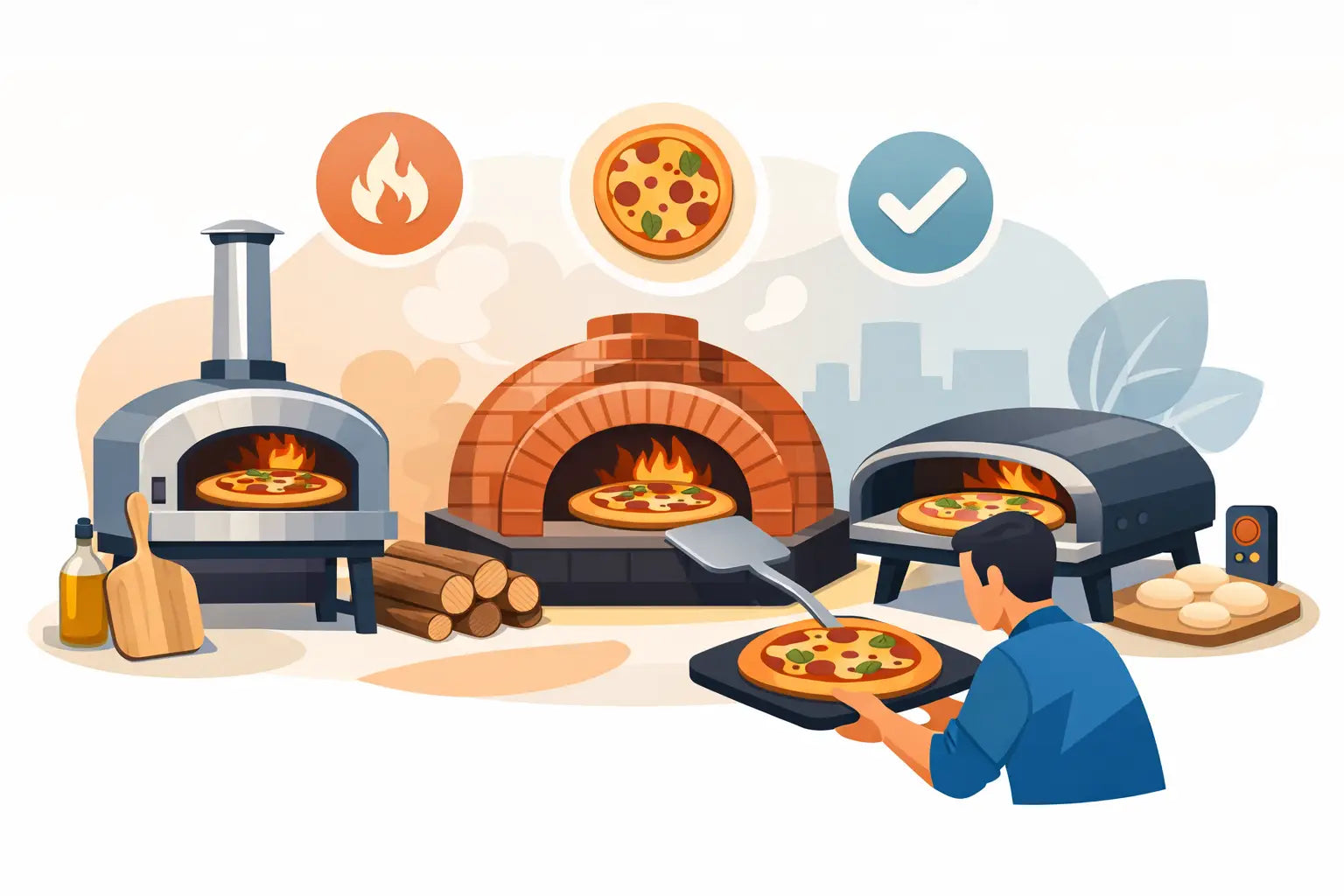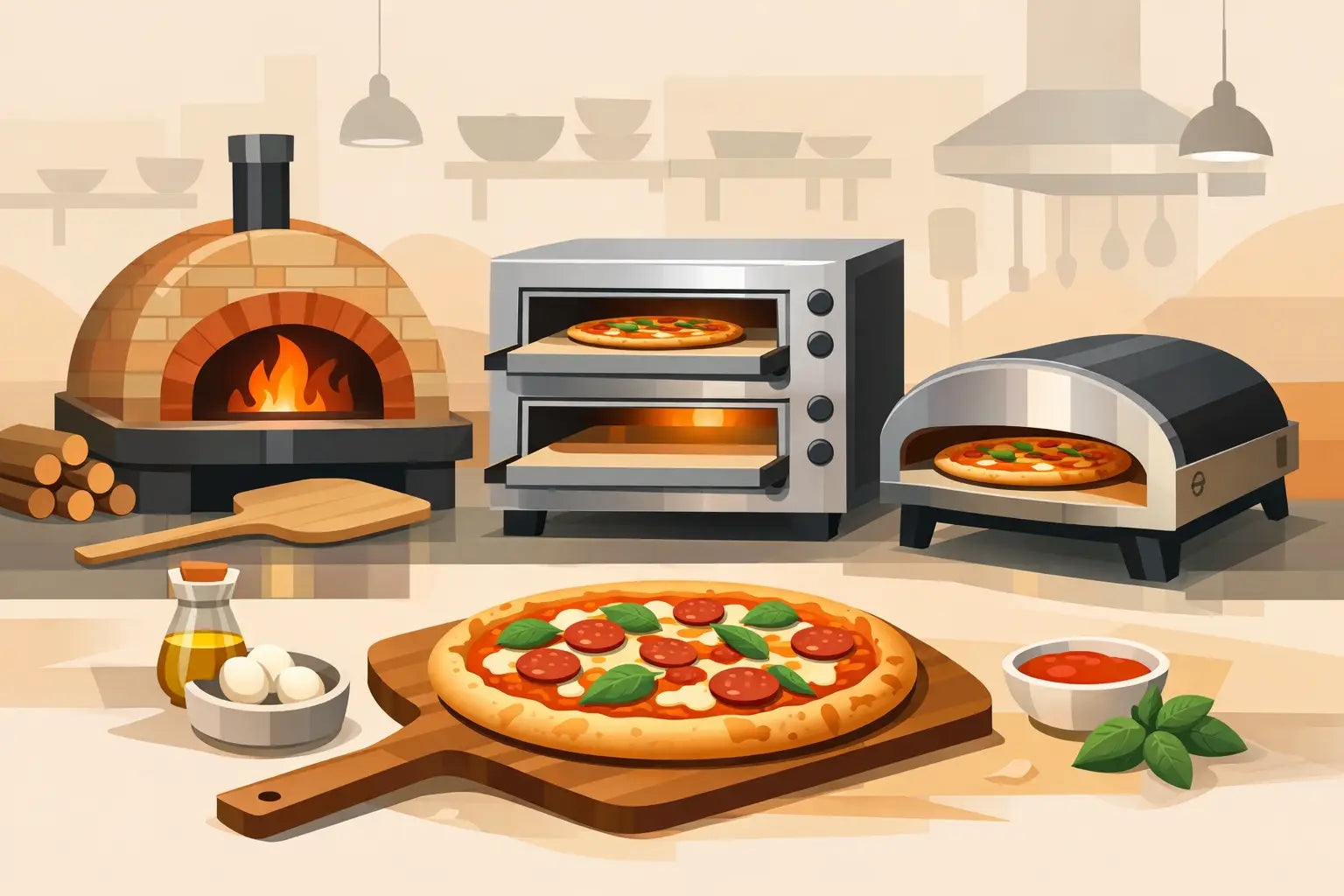
Best Pizza Ovens for Restaurants
Friday dinner service tells the truth about equipment. When tickets stack up, dough proofing is on point, and the line is moving fast, the best pizza ovens restaurants depend on are the ones that hold temperature, recover quickly, and deliver the same bake every time. Style matters, but performance under pressure matters more.
For operators, choosing a pizza oven is not about chasing a trend. It is about matching heat delivery, production volume, footprint, fuel type, and labor reality to the menu you actually run. A beautiful oven that slows service or creates inconsistent pies is not an upgrade. The right oven supports speed, precision, and repeatable results shift after shift.
What makes the best pizza ovens restaurants can trust?
At the commercial level, a pizza oven earns its place by doing three things well: producing consistent crust color, handling peak demand without falling behind, and fitting the workflow of the kitchen. That sounds simple, but the trade-offs are real.
Higher maximum temperatures can shorten bake times, but they also tighten the margin for error. Larger chambers increase output, but they take more space and can demand more ventilation. Gas can be efficient and predictable, while wood can add visual impact and flavor, but often with more training and labor. The best choice depends less on hype and more on operational fit.
If your menu leans heavily on New York-style or artisan pizza, deck ovens often make sense because of their strong bottom heat and controlled bake environment. If your business is built on lunch rushes, delivery volume, or standardized output across multiple staff members, conveyor ovens may outperform more traditional options. If your concept sells theater as much as food, a wood-fired or hybrid oven can become part of the guest experience.
Deck ovens: precision and crust control
Deck ovens remain one of the strongest contenders for restaurants that care deeply about bake quality. They use a stone or ceramic deck surface to create strong conductive heat, which helps develop crisp bottoms and well-structured crusts. For many pizzerias, that deck contact is the difference between a pizza that looks good and one that eats right.
These ovens are especially effective for operators who want control over each pie. You can rotate pizzas manually, adjust placement for hotter or cooler zones, and fine-tune the bake based on dough hydration, topping load, and style. That flexibility is valuable in kitchens where product standards are high and staff know how to read the oven.
The trade-off is labor. Deck ovens ask more from the operator than a conveyor does. They also require disciplined temperature management and a kitchen team that can keep pace during rush periods. For independent pizzerias, chef-driven concepts, and restaurants selling quality first, that extra hands-on control is often worth it.
Electric deck ovens can be a smart option where gas access is limited or where operators want easier installation and steady temperature control. Gas deck ovens are often preferred for their recovery speed and operating economy, but local utility costs and building constraints should shape that decision.
Conveyor ovens: speed, consistency, and throughput
When output is the priority, conveyor ovens are hard to ignore. They are built for volume, repeatability, and labor efficiency. A properly configured conveyor oven can help a restaurant produce pizzas with impressive consistency, even across different shifts and varying staff experience levels.
That consistency comes from automation. Once time and temperature are dialed in, the oven reduces guesswork. Pizzas move through at a programmed pace, which supports ticket flow and cuts down on the variability that can happen with manual loading and turning. In high-demand environments, that matters.
Conveyor ovens are often the best fit for quick-service restaurants, delivery-heavy operations, school and institutional foodservice, and chains that need the same product every time. They also work well for operators with broader menus because they can handle more than pizza, depending on the model and chamber design.
The trade-off is that they can be less romantic and sometimes less forgiving for highly artisanal styles. If your brand is built around hand-finished char, dramatic oven spring, or a highly customized bake, a conveyor may feel limiting. But for many restaurants, the real win is simple: faster service, easier training, and dependable output.
Wood-fired and gas-fired hearth ovens: brand impact with operational demands
Some restaurants need the oven to do more than bake. They need it to sell the experience. That is where wood-fired and hearth-style ovens stand out. They create visual energy, support high-heat baking, and can produce the blistered crust and subtle smokiness many guests associate with premium pizza.
These ovens are often chosen by upscale pizzerias, open-kitchen concepts, and hospitality venues where presentation matters. A live-fire oven can become a focal point that strengthens menu pricing and adds personality to the space. For the right concept, that is a real business advantage.
Still, these ovens are not automatically the best pizza ovens restaurants should buy. Wood-fired units demand fuel management, ash handling, operator skill, and careful ventilation planning. Gas-fired hearth ovens can deliver some of the same visual and baking benefits with more predictable control, which is why many operators prefer them as a middle ground.
If your kitchen has limited labor or your staff turns over frequently, a live-fire oven may create more complexity than value. If your concept can support the training and the guest-facing theater, it may be exactly the right call.
Countertop commercial pizza ovens: compact, but not always enough
For cafes, bars, food trucks, and smaller kitchens, countertop pizza ovens can be attractive because they save space and reduce upfront cost. Some are surprisingly capable, especially for limited menus or lower-volume service. They can work well for flatbreads, personal pizzas, reheating slices, or secondary production.
But operators should be realistic. Countertop units are not always built for nonstop restaurant demand. Chamber size, recovery time, and production capacity can become limiting fast once volume rises. A small oven that performs well for ten pizzas an hour may become a bottleneck at thirty.
This category makes the most sense when pizza is an add-on, not the core engine of the business. If pizza is a signature item or a high-volume revenue driver, stepping up to a true floor model or stacked configuration is usually the smarter investment.
How to choose the best pizza ovens for restaurants by concept
The right oven starts with the menu and the rush. A neighborhood pizzeria focused on traditional pies usually benefits from deck or hearth performance. A delivery-first operation with heavy Friday and Saturday volume often benefits from a conveyor setup. A bar with a tight backline may need a compact unit with fast preheat and simple controls.
Think carefully about your peak hourly output, not just your average day. Many buying mistakes happen because operators size equipment for normal traffic instead of the busiest hour they need to survive. If your oven cannot recover during the rush, ticket times stretch, quality slips, and labor pressure rises.
Space and ventilation deserve the same attention as bake quality. A larger oven may improve capacity, but if it complicates hood requirements or disrupts line flow, it can create new problems. Fuel availability, utility rates, and local code requirements also shape the best decision.
Then there is staffing. Some ovens reward skilled hands. Others protect consistency when training is still in progress. Neither approach is inherently better, but one is likely a better match for your operation.
Features that matter more than marketing
Commercial buyers should pay close attention to heat recovery, chamber layout, insulation quality, control accuracy, and serviceability. These are the features that affect daily performance, not just the showroom impression.
Heat recovery is critical because it determines how fast the oven returns to target temperature after repeated door openings or continuous production. Poor recovery shows up fast during a rush. Insulation matters because it affects efficiency, temperature stability, and kitchen comfort.
Controls matter too. Digital programmability can be a major advantage in high-volume settings, while manual control can appeal to chefs who want direct command of the bake. Neither is universally superior. The better choice is the one your team will use accurately and consistently.
Finally, think beyond installation. Access to replacement parts, ease of cleaning, and long-term maintenance support should influence the decision. A lower purchase price can lose its appeal quickly if downtime becomes a recurring problem.
The smartest purchase is the one that fits your kitchen
The best pizza ovens restaurants invest in are not always the hottest, largest, or most expensive models. They are the ovens that match the menu, the labor model, the volume target, and the physical kitchen without compromise in consistency. Performance is not about specs alone. It is about what the oven allows your team to produce, every day, when the pressure is on.
That is why serious operators buy with discipline. They look at throughput, recovery, footprint, fuel, and bake style together. Brands like Culinary Precisions speak to that mindset because the goal is not simply to add equipment. It is to build a kitchen that performs with confidence.
A great pizza oven should make service stronger, not just pizza better. If it helps your team move faster, bake more consistently, and protect quality at peak volume, you are looking in the right place.