How to Choose Pizza Oven for Real Results
A pizza oven that looks impressive on paper can still slow down service, waste fuel, or miss the crust style you want. If you are asking how to choose pizza oven equipment for a restaurant, mobile setup, or serious home kitchen, the right answer starts with output and ends with consistency. The best unit is not the one with the longest feature list. It is the one built for your space, your menu, and the pace you need to maintain.
How to choose pizza oven starts with your production goals
Before comparing fuel types or finishes, get clear on what the oven needs to do every day. A high-volume pizzeria pushing hundreds of pies through lunch and dinner has very different demands than a wine bar adding flatbreads to the menu, or a backyard cook chasing Neapolitan-style results on weekends.
Start with three numbers: how many pizzas you need to produce per hour, the average pizza size, and the peak demand window. These details matter more than marketing language. An oven that performs well for occasional batches may struggle when the door is constantly opening and closing during a rush.
Menu style also shapes the decision. Thin-crust New York slices, Neapolitan pies, tavern-style pizzas, Detroit pans, and artisan flatbreads all respond differently to heat intensity, deck surface, and bake time. If your menu will expand, choose a unit with enough control range to handle more than one format. Flexibility is valuable, but only if it does not compromise your main product.
Match the oven type to the way you cook
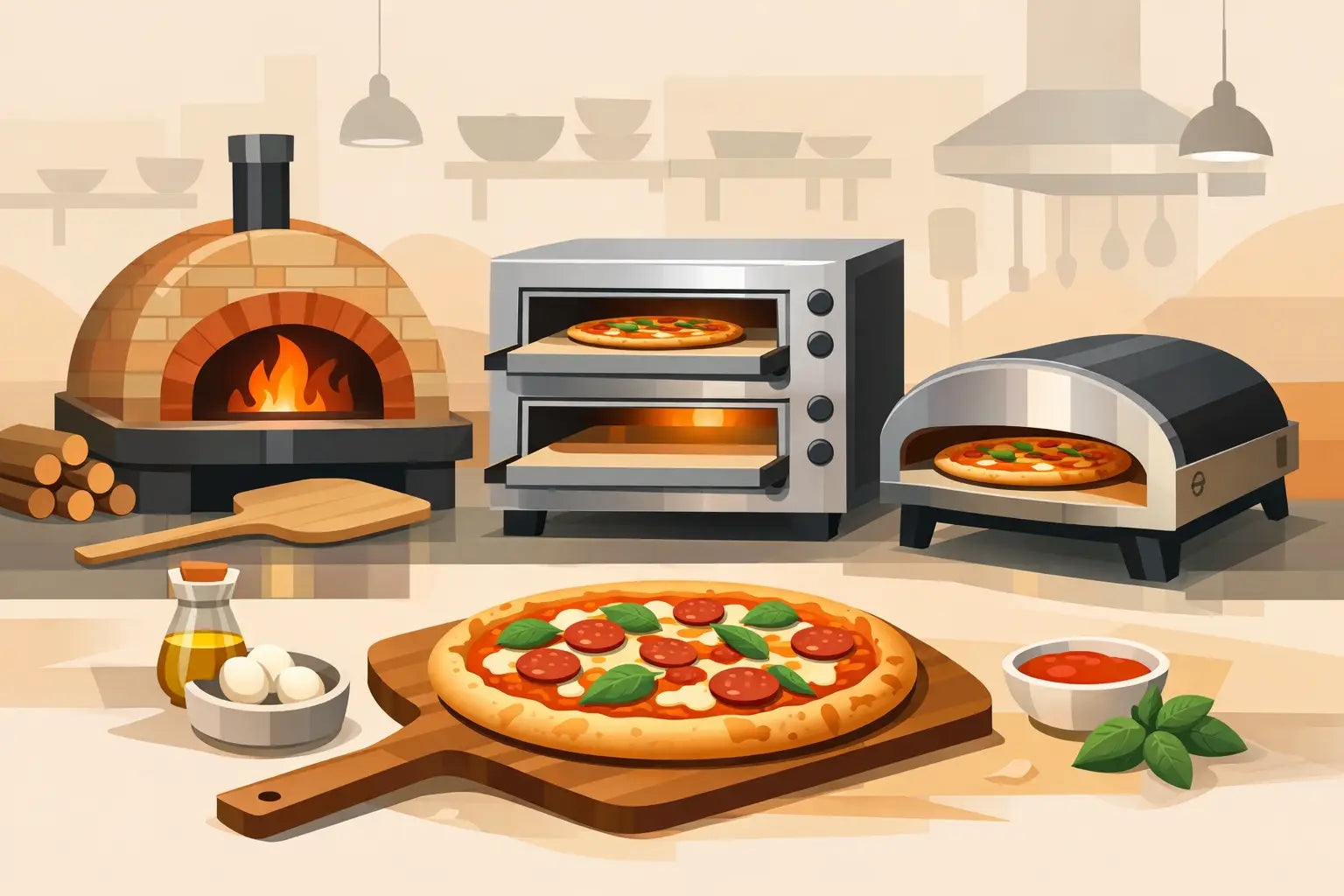
Pizza ovens generally fall into a few practical categories, and each one has clear advantages.
Deck ovens are a strong choice when you want hands-on control and consistent bottom heat. They work especially well for operators focused on traditional pizza programs, where the bake profile matters as much as speed. A quality deck oven can deliver excellent crust character, but it usually requires more operator attention than conveyor systems.
Conveyor ovens are built for throughput and repeatability. In busy operations, that matters. Staff training is simpler, bake times are predictable, and production can stay steady across shifts. The trade-off is that some chefs feel they give up a measure of craft control compared with a deck oven, especially for specialty styles that benefit from active turning and close visual monitoring.
Countertop and compact models make sense where space is limited or pizza is a secondary menu item. They can be a smart fit for concession setups, cafes, bars, and small kitchens. The limitation is capacity. If demand grows, a compact oven can become a bottleneck faster than expected.
Outdoor and portable pizza ovens appeal to serious home cooks and operators with patio or event service. They can reach impressive temperatures and produce excellent results, but recovery time, weather exposure, and fuel handling should be considered before treating them like full-time production equipment.
Fuel type changes performance, cost, and workflow
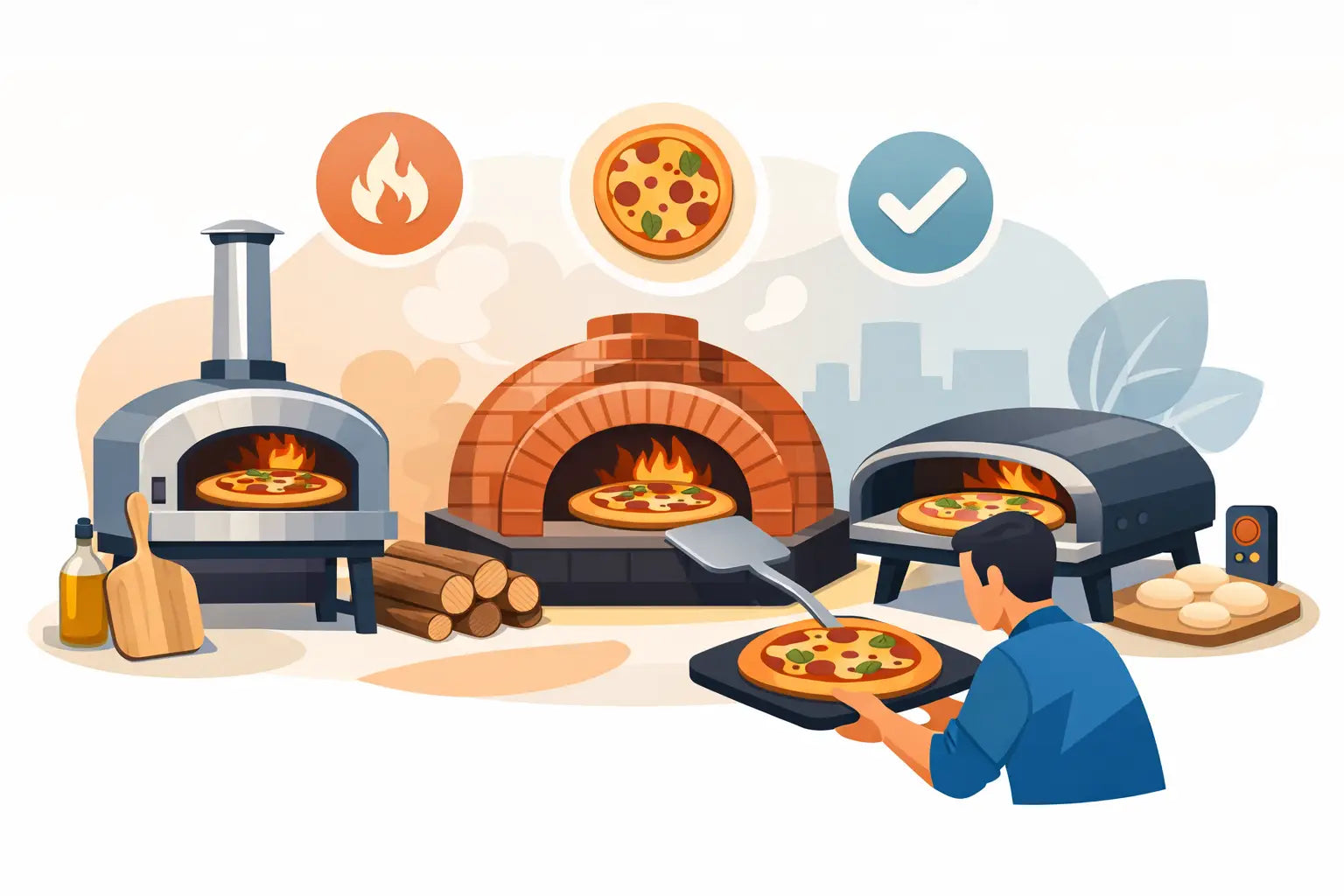
When buyers think about how to choose pizza oven models, fuel type often becomes the first comparison. That is reasonable, because gas, electric, and wood-fired units all affect the final product and day-to-day operation.
Gas ovens are popular for a reason. They heat quickly, hold temperature well, and usually offer a strong balance of operating cost and performance. For many commercial kitchens, gas delivers the right mix of speed and control.
Electric ovens give you precise temperature management and can be easier to integrate where gas service is limited or local requirements are stricter. They are often a practical choice for indoor installations and operators who prioritize clean, steady heat. Depending on utility rates, though, operating costs may run higher.
Wood-fired ovens create distinct flavor and visual appeal. They can also become a selling point for the brand. But romance should not replace planning. Wood-fired cooking demands more skill, more labor, and more attention to ventilation, fire management, and compliance. For some concepts, that effort is worth it. For others, it becomes a distraction from service efficiency.
Dual-fuel or hybrid setups can offer flexibility, but only if your team will actually use that flexibility. More complexity is not always better.
Size and capacity matter more than buyers think
An undersized oven creates stress every shift. An oversized one can waste floor space, energy, and budget. Capacity should be measured against real production, not optimistic assumptions.
Check how many pizzas the oven can hold at once, but do not stop there. Ask what size pizzas those numbers assume, how quickly the oven recovers after loading, and whether stated capacity reflects practical use in a live kitchen. A four-pizza chamber sounds efficient until you realize your menu includes larger pies or pans that reduce that number.
Footprint is just as important. Measure the installation area carefully, including clearance requirements, ventilation access, door swing, and workflow around the oven. In a tight kitchen, poor placement creates delays, safety issues, and unnecessary strain on the team. A better equipment decision often comes from understanding traffic flow, not just reading specifications.
Heat range and recovery define the bake
Maximum temperature gets attention, but recovery is what protects consistency. An oven may hit a strong top-end number, yet struggle to return to target heat after repeated loading during peak service.
If you are aiming for fast, high-heat bakes, especially for Neapolitan-style pizza, the oven needs both temperature headroom and stable recovery. If your menu leans toward slower bakes, pan pizzas, or mixed items, broader control may be more useful than extreme top temperature.
Look closely at how the oven distributes heat. Top heat, bottom heat, chamber airflow, and deck material all influence how the crust sets, how the cheese melts, and how evenly the pizza finishes. Precision here is not a luxury. It is what separates one good pie from a hundred consistent ones.
Consider labor, training, and service pace
The right oven should support the people using it. Some models reward experienced operators who can read the bake and make quick adjustments. Others are built to reduce variation across different staff members.
That distinction matters in commercial kitchens, where turnover, training time, and service pressure are real. If your operation depends on multiple cooks producing the same result, repeatability may be more valuable than manual finesse. A slightly less romantic oven that produces accurate, consistent output all day can be the smarter investment.
For home buyers, ease of use matters too. If setup, fueling, or temperature control feels like a chore, the oven may not get used as often as expected.
Do not overlook ventilation, utilities, and compliance
Many purchase mistakes happen before the oven is even turned on. Utility requirements, hood systems, installation limitations, and local codes can all narrow your options quickly.
In commercial settings, confirm gas type, electrical service, ventilation needs, and fire safety requirements before choosing a model. A great oven that does not fit your buildout or compliance plan is not a great oven. For mobile units and outdoor installations, transport weight, weather protection, and fuel storage become part of the buying decision.
This is where a performance-driven supplier can save time and costly rework. Culinary Precisions serves buyers who need equipment decisions grounded in real kitchen demands, not guesswork.
Budget should include more than purchase price
A low upfront cost can become expensive if the oven struggles under volume, burns through fuel, or needs frequent service. On the other hand, paying for capacity and features you will never use ties up capital without improving results.
Think in terms of total value. That includes durability, expected service life, operating efficiency, maintenance demands, and the impact on food quality and ticket times. In a commercial environment, an oven that protects consistency during rush periods often pays for itself faster than a cheaper model that creates delays or waste.
For serious home cooks, the value equation is similar. Better insulation, stronger build quality, and more precise temperature control usually translate into better long-term performance and more enjoyable use.
How to choose pizza oven with confidence
The strongest buying decisions come from narrowing the field with discipline. Define your pizza style, your production target, your available space, and your utility limitations. Then compare ovens based on how reliably they deliver the bake you want under the conditions you actually face.
That approach keeps you focused on performance instead of distractions. Stainless steel finish, visual design, and extra features have their place, but they come after heat consistency, capacity, recovery, and operational fit.
A pizza oven is not just another appliance. It is a production engine, and in many kitchens it becomes the center of the menu. Choose the one that supports your standards on your busiest day, not just the one that sounds good in a product description. The right oven should make service tighter, results more consistent, and every pizza easier to repeat with confidence.