Blast Freezer vs Refrigerator: Key Differences
When a pan of stock, trays of proteins, or prepped desserts need to cool fast, the question is not simply cold storage. It is performance under pressure. In the real-world comparison of blast freezer vs refrigerator, the difference comes down to cooling speed, food safety, product quality, and how well your kitchen can keep up with service.
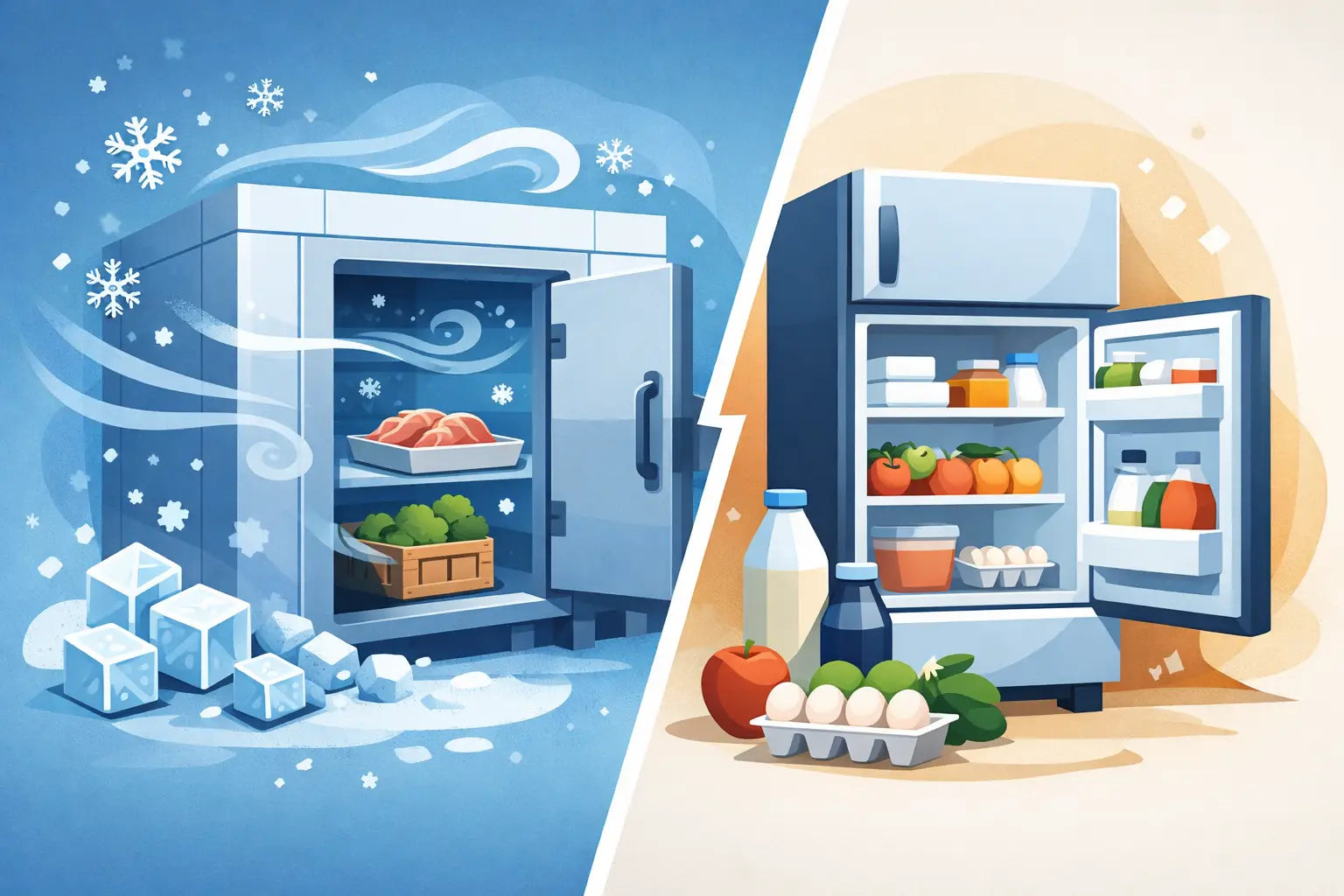
A standard refrigerator is built to hold food at a safe, stable temperature. A blast freezer is built to pull heat out of food rapidly. That distinction sounds simple, but it affects everything from HACCP compliance to texture, labor flow, and batch consistency. If you run a restaurant, commissary, bakery, catering operation, or a serious home kitchen with professional ambitions, choosing the right equipment matters.
Blast freezer vs refrigerator: what each one is built to do
A refrigerator is designed for storage. It keeps already chilled food cold and slows bacterial growth by maintaining a controlled environment, usually in the mid-30s to low-40s Fahrenheit. It does that job well when food enters the cabinet near the target range.
A blast freezer serves a different purpose. It is engineered to reduce food temperature quickly by using powerful airflow and lower operating temperatures. In practice, that means it can take hot or warm food through the danger zone far faster than a refrigerator ever should. Many units are also designed to freeze product rapidly, which helps protect texture and structure.
This is why a refrigerator should not be treated like a cooling shortcut for hot food. Putting large volumes of hot product into standard refrigeration can raise the cabinet temperature, stress the compressor, and put surrounding items at risk. A blast freezer is purpose-built for that load.
Cooling speed changes the entire workflow
Speed is the clearest difference in any blast freezer vs refrigerator discussion. A refrigerator cools passively compared with a blast freezer. It maintains temperature. It does not aggressively remove heat from fresh-cooked product.
That matters because time is one of the biggest variables in food safety and production quality. Soups, sauces, braises, custards, and cooked proteins all hold residual heat. The longer they linger in unsafe temperature ranges, the higher the food safety risk and the more difficult it becomes to control final quality.
In a busy kitchen, fast chilling also creates operational breathing room. You can prep in larger batches, cool with confidence, and move product into storage or service staging faster. For bakeries and pastry programs, rapid chilling helps set delicate items without the long wait that can disrupt the next production step. For meal prep and commissary kitchens, it helps standardize output across larger volumes.
A refrigerator still has a critical role, but that role starts after the food has already been chilled correctly.
Food safety is where the gap gets serious
Commercial kitchens do not buy cold equipment just for convenience. They buy it to protect product, maintain standards, and reduce risk. This is where blast chilling earns its place.
A blast freezer helps move food through temperature danger zones quickly, which supports safer cooling practices and better process control. That is especially valuable for operations handling cooked meats, seafood, dairy-based preparations, rice, sauces, and large-batch production. If your team regularly cooks ahead, portions for later service, or stores menu components for next-day use, fast temperature reduction is not a luxury. It is part of a disciplined kitchen system.
A refrigerator supports food safety too, but in a different stage of the process. It preserves chilled ingredients and finished items once they are already at the right temperature. It is not the ideal first stop for steaming-hot hotel pans.
For operators balancing compliance, quality, and throughput, this is often the point where the decision becomes clearer. If cooling is part of your production cycle, a blast freezer solves a problem a refrigerator was never designed to handle.
Product quality is not just about cold
There is a practical reason chefs care about rapid chilling beyond food safety. Faster cooling protects the eating experience.
When food cools slowly, steam keeps working on the product. Proteins can tighten, starches can change texture, and sauces may separate or dull. Ice crystal formation during slow freezing can also damage cell structure, which shows up later as moisture loss, poor mouthfeel, or compromised presentation.
A blast freezer helps limit that damage by reducing temperature quickly. The result is often better texture, stronger yield retention, cleaner portion recovery, and more reliable reheating performance. This matters in restaurants and catering, but it also matters for premium home users who invest time and ingredients into make-ahead cooking.
Refrigerators are excellent for holding produce, dairy, beverages, condiments, and cold mise en place. But if your goal is preserving the integrity of freshly cooked product during the cooling phase, they are not the same tool.
Capacity, space, and buying reality
Not every kitchen needs a blast freezer. Space, menu format, volume, and budget all shape the right answer.
If you operate a small cafe with limited hot-food prep and mostly use refrigeration for ingredients, desserts, drinks, and grab-and-go holding, a commercial refrigerator may cover your needs. The same goes for home kitchens that cook in small quantities and do not routinely chill large batches.
If you run high-volume service, batch production, prepared foods, catering, or any operation where hot product must be cooled safely and quickly, a blast freezer can pay for itself in reduced waste, better consistency, and stronger kitchen flow. It can also help you prep farther ahead without sacrificing quality.
The trade-off is footprint and cost. Blast freezers are specialized machines. They usually require more investment than standard refrigeration, and they need to fit into a kitchen layout that supports pan transfer, loading, and unloading. For some buyers, the right move is not blast freezer or refrigerator. It is blast freezer and refrigerator, with each piece of equipment doing the job it was built to do.
Energy use and equipment strain
Some buyers assume a refrigerator can cover both tasks if they are willing to wait longer. On paper, that seems economical. In practice, it can create hidden costs.
Loading hot food into a refrigerator forces the unit to work harder to recover temperature. That can stress components, reduce holding performance for other stored items, and create uneven cooling results. Over time, using standard refrigeration outside its intended purpose can work against both efficiency and longevity.
A blast freezer uses significant power during active cooling, but it does so with purpose-built speed and control. The value is not only in energy draw. It is in doing the job correctly, protecting the rest of your cold storage, and supporting a smoother production cycle.
For commercial operators, equipment performance should be measured against labor savings, risk reduction, product quality, and consistency under demand. That is a more useful calculation than comparing sticker price alone.
Which kitchens should choose a blast freezer?
A blast freezer makes the most sense for kitchens where chilling is part of the process, not an occasional afterthought. That includes restaurants with prep-heavy menus, bakeries, caterers, ghost kitchens, meal prep businesses, butchers, seafood programs, and institutional foodservice environments.
It is also a strong fit for serious home cooks who buy in bulk, batch-cook proteins or sauces, or want better freezing results for premium ingredients. If you care about preserving texture and reducing waste, fast freezing has real value at home as well.
A refrigerator remains essential in nearly every kitchen because long-term cold holding is non-negotiable. The real question is whether your operation also needs a dedicated rapid-cooling step. If the answer is yes, standard refrigeration alone will feel like a bottleneck.
How to make the right call
When evaluating blast freezer vs refrigerator, start with one honest question: are you storing cold food, or are you trying to remove heat from hot food fast and safely?
If your daily workflow centers on storage, ingredient access, and general cold holding, a refrigerator is the right foundation. If your workflow includes batch cooking, cook-chill production, freeze-ahead prep, or strict cooling control, a blast freezer becomes a performance tool, not a specialty extra.
The strongest kitchens match equipment to process. That is where speed, safety, and consistency come together. Culinary Precisions serves operators and serious cooks who expect that level of performance from every piece of equipment they put on the line.
The best buying decisions are rarely about getting colder. They are about choosing the machine that protects your product, supports your pace, and keeps your standards intact when the kitchen is moving fast.