How to Clean Commercial Kitchen Equipment
Grease buildup on a range, milk residue in a soft serve machine, or carbonized debris on a charbroiler can turn high-performance equipment into a liability fast. Knowing how to clean commercial kitchen equipment is not just a sanitation task. It is a direct part of protecting food quality, maintaining speed during service, and extending the working life of the tools your kitchen depends on.
Why cleaning commercial equipment affects performance
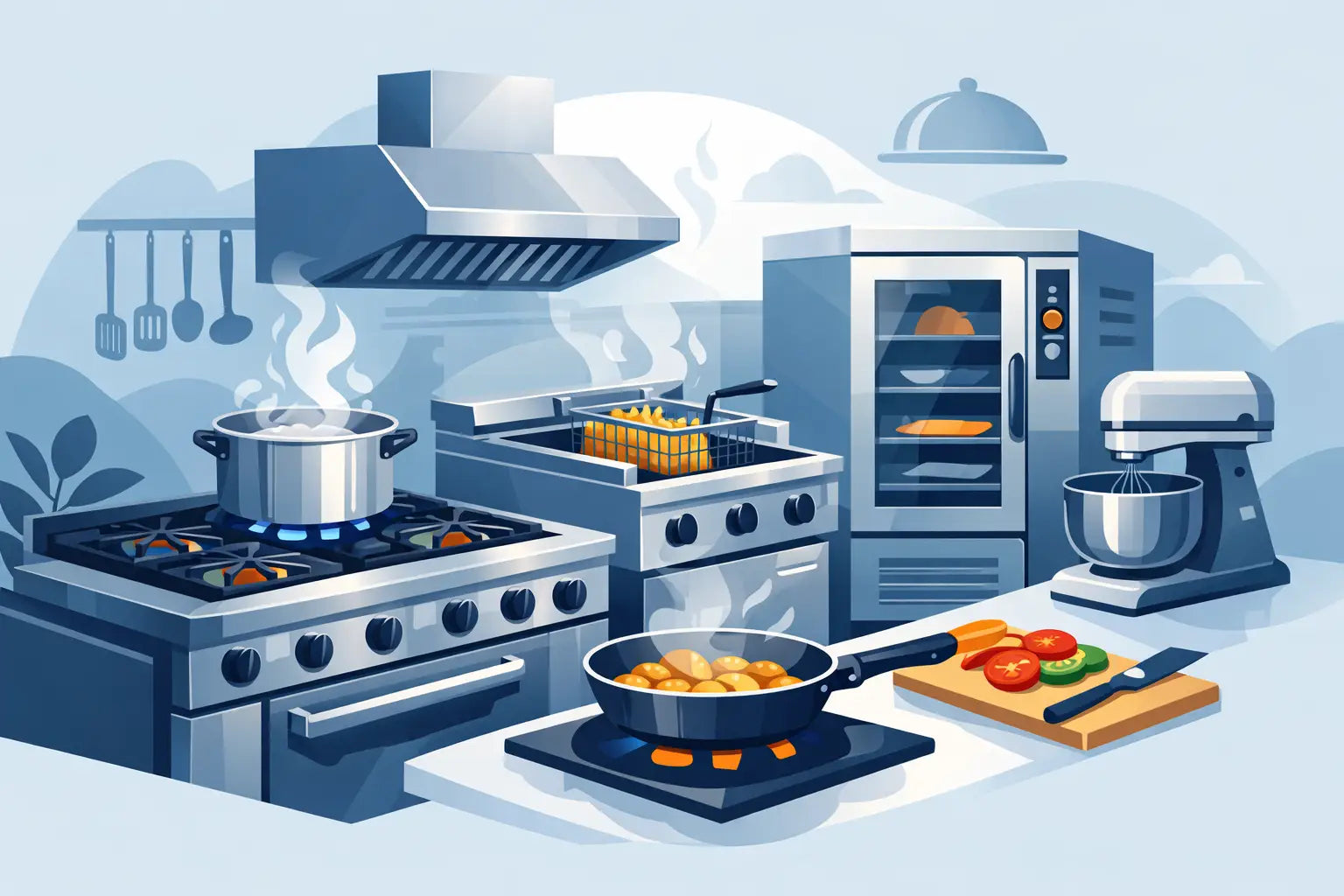
Commercial kitchens ask a lot from their equipment. Heat cycles are constant, prep volume is high, and every machine is expected to deliver consistent output under pressure. When surfaces, filters, coils, burners, gaskets, or food-contact components are not cleaned on schedule, the result is usually not subtle.
Refrigeration runs harder. Ovens heat less evenly. Mixers develop residue in hard-to-reach areas. Ice cream and beverage machines become harder to sanitize properly. In some cases, dirty equipment does more than reduce efficiency. It can create food safety risks, shorten component life, and lead to avoidable service calls.
That is why the right cleaning process should match the equipment, the frequency of use, and the kind of soil involved. A fryer with heavy oil residue needs a different approach than a stainless prep table or a blast chiller condenser coil. Precision matters.
How to clean commercial kitchen equipment without damaging it
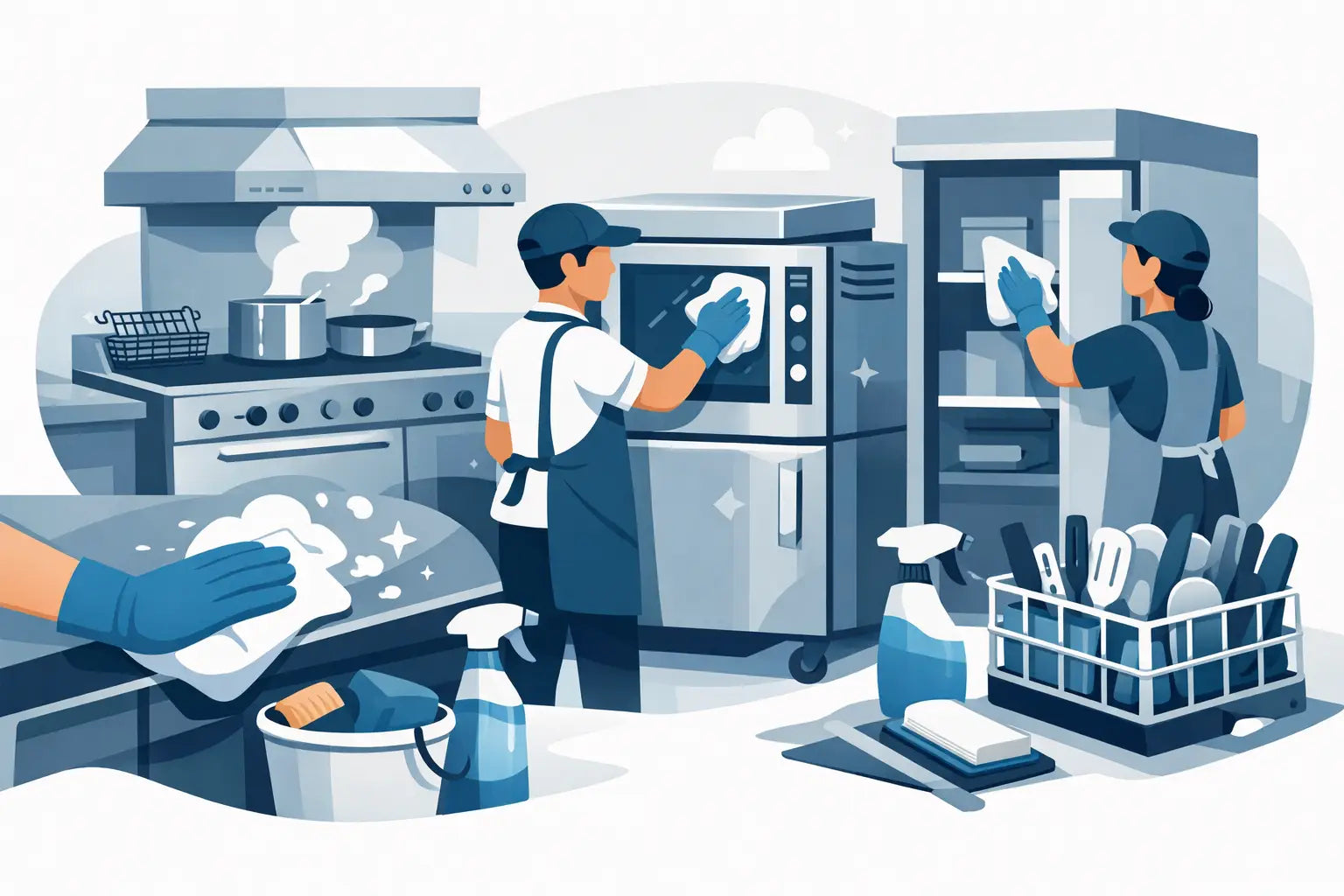
The safest approach starts before any chemical touches the machine. Always power equipment down first. If the unit uses gas, disconnect the fuel supply when appropriate. If surfaces are hot, let them cool to a safe cleaning temperature unless the manufacturer specifically calls for warm-surface cleaning.
Next, remove loose food debris and detachable parts. Trays, guards, nozzles, racks, pans, and drip components should usually be cleaned separately so the main unit can be reached more effectively. This is where many kitchens lose time later - if removable parts are skipped, residue tends to harden and create a recurring sanitation problem.
Use the cleaning product that matches the material and the mess. Degreasers work well on hoods, ranges, and charbroilers, but some chemicals are too harsh for certain finishes, gaskets, or food-contact components. Deliming products are useful for machines affected by mineral scale, including steam equipment and dish machines, but they are not general-purpose cleaners. Stainless steel cleaners can restore appearance and reduce streaking, but appearance should never come ahead of food-safe rinsing.
Soft cloths, non-abrasive pads, nylon brushes, and manufacturer-approved tools are usually the right choice. Metal scrapers and aggressive abrasives can scratch surfaces, damage protective finishes, and create more places for soil and bacteria to collect. On cooking equipment, it is tempting to attack stubborn buildup with force. That can cost more than it saves.
Cleaning by equipment category
Cooking equipment
Ranges, griddles, convection ovens, charbroilers, fryers, and pizza ovens deal with the toughest soils in the kitchen. Grease, carbon, and baked-on food all affect heat transfer. If burners are clogged or cooking chambers are coated in residue, recovery time and consistency can suffer.
For griddles and charbroilers, scrape while the surface is still manageable, then use the right cleaner for the plate or grate material. For ovens, focus on interior walls, racks, door glass, and fan areas, while keeping water away from sensitive electrical components. Fryers need scheduled boil-outs, filtered oil management, and careful cleaning around controls and heating elements. The goal is not just to make the unit look clean. It is to keep heat production predictable and safe.
Pizza ovens deserve extra attention because flour dust, cheese, and grease can accumulate quickly in high-output environments. Stone decks, conveyor belts, and crumb trays all need different handling. What works for a stainless exterior does not necessarily belong on a baking surface.
Refrigeration equipment
Reach-in refrigerators, undercounter refrigeration, prep tables, and blast freezers require a more controlled cleaning routine. Interior spills should be handled quickly to prevent odor transfer, bacterial growth, and cross-contamination. Shelves, gaskets, drain areas, and door handles should be cleaned regularly with food-safe solutions.
The less visible priority is airflow. Condenser coils and air vents collect dust and grease over time, especially in hot-line environments. When that buildup is ignored, the unit has to work harder to hold temperature. That means higher energy demand, more strain on components, and a greater chance of downtime. Coil cleaning is one of the highest-value maintenance tasks in any kitchen.
Food prep equipment
Mixers, slicers, food processors, and steamers all require detailed cleaning because they include food-contact zones, moving parts, and crevices where residue can hide. A planetary mixer bowl may be simple enough, but the attachment hub, guard, and shaft area often need more attention than operators give them.
Slicers are one of the clearest examples of why partial cleaning is not enough. Product residue can remain behind the blade, around the carriage, and in seams if the machine is not disassembled correctly. In busy kitchens, speed matters, but so does proper breakdown and sanitizing. A machine that is only wiped on the surface is not truly clean.
Beverage, frozen dessert, and specialty machines
Soft serve ice cream machines, slushy machines, and curing equipment require strict cleaning discipline because sugar, dairy, and syrup residues create ideal conditions for buildup. These machines often have seals, feed tubes, dispensing parts, and interior passages that need full disassembly and sanitizing at the proper interval.
This is one area where guessing is a bad strategy. Follow the manufacturer cleaning schedule exactly, especially for sanitizing cycles and part replacement. Over-cleaning with the wrong chemistry can wear out seals. Under-cleaning can create serious food safety issues. It depends on the machine design, product type, and daily production volume.
Build a cleaning schedule that matches real kitchen use
A strong cleaning plan separates tasks by frequency. Some surfaces should be cleaned after every use. Others belong on a daily, weekly, or monthly schedule. If everything is treated as an end-of-night job, critical maintenance often gets skipped.
Daily cleaning usually covers food-contact surfaces, spills, touchpoints, grease zones, and visible residue. Weekly cleaning should go deeper into removable components, drains, filters, and hidden buildup areas. Monthly work often includes coils, calibration checks, deliming, and deeper inspection of seals, hinges, and airflow paths.
The right schedule depends on output. A high-volume burger concept will not clean a charbroiler the same way a low-volume catering kitchen does. A soft serve machine in constant summer use needs more attention than one used only occasionally. Precision means matching the cleaning load to the production load.
Common mistakes that cost kitchens time and equipment life
The first mistake is using one cleaner for everything. Different materials and machine types require different chemistry. The second is soaking electrical or control areas during cleanup. Water intrusion can create expensive failures that have nothing to do with normal wear.
Another common problem is skipping rinse and sanitize steps. A surface can look spotless and still carry residue from detergent or food soil. That matters on any food-contact component. The final mistake is ignoring small warning signs like weak cooling, odd odors, sticky switches, or uneven heating. Those symptoms often point to a cleaning issue before they become a repair issue.
For operators investing in professional-grade equipment, cleaning should be seen as performance protection. At Culinary Precisions, that principle aligns with how serious kitchens think about every piece of equipment - not as a static purchase, but as a tool that has to deliver every shift.
Train for consistency, not just compliance
Even the best cleaning protocol fails if only one person in the kitchen knows how to do it correctly. Training should be specific to each equipment category, and staff should know what gets cleaned, when it gets cleaned, what chemical is approved, and what parts require disassembly.
Visual checklists can help, but they work best when paired with accountability and simple routines. If a closer has to guess how to clean a convection oven fan guard or a mixer attachment hub, the system is already weak. Standardized cleaning protects consistency the same way standardized prep does.
When to clean in-house and when to call for service
Most routine cleaning should stay in-house, especially for external surfaces, removable parts, food-contact zones, and scheduled daily care. But there are times when service support is the smarter choice. Severe carbon buildup, internal electrical concerns, refrigeration performance issues, or recurring drainage problems may point to a deeper maintenance need.
Cleaning can solve a lot, but it cannot fix a failing fan motor, a damaged gasket seat, or a calibration issue. The best operators know the difference between sanitation, maintenance, and repair. That judgment protects both uptime and safety.
A clean machine does more than pass inspection. It heats more evenly, cools more reliably, and supports the kind of consistency guests notice even when they never see the equipment behind the line. Treat cleaning as part of performance, and your kitchen will feel the difference where it matters most - in output, reliability, and control.