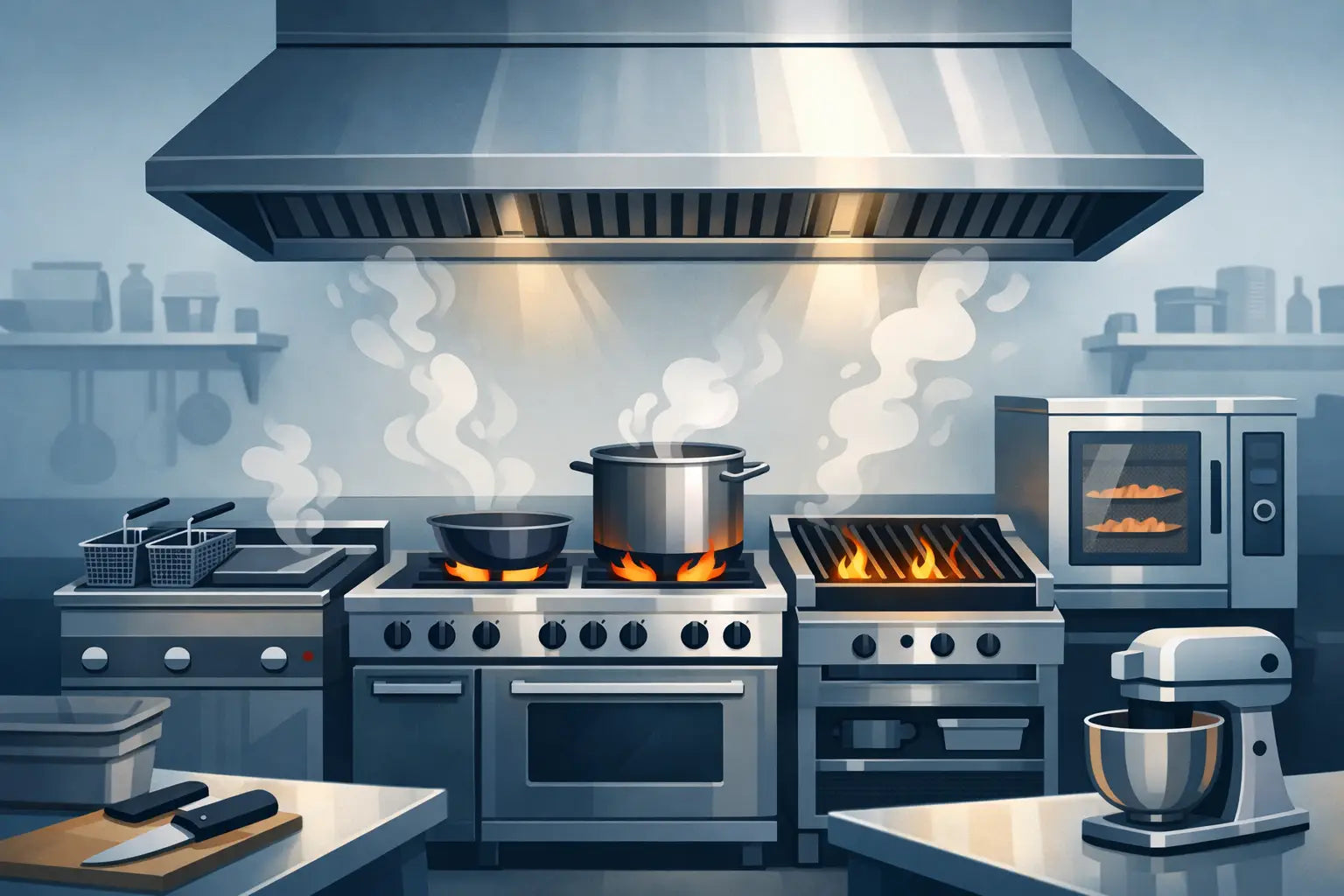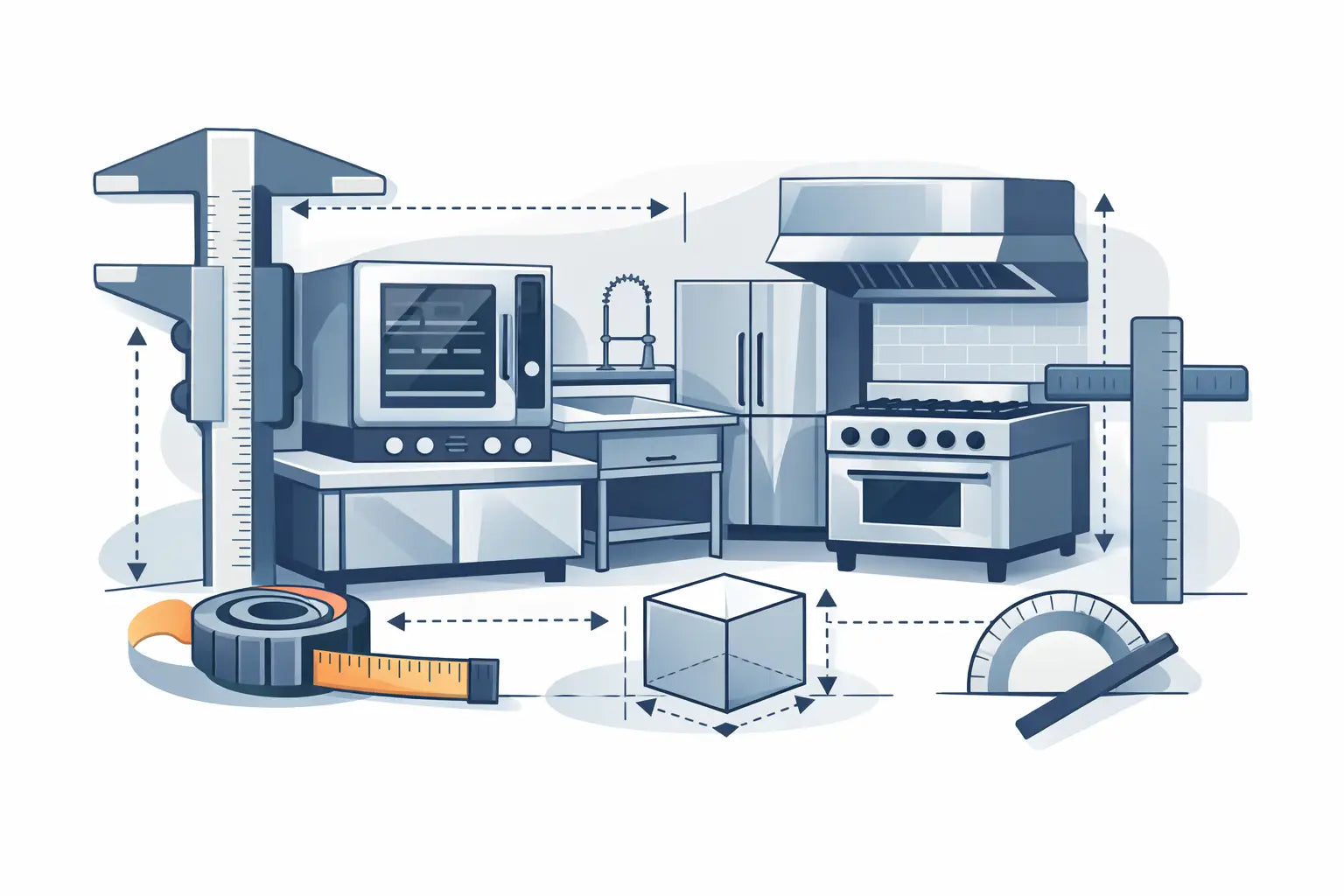
Commercial Kitchen Equipment Dimensions
A kitchen can look workable on paper and still fail the moment the equipment arrives. A range blocks a walkway, a refrigerator door collides with prep, or a convection oven technically fits the footprint but not the swing clearance. That is why commercial kitchen equipment dimensions matter so much. They do not just determine whether a unit fits. They shape speed, safety, cleaning access, ventilation planning, and how consistently your team can work under pressure.
For restaurant owners, chefs, and foodservice managers, dimensions are not a minor spec buried in a product sheet. They are operational data. When you read them correctly, you protect throughput and reduce expensive surprises. When you ignore them, even high-performance equipment can become a daily bottleneck.
How to read commercial kitchen equipment dimensions correctly
Most equipment is listed by width, depth, and height, but those three numbers rarely tell the whole story. The listed width may reflect the cabinet body while excluding side handles or utility connections. The listed depth may not include a rear splash, gas regulator, or door handle. Height may stop at the cooking surface and not account for legs, casters, or shelving.
That is why buyers should treat every dimension as a starting point, not a final answer. The real question is not, “What is the unit size?” It is, “What total operating space does this unit require?” A 36-inch griddle may occupy 36 inches of line space, but it also needs room for safe side clearance, front working space, rear utility connections, and in many cases a hood system sized to match.
This is especially important when replacing existing equipment. Operators often assume a same-category replacement will drop into place. In reality, two 48-inch refrigerators can have very different hinge clearances, compressor housings, and usable interior capacity. Precision starts with the spec sheet, but it only works when you measure the room, the path of delivery, and the active space around the unit.
Commercial kitchen equipment dimensions and workflow
Equipment sizing is never just about square footage. It affects how labor moves through the kitchen. A line that is too tight slows handoffs and raises collision risk. A prep area with oversized refrigeration can reduce the usable work surface your team depends on during peak service.
Think about dimensions in relation to task flow. Cold storage should support prep without forcing staff into repeated cross-kitchen movement. Cooking equipment should fit the production volume without overwhelming the line. Warewashing should allow enough room for dirty drop-off, clean staging, and operator movement. The right dimensions support rhythm. The wrong ones create friction that shows up in ticket times, fatigue, and cleaning lapses.
There is also a trade-off between capacity and maneuverability. Larger units can improve output and reduce batch constraints, but they can also tighten aisles or make service access more difficult. Smaller equipment may preserve mobility and flexibility, especially in compact kitchens, ghost kitchens, food trucks, and serious home setups that borrow commercial standards. The best fit depends on your menu, staff count, service style, and available utility infrastructure.
Clearance matters as much as the unit size
One of the most common buying mistakes is measuring only the footprint. In a working kitchen, clearance often matters more than the cabinet itself. Oven doors need swing space. Refrigerators need full-door opening to allow pan loading and shelf removal. Mixers need overhead room if you use bowl lifts or attachments. Dishwashers need adjacent table space and access for maintenance.
Ventilated cooking equipment adds another layer. Gas ranges, charbroilers, fryers, and convection ovens can require minimum side, rear, and top clearances depending on construction and code requirements. Those numbers are not suggestions. They affect fire safety, airflow, serviceability, and inspection readiness.
Then there is cleaning clearance. Tight placement might help you fit one more piece of equipment, but if staff cannot reach behind or beneath it, grease and debris build up fast. That directly affects sanitation and long-term equipment performance. In high-volume kitchens, cleaning access is part of operational design.
Dimensions by category: what buyers often miss
Cooking equipment
Ranges, griddles, charbroilers, and convection ovens are often chosen by width first, but depth and front clearance deserve equal attention. Many operators underestimate how much active space is needed in front of hot equipment. Staff need room to open doors, plate food, pivot safely, and move around each other during rush periods.
Pizza ovens bring another sizing issue. Exterior dimensions can look manageable, but the real decision should include deck size, loading zone, and ventilation requirements. If your oven supports volume but chokes the line around it, the added capacity may not translate into faster service.
Refrigeration and freezers
Reach-ins, undercounter units, and prep tables require close attention to door swing, ventilation, and compressor placement. Rear-breathing units need wall clearance. Front-breathing designs may fit tighter spaces, but they still need room for service access and airflow.
Undercounter refrigeration is a good example of where nominal size can mislead buyers. A unit may fit beneath a counter line by width and height, but if the door cannot open fully or the ventilation is blocked, performance drops. Temperature consistency depends on more than the cold box itself.
Prep and mixing equipment
Food mixers, slicers, prep tables, and worktables can seem easier to size because they do not always require hoods or gas connections. Even so, operating dimensions matter. A planetary mixer needs room for ingredient loading, bowl movement, and attachment changes. A worktable needs enough surrounding space to keep traffic moving while preserving safe knife work and plating.
In smaller kitchens, this is where multifunctional thinking pays off. A compact prep table with refrigerated storage below can save space, but only if it does not compromise aisle width or prep comfort.
Warewashing equipment
Dish machines are rarely just one box. Their total functional footprint includes soiled dish landing areas, clean dish exit space, chemical storage, and operator clearance. A dishwasher that physically fits can still be the wrong size if the surrounding workflow collapses.
Low-temp and high-temp units may also differ in utility planning and adjacent space needs. If your operation handles steady volume, dimensional planning around warewashing can be the difference between a clean closing routine and a nightly backup.
Why utility and delivery dimensions matter
The best equipment choice can still fail if it cannot get through the door or connect properly once installed. Before buying, measure entry doors, hallways, turns, elevator access if applicable, and final placement points. Include packaging dimensions when available, not just the assembled unit.
Utility locations matter just as much. Gas, electric, water, and drain lines affect whether a unit can sit where the floor plan suggests. A piece of equipment may technically fit a gap but require utility modifications that add cost and delay. That does not always make it the wrong purchase, but it changes the real installation picture.
Casters, legs, and leveling also deserve attention. Slight height differences can interfere with counter alignment, drain slope, or ergonomic comfort. In kitchens built for speed, small dimensional mismatches tend to become daily irritations.
A smarter way to size equipment before you buy
Start with the menu and production goal, not the product catalog. If you know your peak volume, batch size, and service style, you can size equipment around actual demand instead of guesswork. From there, map the space using real dimensions that include clearance, door swing, operator movement, and cleaning access.
It helps to break decisions into three questions. First, can the equipment fit physically? Second, can it operate safely and efficiently in that location? Third, will it support the output your kitchen needs without restricting workflow elsewhere? If the answer to any one of those is no, the dimension is wrong even if the spec sheet says it fits.
This is where a performance-focused supplier can make a real difference. Brands like Culinary Precisions serve buyers who need more than broad category access. They need specification-driven equipment choices that align with throughput, safety, and long-term reliability.
The strongest kitchen layouts are rarely the ones packed with the most steel. They are the ones where every inch earns its place, every door opens cleanly, and every station supports the pace of service. When you treat dimensions as a performance decision instead of a shipping detail, you build a kitchen that works harder for you from day one.