What Commercial Kitchen Equipment Requires a Hood?
A kitchen layout can look efficient on paper and still fail inspection because one key detail was missed: ventilation. If you are asking what commercial kitchen equipment requires a hood, the real answer starts with what the equipment produces - grease, smoke, steam, heat, or combustion byproducts. The hood is not just a box above the cookline. It is a core safety and performance system that protects staff, supports air quality, and keeps your operation aligned with code.
For restaurant owners, chefs, and foodservice managers, this matters early in the buying process. The wrong assumption can lead to expensive redesigns, delayed openings, or equipment that cannot legally be operated where you planned to install it.
What commercial kitchen equipment requires a hood?
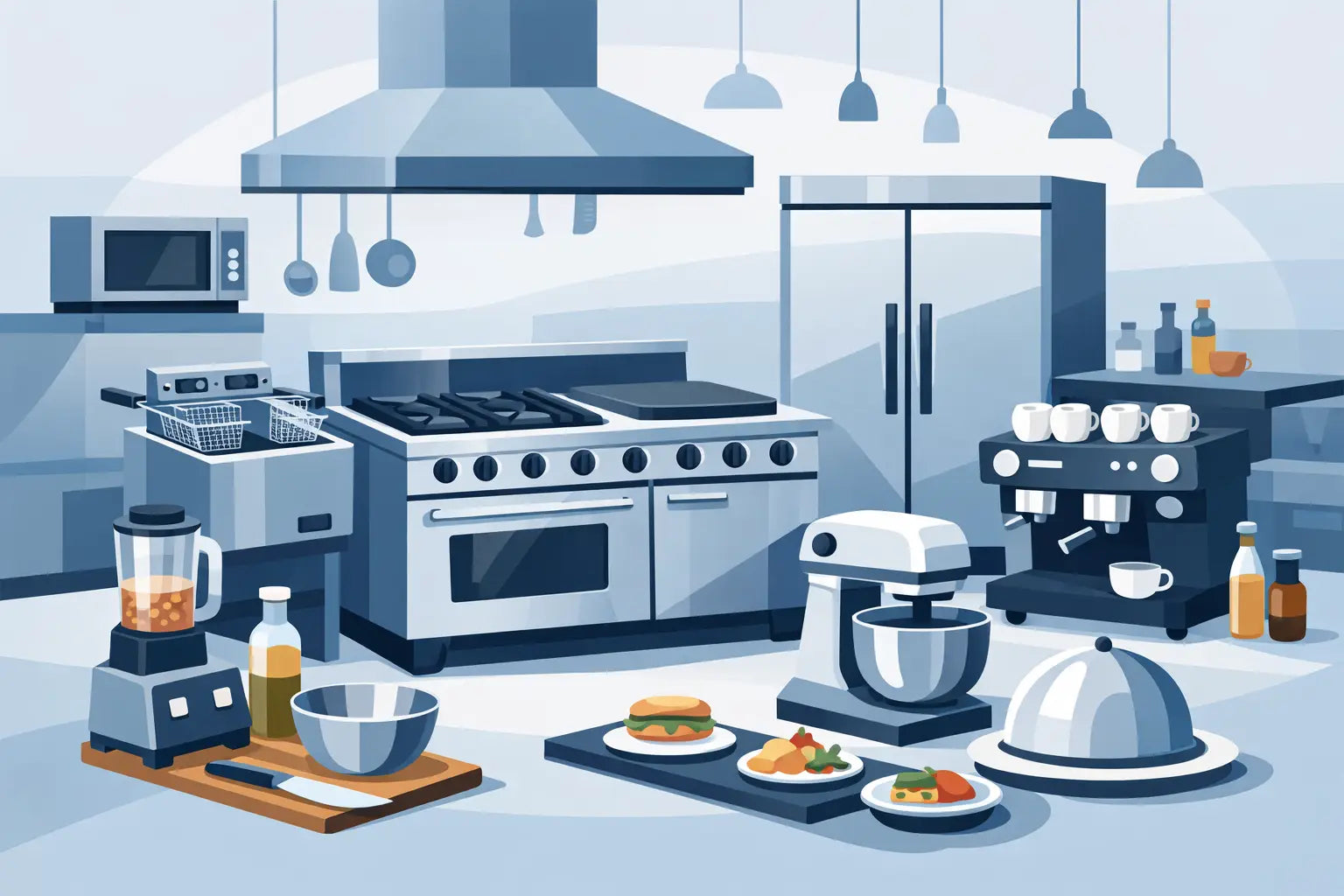
In most commercial settings, equipment that produces grease-laden vapor, smoke, significant heat, or flue gases requires a hood. That usually includes fryers, griddles, charbroilers, gas ranges, wok ranges, conveyor ovens, deck ovens, many countertop hot lines, and some combi or convection ovens depending on how they are powered and listed.
The principle is straightforward. If equipment cooks with open heat, burns gas, or creates airborne byproducts that can affect fire safety or indoor air quality, a hood is typically required. In practice, local code, manufacturer instructions, and the equipment listing decide the final answer.
That last part matters. Two pieces of equipment that seem similar can have different ventilation requirements because of how they are constructed, tested, and certified. One ventless oven may be approved for operation without a traditional hood, while a standard convection oven beside it may still need one.
The two hood categories you need to know
Commercial kitchens generally deal with two main hood types: Type I and Type II. Understanding the difference helps you avoid overbuying or underplanning.
Type I hoods
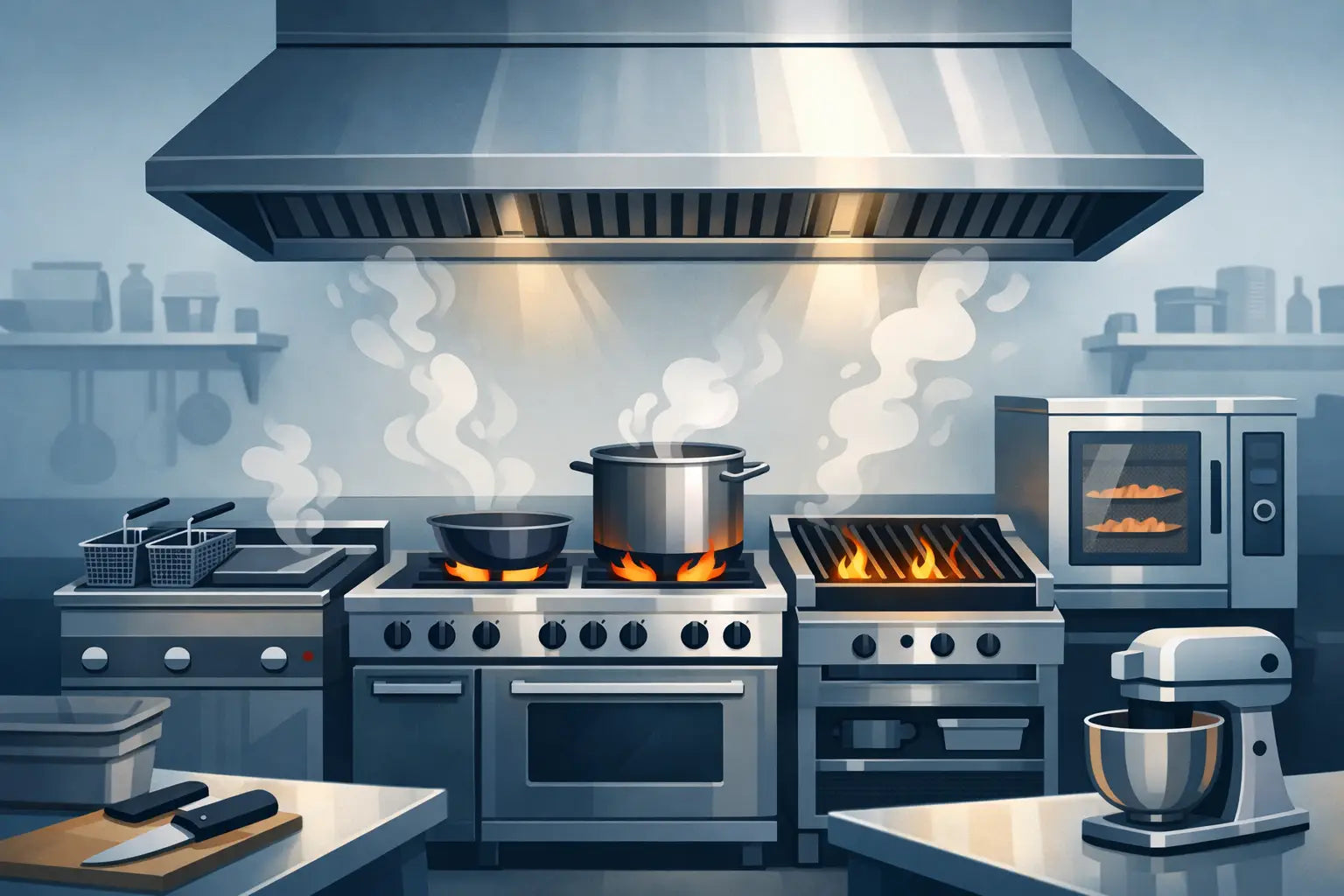
Type I hoods are used over equipment that produces grease or smoke. These hoods are built for fire protection and are usually paired with grease filters and a fire suppression system. If you are installing fryers, charbroilers, griddles, broilers, or ranges used for grease-producing cooking, this is the category that usually applies.
This is the hood most operators think of when they picture a classic cookline. It is designed to capture grease-laden vapors before they spread through the kitchen or ductwork.
Type II hoods
Type II hoods are for heat, steam, and odors, not grease. These are often used over dishwashers, steam kettles, pasta cookers, or some ovens and holding equipment when grease is not part of the equation. A Type II hood does not replace a Type I hood where grease-producing cooking is involved.
That distinction is where many equipment plans go wrong. Steam and heat still require ventilation in many cases, but not every heat source creates the same fire risk.
Equipment that usually requires a hood
The safest starting point is to assume that most hot-line cooking equipment will need ventilation unless it is specifically listed as ventless or your authority having jurisdiction says otherwise.
Fryers are almost always under a Type I hood because they generate grease vapor and carry a clear fire risk. Griddles and flat-top grills also typically need a Type I hood, especially in higher-volume kitchens where grease output is continuous.
Charbroilers and salamanders are strong candidates for hood requirements because they create smoke, grease, and intense heat. Gas ranges and stock pot ranges often require a hood as well, particularly when used in commercial production rather than light-duty warming.
Many pizza ovens need ventilation, but not all in the same way. A gas deck oven, conveyor oven, or high-output pizza oven may require a hood due to heat and combustion products. Some electric countertop models may have different requirements. This is one of the most common it-depends categories, especially for pizzerias, ghost kitchens, and serious home setups trying to bridge into commercial performance.
Combi ovens, convection ovens, and rotisserie ovens also vary. Some produce enough grease, humidity, or heat to require a hood. Others are designed and listed for ventless operation with integrated filtration systems. You cannot judge this by size alone.
Equipment that may not require a hood
Not every piece of commercial kitchen equipment needs a hood. Refrigerators, freezers, blast chillers, prep tables, mixers, slicers, and cold-side equipment generally do not. They do not produce grease vapor, smoke, or combustion gases during normal operation.
Some electric countertop appliances may also avoid hood requirements, depending on use and listing. A ventless rapid-cook oven, certain high-speed ovens, and some enclosed electric equipment are common examples. But ventless does not mean code-free. It means the equipment has been engineered and certified to control emissions in a specific way.
Holding cabinets and food warmers are another gray area. Some are fine without a hood, while others may require Type II ventilation if they generate enough heat or moisture. Commercial dishwashers often fall into the same category. The machine itself may not produce grease, but it can release a large amount of steam, which affects comfort, visibility, and building conditions.
Why the answer is not always simple
If you want the most accurate answer to what commercial kitchen equipment requires a hood, look at three things together: the local code, the equipment manufacturer's installation instructions, and the listing on the equipment itself.
Local code is the enforcement layer. Your city, county, or state may follow national standards closely, or it may add stricter local rules. The authority having jurisdiction has the final say during plan review and inspection.
Manufacturer instructions matter because they are part of the approved installation. If a unit is listed for use under a hood only, that is not a suggestion. If a ventless unit requires specific clearance, filtration maintenance, or room conditions, those details matter too.
The equipment listing is where performance claims are backed up. A unit marketed casually as suitable for small spaces is not the same as a unit tested and listed for ventless commercial use.
Fuel type changes the conversation
Gas equipment usually triggers more ventilation scrutiny than electric equipment because it adds combustion byproducts to the kitchen environment. Even when grease production is limited, gas-fired appliances may still require exhaust to remove heat and flue gases.
Electric equipment can reduce ventilation demands in some applications, but it is not automatically hood-free. An electric griddle still produces grease vapor. An electric pizza oven can still throw off heat that affects the space. The power source helps define the requirement, but the cooking process matters just as much.
For operators working in tight urban footprints, kiosks, food halls, or retrofit spaces, this is where careful equipment selection pays off. Choosing listed ventless electric equipment in the right categories can expand layout options, but only if the menu and production level fit the machine.
Common mistakes that cost operators time and money
One common mistake is assuming small equipment does not need a hood. Countertop fryers, compact griddles, and smaller broilers still produce the same types of byproducts as their larger counterparts. Size does not erase the ventilation requirement.
Another mistake is assuming a residential-style setup will pass in a commercial environment. It usually will not. Commercial code focuses on sustained production, fire safety, and worker exposure, not occasional home use.
The third mistake is buying equipment first and asking about the hood later. That approach often leads to change orders, utility revisions, or discovering that your landlord, building engineer, or local inspector will not approve the installation as planned.
How to plan your equipment line the right way
Start with the menu. The hood requirement follows the actual cooking process more than the marketing category. If your kitchen will fry, sear, broil, char, or cook with open gas heat, plan for a hood from the start.
Next, verify each appliance individually. Review the spec sheet, installation manual, utility requirements, and listing details. If the unit is ventless, confirm exactly what that means for your jurisdiction and your use case.
Then look at the kitchen as a system. A hood is not only about capturing exhaust. You also need makeup air, clearances, duct routing, fire suppression, and enough room for safe operation and service access. Strong equipment performance depends on the environment around it.
This is why experienced buyers do not treat ventilation as an afterthought. At Culinary Precisions, equipment decisions are strongest when they support the full reality of production, safety, and code from day one.
If you are building or upgrading a kitchen, the best question is not just whether a hood is required. It is whether your equipment package, menu, and space are aligned well enough to perform under pressure without forcing compromises later. That is the kind of precision that keeps a kitchen moving.