What Is Commercial Cooking Equipment?
A busy kitchen exposes weak equipment fast. Burners recover too slowly, ovens bake unevenly, refrigeration struggles during peak hours, and prep backs up when a mixer or slicer cannot keep pace. That is why the question what is commercial cooking equipment matters beyond definitions. It is really a question about performance, reliability, and whether your kitchen can produce consistent results under pressure.
What Is Commercial Cooking Equipment?
Commercial cooking equipment is professional-grade kitchen equipment designed for high-volume food production, repeated daily use, and stricter safety and sanitation requirements than standard residential appliances. It includes the machines and cooking systems used in restaurants, bakeries, pizzerias, hotels, catering operations, concession businesses, institutional kitchens, and other foodservice environments.
In practical terms, this equipment is built to do three things well. It has to maintain output during long service hours, deliver consistent cooking results from batch to batch, and hold up to demanding cleaning and operating routines. A residential range may be enough for occasional entertaining. A commercial gas range, convection oven, charbroiler, or steamer is engineered for a kitchen that cannot afford downtime in the middle of service.
That distinction matters for serious home cooks too. Many buyers are not running a full restaurant, but they still want faster recovery times, more precise temperature control, larger capacity, and tougher construction. In those cases, commercial equipment appeals because it brings professional standards into a private kitchen or outdoor cooking setup.
How Commercial Equipment Differs From Residential Appliances
The biggest difference is not appearance. It is workload.
Commercial units are built for frequency and pressure. They often use heavier-gauge stainless steel, stronger burners, larger compressors, more durable hinges, and controls designed for repeated use. They are also made with serviceability in mind, since kitchen operators need equipment that can be cleaned, maintained, and returned to operation without unnecessary delay.
Performance is another major divide. A commercial convection oven is expected to circulate heat consistently across full loads. A food warmer must hold product in the safe temperature zone during active service. A blast freezer is designed to pull temperatures down quickly to protect quality and food safety. These are not just convenience upgrades. They affect ticket times, waste levels, labor flow, and customer experience.
There is also a compliance factor. Many commercial kitchens need equipment that aligns with health, ventilation, fire safety, and local code requirements. That means the right unit is not always the biggest or most powerful. It has to fit the actual operating environment.
The Main Categories of Commercial Cooking Equipment
When people ask what is commercial cooking equipment, they are usually thinking about stoves and ovens. That is part of the picture, but not the full system.
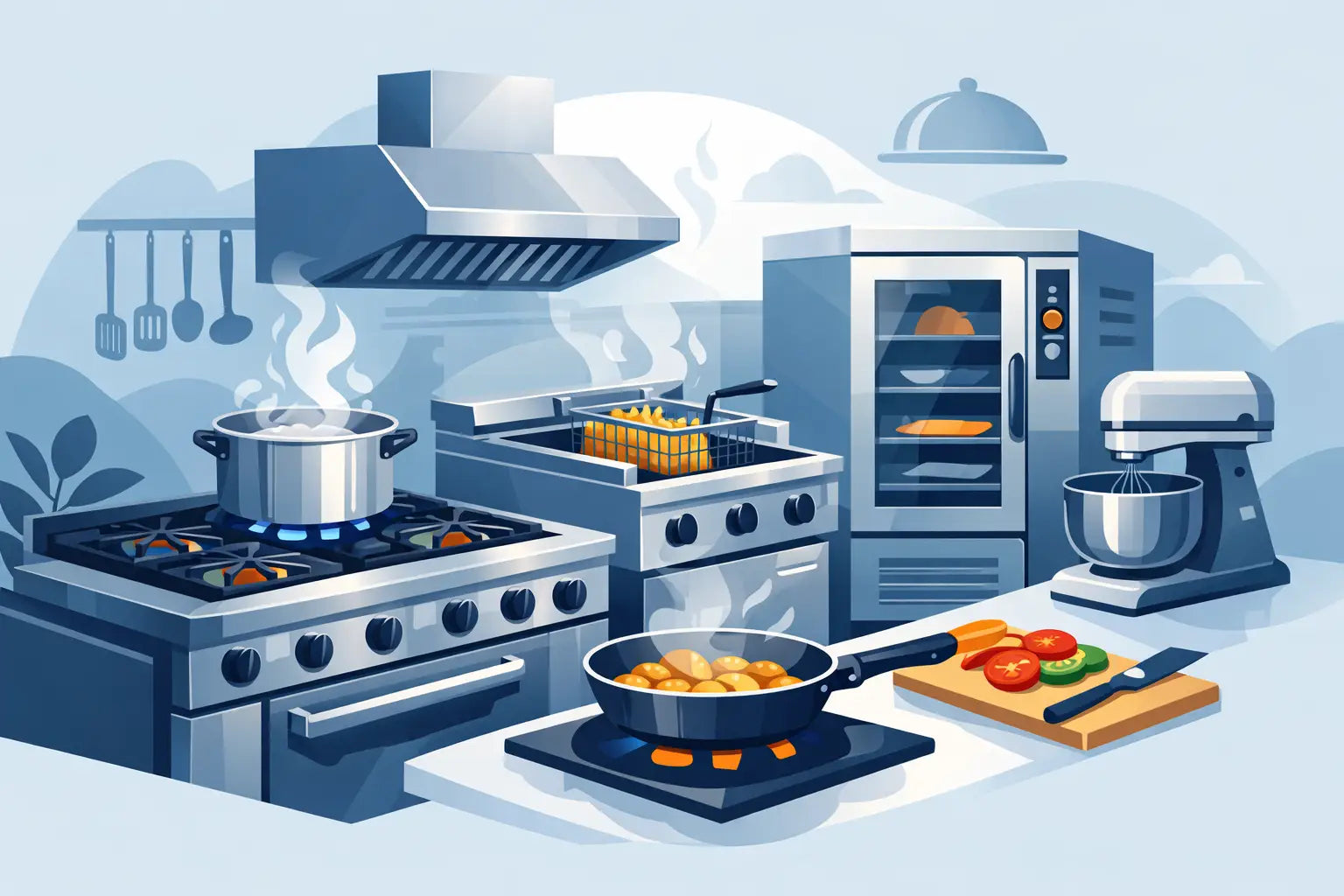
Cooking equipment includes gas ranges and stoves, convection ovens, pizza ovens, grills, charbroilers, steamers, and specialty machines built for specific menus. These are the core heat-producing tools that turn ingredients into finished dishes.
Refrigeration and cold-side equipment are just as important. Commercial refrigerators, undercounter refrigeration, prep tables, and blast freezers protect ingredients, support station efficiency, and reduce spoilage. Without reliable cold storage, even the best cookline will struggle.
Then there is holding, prep, and support equipment. Food warmers, mixers, dish washers, slushy machines, curing machines, and soft serve machines all play a role in production flow. Some kitchens also depend on outdoor kitchen equipment for high-volume event cooking or expanded service formats.
The right lineup depends on menu, volume, footprint, and service style. A pizzeria prioritizes deck or conveyor ovens, dough handling, and refrigeration differently than a steakhouse or café. A ghost kitchen may favor compact, high-output units that maximize every inch. A serious home pizza enthusiast may invest in a commercial-style oven for heat performance but not need a full restaurant cookline.
Why Professional Kitchens Rely on It
Commercial cooking equipment earns its place when speed, consistency, and safety directly affect revenue.
Speed matters because every delay compounds during service. If a range takes too long to recover heat or an oven cannot maintain even temperatures, the bottleneck shows up on the plate. Commercial units are built to keep pace when the order board fills up.
Consistency matters because food quality has to hold from the first ticket to the last. Customers notice when one pizza is blistered perfectly and the next comes out pale, or when one batch of baked goods rises properly and the next does not. Professional equipment reduces that variability through stronger heat control, better airflow, and capacity designed for repetition.
Safety matters because foodservice operations work inside strict standards. Reliable refrigeration, accurate holding temperatures, fast cooling, and cleanable surfaces all support safer handling and easier compliance. That is not just about inspections. It protects product quality and customer trust.
Durability matters because replacement cycles and downtime are expensive. Equipment that fails under daily strain costs more than its purchase price suggests. Repairs interrupt service, create labor inefficiency, and may force menu changes at the worst possible time.
It Depends on Your Kitchen, Not Just Your Budget
One common mistake is treating commercial equipment as a simple upgrade path where more power always means a better result. In reality, the right choice depends on what your kitchen is trying to do.
A compact operation may need undercounter refrigeration and a smaller convection oven to preserve workflow in limited space. A high-volume burger concept may prioritize griddle area, holding capability, and ventilation compatibility over specialty equipment. A bakery may invest more in mixers and proofing support than in open-flame cooking. A home user with serious culinary goals may want one standout commercial appliance instead of trying to recreate a full restaurant line.
Utility access also shapes the decision. Gas, electric, and ventilation requirements can change what is practical. Capacity should match real production, not aspirational volume. Oversizing can waste energy and floor space, while undersizing creates service problems and shortens equipment life.
That is why specification-driven buying matters. Dimensions, output, recovery time, temperature range, storage volume, and cleaning needs all deserve attention before purchase.
What to Look for When Buying Commercial Cooking Equipment
Construction quality should come first. Stainless steel bodies, sturdy grates, commercial-duty motors, and well-built door hardware usually signal equipment meant for long-term use. You are not just buying a feature set. You are buying repeatability under stress.
After that, focus on fit. The best unit is the one that supports your menu and daily workflow without creating new bottlenecks. A large oven that slows movement in a tight kitchen may hurt more than it helps. The same goes for a high-capacity refrigerator that sacrifices prep access or line visibility.
Temperature performance is another nonnegotiable. Look for equipment that can hold, recover, or reduce temperature reliably based on its role. Precision is not marketing language in a professional kitchen. It is the difference between predictable output and avoidable waste.
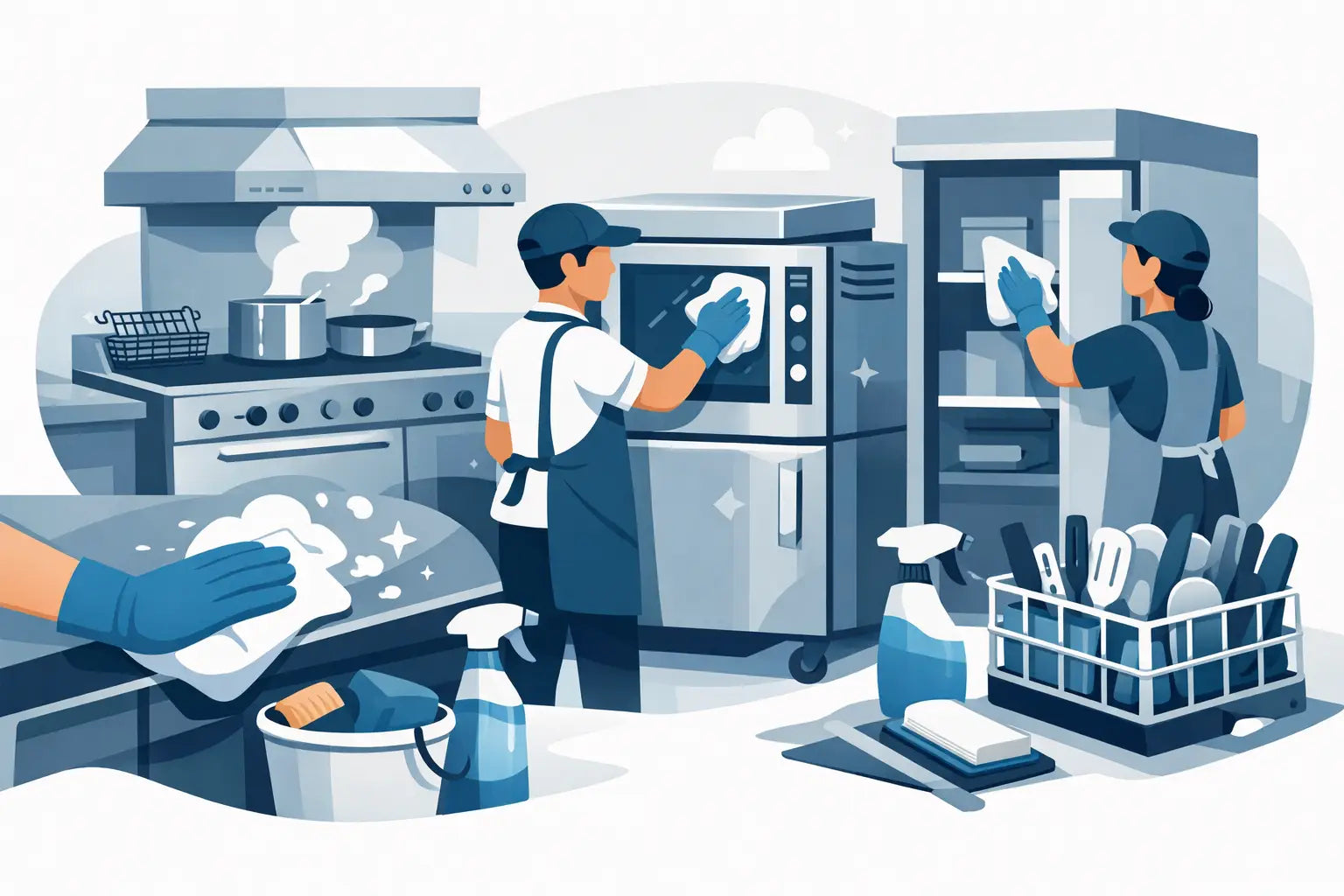
Ease of cleaning should not be overlooked. Smooth surfaces, removable components, and accessible interiors save labor and support sanitation standards. In a busy operation, cleaning efficiency has real operational value.
Finally, think beyond the machine itself. Availability, support access, shipping terms, and buying confidence all matter when you are investing in equipment that your kitchen depends on. Culinary Precisions serves this market because buyers want broad category coverage and dependable access to performance-focused equipment without the friction of a traditional dealer process.
Is Commercial Cooking Equipment Worth It for Serious Home Cooks?
Sometimes yes, sometimes no.
If you cook frequently, entertain at scale, make pizza at high temperatures, process larger batches, or want restaurant-level consistency, commercial-grade equipment can be a smart investment. It often offers better durability, more capacity, and stronger thermal performance than residential alternatives.
But there are trade-offs. Commercial equipment can require more space, more power, more ventilation, and a different cleaning routine. It may also prioritize function over convenience features common in residential appliances. For many home users, the best move is selective adoption - choosing a commercial pizza oven, mixer, refrigeration unit, or outdoor cooker that solves a clear performance need.
The goal is not to make a home kitchen feel industrial. It is to improve results where household equipment starts to fall short.
Why the Definition Matters
Asking what is commercial cooking equipment is really asking what level of performance your kitchen requires. If your operation depends on speed, precision, food safety, and consistent output, the answer usually points toward equipment built for professional demands rather than occasional use.
The best equipment does more than cook. It protects workflow, supports quality, and gives your team the confidence to produce at a high level every day. Choose with your menu, space, and volume in mind, and your kitchen will work harder without feeling harder to run.