Restaurant Refrigerators That Perform Under Pressure
A refrigerator failure during Friday dinner service is not a minor inconvenience. It can put thousands of dollars in ingredients, prep work, and food safety compliance at risk. The right restaurant refrigerators do more than keep food cold: they protect product quality, support faster line execution, and give your team dependable capacity when the kitchen is under pressure.
For a restaurant, café, catering operation, bar, or high-output home kitchen, refrigeration should be selected around the way food actually moves through the space. Capacity matters, but so do door style, workflow, temperature recovery, footprint, and the demands your menu places on every shelf.
Start With the Job the Refrigerator Must Do
A commercial refrigerator is not a one-size-fits-all purchase. A reach-in unit used for bulk produce and proteins has a different role than an undercounter refrigerator holding mise en place on the cook line. The best configuration is the one that reduces unnecessary steps while giving products the stable, food-safe environment they require.
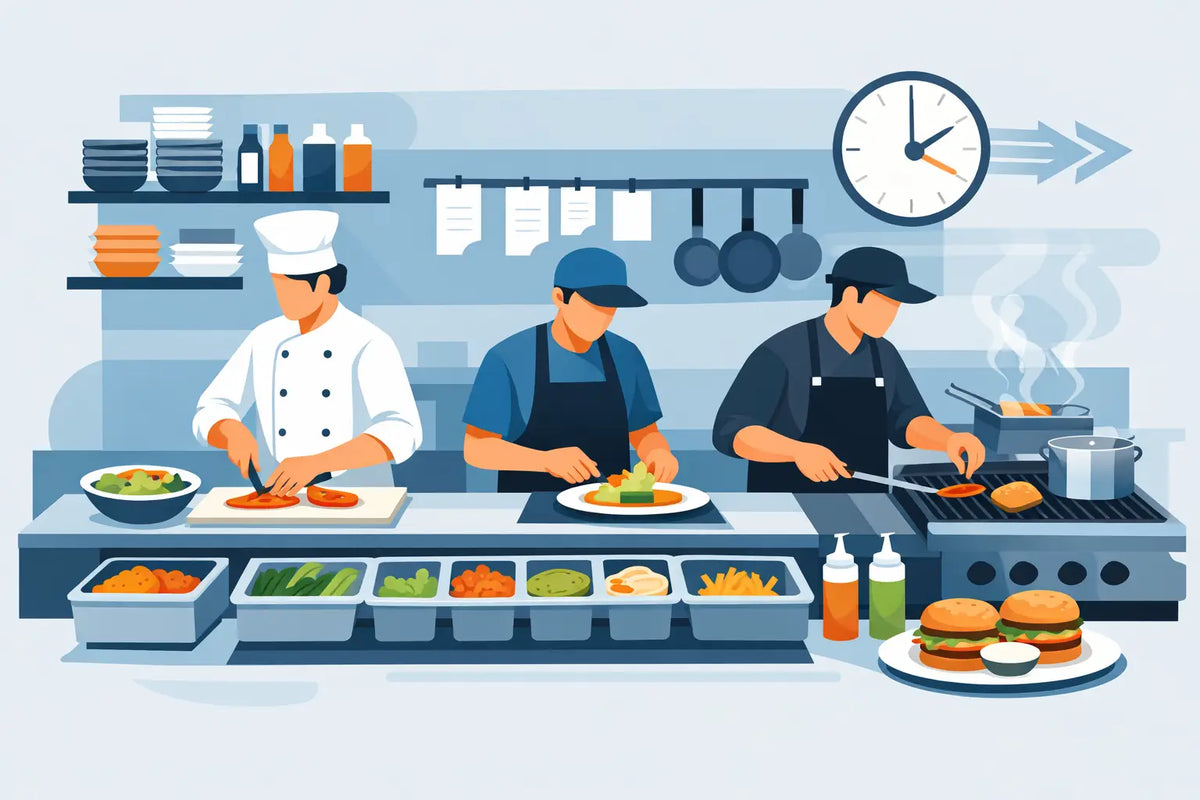
Begin by looking at where ingredients enter, where they are prepped, and where they are cooked or served. A walk-in may handle primary storage, but reach-in refrigerators can keep high-turn items organized and accessible near prep. Undercounter units place pans, garnishes, dairy, sauces, and proteins directly beneath the work surface, reducing trips across the kitchen during service.
For operators without a walk-in, larger reach-in models often become the backbone of cold storage. In that case, usable cubic capacity is only part of the decision. Shelf layout, pan compatibility, door clearance, and interior visibility affect whether the unit remains organized once deliveries, prep containers, and service backups start filling it.
Choose Restaurant Refrigerators by Configuration
Each refrigerator format solves a different operational problem. Matching the format to the task can improve speed without crowding the kitchen.
Reach-In Refrigerators for Core Storage
Reach-in refrigerators are a practical choice for back-of-house storage, prep areas, bakeries, delis, and operations with frequent access to a broad mix of ingredients. One-door units suit tighter spaces or lower-volume needs. Two- and three-door models provide more capacity and can help separate proteins, produce, dairy, and ready-to-eat foods.
Solid doors generally support better insulation and are well suited to storage-heavy applications. Glass doors offer immediate product visibility, which can be valuable for beverage programs, grab-and-go displays, or high-turn ingredients. The trade-off is that glass-door models may invite more frequent browsing and door openings, so placement and staff habits matter.
Undercounter Refrigeration for Faster Stations
Undercounter refrigerators make sense when every movement on the line counts. They create cold storage below a prep table, plating area, bar, or service counter without adding another vertical obstacle to the room. For compact kitchens, that combination of workspace and refrigeration can be especially valuable.
Consider the equipment positioned above the unit. A refrigerated base beneath a sandwich prep surface, pizza station, or general worktop should support the pan depth, cutting board arrangement, and ingredient volume your team uses through peak periods. A shallow cabinet that looks efficient on paper can become a bottleneck if it cannot hold enough backup product for the rush.
Prep Tables for Assembly-Driven Menus
Sandwich, pizza, salad, and deli operations benefit from refrigerated prep tables designed to keep ingredients accessible in food pans at the point of assembly. The value is not simply cold storage. It is the ability to maintain a clean, repeatable station where the crew can build orders quickly and replenish product with minimal disruption.
Look beyond the top rail. The refrigerated base should hold backup pans, sauces, proteins, and prepped components in a logical order. A prep table that matches your menu flow can reduce ticket times and help maintain portion consistency during the busiest hour of service.
Capacity Is About Product Flow, Not Just Cubic Feet
It is tempting to buy the largest refrigerator that will fit through the door. More storage can be helpful, but oversized equipment can consume valuable floor space, increase energy use, and encourage poor rotation if product disappears in the back of the cabinet.
Instead, estimate what needs to be stored at one time, including delivery-day inventory, prepped food, backup service product, and containers that need space around them for airflow. Then account for your delivery schedule. A kitchen receiving produce and proteins six days a week may need less reserve capacity than one receiving two larger deliveries.
Do not plan to pack every shelf tightly. Refrigerated air needs room to circulate. Overloading a cabinet can create warm zones, slow temperature recovery, and make it harder for staff to see what needs to be used first. A well-sized refrigerator gives you enough capacity to organize food safely rather than stack it wherever it fits.
Protect Food Safety With Temperature Recovery and Organization
Commercial refrigeration must hold safe temperatures, but its ability to recover after repeated door openings is just as important in a busy kitchen. During prep and service, doors open constantly. Warm product is added, pans are pulled, and staff may leave a door ajar while looking for an item. Equipment built for commercial use is designed to handle more demanding cycles than residential models, but no refrigerator can perform at its best when it is overloaded, poorly maintained, or placed in a punishing environment.
Set clear internal zones for raw proteins, ready-to-eat food, dairy, produce, sauces, and allergens. Store raw proteins below ready-to-eat items to reduce cross-contamination risk. Use labeled containers, date marking, and first-in, first-out rotation so your team can identify product quickly instead of holding the door open while searching.
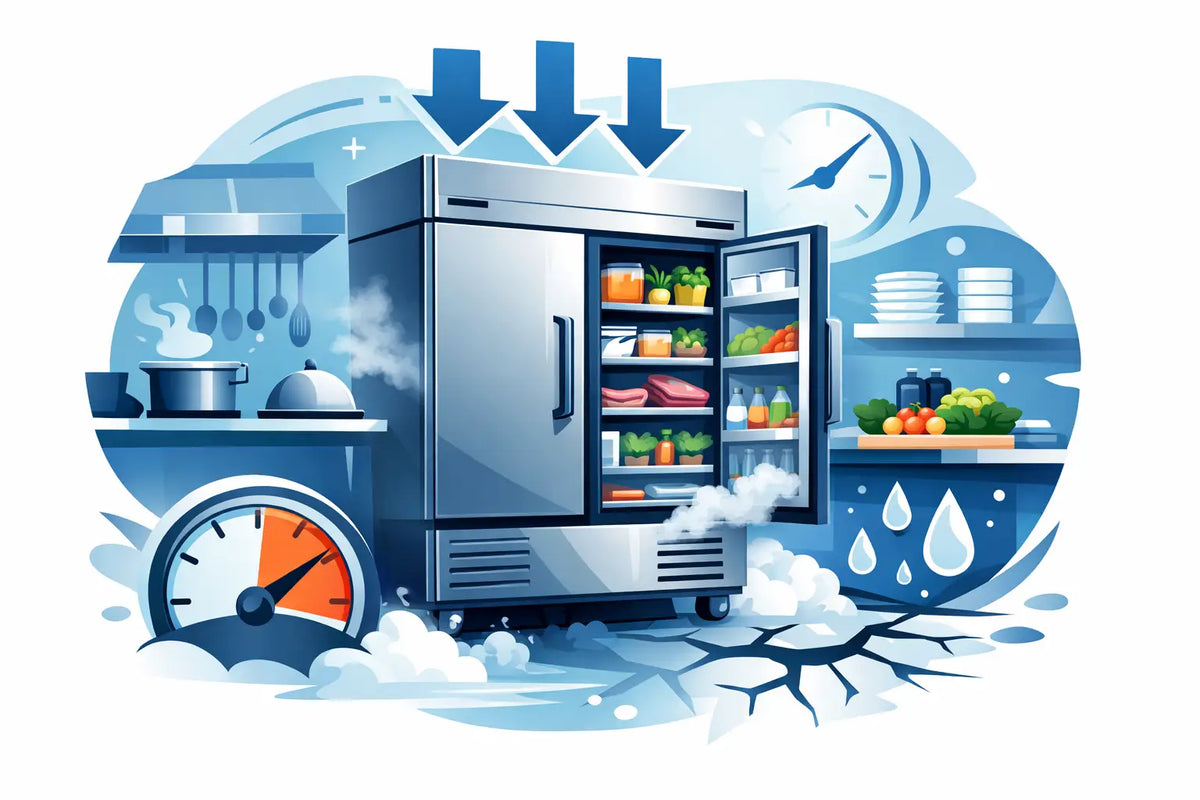
Temperature monitoring should be routine, not a response to a problem. Check and record cabinet temperatures according to your food safety plan, and train staff to report unusual noises, frost buildup, pooling water, or temperature swings immediately. Those signals can point to a blocked condenser, damaged gasket, airflow problem, or service need before inventory is compromised.
Measure the Space Before You Choose
A refrigerator that fits the floor plan can still fail the installation test. Measure the equipment footprint, door swing, ceiling height, delivery path, narrow hallways, and the clearance needed for ventilation and maintenance. Also confirm the electrical requirements and the location of the outlet before the unit arrives.
Pay close attention to where heat-producing equipment sits. Positioning refrigeration beside ovens, ranges, charbroilers, or dish machines can force the system to work harder, particularly in a compact kitchen. Sometimes a small change to the layout protects performance and lowers long-term strain on the compressor.
Caster-equipped units can simplify cleaning and service access, while legs may provide a stable, code-friendly option depending on the application. Either way, the unit needs enough room for staff to clean beneath, behind, and around it. Neglected dust and grease around condenser components can reduce efficiency and shorten equipment life.
Look Beyond the Purchase Price
The lowest initial price is not always the lowest operating cost. Restaurant refrigerators work continuously, so construction quality, insulation, door gaskets, compressor performance, and serviceability all influence the value you receive over time. A dependable unit can help limit product loss, prevent disruption, and support a more predictable kitchen operation.
Prioritize features that serve your actual workflow. Digital temperature displays can make daily checks easier. Self-closing doors help prevent energy loss during busy shifts. Adjustable shelves improve organization as menus change. Stainless steel exteriors are favored in commercial settings because they stand up to frequent cleaning and daily wear.
Warranty coverage and access to support also deserve attention. Refrigeration is mission-critical equipment. When an issue occurs, clear documentation, available parts, and qualified service options can matter more than an extra shelf or a cosmetic feature.
Build a Refrigeration Plan That Can Keep Up
The best refrigeration setup is rarely a single oversized cabinet. It is often a coordinated mix of cold storage where it is needed most: dependable bulk storage in the back, organized prep refrigeration near production, and accessible ingredient holding at the line or bar.
Before ordering, walk your kitchen during a busy period and watch where employees pause, cross paths, or leave stations to retrieve product. Those moments reveal where refrigeration is helping the operation and where it is costing time. Culinary Precisions helps serious operators choose professional equipment around capacity, performance, and the demands of real service.
Choose refrigeration that gives your crew room to work cleanly, move quickly, and protect every ingredient from delivery through final plate. When the rush arrives, reliable cold storage should be the part of the kitchen no one has to think about.