Charbroiler vs Griddle: Which Fits Your Line?
A busy service makes the charbroiler vs griddle decision feel immediate. One surface lays down dark grill marks and open-flame aroma; the other produces an even, edge-to-edge crust on burgers, eggs, sandwiches, and breakfast staples. Both earn their footprint on a commercial line, but they create different food, require different workflows, and place different demands on ventilation, cleaning, and labor.
The right choice begins with the menu you intend to repeat hundreds of times, not the image of the kitchen you want to build. A charbroiler brings live-fire character and visible craft. A griddle brings speed, consistency, and a broad, forgiving work surface. For many operations, the strongest answer is not either-or, but sequence: choose the surface that carries the heaviest volume first, then add the other when the menu and hood capacity support it.
Charbroiler vs Griddle: The Core Difference
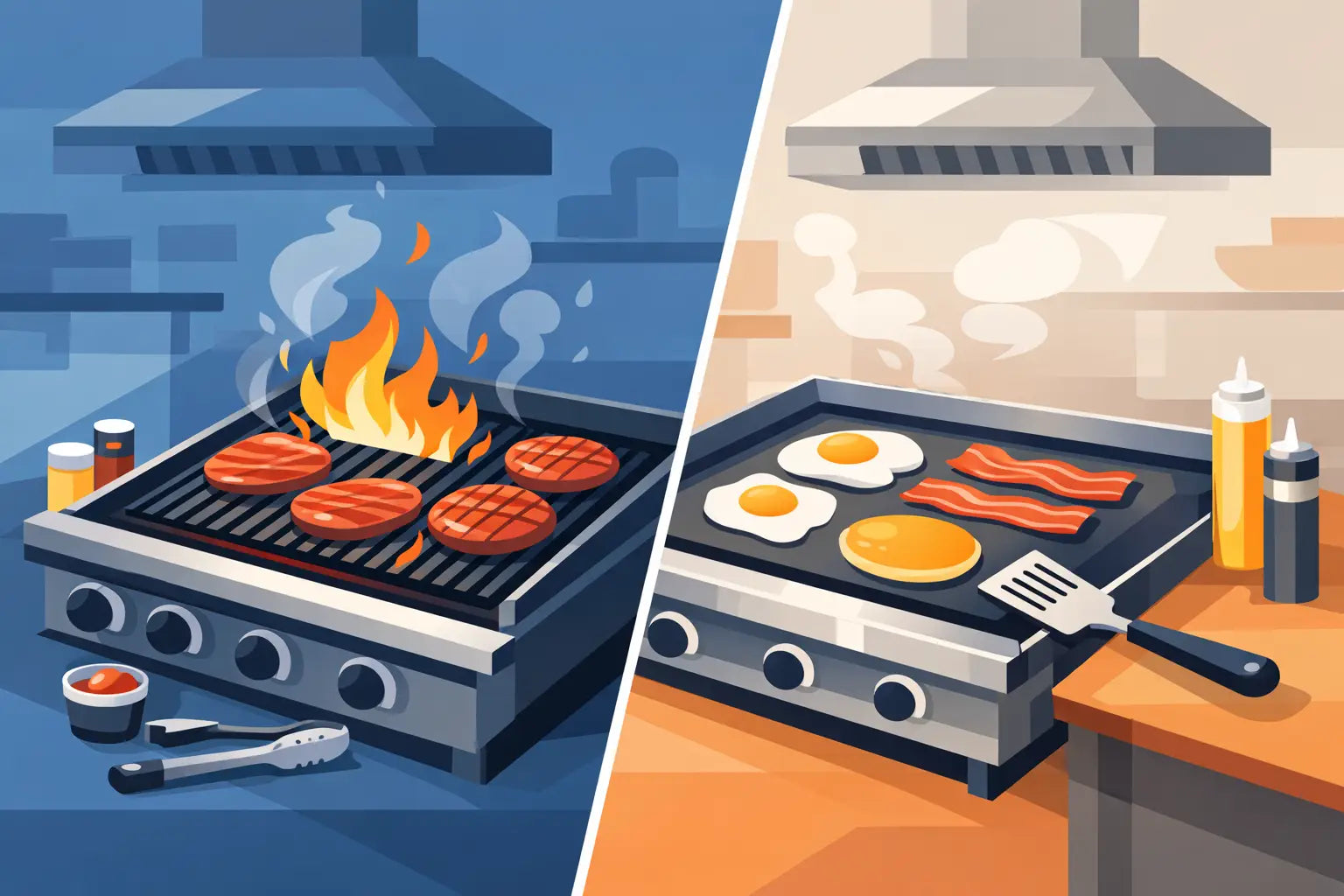
A charbroiler cooks over radiant heat from gas burners, electric elements, or heated briquettes positioned below grates. Fat and juices fall toward the heat source, creating smoke and flare-ups that contribute to the familiar grilled flavor. Food contacts narrow metal bars rather than a solid plate, so heat is intense but less continuous across the product.
A griddle cooks on a solid, smooth steel plate heated from below. The food remains in direct contact with the surface, where rendered fat, seasoning, and moisture help build browning. Its heat is steadier and its usable cooking area is nearly uninterrupted, making it especially effective for high-volume production and foods that need a flat, stable surface.
That distinction affects much more than appearance. It determines how quickly an operator can turn tickets, how much seasoning and fat remain with the food, what cleanup looks like after service, and whether a station supports delicate breakfast work as comfortably as a hard sear.
Choose a Charbroiler for Fire-Kissed Flavor
A charbroiler is built for menus where grill character is part of the promise. Steaks, chicken breasts, chops, kebabs, burgers, fish fillets, vegetables, and certain fruit preparations take on the visual and aromatic signals guests associate with open-flame cooking. The grate marks are not merely decorative. The hotter, concentrated contact points and vaporized drippings create a flavor profile that a flat surface cannot exactly duplicate.
This makes charbroilers a natural fit for steakhouses, burger concepts, sports bars, hotel kitchens, outdoor dining programs, and chef-driven restaurants where grilling is visible in the menu language. For an outdoor kitchen, a commercial-grade charbroiler can also become the center of the gathering: direct heat, a substantial grate, and food that moves from flame to platter with little ceremony.
There are practical trade-offs. Grates have gaps, so small or fragile items need a basket, plancha, pan, or other support. Marinades high in sugar can burn quickly. Lean proteins can stick if the grates are not properly preheated, brushed, and seasoned. Flare-ups require an attentive cook who knows when to move product rather than fight the fire.
Charbroilers also create more grease, smoke, and heat in the immediate cooking zone. Verify hood performance, fire suppression requirements, local code, and clearances before selecting a unit. A beautiful grill station should feel like controlled fireside craftwork, not a source of service-time surprises.
What to look for in a charbroiler
Consider the width and grate configuration first. A 24-inch unit may suit a focused menu or satellite station, while 36- and 48-inch models offer meaningful capacity for a central grill line. Heavier cast-iron grates retain heat well and produce distinct marks; angled or reversible grates can help manage fat drainage and product positioning.
Also compare burner output, heat zones, and the radiant system beneath the grates. Lava rock, ceramic briquettes, and metal radiants each influence heat distribution, recovery, cleanup, and the way drippings interact with the flame. The best setup depends on the food you cook, the pace of service, and how much hands-on grill management your team can sustain.
Choose a Griddle for Volume and Versatility
A griddle is one of the most productive square inches on a commercial cooking line. It can handle pancakes at breakfast, burgers at lunch, cheesesteaks and pressed sandwiches through the afternoon, then salmon, vegetables, or tortillas at dinner. The solid plate gives cooks room to stage, turn, assemble, and hold short runs of product without navigating around grates.
For burger programs, the griddle often has a decisive advantage. It captures rendered beef fat beneath the patty, encouraging a deeply browned crust and a juicy interior. Smash burgers, diner-style burgers, chopped steak, onions, bacon, and fried eggs all benefit from that direct contact. A charbroiler makes a different, compelling burger - leaner in surface fat, marked by flame and smoke - but it does not deliver the same griddled crust.
Griddles are equally strong for breakfast, where eggs, hash browns, French toast, and pancakes demand even contact. They are useful for operators who need menu flexibility without filling the line with specialized equipment. A well-sized plate with independent heat zones allows one side to run hot for searing while another stays moderate for buns, eggs, or gentle holding.
The trade-off is flavor identity. A griddle browns beautifully, but it does not provide the open-grate char or smoke aroma of a charbroiler. Grease management matters, too. The plate must be scraped regularly, and the grease trough and drawer need disciplined attention. During high-volume service, an overcrowded griddle can steam food rather than sear it, so space and temperature recovery still matter.
Plate thickness, zones, and recovery
When comparing griddles, plate thickness deserves close attention. A heavier plate stores more heat and resists sharp temperature drops when cold product lands on the surface. That stability is valuable for burger volume, breakfast rushes, and any menu that depends on consistent browning.
Independent thermostat controls or heat zones improve rhythm on the line. They let the cook create distinct working areas rather than heating the whole plate to one compromise temperature. Gas griddles offer responsive, familiar heat for many kitchens; electric units can provide precise control and may suit locations where gas is unavailable or where the utility plan favors electric equipment.
Match the Equipment to Your Menu and Service Pattern
The useful question is not which surface is better in the abstract. Ask which item drives your sales, which ticket times create pressure, and what culinary signature guests should recognize.
A breakfast-and-lunch cafe usually benefits from a griddle as its primary surface. Its menu moves through eggs, pancakes, bacon, burgers, melts, and vegetables with minimal interruption. A steakhouse, grilled-chicken concept, or restaurant built around flame-roasted proteins will usually prioritize a charbroiler, even if a smaller griddle supports sides and finishing work.
Fast-casual burger operators should consider their desired burger style before anything else. If the product is a thin, crisp-edged smash burger, start with a griddle. If the menu sells grill marks, smoky aroma, and thicker patties cooked over radiant heat, a charbroiler better supports the promise. Caterers may value the griddle's range and production efficiency, while outdoor hosts may choose a charbroiler because the act of grilling is part of the hospitality.
If your menu relies on both breakfast volume and grilled dinner proteins, separate stations can protect quality and speed. Do not expect one surface to imitate the other perfectly. Equipment works best when its strengths are allowed to remain distinct.
Space, Utilities, and Cleaning Change the Calculation
Before choosing a width, measure more than the opening on the cook line. Account for landing space, refrigerated prep, utensil storage, traffic flow, access to the grease drawer, and clearance for cleaning. A cooking surface that technically fits but interrupts movement will cost time every service.
Fuel type, gas capacity, electrical requirements, and ventilation should be confirmed early. Charbroilers generally impose a heavier ventilation and grease-management burden because of smoke, radiant heat, and flare potential. Griddles still require proper hood coverage and daily grease handling, but their cooking environment is typically more contained.
Cleaning routines should shape the purchase as much as output ratings. Charbroiler grates need brushing and seasoning, while radiants or briquettes require periodic attention to grease and debris. Griddles require scraping during service, a thorough end-of-day cleaning process, and correct plate conditioning. Neither is maintenance-free. The more clearly the routine fits your team's habits, the more consistently the equipment will perform.
The Better Investment Is the One Your Team Can Repeat
Choose a charbroiler when flame, grill marks, and a distinctive grilled profile are central to the plate. Choose a griddle when your operation needs broad menu coverage, direct-contact browning, and fast, organized production. Size it for peak demand rather than a quiet Tuesday, but avoid buying excess surface that your hood, labor plan, or menu cannot justify.
Culinary Precisions approaches these decisions as line design, not just equipment selection. The goal is a cooking surface that holds its temperature, supports the hands working around it, and makes every plate feel intentional. When the rush begins, the best choice is the one that lets your team cook with control and send food out with the character your guests came for.