Commercial Gas Range Buying Guide for Busy Kitchens
The range is where a kitchen finds its rhythm. It carries the first hard sear of service, the quiet reduction between tickets, and the final pan sauce that leaves the pass. This commercial gas range buying guide is designed to help you choose a heatline that suits the food you make, the volume you serve, and the physical realities of your kitchen.
A commercial range is not simply a bank of burners. Its burner layout, oven base, gas demand, construction, and recovery speed shape how cooks move through a shift. The right model gives the line room to breathe. The wrong one creates bottlenecks, uneven results, and costly compromises that become obvious only when every burner is occupied.
Start With the Work, Not the Spec Sheet
Before comparing BTUs or widths, look at what actually happens during your busiest 30 minutes. A neighborhood bistro turning out sautés, a high-volume breakfast concept, and a catering kitchen may all use gas ranges, but their demands are fundamentally different.
Consider which pans live on the range, how many cooks need access at once, and whether the oven below will carry meaningful production. A menu built around delicate fish, sauces, and shallow pans benefits from responsive open burners and manageable flame control. A steakhouse may need the concentrated output of powerful burners, while a bakery-café might value a dependable standard oven more than maximum top-fire capacity.
Also account for the equipment surrounding the range. A range should support a deliberate station, not consume it. Placement beside a refrigerated prep table can shorten the journey from mise en place to pan. Landing space for hot pans, sauce pots, and sheet trays matters just as much. Measure your available lineal footage, but also protect the movement of people, doors, and oven handles.
Commercial Gas Range Buying Guide: Choose the Right Format
Commercial gas ranges are commonly available in 24-, 36-, 48-, and 60-inch widths, with configurations that vary substantially within each footprint. More burners are useful only when your hood capacity, cook staff, and menu can use them.
Open burners for flexible pan work
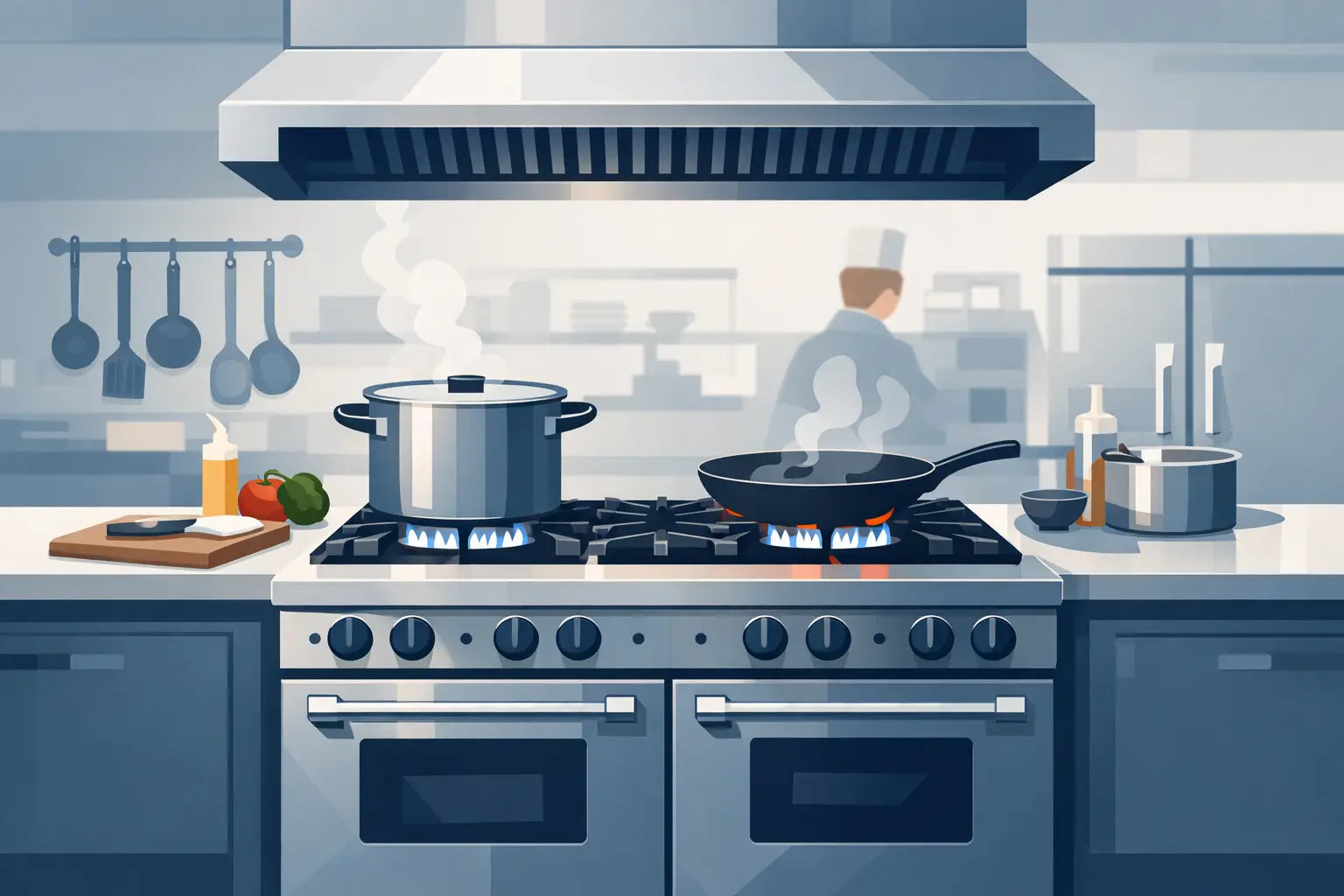
Open-burner ranges are the familiar workhorses of the professional line. Individual grates support sauté pans, stockpots, rondeaus, and smaller vessels while allowing a cook to move quickly between zones of different heat. They are a strong fit for restaurants with varied menus and frequent à la carte cooking.
Burner output often ranges from roughly 25,000 to 35,000 BTU per burner, though specifications vary by manufacturer and model. Higher output can shorten recovery when cold food hits a pan, but it is not automatically better. Very high heat demands disciplined cooks, suitable cookware, and adequate ventilation. For sauce-heavy or low-and-slow work, precise control and grate design may be more valuable than peak BTU figures.
Hot tops for steady, heavy cookware
A hot top uses a solid, heated surface rather than individual open grates. It is especially useful for stockpots, braises, and operations where pans stay in position for extended periods. The surface creates graduated heat zones, allowing pots to simmer at the perimeter while more active cooking happens over the center.
The trade-off is speed and flexibility. Hot tops take longer to respond than open burners and are less convenient when cooks need to toss pans or switch vessels constantly. They earn their place in kitchens built around production cooking, soups, sauces, and long service windows.
French tops for controlled, multi-zone cooking
French tops use a heavy steel plate, typically heated from the center outward, to create a refined field of temperature zones. They are prized in chef-driven kitchens for nuanced sauce work, gentle holding, and controlled pan cooking. A French top rewards technique and can make a compact range feel remarkably versatile.
It also requires a different style of cooking. The surface holds heat, so it is less immediate than an open burner when you need to sharply change a pan's temperature. For a brigade accustomed to working the plate, that thermal mass is an asset. For a fast-turning line with less specialized training, open burners may be the more practical choice.
Griddle combinations and specialty sections
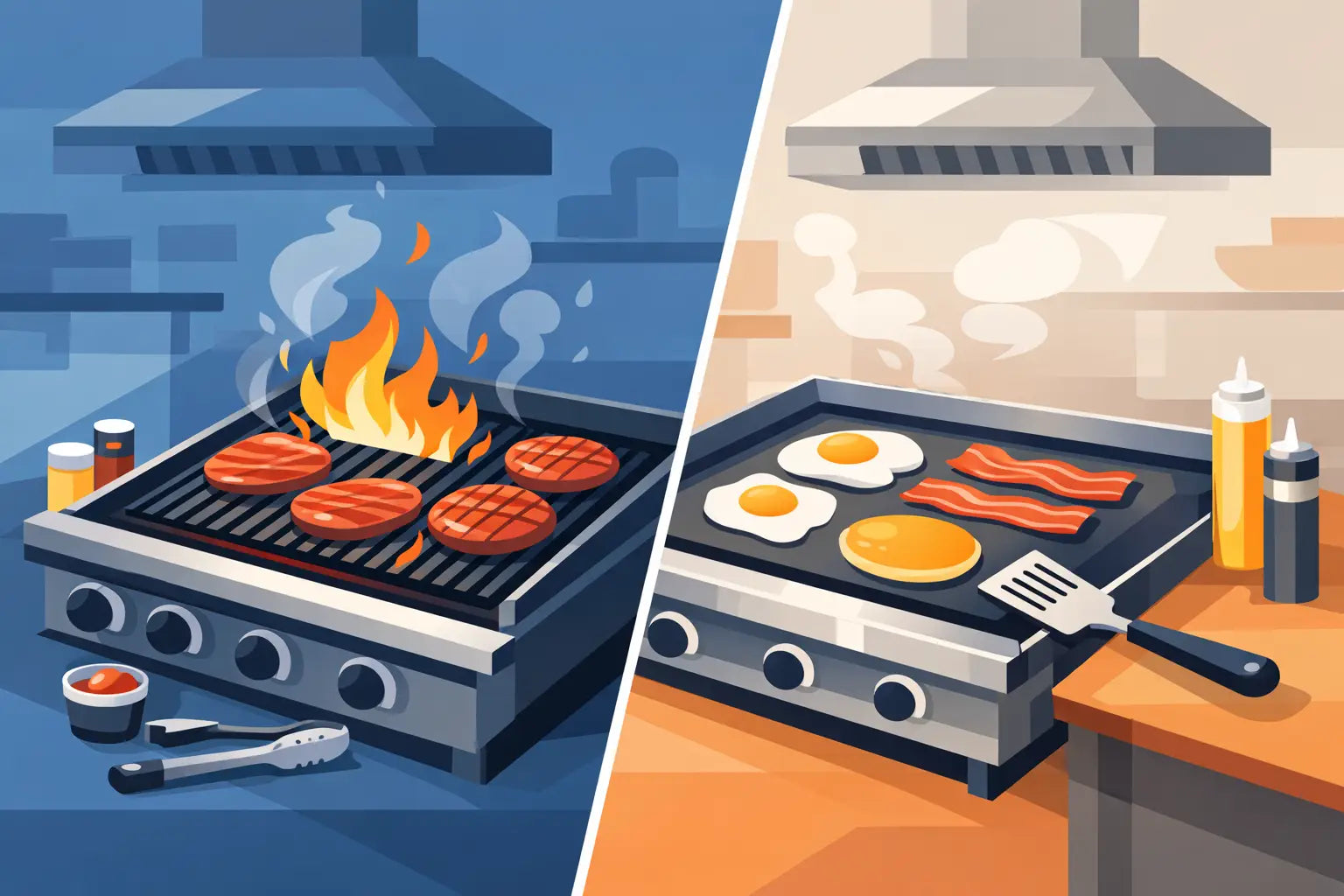
Some ranges integrate a griddle, charbroiler, or other specialty top alongside burners. This can be an efficient use of a constrained footprint, particularly in breakfast concepts, diners, bars, and compact open kitchens. A combination range can keep a cook anchored at one station rather than crossing the line for every egg, burger, or sauce pan.
Be realistic about simultaneous use. A built-in griddle can be ideal when it supports a core menu item, but it cannot offer the same surface area as a dedicated countertop or floor-model griddle. The best configuration is the one that protects your highest-volume cooking task without weakening the rest of the line.
Treat BTU Output as a Workflow Decision
BTU ratings are useful, but they should be read in context. They describe potential heat input, not automatic cooking performance. Burner design, grate height, flame pattern, cookware, and the cook's technique all influence what happens in the pan.
For high-volume sautéing, stir-frying, or fast recovery after repeated pan drops, greater burner output can protect ticket times. For a small wine bar serving composed plates, moderate burners may offer more usable control while reducing unnecessary gas consumption and heat load in the room.
Think beyond the top burners as well. A range with six 30,000-BTU burners has a very different fuel requirement than a compact four-burner model. Confirm the total BTU load against the gas service available to the building. An undersized gas line can leave an otherwise excellent range performing below its potential when the entire battery is firing.
Decide Whether the Oven Base Will Carry Production
The oven under the range is often treated as a bonus, then asked to do too much. Determine whether it will be used for finishing, roasting, holding, baking, or daily batch production. That answer should guide your choice between a standard oven, convection oven, storage base, or an open cabinet.
A standard oven is dependable for roasting, baking, and general utility. It suits kitchens that need traditional radiant heat and a simple, durable platform. A convection oven circulates hot air for more even browning and faster cooking, which can be valuable for sheet-pan work, roasted vegetables, and high-turnover finishing. The fan can be less desirable for fragile items or applications where a still oven environment matters.
If you already have dedicated ovens elsewhere on the line, a storage base may be the smarter use of space. It keeps frequently used pans close to the station and can reduce the cost and complexity of the range. Conversely, relying on a range oven for major volume in a busy operation may create a conflict: cooks need access to the oven while the stovetop remains crowded with active pans.
Verify Utilities, Ventilation, and Clearances Early
A range purchase should never be separated from installation planning. Confirm whether your site uses natural gas or liquid propane, and ensure the selected unit is configured for that fuel or can be properly converted according to manufacturer requirements. Verify the gas connection size, manifold pressure, total load, and shutoff location with a qualified installer.
Ventilation is equally central. Gas ranges produce heat, combustion byproducts, moisture, and grease-laden vapors from cooking. Your hood system must be sized and configured for the equipment and cooking process beneath it. Local codes, fire suppression requirements, makeup air, and authority having jurisdiction all affect what is permissible. A beautiful range that overwhelms the existing hood is not a finished solution.
Check finished dimensions, including legs, backsplash, oven-door swing, and required side and rear clearances. Specify whether the kitchen needs casters for service access, and remember that mobile equipment may require a restraining device and flexible gas connection. These details are practical, but they protect both safety and the long-term serviceability of the line.
Look Closely at Construction and Cleanability
Commercial ranges live through heat cycles, spills, impacts, and constant cleaning. Stainless steel exterior panels, sturdy cast-iron grates, well-fitted controls, and accessible burner components all matter over years of service.
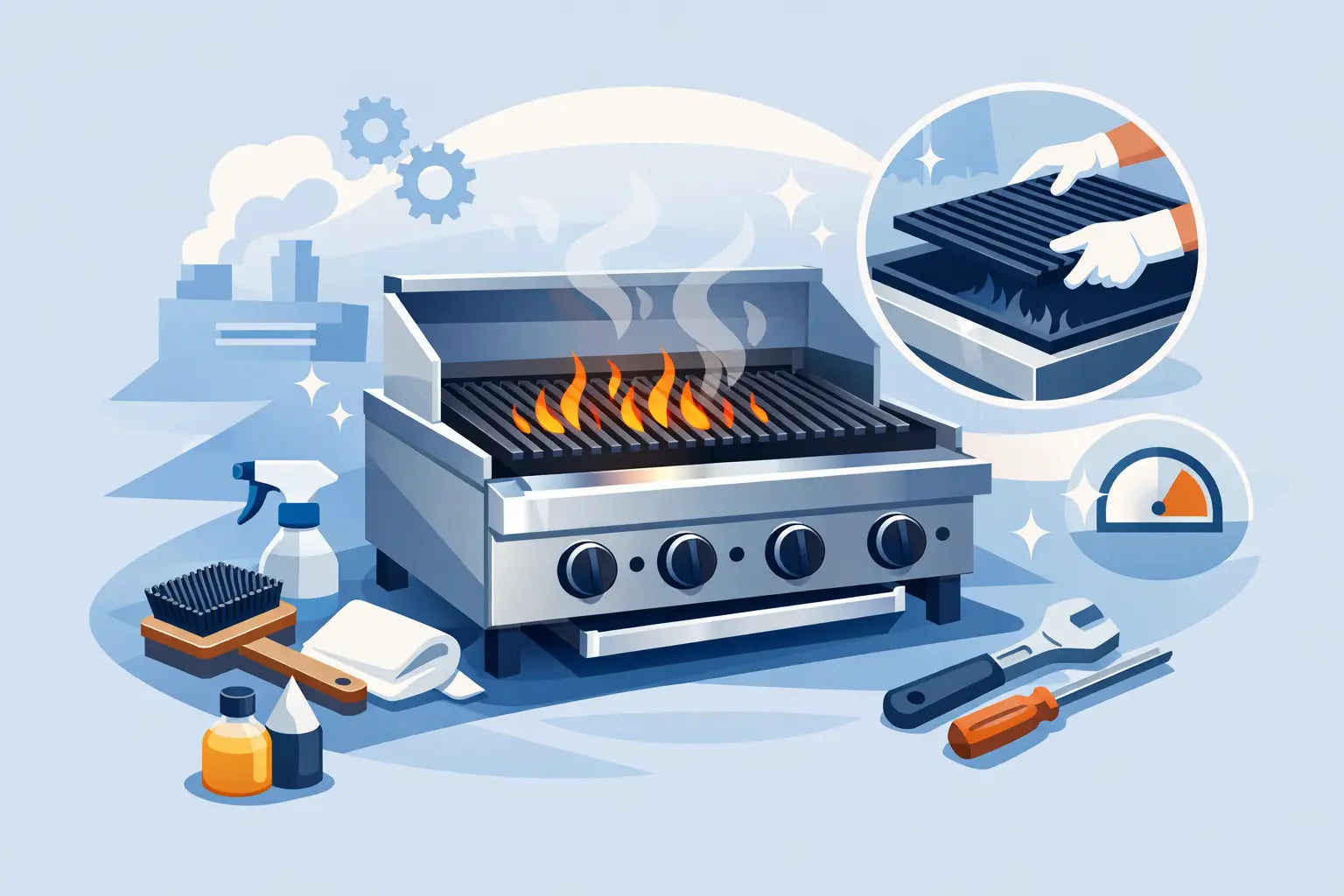
Lift-off burner grates and removable drip trays make daily cleaning more realistic. Sealed burner areas can reduce debris below the cooktop, while open designs may offer easier access for certain repairs. Neither approach is universally superior. Consider who will clean the range, how intensely it will be used, and whether parts can be reached without disrupting the whole line.
Pay attention to the details cooks touch all day: knob feel, pilot access, oven-rack positions, backsplash height, and the stability of pans on the grate. A range should feel composed under pressure. That quality is not decorative. It supports consistent food and calmer service.
Buy for the Next Menu Change, Not a Fantasy Expansion
A little spare capacity is sensible. Buying far beyond your current operation can burden the project with excess gas demand, ventilation requirements, and unused surface area. The better approach is to choose a configuration with room for genuine near-term growth while keeping the line intentional.
For operators balancing performance, footprint, and presentation, Culinary Precisions can help clarify the practical fit between a range's specifications and the service you are building. Bring measurements, utility details, menu priorities, and expected covers to the conversation.
Choose the range that lets your cooks work with heat as a controlled instrument: fast when the pan demands it, steady when the sauce needs patience, and dependable through the final ticket of the night.