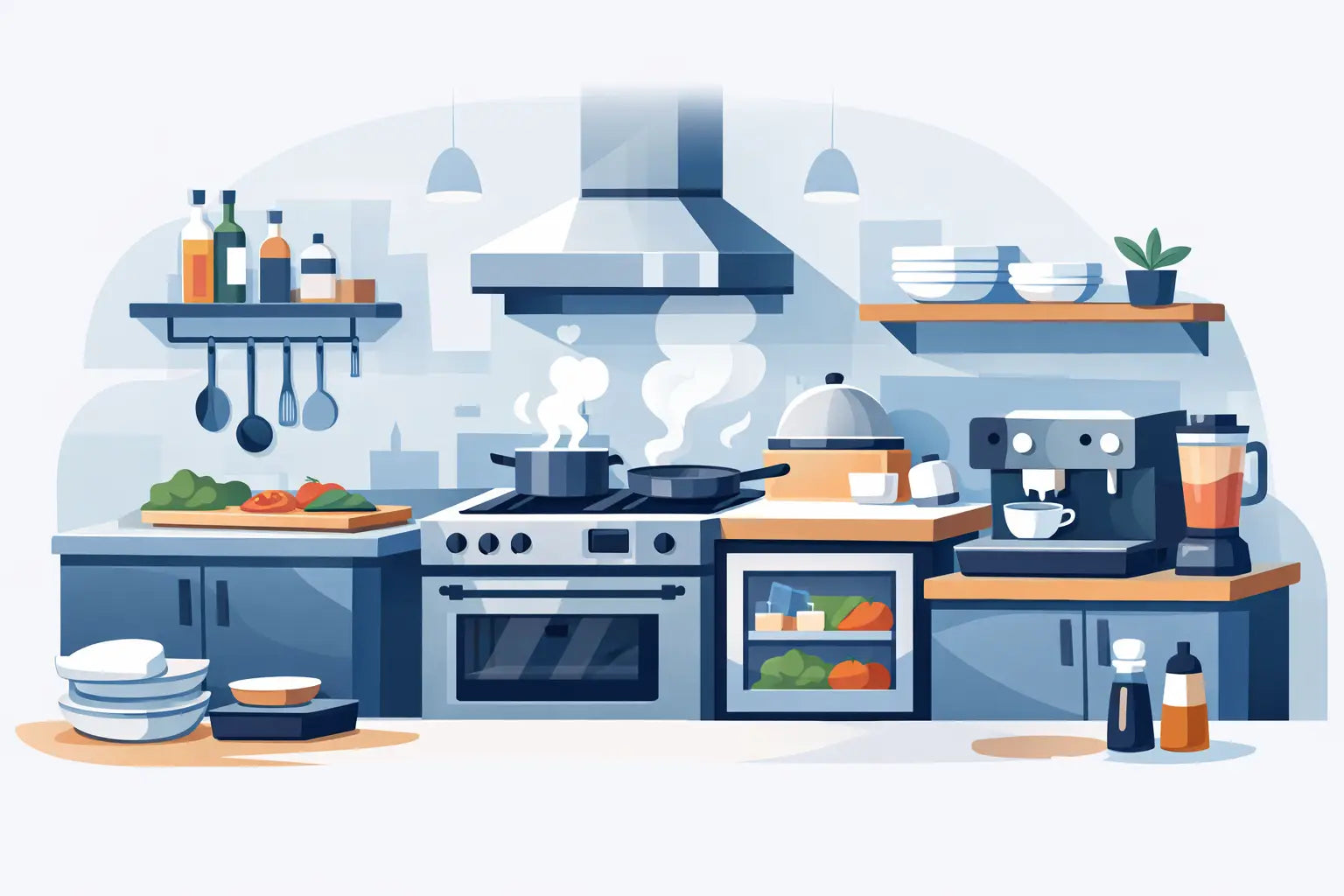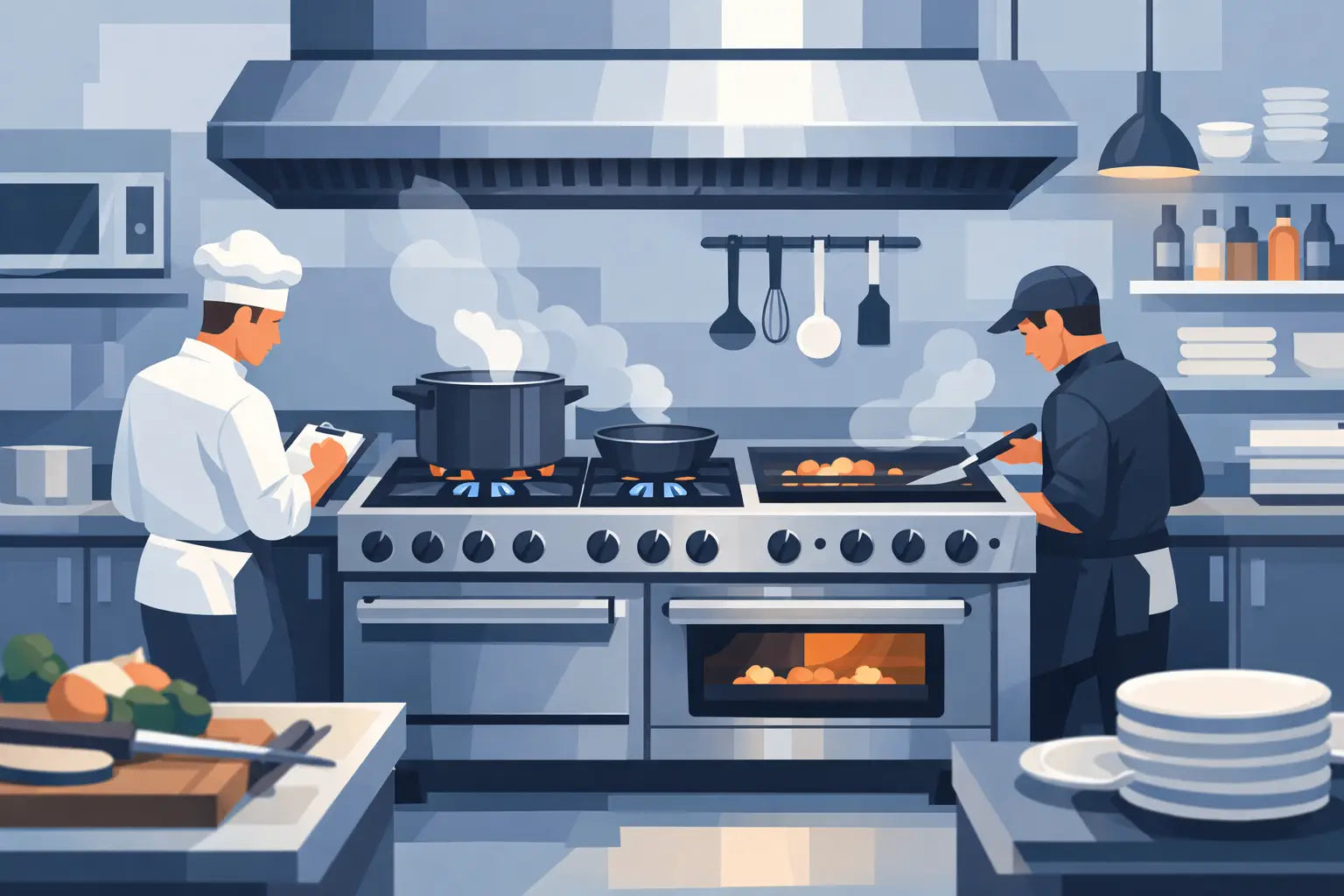
Restaurant Range Buying Guide for Busy Kitchens
A range earns its keep every shift. It handles sauces, searing, stockpots, sauté pans, and last-minute pickups when the line is stacked and timing matters. That is why a smart restaurant range buying guide starts with your menu and workflow, not just BTU numbers or a price tag.
The wrong unit creates pressure in all the wrong places. Burners run too hot for delicate work, the oven base sits underused, or the footprint steals space from prep and plating. The right range supports speed, consistency, and control without forcing your kitchen to work around the equipment.
Restaurant Range Buying Guide: Start With Production Reality
Before you compare brands or configurations, look at what your kitchen actually produces during peak service. A breakfast spot that runs eggs, pancakes, and sautéed sides needs a different cookline setup than a steakhouse, a café, or a high-volume prep kitchen.
Count how many pans are in use at once during your busiest hour. Look at your largest stockpot, your most common sauté pan, and whether oven space below the cooktop is active all day or only occasionally. If your menu leans heavily on quick pan work, open burners may be the priority. If you rely on holding heat across wide cookware, a hot top or griddle section may serve you better.
This is also where volume matters more than ambition. Buying for the busiest holiday weekend while ignoring the other 300 days of the year can leave you with excess heat, wasted energy, and a line that feels oversized for the work. On the other hand, a kitchen that is already maxed out at lunch probably should not buy for today alone.
Choose the Right Width and Burner Count
Commercial ranges commonly run from compact 24-inch models up to 60 inches or more. The right width depends on your line layout, utility access, and the number of stations that need the range at the same time.
A smaller operation or serious home setup may perform well with a 24-inch or 36-inch model if the menu is focused and prep is disciplined. For many restaurants, 48 inches hits a practical middle ground. It offers enough burner capacity for active service without overwhelming the line. Larger kitchens with multiple cooks working simultaneously may need 60 inches to avoid bottlenecks.
More burners are not automatically better. Tight burner spacing can limit pan size, especially when several large sauté pans or stockpots are working together. Six usable burners are often more valuable than eight crowded ones. The key question is whether your cooks can actually use the full surface efficiently.
Gas or Electric Depends on Your Kitchen Priorities
For most commercial kitchens, gas remains the default because it offers fast heat response and broad familiarity among line cooks. Flame control is immediate, which helps during high-speed service and precision sauté work. Gas models are also common in heavy-duty ranges built for restaurant output.
Electric ranges can still make sense in certain settings. Some kitchens prefer them where gas service is limited, ventilation plans differ, or the cooking style benefits from a more even surface heat. Electric can also appeal to some high-end residential buyers who want commercial-style performance in a serious home kitchen.
The trade-off is simple. Gas often wins on responsiveness and line familiarity. Electric may fit utility constraints or specific cooking preferences. The right choice depends on how your team cooks, what your building supports, and how the rest of your kitchen is configured.
Open Burners, Hot Tops, Griddles, and Combination Layouts
This is where a range becomes a real production tool rather than a generic appliance. Top configuration changes how your kitchen moves.
Open burners are the most flexible option for many restaurants. They support sauté pans, saucepots, stockpots, and quick repositioning during service. If your menu changes often or your cooks work across multiple pan sizes, open burners usually provide the most versatility.
Hot tops offer a solid surface that supports slower, steadier heat and easier movement of cookware across zones. They are useful when you need holding flexibility, consistent simmering, or a surface that accommodates varied pot placement. The trade-off is slower responsiveness compared with open flame.
Griddle sections make sense when the menu demands dedicated flat-top production. Breakfast operations, burger concepts, sandwich shops, and diners often benefit from having that surface integrated into the range. But if you only use a griddle occasionally, a combination layout may be better than sacrificing too many burners.
Combination tops work well for kitchens with mixed output. A range with burners on one side and a griddle or hot top on the other can support broader production without adding separate equipment. The best setup is the one that matches your menu every day, not the one that looks most capable on paper.
Do You Need an Oven Base?
A standard oven base adds real value when the range is expected to handle roasting, finishing, warming, or backup baking during service. In smaller kitchens, that extra cooking chamber can save both space and labor by combining two functions in one footprint.
But not every kitchen needs it. If you already have dedicated convection ovens, combi ovens, or prep ovens doing the heavy lifting, the oven base under a range may become expensive storage space. In some cases, a cabinet base is the smarter move because it reduces heat load and gives you practical access to pans and tools.
The question is not whether an oven base sounds useful. It is whether your team will use it enough to justify the added cost, heat, and cleaning time.
Ventilation, Clearance, and Utility Planning
A range is never a stand-alone purchase. It affects hood capacity, gas supply, fire safety planning, and the usable flow of the line. This is where rushed buying decisions get expensive.
Check your kitchen dimensions carefully, including side clearance, rear clearance, door swing, and the space cooks need to move safely during service. Confirm that your gas line or electrical service matches the unit requirements. Make sure your hood system can support the added heat and vapor load.
Weight matters too, especially for older buildings, upper floors, or installs that require moving equipment through tight doors and corridors. A powerful range that cannot be installed efficiently is not a performance upgrade.
Restaurant Range Buying Guide: Build for Cleaning and Durability
Commercial cooking equipment is judged in the middle of a busy week, not on delivery day. Durability shows up in grate strength, knob construction, stainless steel quality, and how well the unit handles repeated heat cycles and daily cleaning.
Look closely at removable parts and service access. Heavy-duty cast iron grates, pull-out crumb trays, and accessible burner assemblies can save labor and reduce downtime. Sealed designs or well-contained spill areas may also support faster cleanup, depending on the model.
This is one of the biggest trade-offs in the buying process. Lower upfront pricing can be attractive, but if cleaning takes longer or service calls become frequent, the actual cost climbs fast. Range performance is not only about heat output. It is also about how reliably the unit supports production over time.
Match the Range to the Skill Level of the Kitchen
A chef-driven kitchen may want aggressive heat, fast response, and a configuration built for advanced pan work. A school kitchen, church kitchen, or staff with frequent turnover may need something more forgiving and simpler to operate consistently.
There is no shame in buying for repeatability. Equipment should match the team using it. A range that performs beautifully in the hands of one experienced chef may create inconsistency for a broader crew if controls are touchy or the output is more intense than the menu requires.
For serious home cooks, the same logic applies. Commercial-style power is appealing, but only if the space, ventilation, and cooking habits support it. Precision is valuable when it improves results, not when it makes the kitchen harder to manage.
What to Compare Before You Buy
When narrowing your options, compare usable cooking surface, burner spacing, total output, oven capacity, build quality, and cleaning access. Also look at warranty support and parts availability. A restaurant range is a working asset, so support after the sale matters.
It also helps to think in terms of production payoff. Will this range shorten ticket times, reduce cook frustration, or improve consistency at peak volume? Those are stronger buying signals than a spec sheet alone. Culinary Precisions serves buyers who care about that level of performance because the right equipment should strengthen the entire line, not just fill a spot on it.
The best range is not the largest, hottest, or most expensive model. It is the one built for your menu, your team, and the pace your kitchen has to sustain every day. Buy with that level of clarity, and your range will keep proving its value long after the installation is done.