Undercounter Fridge vs Reach-In: Which Fits?
A line cook should not have to cross the kitchen for a pan of prepped greens, and a busy prep station should not lose cold storage because the room is too tight for a full cabinet. That is where the undercounter fridge vs reach in decision becomes practical, not theoretical. The right unit affects speed, food safety, floor flow, and how hard your team has to work during service.
For many kitchens, this is not about which refrigeration style is better in absolute terms. It is about which one supports your menu, your volume, and your layout with fewer compromises. An undercounter unit can keep ingredients within arm's reach and protect valuable floor space. A reach-in can deliver more capacity and stronger centralized storage. The best choice depends on how your kitchen operates under pressure.
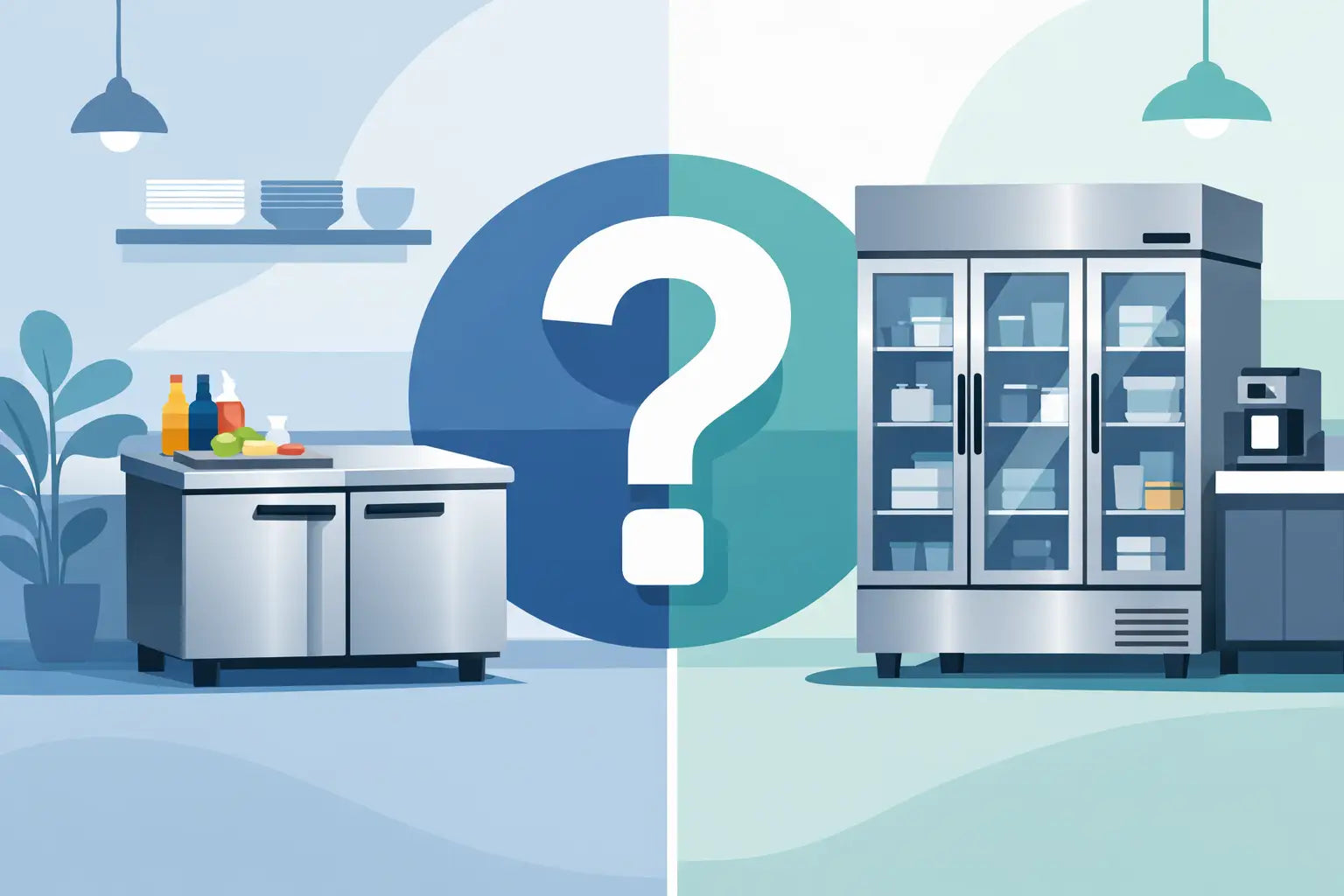
Undercounter fridge vs reach in at a glance
An undercounter refrigerator is built to sit beneath a worktop, counter, or prep surface. It keeps ingredients close to the station where they are used, which helps reduce steps and tighten production. These units are common on cook lines, sandwich stations, bars, and compact prep zones where every inch matters.
A reach-in refrigerator is a full-height cabinet designed for larger-volume cold storage. It is often used as a primary refrigeration piece in commercial kitchens because it holds more product, usually offers more shelving, and makes bulk organization easier. If your operation receives frequent deliveries, stores backup product, or needs clear separation by category, a reach-in is often the stronger fit.
The real difference is not just size. It is role. Undercounter models support point-of-use efficiency. Reach-ins support capacity and broader inventory control.
When an undercounter fridge is the smarter choice
If your kitchen runs on fast assembly, short movements, and station-based prep, an undercounter refrigerator can improve performance immediately. It places cold product exactly where it is needed, which cuts back on traffic and helps your team stay focused on execution. In a pizza kitchen, that might mean dough trays, cheese, and toppings stored directly under the prep surface. In a cafe, it may mean milk, pastry fillings, and grab-and-go ingredients kept beside the service point.
This format also earns its value in smaller kitchens. Food trucks, bars, concession setups, compact backlines, and serious home cooking spaces often cannot spare the footprint for a tall cabinet. An undercounter model uses lower space efficiently while preserving the open feel of the room. That can make cleaning easier and workflow less cramped.
There is also a production benefit. When cold ingredients stay near the station, doors open for shorter periods and product spends less time traveling through the kitchen. That can support temperature control during a busy shift, especially when a team is pushing speed.
The trade-off is straightforward. You gain access and workflow efficiency, but you give up storage volume. If the unit is expected to hold bulk inventory for an entire day or more, it may run out of useful space quickly.
Best uses for undercounter refrigeration
Undercounter units make the most sense when refrigeration needs to serve an active station rather than the whole kitchen. Prep lines, pizza assembly counters, bar service, dessert stations, and satellite work areas all benefit from this style. They are especially effective when menu items rely on repeated access to a limited range of ingredients.
They also fit operators who want their work surface and cold storage integrated into one footprint. That combination can tighten production without adding another major appliance to the room.
When a reach-in is the better investment
A reach-in refrigerator is built for kitchens that need dependable, higher-capacity cold storage throughout the day. Restaurants with broad menus, higher ticket volume, or larger prep loads usually need the flexibility a reach-in offers. Shelving supports organization by product type, labeled containers are easier to separate, and staff can store both active inventory and backup stock in one place.
This is often the stronger choice when receiving deliveries in larger quantities. Cases of produce, proteins, dairy, sauces, and prepared components need room to breathe and room to be found quickly. A reach-in helps operators avoid overpacking, which matters for airflow, temperature consistency, and food safety.
Reach-ins are also practical if your kitchen relies on central storage rather than station-specific refrigeration. In some layouts, it makes more sense to pull ingredients from a main cabinet during prep windows and then stock smaller rails or insert pans at the line. That model reduces the number of individual refrigeration units on the floor.
The compromise is footprint. Reach-ins require more vertical and floor space, and they can create bottlenecks if placed poorly. In tight kitchens, a full-height cabinet may solve one storage problem while introducing a movement problem.
Where reach-ins perform best
Reach-ins typically serve as the backbone of refrigeration in full-service restaurants, commissaries, bakeries, school kitchens, catering operations, and high-volume prep environments. They are also a strong fit for serious home cooks who buy in quantity, batch prep regularly, or need dedicated cold storage beyond what a residential refrigerator can support.
If your operation values centralized product control and the ability to store more categories in one unit, a reach-in usually delivers better long-term utility.
Space, workflow, and labor all matter
Buyers often focus on cubic feet first, but kitchen performance is shaped just as much by movement as by capacity. A refrigerator that holds more product is not automatically the better tool if it slows the line or forces staff to take extra steps every few minutes. Over a full service, those steps add up to labor drag.
That is why the undercounter fridge vs reach in question should start with workflow mapping. Where is the product used? How often is it accessed? Is this unit supporting live service, batch prep, or storage between deliveries? A reach-in at the end of the room may be fine for backup ingredients. It is less efficient for high-frequency items used at a station every 30 seconds.
Likewise, an undercounter model at the line may be perfect for active ingredients, but it should not be expected to carry your full cold inventory unless your menu and volume are very limited. Matching equipment to task is what creates speed and consistency.
Food safety and temperature discipline
Both styles can support safe refrigeration when sized correctly and used as intended. Problems usually come from misuse, not category. An undercounter fridge packed too tightly or opened constantly as a substitute for main storage can struggle to support ideal airflow and organization. A reach-in stuffed with mixed product and poor labeling can create its own safety risks.
The better question is which model helps your team maintain discipline. Reach-ins often make it easier to separate raw and ready-to-eat items, assign shelves by category, and monitor more inventory in one place. Undercounter units can reduce time out of refrigeration because product stays near the station, which is useful during high-speed service.
If sanitation and consistency are priorities, think beyond capacity. Think about how staff actually stock, rotate, and access the unit during a real shift.
Cost is more than purchase price
Undercounter refrigerators can look more approachable from a footprint standpoint, but kitchens sometimes need multiple units to cover several stations. A single reach-in may deliver more total storage for the money. On the other hand, if adding one reach-in leads to slower service or a less efficient layout, the cheaper answer on paper may cost more in labor and lost pace.
Energy use, cleaning access, maintenance demands, and lifespan under heavy use all matter. Commercial buyers should also consider whether the unit is a primary storage asset or a line-support asset. That distinction affects return on investment. Tools that shorten movement and support cleaner station execution often justify themselves in labor savings and smoother service.
So which one should you choose?
Choose an undercounter refrigerator if your biggest challenge is station efficiency, limited floor space, or keeping core ingredients close to the point of use. It is built for kitchens where speed, access, and compact design directly affect output.
Choose a reach-in refrigerator if your operation needs more storage capacity, better inventory organization, or a central refrigeration solution that supports larger prep volume and broader menus. It is built for stronger holding power and clearer product management.
Some kitchens need both. In fact, many of the best-performing setups use reach-ins for primary storage and undercounter units for frontline execution. That combination keeps bulk inventory organized while giving each station the cold access it needs to perform cleanly and quickly.
At Culinary Precisions, that is the standard worth aiming for - refrigeration that fits the work, not just the wall. When your equipment matches your workflow, the whole kitchen gets sharper.