Commercial Kitchen Equipment List for Pros
A rushed equipment purchase shows up later in ticket times, food waste, service bottlenecks, and repair calls. A strong commercial kitchen equipment list does the opposite. It gives your operation the tools to hold temperature, move faster, stay cleaner, and produce the same result every shift.
The right list is not the longest one. It is the one matched to your menu, volume, floor plan, utility setup, and labor reality. A pizza shop needs a very different mix than a hotel breakfast kitchen or a high-output burger concept. Serious home cooks building a professional-grade setup also face similar decisions, especially when space and performance both matter.
What belongs on a commercial kitchen equipment list
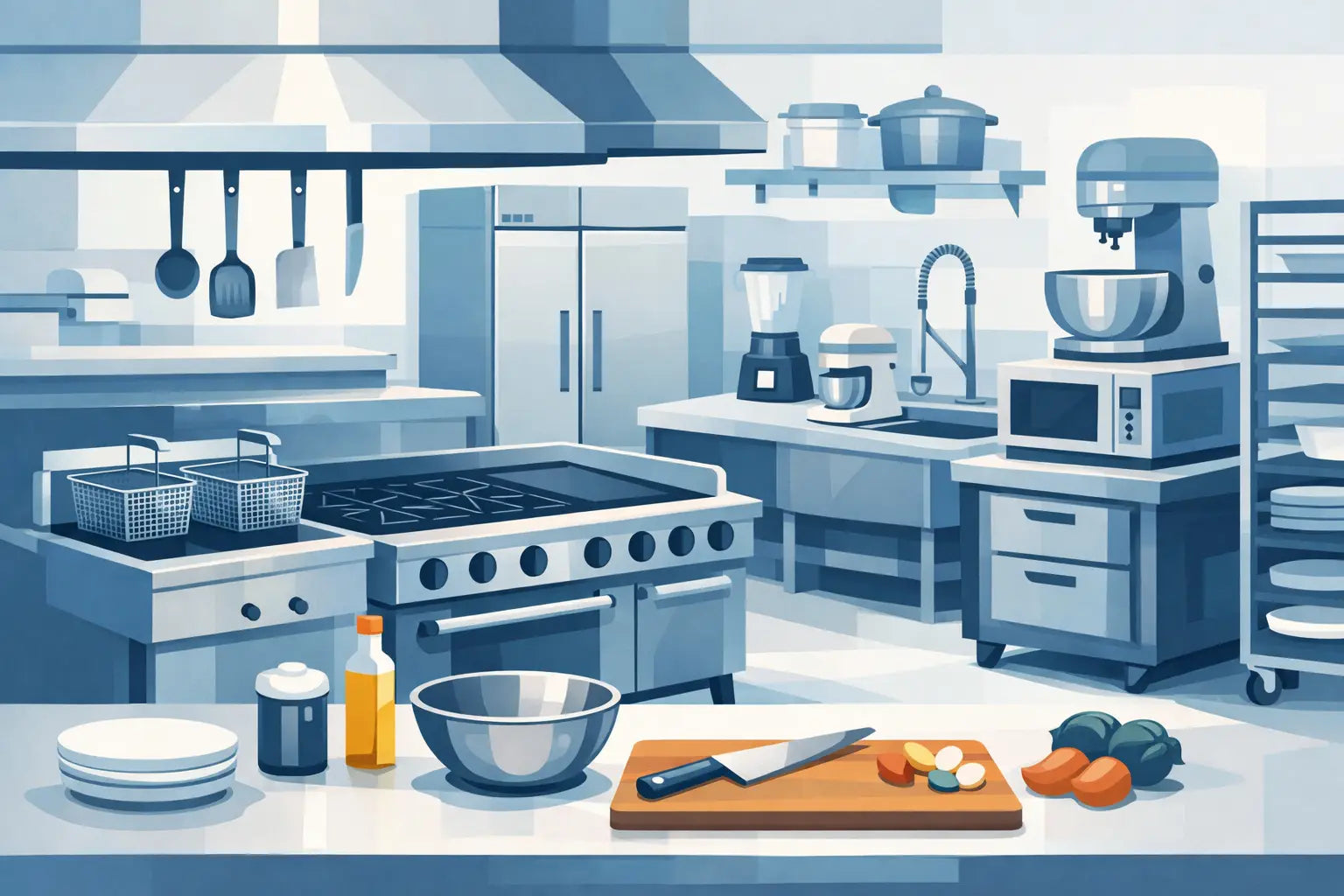
Most kitchens need equipment across five core areas: cooking, refrigeration, food prep, holding, and sanitation. The exact mix depends on production style, but every operation is balancing speed, food safety, consistency, and durability.
Cooking equipment usually anchors the budget because it drives output. Refrigeration protects inventory and supports food safety. Prep equipment reduces labor and improves consistency. Holding equipment protects quality during rush periods. Sanitation equipment keeps the operation compliant and efficient. If one of those areas is underbuilt, the whole kitchen feels it.
Cooking equipment that drives service
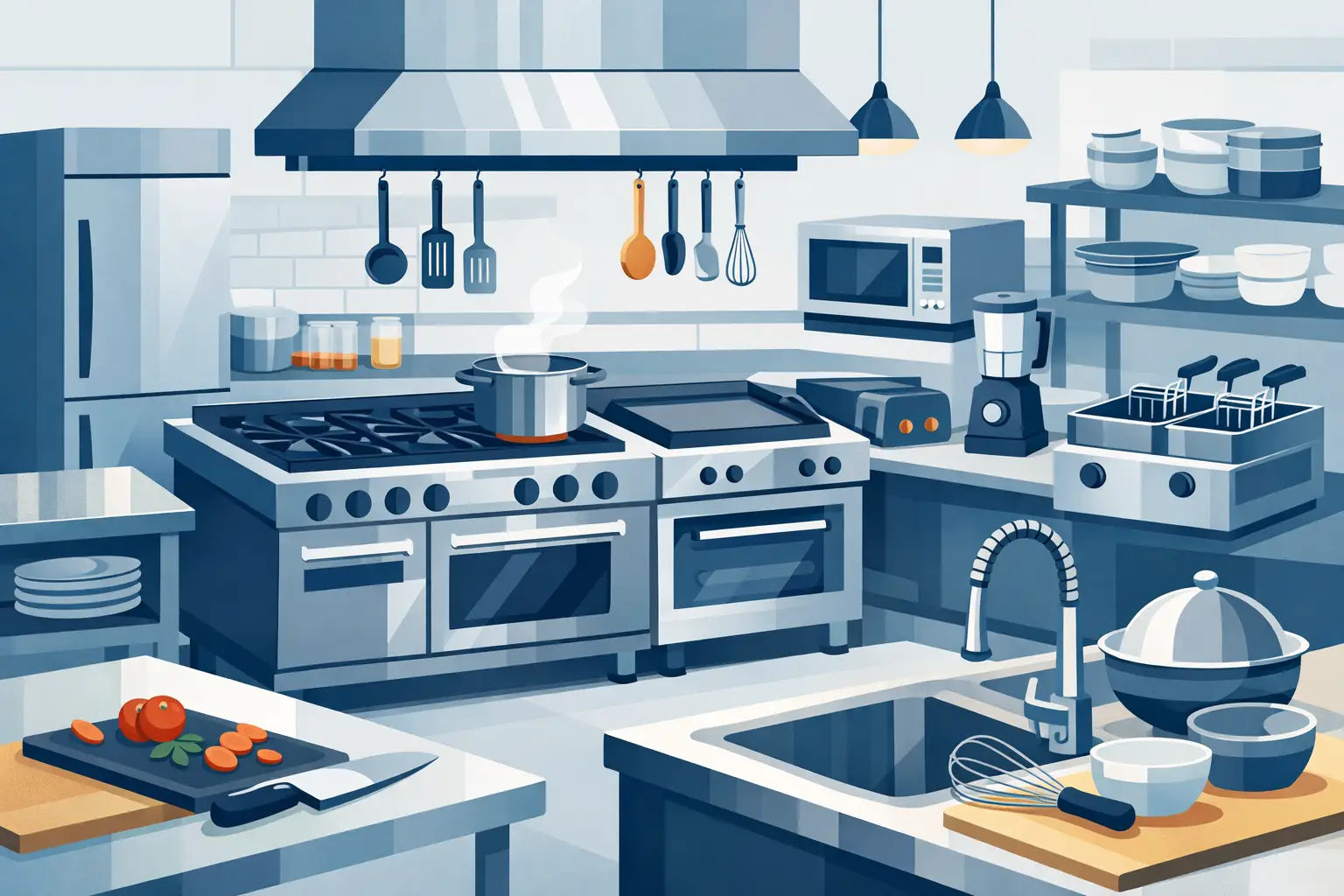
Ranges and stoves remain foundational for many kitchens because they handle sautéing, boiling, pan work, and finishing. Gas ranges are often favored for responsiveness, while electric setups can make more sense where utility access, ventilation, or local code creates limitations. The best choice depends on how much line cooking your menu actually requires.
Convection ovens are a strong fit when you need reliable airflow, even cooking, and better batch performance than a standard oven can provide. They work well for baking, roasting, reheating, and finishing. If your menu depends on repeatable results across multiple pans, this category earns its place quickly.
For high-heat production, grills and charbroilers bring a different value. A flat grill supports breakfast service, sandwiches, burgers, and proteins that benefit from broad contact heat. A charbroiler adds flame-kissed flavor and visual appeal, but it also introduces more grease management and ventilation demands. That trade-off matters in tighter spaces.
Pizza ovens deserve separate consideration because they define throughput and product character. Deck ovens, conveyor ovens, and specialty pizza ovens all produce different results. If pizza is a signature revenue driver, choosing the oven is less about preference and more about matching bake style, recovery time, and expected volume.
Steamers can be a smart addition for operations focused on vegetables, seafood, rice, dumplings, or healthier menu formats. They support consistency and moisture retention while reducing some of the guesswork that comes with dry heat methods. They are not essential for every concept, but in the right kitchen they improve both speed and yield.
Refrigeration and cold storage
Refrigeration is where many equipment lists go wrong. Operators either buy too little capacity or choose the wrong configuration. Reach-in refrigerators work for bulk cold storage, but line efficiency often improves more with undercounter refrigeration placed close to prep and service stations.
Freezers are equally important when frozen inventory, batch prep, desserts, or proteins are part of the model. In some kitchens, a blast freezer is worth serious consideration because it protects texture, extends shelf life in certain workflows, and supports safer cooling of prepared foods. It is especially valuable for operations that batch produce and need control, not just cold storage.
The key is workflow. If staff have to cross the kitchen repeatedly for core ingredients, your refrigeration setup is slowing production. A better configuration often means more points of access, not simply more cubic feet.
The commercial kitchen equipment list for prep and production
Prep equipment pays off in labor savings and consistency. It often gets less attention than cooking equipment, but it has a direct effect on output quality and speed.
Food mixers are essential in bakeries, pizza programs, and any kitchen producing doughs, batters, whipped components, or large-batch mixes. The right size matters. A mixer that is too small creates extra cycles and labor, while an oversized model may waste space and power if your batch size stays modest.
Worktables, ingredient stations, and refrigerated prep units also matter, even if they do not get the same attention as headline equipment. A kitchen can have excellent ovens and still underperform if prep flow is cramped or poorly organized. The smoother the handoff between storage, prep, cookline, and service, the more reliable the operation becomes.
Specialty concepts may need more. Soft serve ice cream machines, slushy machines, and curing machines are not standard across every kitchen, but for the right business they are core production tools rather than extras. The better question is not whether specialty equipment is niche. It is whether it supports a profitable menu item with repeat demand.
Holding and service support
Food warmers are often underestimated until a kitchen hits peak demand. They help protect product quality during staging, expo, delivery prep, and high-volume service windows. The right holding setup keeps food within safe temperature ranges while reducing the quality drop that comes from rushed service.
For operations serving multiple order channels, especially dine-in plus takeout, holding becomes even more important. A warmer can support pace without forcing the line to remake items or rush unfinished plates. That translates into lower waste and better consistency.
Dishwashing, hygiene, and back-of-house efficiency
A kitchen that cooks fast but cleans slowly will still fall behind. Dish washers are not just utility equipment. They are throughput equipment. If wares are not returning to service fast enough, your line gets choked by missing pans, utensils, and plates.
The right dish machine depends on rack volume, labor model, and available space. Smaller operations may do fine with a compact system, while high-volume kitchens need faster turnover and more durable wash capacity. Water, drainage, detergent setup, and ventilation all affect the final decision.
Sanitation planning should also include handwashing access, cleanable surfaces, storage discipline, and traffic flow. Equipment selection supports hygiene, but layout determines whether hygiene standards are easy to maintain during a rush. The best kitchen designs reduce opportunities for cross-traffic and contamination.
Choosing equipment by kitchen type
A restaurant opening with a broad menu usually starts with ranges, convection ovens, refrigeration, freezers, prep tables, food warmers, and dishwashing capacity. A pizza-focused operation will shift more investment into mixers, refrigerated prep, and pizza ovens. A bar or dessert program may need undercounter refrigeration, ice support, soft serve equipment, or frozen beverage machines before it needs a full hot line.
Outdoor cooking environments add another layer. Outdoor kitchen equipment has to handle weather exposure, variable temperatures, and a different hosting style than indoor commercial service. Durability matters more, and utility planning becomes even more important.
For serious home cooks buying professional-grade equipment, the same logic applies in smaller form. Buy for how you cook every week, not for the fantasy of what you might cook twice a year. Performance matters most when it supports real habits.
How to prioritize your commercial kitchen equipment list
Start with your menu and identify the equipment tied directly to revenue. Then measure volume expectations against available space and utilities. This is where good buying decisions are made. A powerful oven is only useful if your electrical or gas setup supports it and your hood system can handle the load.
Next, look at bottlenecks. If service is slow, the answer may not be more cooking equipment. It could be better cold storage placement, more prep capacity, or stronger holding support. Kitchens lose speed in transitions as often as they lose speed on the cookline.
Durability should stay high on the priority list. Commercial environments punish weak equipment quickly. Handles, hinges, controls, doors, and compressors all matter because daily performance is built on repeated use, not showroom impressions.
It also helps to think in phases. Not every operation needs every upgrade on day one. If the budget is tight, focus first on equipment that protects food safety, drives output, and reduces labor strain. Secondary specialty categories can follow once the core workflow is stable.
Culinary Precisions serves buyers who think this way - not just about owning equipment, but about building a kitchen that performs under pressure. That mindset usually leads to better long-term decisions than chasing the lowest upfront price.
A smart equipment list is really a performance plan. When each category supports the next, the kitchen runs cleaner, faster, and with fewer surprises. Build for the pace you expect, the consistency your customers notice, and the standards your team has to meet every day.