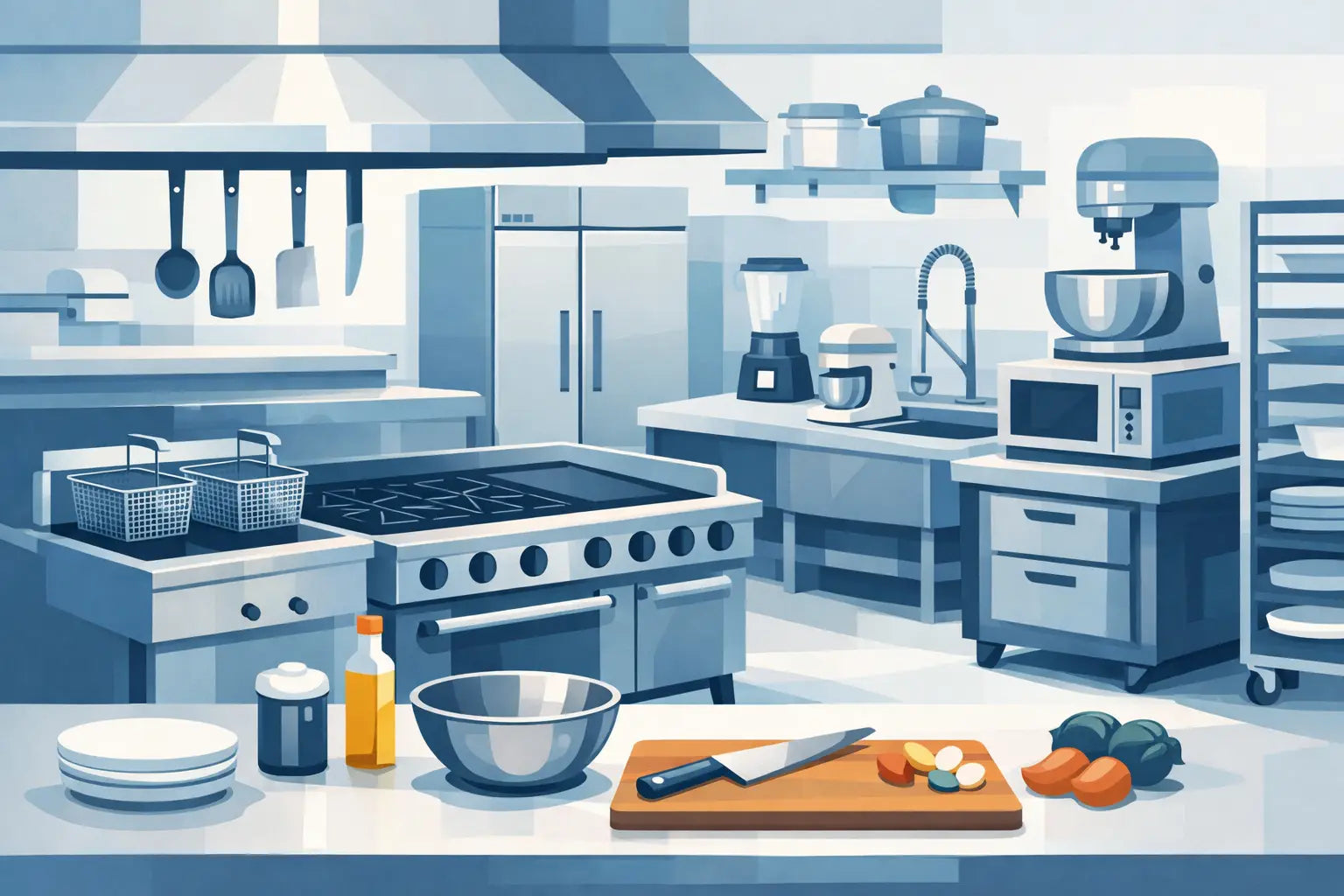
Article: What Equipment Is Required in a Commercial Kitchen?
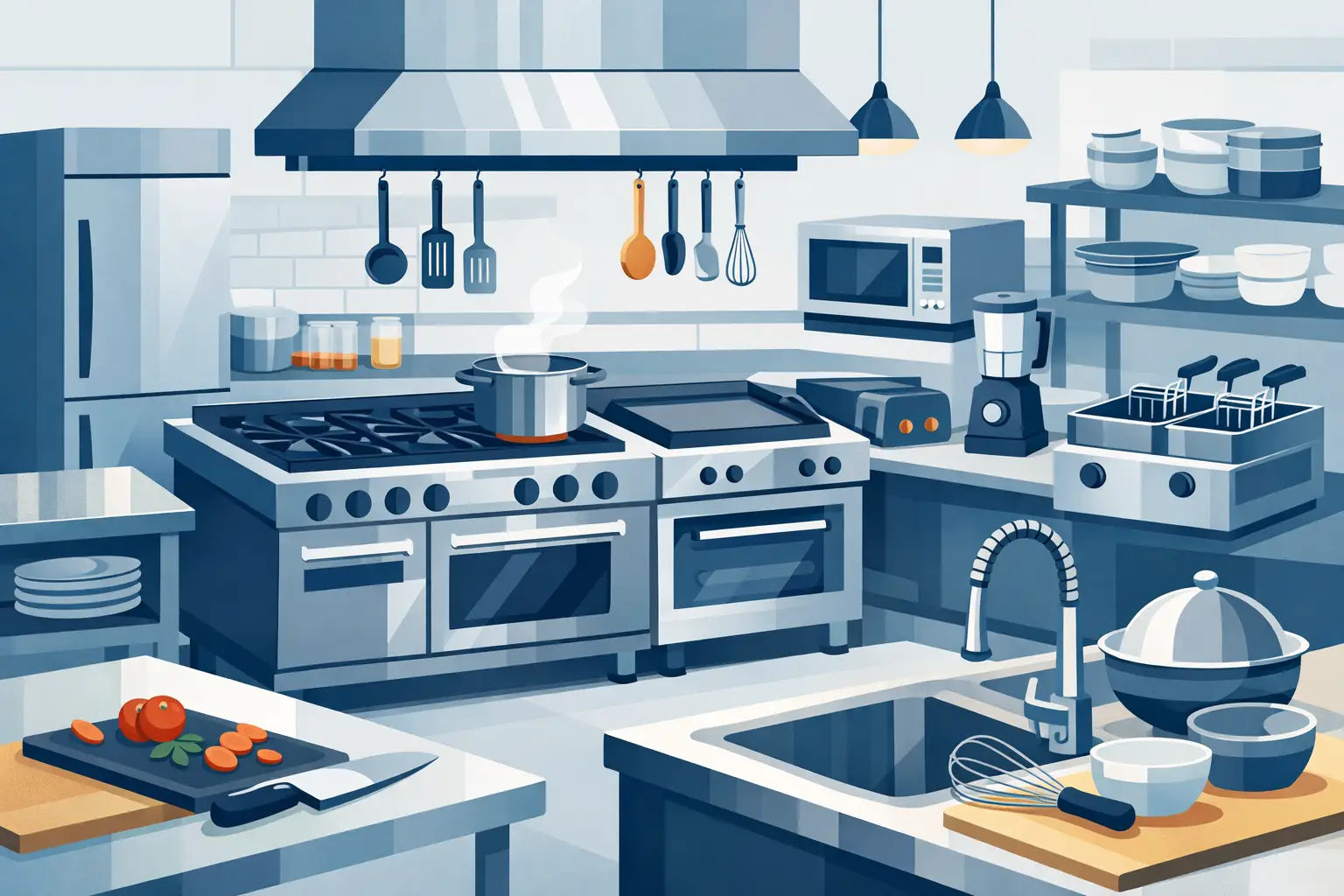
What Equipment Is Required in a Commercial Kitchen?
A commercial kitchen fails or succeeds long before the first service ticket prints. The real difference usually comes down to whether the space is equipped for the menu, the volume, and the pace of work. If you are asking what equipment is required in a commercial kitchen, the answer is not one fixed checklist. It depends on what you serve, how much you produce, and how consistently your equipment can perform under pressure.
A coffee shop with light food service does not need the same setup as a high-volume pizzeria, hotel kitchen, ghost kitchen, or steakhouse. Still, most professional operations rely on the same core equipment categories: cooking, refrigeration, food prep, ventilation, warewashing, holding, and safety. The goal is not simply to fill a kitchen with machines. It is to build a system that supports speed, food safety, workflow, and repeatable quality.
What equipment is required in a commercial kitchen for core operations?
At the center of nearly every commercial kitchen is the cooking line. For many operators, that starts with a range or stove, an oven, and some form of high-heat finishing equipment. Gas ranges remain a common choice because they offer responsive heat control and support a wide range of cooking methods. Convection ovens are equally important in many kitchens because they cook evenly and improve throughput for roasting, baking, and reheating.
Some concepts need more specialized cooking equipment. A burger or sandwich operation may depend on a flat-top griddle and charbroiler. A pizza concept may need a dedicated pizza oven rather than a standard convection unit. High-volume production kitchens often benefit from steamers, food warmers, and holding cabinets that protect consistency during rush periods. If fried food is a major revenue driver, fryers become essential, but if frying is only a small part of the menu, dedicating space and ventilation capacity to them may not be the best use of the line.
That is the first real trade-off most buyers face. Required equipment is not only about what can cook the food. It is about what can cook it fast enough, safely enough, and with enough consistency to support service.
Refrigeration is not optional - it is operational control
If the cooking line drives output, refrigeration protects product quality and food safety. Every commercial kitchen needs reliable cold storage, but the exact setup varies by layout and menu. Reach-in refrigerators and freezers are standard for bulk ingredient storage. Undercounter refrigeration is especially valuable on the line because it keeps proteins, dairy, sauces, and produce within reach without forcing staff to leave their station.
Walk-in refrigeration may be necessary for larger operations, but smaller restaurants can often run efficiently with a combination of reach-ins and prep tables with refrigerated bases. The key is capacity planning. Buying too little refrigeration creates workflow problems, inconsistent holding temperatures, and overcrowded storage. Buying too much can waste floor space and energy.
Blast freezers are not required in every kitchen, but in some operations they are a major performance advantage. They help preserve texture, support batch production, and improve food safety by cooling products quickly. For commissaries, bakeries, prep-heavy kitchens, and operations with fluctuating demand, this type of equipment can solve problems that standard freezers cannot.
Prep equipment shapes speed and consistency
Preparation equipment often gets less attention than cooking equipment, but it has a direct impact on labor efficiency. Mixers, slicers, food processors, prep tables, and worktables all support the pace of production. If your kitchen makes dough, batters, fillings, or sauces in volume, a commercial mixer is not a luxury. It is a consistency tool.
The same goes for dedicated prep refrigeration. Sandwich and salad stations, refrigerated prep tables, and ingredient rails reduce motion and help teams build orders faster. In a commercial setting, seconds matter. Equipment that shortens repetitive movement can improve ticket times without changing staffing.
For specialty concepts, prep equipment becomes even more important. A pizzeria may need dough mixers, dough management tools, and refrigerated ingredient prep stations. A dessert or frozen concept may need soft serve machines, slushy machines, or specialty holding equipment. These are not universal requirements, but they are essential once the menu depends on them.
Warewashing and sanitation equipment are part of production
Clean dishes, sanitized cookware, and code-compliant cleaning processes are not back-of-house details. They are part of the engine that keeps service moving. Every commercial kitchen requires a warewashing setup that matches volume. For some smaller operations, a three-compartment sink and proper sanitizing procedures may cover the basics. For higher-output kitchens, a commercial dishwasher becomes a practical necessity.
Dishwashers reduce labor strain, improve turnaround on plates and utensils, and help maintain sanitation standards during peak periods. Hand sinks are also required in the right locations, and mop sinks, grease management, and drain planning should not be treated as afterthoughts. A kitchen that cooks well but cannot clean efficiently will run into service delays and hygiene risks fast.
This is one area where compliance matters just as much as performance. Local health departments and building codes may require specific sink counts, sanitation setups, or dishwashing capacity. Equipment planning should always account for those standards before purchase decisions are finalized.
Ventilation, fire protection, and utility support
Many first-time operators focus on appliances and forget the systems that make those appliances usable. Ventilation hoods, make-up air, gas connections, electrical capacity, water supply, drainage, and fire suppression are all part of what equipment is required in a commercial kitchen. Without them, even the best cooking equipment cannot operate safely or legally.
Ventilation is especially important for heat-heavy lines with charbroilers, ranges, griddles, and fryers. The wrong hood system can lead to excess heat, poor air quality, grease accumulation, and compliance issues. Fire suppression systems are equally critical, particularly over cooking equipment that produces grease-laden vapors.
Utilities need to match the equipment mix. A kitchen with multiple electric ovens, refrigeration units, and dishwashers may need substantial electrical service. Gas-fired equipment requires proper supply and installation. Water demand matters too, especially when steamers, ice machines, and warewashing systems are part of the layout. Precision in equipment selection means little if the infrastructure behind it is undersized.
Holding and service equipment keep quality intact
Cooking the food is only part of the job. Many commercial kitchens also need equipment that holds, transports, or merchandises food without sacrificing quality. Food warmers, heated holding cabinets, steam tables, and pass-through shelves help protect temperature and timing during service. In fast-casual and catering operations, these pieces are often just as important as the primary cookline.
Cold holding matters too. Display refrigeration, prep rails, and undercounter units support service while maintaining safe temperatures. If your menu includes frozen beverages, desserts, or specialty cold items, dedicated machines may also be part of the required setup.
The deciding factor is always the production model. If food is cooked to order, holding equipment may play a smaller role. If the operation depends on batch cooking, staging, or high-volume assembly, holding equipment becomes central to consistency.
Smallwares, shelving, and work surfaces still matter
Not every requirement is a powered appliance. Stainless steel worktables, shelving, ingredient bins, speed racks, and storage systems are foundational. They affect sanitation, organization, and usable workspace. A kitchen can have premium appliances and still struggle if there is nowhere to prep, no logical dry storage, or no durable shelving for inventory.
Smallwares also deserve serious planning. Pots, pans, hotel pans, sheet trays, knives, cutting boards, thermometers, and food storage containers are part of operational readiness. They may not carry the same price tag as a convection oven or refrigerator, but service suffers quickly when these basics are missing or mismatched.
How to decide what equipment you actually need
The smartest way to answer what equipment is required in a commercial kitchen is to start with the menu and work backward. Every item you plan to serve should point to a cooking method, a storage need, a prep requirement, and a cleaning demand. From there, volume tells you the size and number of units required.
A small kitchen with a focused menu can outperform a larger kitchen filled with unnecessary equipment. At the same time, underbuying can create bottlenecks that cost more in labor, downtime, and inconsistent output. That is why experienced buyers think in terms of line flow, station design, recovery time, and peak demand, not just product features.
For serious operators, equipment should be selected as a performance system. Reliability matters. So does recoverability under heavy use, ease of cleaning, and fit within the footprint. Brands like Culinary Precisions speak to that reality by focusing on commercial-grade tools built for speed, safety, and repeatable results.
The right commercial kitchen equipment is not the longest list. It is the right combination of tools for your menu, your pace, and your standards. Build for the way your kitchen actually works, and every service gets easier from there.