Restaurant Equipment Startup Checklist for Service
The first rush tells the truth about a kitchen. A range that cannot recover heat, a prep table that sits outside the cook’s reach, or an undersized ice machine can turn a strong menu into a slow, frustrating service. This restaurant equipment startup checklist begins with the work your kitchen must perform, then builds outward into the equipment, utilities, and clearances that make that work repeatable.
A successful opening is not about filling a room with stainless steel. It is about creating a precise rhythm from receiving to prep, cooking, holding, plating, warewashing, and storage. Every piece should earn its footprint.
Start With the Menu, Not the Equipment
Equipment follows the menu’s technique, volume, and service style. Before comparing oven sizes or refrigeration configurations, write down your highest-volume dishes and identify how each one moves through the kitchen. A fast-casual bowl concept, a neighborhood pizzeria, and a chef-driven dining room may all use a range, refrigeration, and dishwashing, but their demands on those systems are very different.
Estimate covers or transactions for a typical day, then isolate the busiest 60 to 90 minutes. That peak period should guide capacity decisions. A fryer that performs well over a full day may still become a bottleneck when nearly every ticket requires fries at 7:15 p.m. Likewise, a combi oven can consolidate several cooking tasks, but it needs operators who will use its programming and humidity control with discipline.
Ask practical questions early: Will proteins be cooked to order or finished in batches? Is dough made in house? Does the menu depend on rapid char, gentle steam, cold assembly, frozen dessert, or high-volume beverage service? These answers determine the true heatline of the kitchen.
Build the Restaurant Equipment Startup Checklist Around Flow
A kitchen should move forward. Deliveries enter, products are stored, ingredients are prepped, food is cooked and plated, then dishes return through a separate cleaning path. When those paths cross too often, labor rises and sanitation becomes harder to manage.
Receiving, storage, and cold holding
Begin at the back door. Plan dry storage for shelving, smallwares, disposables, chemicals, and reserve inventory. Leave enough aisle space for deliveries and restocking, especially if staff will move hand trucks or speed racks through the area.
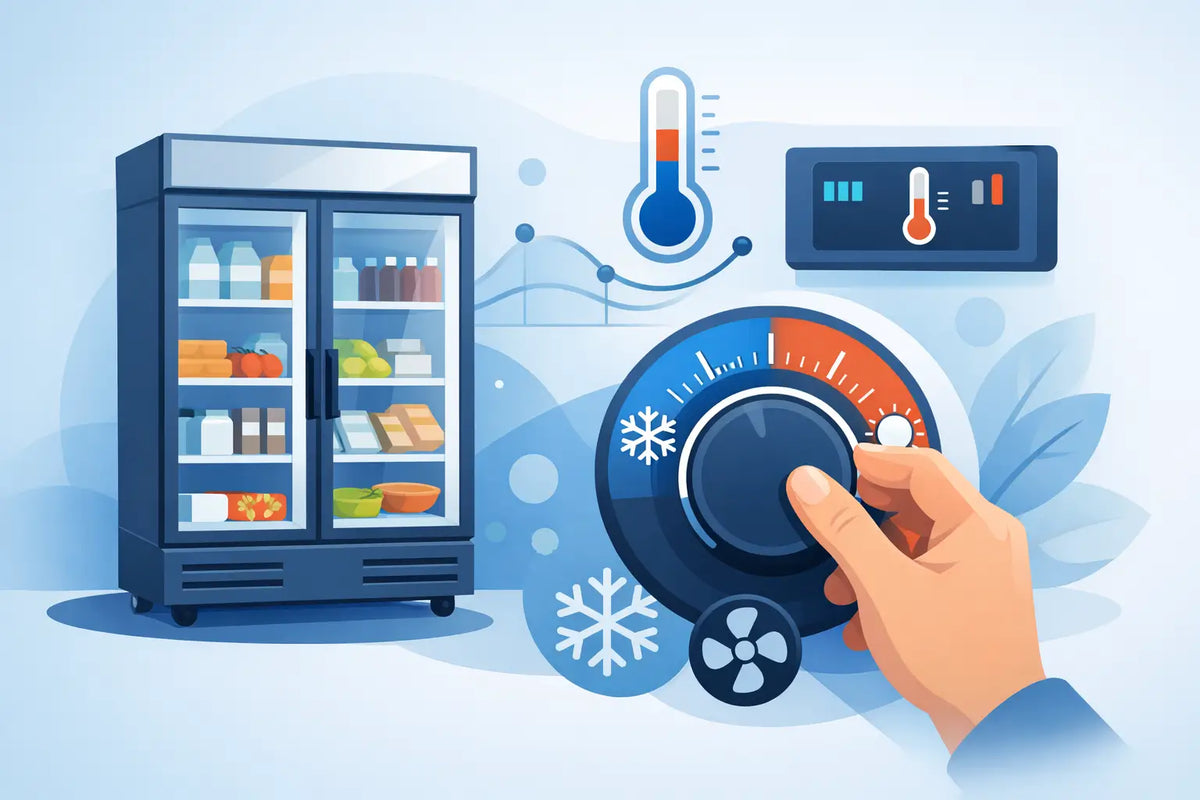
Refrigeration is one of the first places where startup budgets get strained, yet it is rarely the place to compromise blindly. Reach-in refrigerators and freezers offer flexible access and are easier to place in tight footprints. Walk-in coolers and freezers provide deeper inventory capacity and can simplify high-volume operations. The best choice depends on delivery frequency, menu prep, available square footage, and the distance staff must travel during service.
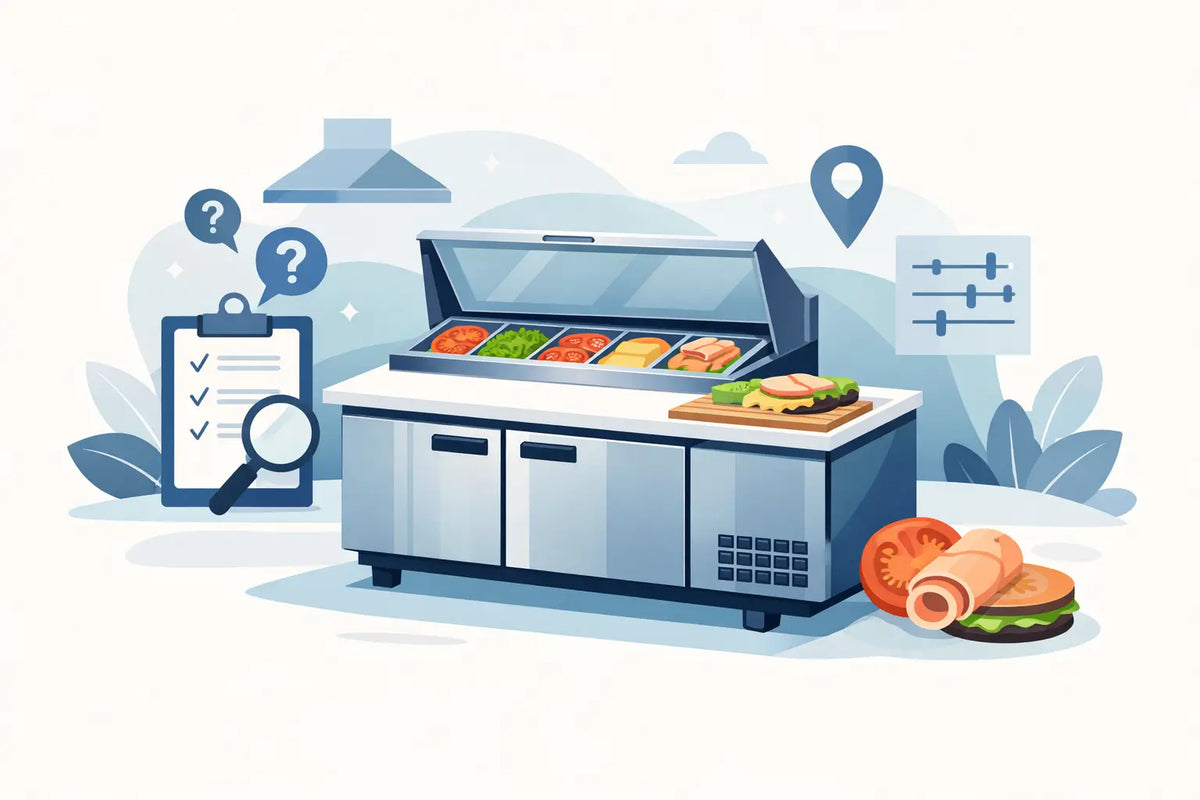
Place cold storage close to the station that uses it most, without crowding the cooking line. A sandwich or salad prep table can keep ingredients directly beneath the work surface, reducing steps and helping preserve a clean, cold assembly rhythm. For bakeries, seafood programs, and scratch kitchens, consider whether blast chilling will protect product quality, improve cooling compliance, and support more deliberate prep scheduling.
Prep and production
Prep tables, worktables, cutting boards, sinks, scales, food processors, mixers, and storage containers are the quiet machinery of consistent service. Measure these zones for real tasks, not just open floor area. A baker needs room for flour, sheet pans, dough tubs, and a mixer bowl swing. A garde manger station needs refrigerated pans, a hand sink nearby, and enough surface to assemble without stacking finished plates on raw ingredients.
Choose food mixers according to batch size and product density. A small planetary mixer can suit sauces, whipped ingredients, and occasional dough. Dense pizza dough or frequent large batches may require a more specialized machine and a plan for where bowls, attachments, and finished dough will rest. Capacity on paper is useful; daily production volume and staff handling are more revealing.
The cooking line
The cooking line is where equipment needs to match the menu’s tempo. Gas ranges offer familiar control and flexible burner space. Induction can deliver focused, responsive heat with less ambient warmth, but it requires compatible cookware and sufficient electrical capacity. Charbroilers bring direct-fire character, while griddles favor even contact cooking and high-volume breakfast or burger production.
For pizza concepts, oven selection shapes both the product and the business model. Deck ovens reward a hands-on baking style and can support a classic crust profile. Conveyor ovens favor consistency and throughput. High-temperature specialty ovens can create dramatic blistering and rapid bakes, but demand careful attention to ventilation, clearances, fuel type, and workflow around launching and finishing pies.
Do not size cooking equipment only for opening month. Build in enough recovery capacity for a successful Friday, while resisting the temptation to buy oversized equipment that consumes capital, fuel, and valuable line space. The right answer often sits between bare-minimum capacity and a kitchen built for an imagined stadium crowd.
Confirm Utilities Before You Place an Order
A beautiful equipment layout can fail in the field if power, gas, water, drainage, ventilation, or access have not been verified. Gather specification sheets for every major unit and review them with your contractor, designer, and local authorities before purchase.
Electrical requirements deserve particular care. Confirm voltage, phase, amperage, plug type, and whether a unit must be hardwired. Refrigeration, ice machines, combi ovens, dishwashers, and specialty beverage equipment may each have distinct requirements. Electrical upgrades can be a sound investment, but discovering them after equipment arrives can delay an opening.
Gas equipment requires correct line sizing, shutoffs, pressure, and code-compliant installation. Water-connected equipment needs supply lines, filters where appropriate, drains, and sometimes indirect waste connections. Ice machines and steam-producing equipment are especially sensitive to water quality. A water filtration plan can protect performance, reduce scale, and make routine maintenance more predictable.
Ventilation is not an afterthought. Type I hoods are generally required over grease-producing cooking equipment, while other appliances may use Type II hoods or alternative ventilation arrangements depending on local code and the appliance. Hood size, fire suppression, make-up air, ceiling height, and duct routing affect the layout from the start. Confirm requirements with local building, fire, and health authorities rather than assuming one jurisdiction’s rules apply to another.
Protect Food Safety and the Warewashing Rhythm
A food-safe kitchen gives staff the tools to do the right thing without breaking pace. Plan dedicated hand sinks where employees can reach them naturally. Include three-compartment sinks where required, adequate dish tables, floor drains where appropriate, and shelving that keeps clean wares protected and accessible.
Dishwashing capacity should reflect plate count, glassware, cookware, and turnover time. An undercounter dishwasher can fit a small bar or compact service model. A door-type unit can support higher-volume restaurants with a steady rack flow. Larger operations may need conveyor warewashing and a dedicated dish area that keeps dirty returns away from finished food.
Do not forget the details that protect the operation each day: probe thermometers, shelving, speed racks, food pans, labels, storage containers, dunnage racks, fire extinguishers, and replacement gaskets or filters. These are not glamorous purchases, but they shape sanitation, organization, and service speed more than many first-time operators expect.
Plan Delivery, Installation, and Service Access
Commercial equipment is heavy, exacting, and sometimes difficult to move through a finished space. Measure doorways, corridors, elevators, turns, loading areas, and the final installation path. A walk-in component, oven, or large refrigeration cabinet may fit the kitchen plan perfectly yet fail to clear the building entrance.
Leave service clearance around equipment. Compressing every unit into a tight line can look efficient until a technician cannot reach a compressor, gas connection, or electrical panel. Consider floor conditions, leveling, wall protection, and whether casters will help with cleaning and maintenance. For outdoor kitchens, account for weather exposure, fuel supply, drainage, and materials that will hold their finish through changing seasons.
When comparing products, read dimensions and utility specifications as closely as performance claims. Culinary Precisions can help operators assess the fit between a piece of equipment, the menu, and the physical realities of the site before that equipment is on the loading dock.
Purchase in the Order That Reduces Risk
Long-lead and infrastructure-dependent pieces should be decided first: hoods, walk-ins, custom fabrication, major refrigeration, cooking equipment, and dish machines. These choices influence construction and utility work. Smallwares, countertop equipment, pans, shelving accessories, and storage systems can usually follow once stations are defined.
Keep a contingency reserve for installation changes, permits, water treatment, additional shelving, and the small corrections that appear during commissioning. The lowest purchase price is not always the lowest operating cost. Energy use, recovery time, cleaning labor, repair access, warranty support, and expected life all deserve a place in the decision.
A well-built kitchen does more than open on time. It gives cooks room to move with confidence, holds the cold where it belongs, delivers heat when the ticket printer accelerates, and makes hospitality feel composed rather than improvised.