Commercial Refrigerator Temperature Control Guide
A commercial refrigerator can look perfectly normal while putting inventory, service, and food safety at risk. This commercial refrigerator temperature control guide focuses on the daily decisions that protect perishables: choosing the right operating range, verifying actual cabinet conditions, loading product correctly, and responding quickly when temperatures drift.
For most foodservice operations, refrigerated time/temperature control for safety (TCS) foods must be held at 41°F or below. That is the compliance ceiling, not necessarily the ideal equipment setpoint. A cabinet set to run closer to 36°F to 38°F gives your operation a practical buffer for door openings, deliveries, prep rushes, and normal recovery cycles.
Set the Right Temperature for the Product and the Kitchen
The best setpoint depends on what the refrigerator holds, how often staff access it, and where the unit sits in the kitchen. A reach-in used for prepped proteins during a busy service works harder than a lightly loaded back-of-house beverage refrigerator. Both need dependable temperature control, but their operating demands are different.
For general refrigerated storage, aim for 36°F to 38°F. This range keeps most TCS foods safely below 41°F while reducing the risk of freezing delicate produce, dairy, and sauces near the evaporator or air discharge. A unit consistently operating at 40°F leaves very little room for error when ambient heat rises or doors stay open.
Some products need more specific handling. Raw proteins, cut produce, dairy, cooked foods, and prepared sauces should remain at 41°F or below. Leafy greens and some produce can suffer chilling injury if held too cold, while seafood benefits from especially cold storage and careful drainage. Follow the product label, your HACCP plan, and local health department requirements when they are more specific than general guidance.
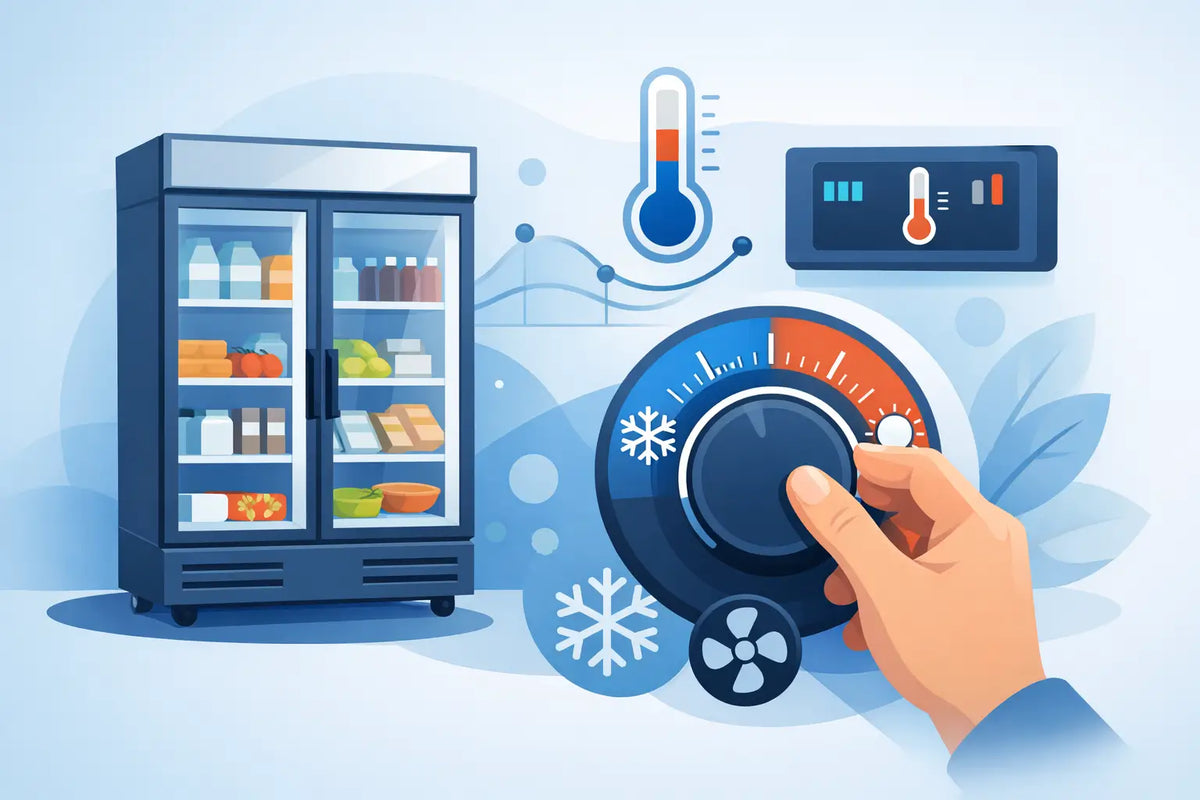
Do not use a refrigerator dial as proof of food temperature. The control setting tells the system what it is trying to achieve. It does not confirm that the product in the warmest area of the cabinet is protected.
Cabinet Air Temperature vs. Product Temperature
Commercial refrigeration moves cold air, and that movement creates warmer and colder zones. Product near the door, on an upper shelf, or packed too tightly against a wall may read differently from product in the center of the cabinet. A display thermometer can also be affected by where it is mounted.
Use an accurate, independently placed thermometer to check cabinet conditions. For sensitive inventory and high-volume operations, verify product temperature with a sanitized probe thermometer as part of the opening routine or receiving process. Measure between packages or in a representative product container without contaminating food.
A digital temperature monitoring system adds another layer of protection. It records trends, identifies recurring temperature swings, and alerts the team before a small issue becomes a product-loss event. For kitchens that close overnight or store high-value proteins, that visibility can justify the investment quickly.
How to Check Commercial Refrigerator Temperature Control
Build temperature checks into the operating rhythm of the kitchen rather than treating them as a repair-only task. Check at opening, after deliveries, and after any unusual event such as a power interruption, a long prep period, or a door left ajar. A simple log supports accountability, but the value comes from acting on what the reading shows.
Start by comparing the unit display with an independent thermometer. A difference of one or two degrees is not always a crisis, but a persistent gap means you should rely on the verified reading and investigate the cause. If the cabinet display says 37°F but a calibrated thermometer repeatedly reads 42°F, the food is being held too warm regardless of the display.
Calibrate probe thermometers regularly. An ice-water slurry should read 32°F when prepared correctly, giving staff a fast way to confirm accuracy. Replace damaged probes, weak batteries, and thermometers with inconsistent readings. Precision equipment only delivers precision when its measurements can be trusted.
When adjusting a controller, make small changes and allow the unit time to stabilize. Opening the door every few minutes to check the result creates misleading readings and adds heat load. Depending on the unit, product load, and room temperature, meaningful stabilization may take several hours or longer.
Keep a Temperature Log That Helps You Act
A useful log records the date, time, unit identification, observed temperature, initials, and corrective action when needed. Avoid logs that simply collect numbers with no response plan. If a reading is outside your established limit, document what happened and what the team did next.
Digital monitoring can automate much of this work, but it does not replace human judgment. Staff still need to inspect door closure, product placement, unusual noise, ice buildup, and the condition of stored food.
Load the Refrigerator for Airflow and Food Safety
A commercial refrigerator is not a cold storage box. It is an active airflow system, and poor loading can create warm pockets even when the compressor is operating normally.
Leave space around pans, cases, and containers so cold air can circulate. Do not block supply vents, fan covers, or the evaporator area with sheet pans and bulk product. Avoid packing warm deliveries directly against cold product, and cool cooked foods properly before placing them into a fully loaded refrigerator. Adding large amounts of hot food forces the system to recover slowly and can warm nearby inventory.
Store raw proteins below ready-to-eat foods to reduce cross-contamination risk. Keep food covered, labeled, dated, and elevated off the floor. This is not only a sanitation practice. Organized storage makes it easier for cold air to move, for staff to rotate product, and for managers to spot a problem before product is lost.
Door habits matter as much as shelf habits. A busy line refrigerator may be opened hundreds of times per shift. Train staff to retrieve what they need, close the door fully, and report doors that rebound or fail to seal. If speed of access is a recurring problem, consider whether the operation needs more refrigerated prep capacity, a better station layout, or an undercounter refrigerator positioned closer to the point of use.
What to Do When the Temperature Is Too High
A high-temperature alarm or reading requires a controlled response, not guesswork. First, verify the reading with a reliable thermometer. Then limit door openings and assess the product temperature, how long the condition may have existed, and whether another approved refrigerator can safely hold the inventory.
Take these actions in order when appropriate:
- Keep the door closed as much as possible while you assess the unit.
- Move food to a verified cold unit if safe capacity is available.
- Record product temperatures and the time the issue was discovered.
- Contact qualified service if the unit cannot return to its normal operating range.
Common causes include a door left open, damaged gaskets, blocked airflow, dirty condenser coils, a failed fan, excessive product loading, or an underperforming refrigeration system. A hot kitchen can also expose an installation problem, particularly when a unit is placed beside cooking equipment, in direct sun, or without adequate clearance for ventilation.
Prevent Drift With Routine Refrigeration Maintenance
Temperature control is strongest when maintenance is preventive. Inspect door gaskets for tears, flattening, and food debris. Clean them regularly so they seal without gaps. Check that hinges allow the door to close and that nothing on the shelves prevents it from seating.
Keep condenser coils clean according to the manufacturer’s schedule and the conditions of your kitchen. Grease, flour dust, and airborne debris reduce heat transfer, making the compressor run longer and increasing the chance of temperature drift. High-volume kitchens often need more frequent cleaning than the minimum schedule suggests.
Listen for changes in operation. Constant running, unusual vibration, loud fan noise, repeated cycling, and excess frost are early warnings that deserve attention. Waiting until a refrigerator stops cooling during service turns a manageable maintenance call into an operational emergency.
When selecting new equipment, match capacity and construction to the workload. A lightly built unit may struggle in a hot, high-volume line environment, while an oversized cabinet wastes space and energy in a compact operation. Culinary Precisions helps operators choose commercial refrigeration built for the demands of serious prep, storage, and service.
A refrigerator that holds a steady, verified temperature does more than meet a number on a log. It protects product quality, supports confident service, and gives your kitchen one less variable to manage when the pace picks up.