Commercial Refrigeration That Keeps Service Moving
The first rush of service exposes every weak point in a kitchen. A reach-in that cannot recover temperature after repeated door openings, a prep table with shallow pans, or a walk-in laid out without a clear receiving path can slow the entire line. Commercial refrigeration is not background equipment. It is the cold side of your operation’s rhythm - protecting ingredients, organizing labor, and keeping each station ready for the next order.
The right system is rarely defined by cubic feet alone. It should match the volume you buy, the way your team preps, the menu you serve, and the physical realities of the room. A well-chosen unit gives cooks fewer steps, gives ingredients a proper home, and gives the operation a steadier margin for quality.
Start With the Work, Not the Cabinet
A refrigerator may look straightforward: doors, shelves, a compressor, a temperature display. Yet its value comes from where it sits and what it removes from a cook’s routine. Before comparing finishes, capacities, or door styles, map the movement of food through the kitchen.
Receiving is one path. Raw storage, prep, line service, cooling, and finished-product holding are others. When these stages are separated with intention, food is easier to rotate, teams are less likely to cross paths, and cold storage is less likely to become a crowded catchall.
A small café with a focused lunch menu may need a dependable reach-in refrigerator, an undercounter unit at the beverage station, and a sandwich prep table. A pizzeria often benefits from a refrigerated pizza prep table that keeps dough, sauce, cheese, and toppings within reach of the make line. A high-volume restaurant may need multiple reach-ins plus a walk-in cooler and freezer to receive deliveries efficiently and stage prep for several days.
There is no universal configuration. The better question is: what must be cold, where must it be cold, and how often does someone need to reach for it?
The Core Types of Commercial Refrigeration
Each refrigeration format carries a different role in the kitchen. Building around those roles is more productive than trying to make one large unit solve every storage problem.
Reach-In Refrigerators and Freezers
Reach-ins are the workhorses of many kitchens. Available in one-, two-, and three-door configurations, they provide vertical storage without demanding the floor area of a walk-in. Solid doors tend to support colder, more stable storage and may offer better efficiency. Glass doors are valuable when visibility matters, particularly in beverage service, retail displays, grab-and-go programs, or bar operations.
Choose the door count based on usable storage and access, not simply the largest cabinet that fits through the door. A three-door refrigerator can be excellent for a busy production kitchen, but it may be excessive in a narrow line where door swing interrupts traffic. Half doors can also be practical when staff need access to one section without exposing the entire cabinet.
Prep Tables and Refrigerated Worktops
Refrigerated prep tables bring ingredients and assembly together. Their usefulness is measured in inches and motions: pan rail capacity, cutting-board depth, lid design, undercounter storage, and the number of steps between cold ingredients and the finished plate.
Sandwich, salad, pizza, and chef-base configurations all support a different style of work. A sandwich prep table is built around frequent access to pans and a broad cutting surface. Pizza prep tables typically offer more room for dough handling and a larger ingredient rail. Chef bases place refrigerated drawers beneath griddles, charbroilers, or other cooking equipment, making them especially valuable when the line is tight and the menu relies on fast replenishment.
Pay close attention to pan layout. A unit may technically hold the number of pans you need, yet still create congestion if the frequently used ingredients are not positioned naturally for the cook.
Undercounter Refrigeration
Undercounter refrigerators and freezers create cold storage exactly where it is needed without adding visual bulk. They are particularly effective at bar stations, dessert lines, food trucks, open kitchens, and compact production areas.
Drawers are ideal for portioned mise en place and frequently accessed products. Doors can make more sense for larger containers, backup stock, or irregularly shaped items. The choice comes down to how ingredients are stored and whether the team benefits more from visibility or flexible shelf space.
Walk-In Coolers and Freezers
Walk-ins provide the capacity and organization that growing operations eventually need. They are not just bigger refrigerators. Their design affects delivery receiving, inventory rotation, staff safety, airflow, and the speed of daily prep.
A walk-in should have enough room for shelving, carts, and people to move without blocking product access. Plan for the reality of your deliveries, not only your average inventory. If cases arrive twice a week, the cooler needs enough temporary staging space to receive and rotate them without compromising the rest of the room.
Door location, floor type, panel thickness, refrigeration system placement, and ambient conditions all matter. A walk-in placed near high heat or in an outdoor environment may require a different approach than one installed in a climate-controlled back-of-house area.
Capacity Is About Par Levels and Delivery Rhythm
Oversizing refrigeration can consume capital, floor space, and energy. Undersizing it creates a more immediate cost: cluttered shelves, poor air circulation, stressed crews, and inventory that migrates into places it does not belong.
Start with par levels. Consider the volume of product required for a normal service period, the backup stock needed for your delivery schedule, and the space required for safe rotation. Then add room for seasonal demand, catering orders, and the occasional delivery that arrives at an inconvenient time.
The shelf count matters as much as the cabinet’s exterior dimensions. Deep storage can look generous on a specification sheet but become difficult to manage if staff must move several containers to reach an item. Adjustable shelving, clear zones for raw and ready-to-eat foods, and labeled containers preserve both speed and food safety.
For frozen storage, avoid treating a freezer as long-term overflow for every item the operation cannot organize elsewhere. Frozen inventory still needs rotation, accessible shelving, and enough airflow to maintain consistent temperatures.
Temperature Control Protects More Than Product
Commercial refrigeration protects flavor, texture, shelf life, and the confidence behind every plate. Temperature stability is especially significant for proteins, dairy, prepared foods, produce, cultured products, and delicate pastry components. A cabinet that holds its set point under active use supports consistency that guests may never see directly, but will taste.
Digital controls and visible temperature displays make daily checks easier, but they do not replace operational discipline. Staff should understand which products belong in each unit, avoid overpacking shelves, close doors promptly, and report unusual sounds, frost buildup, or temperature fluctuations early.
Recovery matters, too. Every door opening introduces warmer air. In a quiet prep kitchen, that may be a minor consideration. On a hard-running cook line, a unit is opened dozens or hundreds of times in a shift. Equipment should be selected for the service conditions it will actually face, not the calm conditions of a showroom.
Measure the Room Twice
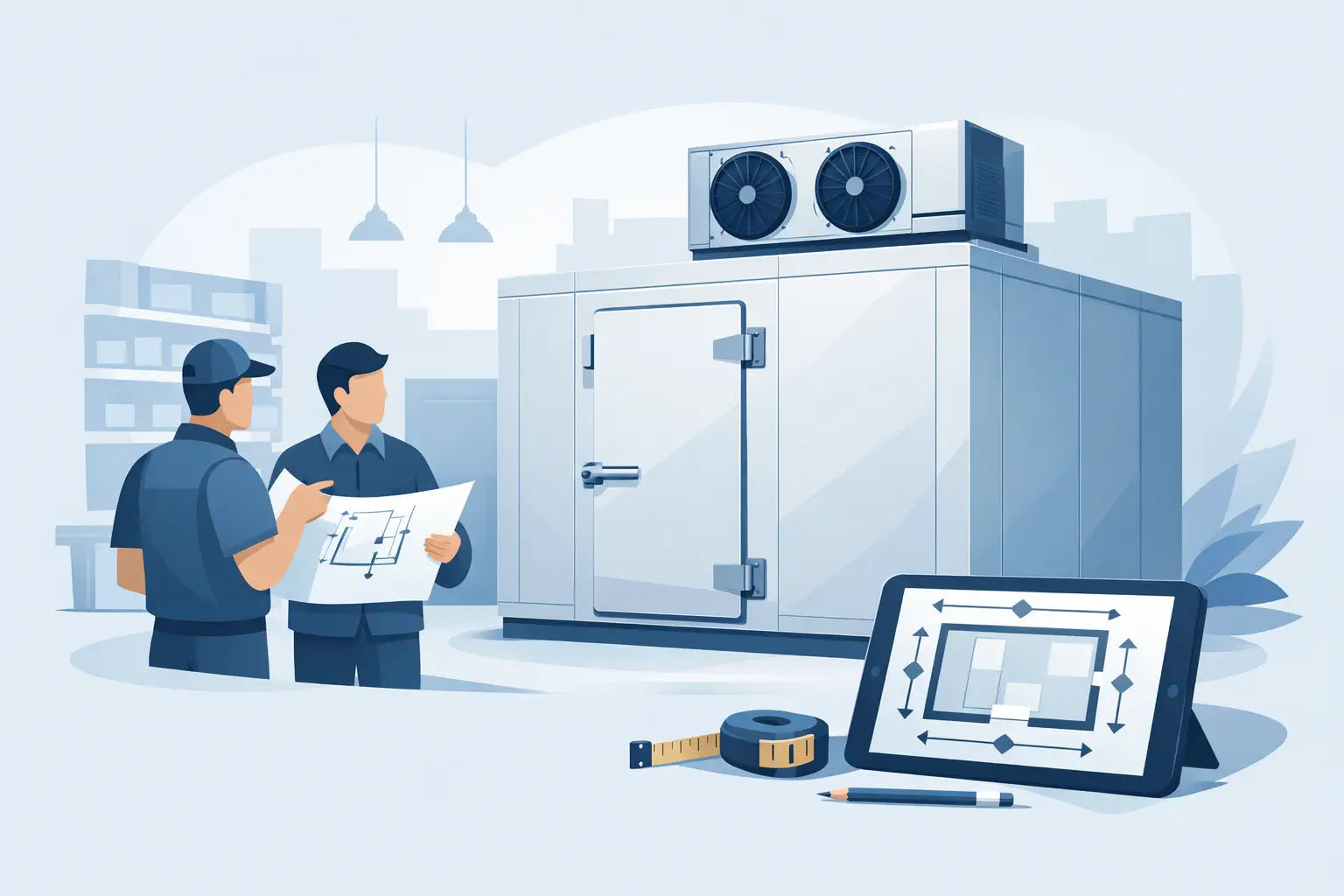
The most capable refrigerator is the wrong purchase if it cannot be delivered, installed, ventilated, or serviced properly. Measure the equipment footprint, but also confirm aisle width, doorway clearance, turns from the loading area, ceiling height, and door swing. If a unit must pass through a narrow opening, its shipping dimensions may be just as relevant as its installed dimensions.
Leave the manufacturer-required clearance around the refrigeration system. This space allows heat to escape and provides access for cleaning and service. A tightly boxed-in condenser may work at first, then struggle as dust accumulates and ambient heat rises.
Electrical requirements deserve the same attention. Verify voltage, plug type, dedicated circuit needs, and the location of the receptacle before delivery. Walk-ins and remote systems may involve additional site planning, while mobile concepts and outdoor kitchens need special consideration for weather exposure, power capacity, and ventilation.
Build Maintenance Into the Purchase Decision
The best refrigeration program includes care from day one. Clean condenser coils on schedule, inspect door gaskets, keep drains clear, and avoid blocking vents with boxes or product. These routine actions support airflow and reduce strain on the system.
When comparing units, think about access for cleaning and service. A lower upfront price can become less appealing if a unit is difficult to maintain, poorly suited to the surrounding heat load, or unavailable when a critical part is needed. For operations where downtime is especially costly, proven construction, accessible components, and a sensible service plan may be worth more than an attractive first price.
Culinary Precisions approaches equipment selection as a balance of specifications and workflow. The dimensions, electrical details, capacity, and configuration matter because they shape the work that happens around them every day.
A refrigerator should make the kitchen feel calmer at full speed. Give each ingredient a deliberate place, give the team clear access to it, and choose cold storage with the same care you bring to the heat on the line.