How to Choose a Sandwich Prep Table
A lunch rush exposes every weak point in a cold station. The sliced turkey is two steps away, lids clutter the cutting surface, and a team member keeps opening the base to find backups. A well-chosen sandwich prep table turns that friction into a measured rhythm: pans held at proper temperature, ingredients arranged in build order, and a worktop ready for the next ticket.
For delis, cafes, pizzerias, bars, hotel kitchens, and busy catering operations, this is not simply refrigerated storage with a cutting board on top. It is the workstation where speed, food safety, portion consistency, and presentation meet. The right model should suit the menu you actually make, the room your team has to move, and the volume you expect at your busiest hour.
Start With the Way Your Line Builds Food
The most useful way to select a prep table is to watch the assembly process before comparing cabinet widths. Follow one sandwich from ticket to handoff. Where does the bread land? Which ingredients are used on nearly every order? Are proteins portioned in advance, or sliced to order? Does the station also produce wraps, salads, bowls, or pizzas?
A compact operation with a focused menu may work beautifully with a 27-inch or 48-inch unit. These configurations preserve valuable floor space while keeping core ingredients close. A high-volume deli, fast-casual concept, or sandwich program with broad customization may need a 60-inch, 72-inch, or larger table to prevent the line from becoming crowded during peak service.
Width alone does not determine capacity. Look carefully at the pan rail layout. Standard food pans make it easy to organize a familiar ingredient sequence, but the number and size of pans should match your menu. A shop with six toppings and three proteins has different needs than a build-your-own program carrying greens, cheeses, pickles, sauces, vegetables, and multiple dietary alternatives.
Think in terms of motion. Frequently used ingredients belong in the most accessible positions. Less common garnishes can sit toward the end of the rail, while backup product belongs below. When every reach is deliberate, a prep table helps protect both ticket times and the calm, focused feel of the line.
Refrigeration Is the Foundation of a Sandwich Prep Table
The ingredient rail gets attention because it is visible, but the refrigeration system does the real preservation work. A commercial prep table must recover temperature after repeated lid openings, warm product pans entering service, and the ambient heat of a working kitchen. That recovery matters when the lunch line is moving fast.
Look for a unit designed to hold refrigerated food at safe operating temperatures under real service conditions, not merely in an empty showroom. Digital controls allow staff to monitor and adjust the cabinet with greater precision. An accessible temperature display also makes opening checks faster and supports disciplined food-safety routines.
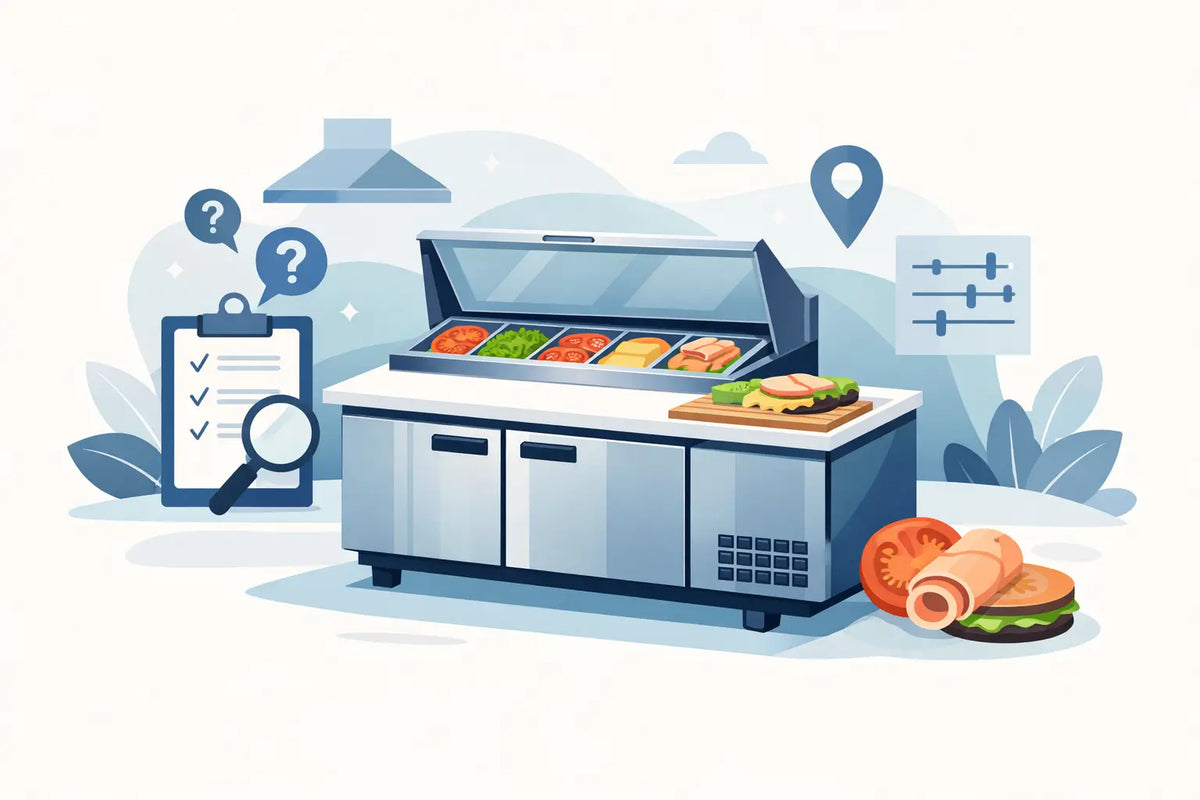
The cold rail and the base cabinet serve related but distinct purposes. The rail keeps active mise en place visible and ready for assembly. The refrigerated base holds wrapped backups, extra pans, proteins, sauces, and other replenishment stock. A shallow or poorly organized base forces staff to leave the station too often. A cabinet with the right shelf configuration or drawer layout keeps replenishment close without overloading the rail.
Doors are often the practical choice for operations storing cambros, backup pans, and varied package sizes. Drawers can be more efficient for portioned proteins, cheese packs, and smaller organized inventory. Neither is universally better. Choose doors for flexible volume and drawers for repeatable organization at a high-output station.
Refrigerated Rail Details That Matter
The pan rail should accommodate the pan sizes your team already uses, or the system you intend to standardize. Full-size, half-size, third-size, and sixth-size pans each have a place, but a rail filled with undersized containers can create clutter and compromise portion control.
A hinged or insulated lid helps protect ingredients between service periods and reduces exposure to kitchen heat. During active production, many operators keep the lid open for speed. That makes proper loading even more critical: begin with cold product, avoid overfilling pans, replenish in smaller batches, and follow your local food code and operating procedures.
Choose a Worktop Built for Your Menu
The cutting board is where the equipment becomes tactile. It should provide enough depth for bread, paper, knives, squeeze bottles, and a clean finishing area without forcing the team to balance ingredients at the edge. On a sandwich line, a cramped board quickly becomes a messy board.
A thick polyethylene cutting board is a practical commercial standard. It gives knives a forgiving surface, can be removed for cleaning, and stands up to repeated prep. Some tables offer extended boards that create more assembly space. That extra depth is valuable for large subs, layered club sandwiches, wraps, or operations that package every order at the station.
Material quality across the cabinet matters as well. Stainless steel exteriors are durable, easy to clean, and suited to the humidity, impacts, and constant wiping of a professional kitchen. Pay attention to drawer slides, door hinges, gaskets, handles, and casters. These are the components your staff touches hundreds of times per shift.
For open-kitchen concepts and serious outdoor culinary spaces, visual restraint matters alongside durability. Clean stainless planes, aligned pan wells, and a well-proportioned work surface help the station feel purposeful rather than improvised. Commercial equipment can carry its workload with quiet confidence.
Measure the Space Beyond the Cabinet Width
A prep table that technically fits is not always a prep table that works. Measure the available wall space, but also account for door swing, drawer extension, aisle clearance, electrical access, and the path required to roll the unit into place. If the station sits beneath shelving, confirm that lids can open fully and that staff can replenish pans without striking an obstruction.
Ventilation deserves the same attention. Refrigeration equipment needs room to reject heat, and the required clearance varies by model and condenser design. A crowded installation can reduce efficiency, raise energy use, and make servicing more difficult. Consider where dust, flour, grease, or outdoor debris may collect if the unit will operate near other equipment or in a semi-exposed entertaining area.
Most commercial sandwich prep tables require a dedicated electrical connection appropriate to their listed voltage and plug configuration. Confirm these requirements before purchase, not after delivery. The same discipline applies to flooring and leveling. A table must sit stable and level for doors to seal properly, condensate to drain as designed, and cutting surfaces to feel secure under pressure.
Right-Size Capacity Without Buying Empty Steel
Oversizing is tempting because more pan wells and more refrigerated storage appear to offer insurance. Yet an oversized table can consume high-value line space, require more cleaning, and encourage teams to hold too much product in service. Ingredient quality is often better when the rail is intentionally stocked and replenished with fresh, cold backups.
Undersizing creates a different problem. Staff begin placing containers on adjacent counters, making extra trips to reach ingredients, and storing products wherever there is room. The station loses its rhythm. During a peak period, that disorganization can become a food-safety and labor issue, not simply an inconvenience.
Estimate capacity using your busiest 30 to 60 minutes, not your average afternoon. Calculate how many sandwiches or salads you expect to produce, identify the ingredients with the fastest turnover, and determine how often someone can realistically replenish the station. A rail that holds enough for the rush without becoming overfilled is usually the better design.
If your menu is evolving, allow some room for growth, but avoid treating a prep table as a catch-all refrigerator. Its greatest value comes from supporting a defined production task with speed and discipline.
Features Worth Paying For
Some features repay their cost every service day. Digital temperature controls, dependable self-closing doors, high-quality gaskets, sturdy casters, and accessible condensers support cleaner operation and easier maintenance. Casters are especially useful when the table must be moved for thorough floor cleaning or serviced in a tight kitchen.
Drawers, locking casters, factory-installed pan covers, and extended cutting boards can also be worthwhile, but only when they solve a real workflow need. A drawer configuration that looks polished on a specification sheet may be less useful than open shelving flexibility for an operation receiving varied product packaging.
Brand reputation, warranty terms, parts availability, and service access should influence the decision for any refrigeration purchase. A prep table works hard in an environment where downtime is expensive. The lowest initial price is rarely the whole cost of ownership.
Keep the Station Performing Through Service
Even a premium table needs a disciplined operating routine. Start each day by confirming temperatures and checking that gaskets seal cleanly. Keep the rail arranged consistently so new staff can work the station without searching. Wipe the cutting surface throughout service, rotate ingredients according to your established food-safety procedures, and avoid blocking airflow inside the cabinet with overpacked product.
At closing, remove pans for proper cleaning, clear debris from door tracks and gaskets, and inspect the condenser area according to the manufacturer’s maintenance guidance. Small routines preserve cooling performance, reduce strain on components, and keep the station ready for the next rush.
Culinary Precisions approaches commercial refrigeration as working infrastructure for better cooking and better hospitality. Select a table with the dimensions, pan capacity, refrigeration strength, and construction your service demands, then organize it with intent. When the first tickets arrive, the station should feel less like storage and more like a precise place to make food well.