Pizzeria Oven Upgrade Case Study for Faster Service
When a Busy Pizza Line Outgrows Its Oven
This pizzeria oven upgrade case study follows a representative high-volume operation facing a familiar problem: the pizza was good, demand was growing, and the oven had become the limiting factor. Friday service regularly produced a long rail, inconsistent bake results, and frustrated staff working around equipment that could not recover quickly enough after repeated door openings and heavy loads.
The operator did not need a bigger oven simply because the dining room was busy. They needed a cooking platform that could protect product quality while moving more tickets through the kitchen. That distinction shaped every part of the buying decision.
The pizzeria served a mix of dine-in, carryout, and delivery orders. Its menu relied on 12-inch and 16-inch pies, with a smaller share of calzones and finished appetizers. During peak periods, the existing oven could produce acceptable results when the load was light, but it struggled when multiple large orders hit at once. The team compensated by extending bake times, rotating pizzas more often, and delaying new orders until deck space opened up.
Those workarounds kept the kitchen operating, but they came at a cost. Longer ticket times affected delivery promises. Frequent rotation pulled attention away from topping and expediting. Most importantly, the finished pizza was not as consistent as the kitchen standards required.
The Operational Problem Was Recovery, Not Just Size
The original oven had enough capacity for slower weekdays. Its weakness was heat recovery. Each new pizza, opened door, and rush of orders lowered the cooking environment enough to change how the crust browned and how the cheese finished. Staff began adjusting by instinct, which made results dependent on who was working the line.
That is a warning sign for any foodservice operation. When experienced cooks must constantly compensate for equipment limitations, the operation is relying on labor to solve a mechanical problem. Labor matters, but repeatable production depends on controlled heat, dependable recovery, and a layout that supports the pace of service.
The owner first considered purchasing the largest available unit. After reviewing the menu and the actual order pattern, that approach proved incomplete. A larger chamber can increase output, but it may not be the right answer if the unit requires more ventilation capacity, exceeds available gas or electrical service, creates clearance issues, or takes up needed prep space.
The better question was: what oven configuration would support the peak 90 minutes without sacrificing the rest of the line?
Measuring the Upgrade Before Buying
The team reviewed a month of sales data and observed several dinner services. The goal was not to chase a manufacturer capacity number. It was to identify the production gap under real conditions.
They looked at four operational measures:
- Average pizza tickets per 15 minutes during the busiest periods
- Typical bake time by pizza size and topping load
- The number of pies the team could cook without noticeable temperature loss
- Ticket-time variance from the start to the end of a dinner rush
The team also mapped the line. The oven sat too far from the make table, and the landing area for finished pies was narrow. An upgrade that added cooking capacity without improving movement would only shift the bottleneck to cutting, boxing, and pickup.
Selecting an Oven for the Actual Menu
The selected solution was a higher-capacity commercial pizza oven with stronger recovery performance, more controlled cooking settings, and a chamber arrangement suited to the pizzeria’s dominant pie sizes. The decision was based on more than peak capacity. The operator evaluated heat source, footprint, ventilation requirements, utility needs, control simplicity, service access, and the ability to maintain a consistent bake across repeated cycles.
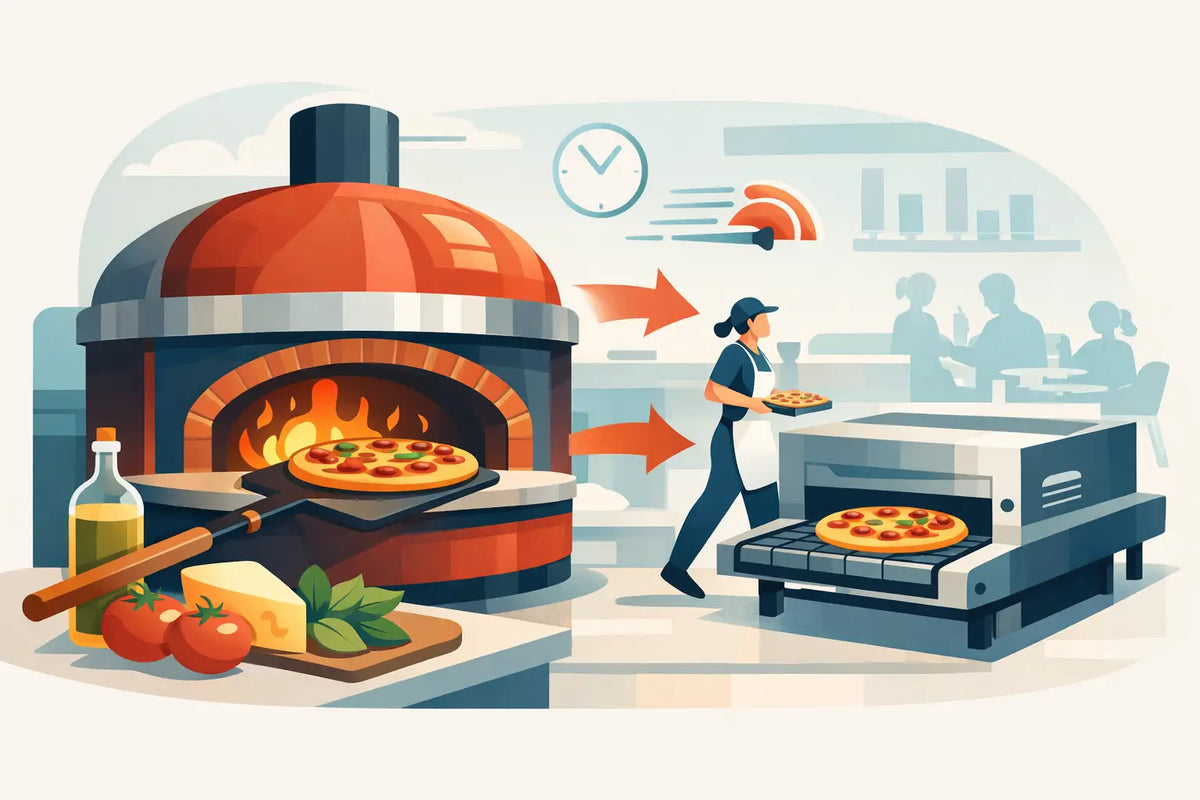
For this operation, a deck-style configuration made sense because the menu depended on crust character and high-heat performance. A different restaurant could reach a different conclusion. Conveyor ovens can be highly effective for standardized, high-volume production, particularly when speed, labor consistency, and predictable throughput take priority. Countertop units may serve a limited menu, a bar program, or a smaller satellite operation well. There is no universal best oven, only the right oven for the menu, volume, space, and staffing model.
The operator also avoided overbuying. An oven with significantly more capacity than the kitchen could support would have increased upfront costs, utility demands, and the risk of underused equipment. The goal was controlled growth, not unnecessary square footage.
Installation Required More Than a Delivery Date
A successful oven upgrade begins before the equipment arrives. The pizzeria confirmed utility specifications, hood and ventilation requirements, floor loading, clearances, fire safety requirements, and the path from delivery point to final installation location. These details are often where an otherwise strong equipment decision becomes expensive.
The kitchen scheduled installation during a slower operating window and planned a limited menu for the transition period. Staff received training on startup, temperature verification, loading patterns, cleaning, and the revised ticket flow. This step mattered because a new oven changes the rhythm of the line. Cooks need time to learn how quickly the chamber recovers, how different dough formulas respond, and when a pizza needs rotation or no rotation at all.
The team also tested the oven with their actual dough, sauce, cheese, and topping combinations. Factory settings are a starting point, not a final recipe. Heavily topped pizzas, cold ingredients, and larger pies can behave differently from a basic cheese pizza. The kitchen documented target bake times and visual standards so every shift had a reliable reference.
Results: Better Flow and More Predictable Quality
Within the first several weeks, the pizzeria saw the operational gains it had targeted. During peak service, the line could accept more orders without immediately creating a backlog. The improved recovery rate reduced the need for cooks to extend bakes late in the rush, helping the team maintain more consistent crust color and cheese finish.
Ticket times became more predictable rather than simply faster in every circumstance. That distinction is valuable. A restaurant can communicate an accurate pickup time, pace its delivery orders, and staff the line more intelligently when the cooking process is stable. Predictability improves the guest experience and reduces pressure on the kitchen team.
The upgrade also reduced unnecessary touches. Cooks spent less time opening the oven to check progress, rotating pizzas to correct uneven conditions, or reworking an underbaked pie. That gave them more attention for topping accuracy, presentation, and clean handoffs to the expo station.
The financial benefit was not limited to selling more pizzas. Better consistency reduced waste. Improved throughput helped the operation capture demand during the periods when every missed order mattered most. A more controlled process also made training easier, because new employees were learning a repeatable system instead of inheriting a collection of rush-hour workarounds.
What This Pizzeria Oven Upgrade Case Study Reveals
The central lesson from this pizzeria oven upgrade case study is that oven selection should begin with production reality. Count the tickets, study the peak periods, understand the menu, and identify where heat recovery or workflow breaks down. Equipment specifications matter, but only when they are matched to how the kitchen truly operates.
Restaurant owners should also plan for the surrounding system. An oven upgrade may expose limits in refrigeration, dough staging, make-line capacity, ventilation, packaging space, or staffing. That is not a reason to delay the investment. It is a reason to evaluate the entire production path before ordering.
For operators ready to grow, the right commercial oven is more than a replacement for aging equipment. It is a performance tool that helps the kitchen deliver the same pizza, at the same standard, when the pressure is highest. Choose the unit that makes your strongest service more repeatable, then build the line around that level of execution.