Best Commercial Pizza Oven: Find Your Fit
The best commercial pizza oven is not necessarily the one that reaches the highest temperature or carries the most dramatic silhouette. It is the oven that holds its heat through a Friday-night rush, fits the rhythm of your line, and gives every pie the crust, char, and finish your guests recognize. For a neighborhood pizzeria, hotel kitchen, bar, food truck, or polished outdoor entertaining space, that decision shapes far more than pizza. It affects ticket times, labor, utility planning, menu range, and the feeling of the room.
A pizza oven is a heat source, but it is also a production system. The right model gives a skilled operator control over the details that matter: floor recovery, dome heat, airflow, loading space, and the small adjustments that turn dough, sauce, and cheese into a consistent signature pie.
Start With the Service You Need to Run
Before comparing fuel types or exterior finishes, define the service pattern. A restaurant producing 40 pizzas across a relaxed dinner period needs something very different from a slice operation producing 40 pizzas in 30 minutes. Peak demand, not average sales, should guide oven capacity.
Think about your busiest 15-minute window. How many pizzas must leave the pass in that period, and what sizes are they? A deck oven with multiple chambers may support several bake styles at once, while a high-output conveyor can keep an express concept moving with less dependence on a dedicated pizzaiolo. A compact countertop unit can be a strong fit for a bar menu, café, or limited-service operation, but it should not be expected to absorb a full pizzeria rush without bottlenecks.
Your menu deserves equal weight. Neapolitan-style pizzas require intense heat and fast bakes, often with a live-fire character and a supple center. New York, tavern, Detroit, grandma, and pan pizzas generally benefit from more measured deck heat and longer bake times. If pizza shares the menu with roasted vegetables, baked pastas, flatbreads, or proteins, consider whether the oven can support those items without interrupting pizza production.
The Best Commercial Pizza Oven by Oven Style
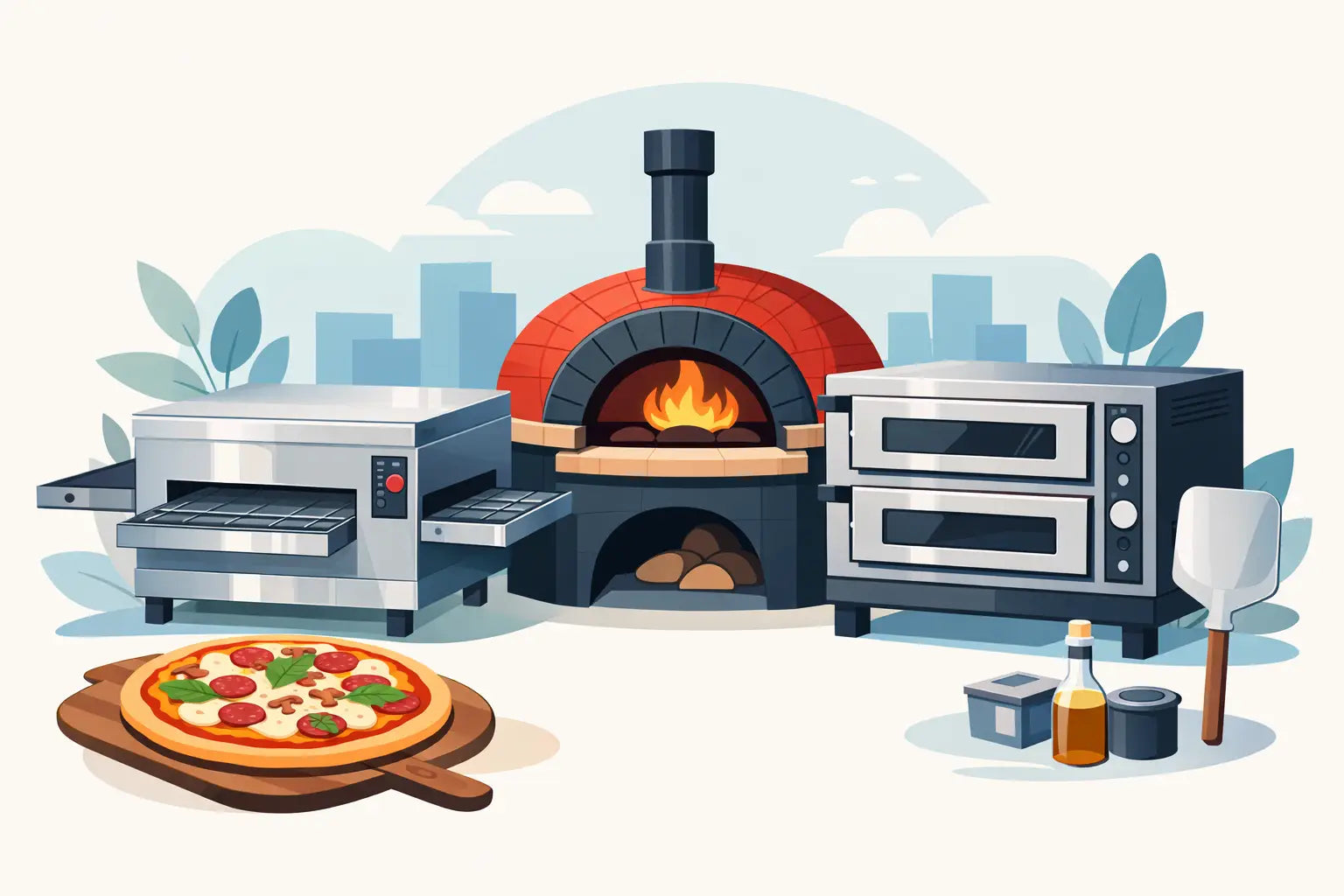
There is no universal winner among commercial pizza ovens. Each format creates a different heat profile, workflow, and finished product.
Deck Ovens: Steady Heatlines of Control
Deck ovens remain a foundation of serious pizza production. Their stone or ceramic decks deliver conductive bottom heat, while the chamber provides the radiant energy needed for balanced color and melt. They are especially well suited to operators who want control over bake position, deck temperature, and timing.
Gas deck ovens offer practical, responsive heat for high-volume kitchens with available gas service. Electric deck ovens can be the better choice where gas is unavailable, ventilation options are limited, or precise independent deck control is a priority. Both can produce excellent pizza, provided the oven is properly sized and allowed to recover between loads.
The trade-off is technique. Deck ovens reward experienced hands, but they demand attention. Someone must rotate pies, manage hot spots, and understand when a deck needs time to recover. For concepts built around craft and visible kitchen rhythm, that is often a feature rather than a drawback.
Conveyor Ovens: Consistency at Speed
Conveyor ovens are designed for repeatable output. A set belt speed and temperature program move pizzas through a controlled baking chamber, making them particularly useful for high-volume delivery, quick-service, institutional, and multi-unit operations.
Their greatest advantage is labor consistency. A well-programmed conveyor reduces the reliance on constant oven-side judgment, helping newer team members produce dependable results. They can also support a wide range of products, from pizza and toasted sandwiches to wings and baked appetizers.
The compromise is less individual control over each pie. A conveyor can produce a very good product, but it is not the natural choice for an operation where hand-turning and live-fire variability are central to the guest experience. Also account for its footprint. Belt length, landing space, and line flow must be planned as carefully as the oven itself.
Wood-Fired and Gas-Fired Hearth Ovens: Fireside Craftwork
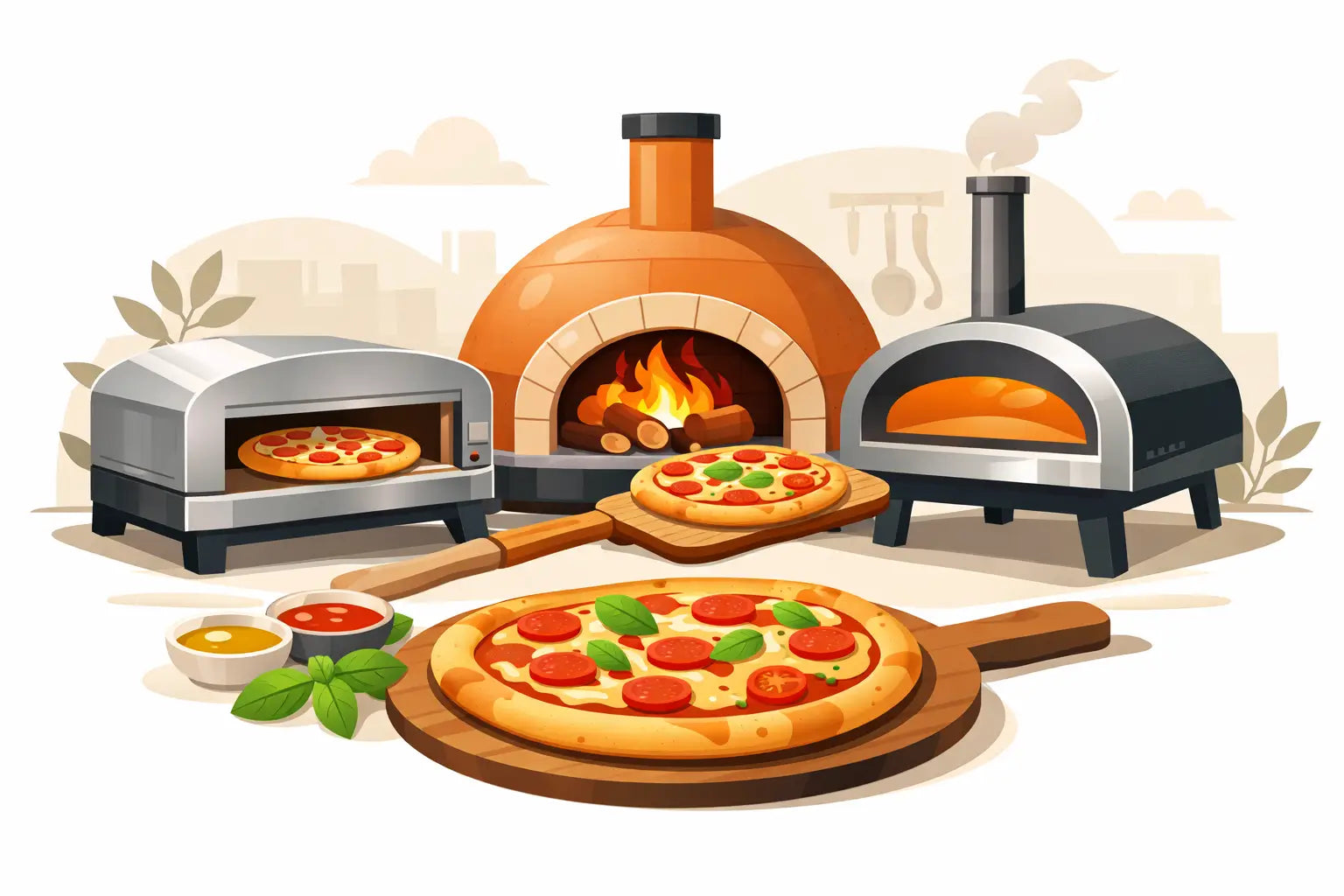
A hearth oven brings theater to the kitchen. The visible flame, masonry presence, and aromatic finish can make pizza service part of the hospitality experience. Wood-fired models create a distinctive live-fire character, while gas-fired hearth ovens offer many of the same visual and radiant-heat benefits with easier temperature management and less fuel handling.
These ovens make sense when the pizza itself is a focal point and guests can see, smell, or feel the work behind it. They can reach the high temperatures needed for fast, blistered pies, but they require thoughtful installation, trained operators, and a realistic plan for ventilation, clearance, fuel storage, and cleaning.
Wood is not automatically better. It adds flavor and romance, but it also introduces ash management, greater temperature variation, and a steeper learning curve. For many commercial kitchens, gas-fired hearth performance provides a more controllable path to the desired result.
Countertop and Compact Ovens: Focused Capability
Small-format commercial pizza ovens are useful where space is tight and pizza is an important addition rather than the entire concept. They suit concession counters, breweries, cafés, hotel bars, food trucks, and outdoor kitchens that need professional-grade heat without a full pizza line.
Capacity is the constraint. Measure not just the oven, but the work around it: dough staging, topping rail access, peel movement, finished-pizza landing space, and safe operator clearance. A compact oven can feel generous in an empty plan and restrictive once service begins.
Match Fuel and Power to Your Building
The oven you prefer must still work with your site. Confirm utility availability before narrowing the field. Gas models require the correct gas type, pressure, and connection capacity. Electric ovens may require high-voltage service, sufficient amperage, and electrical upgrades that affect both budget and installation timing.
Ventilation is equally consequential. Some equipment may require a Type I hood, while certain electric or ventless applications can offer more flexibility under specific conditions. Local codes, fire authorities, landlords, and health departments determine what is permissible. Never treat a product specification as a substitute for local approval.
For outdoor residential or hospitality settings, weather exposure, placement clearances, surface construction, and fuel routing still matter. A beautiful oven installation should look intentional because it was planned intentionally, not because equipment was forced into an unsuitable corner.
Size the Oven for Recovery, Not Just Capacity
Operators often focus on how many pizzas fit inside an oven at one time. That matters, but recovery is what protects quality during service. When cold dough and toppings hit the deck, they pull heat from the cooking surface. An oven with adequate deck area but weak recovery can produce pale bottoms, extended bakes, and uneven results when demand rises.
Ask practical questions: How many pizzas can bake at once at your target size? How quickly does the deck regain temperature after a full load? Can separate decks or zones run at different temperatures? Is the listed production rate based on real bake times and your actual pizza format?
A little excess capacity is rarely wasted. It gives the team room to recover from a surge, accommodate larger pies, and protect quality when the dining room fills faster than forecast.
Design the Line Around the Oven
An oven performs best when its surrounding workspace supports it. Position refrigeration and dough storage close enough to reduce steps, but not so close that the pizza maker is constantly crossing traffic. Provide a clean make table, flour or cornmeal storage, peel storage, pan landing space, and a clear path for finished pies to reach cutting, boxing, or service.
The oven opening should be comfortable for the operator who will use it most. Repetitive reaching, awkward turns, and crowded peel movement slow the line and increase the chance of burns. In a visible kitchen, the same disciplined layout also reads as confidence to guests.
Details Worth Confirming Before You Buy
Specifications are where a beautiful idea becomes an operational decision. Review exterior dimensions, interior deck dimensions, door swing or conveyor clearance, weight, fuel requirements, electrical requirements, temperature range, and required installation clearances. Confirm whether stands, casters, shelves, stones, venting components, or other accessories are included or separately required.
Also consider maintenance access. Heating components, controls, belts, and gas connections will eventually need service. Leave room to reach them. The most elegant kitchen is still a working environment, and equipment that cannot be maintained easily becomes expensive quickly.
Choose for the Pie You Want to Be Known For
The best commercial pizza oven should make your intended product easier to execute on an ordinary Tuesday, not only impressive during a demonstration. A hand-built hearth oven may be the right statement for a chef-driven pizzeria. A stacked deck oven may be the dependable center of a busy neighborhood operation. A conveyor may be the disciplined engine behind fast, consistent delivery volume.
Culinary Precisions approaches oven selection as part of a broader kitchen composition: heat, workflow, utility requirements, and the kind of hospitality you want the equipment to support. When the oven matches the menu and the pace of service, it becomes more than a purchase. It becomes the steady source of color, texture, and confidence behind every pie that leaves the kitchen.