Choosing Pizza Ovens for Service and Flavor
A pizza oven earns its place on the line in the first rush. It has to recover heat after repeated door openings, bake consistently when the ticket rail fills, and give the cook enough control to produce the same crust at noon and at 9:30 p.m. The best pizza ovens are not simply the hottest models available. They are the ovens that suit the menu, the volume, the space, and the rhythm of service.
For a chef or operator, this is a decision about more than pizza. Oven performance affects ticket times, labor, energy use, kitchen layout, and the character guests associate with the business. For a serious home cook building an outdoor kitchen, the same principle applies on a more intimate scale: the oven should make gathering feel effortless, not turn every pizza night into a fire-management project.
Start With the Pizza You Intend to Serve
The crust sets the requirements. Neapolitan-style pizzas need intense, radiant heat and a very short bake, often around 60 to 120 seconds in an oven operating well above 700°F. That heat creates the leopard spotting, airy rim, and tender center that define the style. A lower-temperature deck oven can make excellent pizza, but it will produce a different result: a more structured crust, a longer bake, and more time for toppings to cook through.
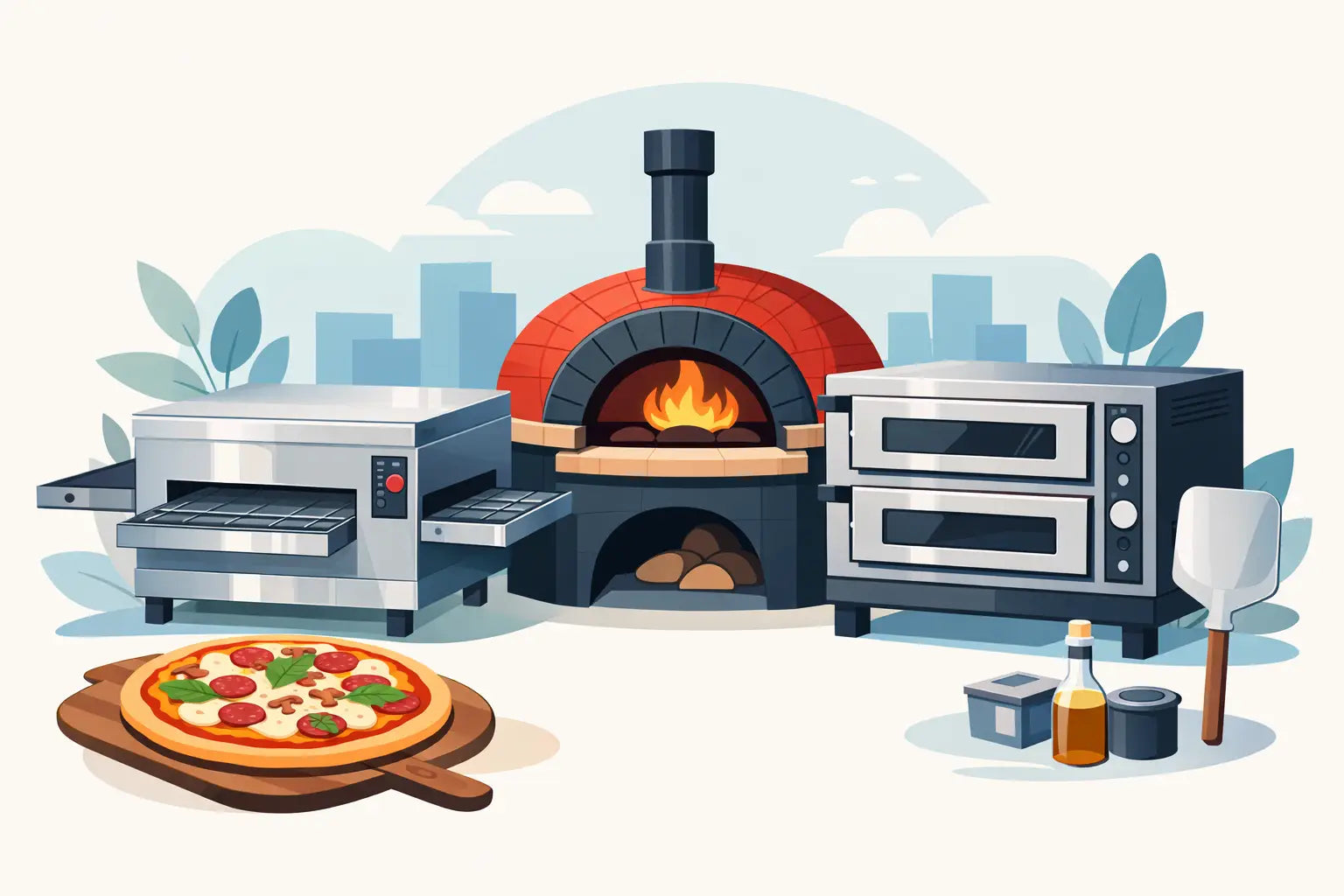
New York-style, tavern-style, Detroit-style, Sicilian, and pan pizzas each place different demands on the oven. A deck oven provides the steady floor heat needed for pies that bake longer and carry more moisture or cheese. Conveyor ovens bring repeatable timing to high-volume operations, especially where multiple staff members must produce a consistent product. Wood-fired and gas-fired hearth ovens offer direct visual appeal and distinctive heat behavior, making them a natural fit for open kitchens, chef-driven concepts, and outdoor hospitality settings.
The right question is not, “Which oven makes the best pizza?” It is, “Which oven makes our pizza well, through our busiest service, with the staff and utilities we have?”
The Main Types of Pizza Ovens
Deck Ovens: Steady Heat and Hands-On Craft
Deck ovens use stone, ceramic, or composite decks to deliver strong bottom heat and radiant energy from the chamber. They are a familiar choice for pizzerias because they can produce a crisp, evenly baked crust with an appealing degree of manual control. Operators can adjust deck and top heat, move pies within the chamber, and develop a bake that fits their dough formula.
They also reward disciplined workflow. A deck oven requires staff who can judge doneness, rotate pizzas when needed, and manage available deck space during a rush. Recovery time, deck size, and the number of chambers matter more than a headline maximum temperature. A single large deck can suit a focused menu, while stacked decks give an operation flexibility to run different products or temperatures at once.
Conveyor Ovens: Repeatability at Volume
Conveyor pizza ovens move product through a controlled heat chamber at a programmed speed. Their strength is consistency. Once the correct belt speed and temperature are established, a new employee can produce a reliable pizza with less judgment required at the oven.
This makes conveyor systems especially useful for quick-service restaurants, bars, concessions, schools, delivery-heavy concepts, and any operation where speed and labor consistency carry real value. They can also support a wider menu, handling flatbreads, sandwiches, baked appetizers, and other items during slower periods.
The trade-off is culinary expression. Conveyor ovens can produce very good pizza, but they do not offer the same direct interaction with the bake as a deck or hearth oven. They also require careful attention to hood requirements, clearance, belt width, and the landing space needed at both ends of the oven.
Wood-Fired and Gas Hearth Ovens: Heat With Presence
A hearth oven changes the atmosphere of a room. Flame, masonry, and the movement of a pizza peel give guests something to watch while creating a high-heat environment suited to artisan pizza. Wood-fired ovens bring smoke and live-fire character, though the flavor effect depends greatly on the oven design, wood quality, fire placement, and bake time. The practical reality is that wood also demands more training, ash management, fuel storage, and ventilation planning.
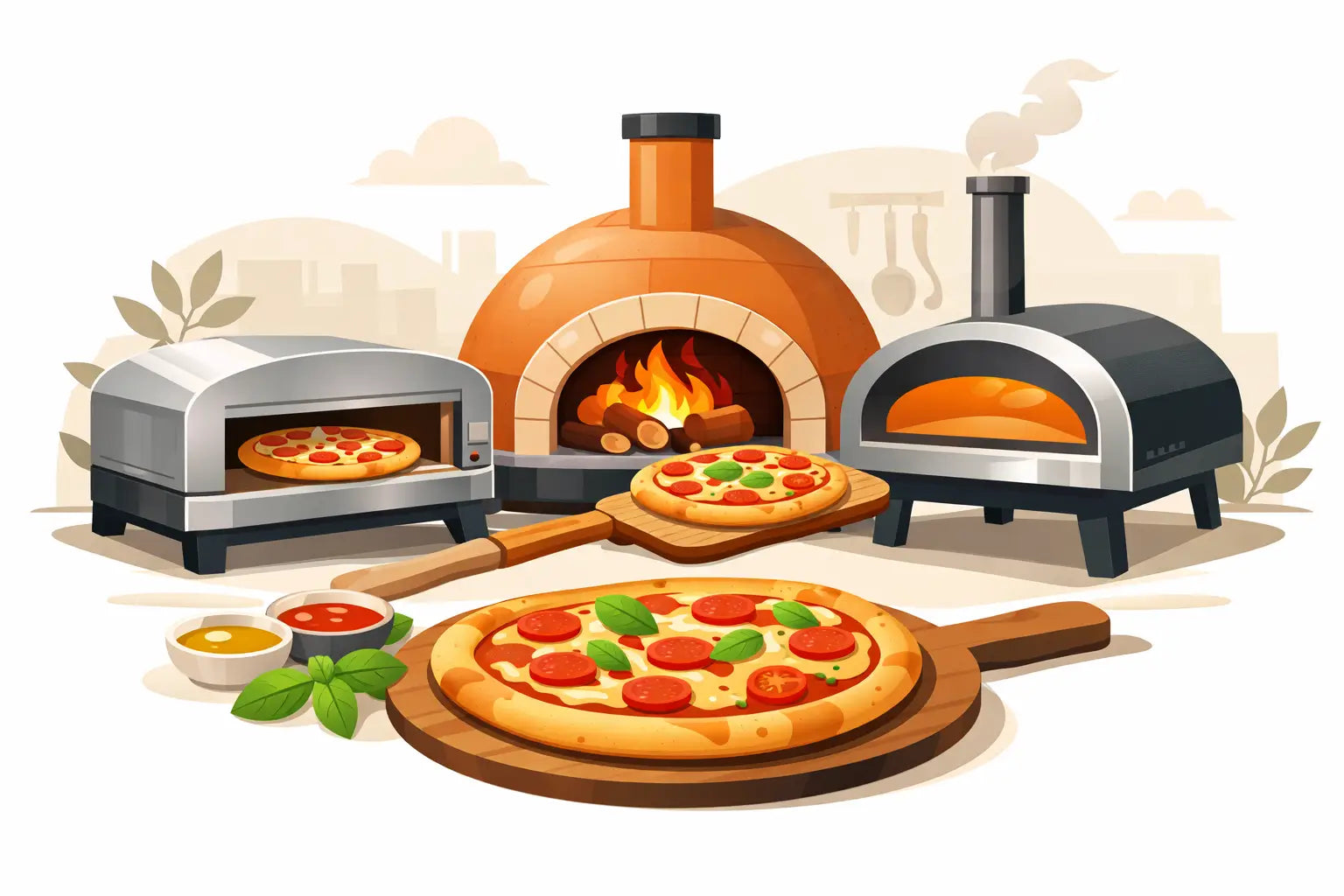
Gas-fired hearth ovens provide much of the visual and thermal appeal of a traditional oven with more immediate control. They generally heat up faster, recover predictably, and reduce the labor associated with maintaining a wood fire. For operators who want open-fire theater without making wood management central to the job, gas is often the more practical choice.
Electric hearth and countertop ovens can be compelling where gas is unavailable, ventilation is limited, or an operation needs a compact production solution. Their suitability depends on electrical capacity and local code requirements, so planning should begin before the equipment reaches the site.
Capacity Is More Than Pizzas Per Hour
Capacity claims are useful, but they need context. A manufacturer may describe how many 12-inch pizzas fit in a chamber, yet that figure does not account for loading technique, bake style, staff experience, recovery time, or how much room is needed to turn pies. A crowded oven can reduce quality just as quickly as an undersized oven can slow service.
Build capacity around the peak 15 minutes, not the average day. Consider the number of pizzas likely to land during the busiest interval, the intended bake time, and whether the oven will also carry other menu items. If an operation expects a sharp dinner rush followed by a quiet late evening, the oven must handle the surge without forcing cooks to compromise on browning or ticket times.
A useful planning exercise is to map the full station: refrigerated prep rail, dough storage, topping reach, oven mouth, landing area, cutting surface, boxing, and handoff. The oven is the heat center, but the station succeeds only when every movement around it is clean and deliberate.
Heat, Fuel, and Utility Planning
High temperature is valuable only when it is controllable. Look for a system that can hold its set point, recover after loading, and provide the type of heat your product needs. Strong deck heat supports a crisp base. Radiant top heat finishes cheese and toppings. Airflow can accelerate the bake, but too much can dry delicate ingredients or push cheese color too quickly.
Fuel choice should be made with the building in mind. Gas may offer operating convenience and rapid recovery, but it requires appropriate gas supply and installation. Electric ovens may simplify placement in some locations but can demand substantial electrical service. Wood adds a distinctive craft element, yet it introduces fuel handling, ash disposal, and more complex ventilation considerations.
Do not treat ventilation as an afterthought. Hood type, fire suppression, make-up air, clearances, local code, and landlord approval can shape the project before a pizza is baked. Outdoor installations have their own constraints, including weather exposure, noncombustible surfaces, wind, gas connections, and safe traffic flow around the cooking area. Confirm specifications with qualified installers and local authorities before finalizing a purchase.
Choose for Workflow, Not Just the Spec Sheet
Dimensions matter in ways that are easy to miss. Measure the equipment footprint, but also account for door swing, peel clearance, service access, stand height, and the space required to move the oven into the building. A unit that fits on paper can become a costly problem if it cannot clear a doorway, turn a corridor, or reach its final location without disassembly.
Controls deserve equal attention. Simple manual controls can be durable and intuitive for experienced cooks. Digital controls can improve repeatability, recipe management, and training across multiple shifts. Neither approach is automatically better. A focused neighborhood pizzeria with a skilled oven cook may value tactile control, while a multi-unit concept may benefit more from programmed consistency.
Material quality also has operational consequences. Insulation affects heat retention and exterior temperatures. Door construction influences heat loss. Thick decks hold energy but take longer to heat and cool. Stainless steel exteriors are practical for commercial cleaning, while decorative finishes and visible hearths may be worth the investment when the oven anchors the guest experience.
For complex projects, Culinary Precisions can help translate those details into an equipment choice that respects both the menu and the installation realities. The goal is not to overspecify an oven. It is to build a heat line that performs with confidence every day it is called into service.
A Better Buying Decision Begins With the First Pie
Before choosing, picture the first pizza leaving the oven during a packed service. Who is making it? How quickly must it be ready? What should the crust feel like when it reaches the table or the box? The answers will point toward the right capacity, fuel, controls, and format.
A well-chosen oven does more than bake dough. It gives the kitchen a reliable center of gravity, where practiced hands, calibrated heat, and a good dough come together with purpose.