Commercial Ovens That Match Your Kitchen’s Rhythm
A dinner rush exposes every weakness in a kitchen. The line needs to move, proteins need an even finish, bread needs a crisp crust, and the person working the oven cannot spend service fighting hot spots or guessing at recovery time. Commercial ovens are not simply larger appliances. They establish the heat, pace, and consistency behind a menu.
For a restaurant, hotel kitchen, bakery, catering operation, or serious outdoor cooking space, the right oven should feel like a dependable part of the crew. It should suit the food you make, the volume you serve, the utilities you have available, and the physical rhythm of your workspace. Choosing well starts with a clear view of how heat will support the work.
Start With the Food, Not the Oven
A commercial oven earns its place through the menu. Before comparing cabinet sizes, control panels, or finishes, identify the items that must come out right every time. A pizzeria needs rapid deck recovery and the particular character of high, radiant heat. A bakery may prioritize gentle, even baking across multiple sheet pans. A steakhouse could need convection speed for sides alongside a range or charbroiler for the main event.
Also consider what happens at your busiest 15-minute interval, not just over the course of a day. An oven that handles 80 covers comfortably can still become a bottleneck when tickets arrive in one concentrated wave. Batch size, cook time, loading frequency, and recovery time all matter more than a broad claim of capacity.
A useful planning exercise is to map your oven-dependent menu items by temperature and timing. If several dishes require 350°F while another needs a short blast at 500°F, one versatile oven may work well. If products need fundamentally different heat environments at the same time, separate equipment may protect both quality and ticket times.
The Commercial Oven Types That Define Service
Convection ovens for speed and evenness
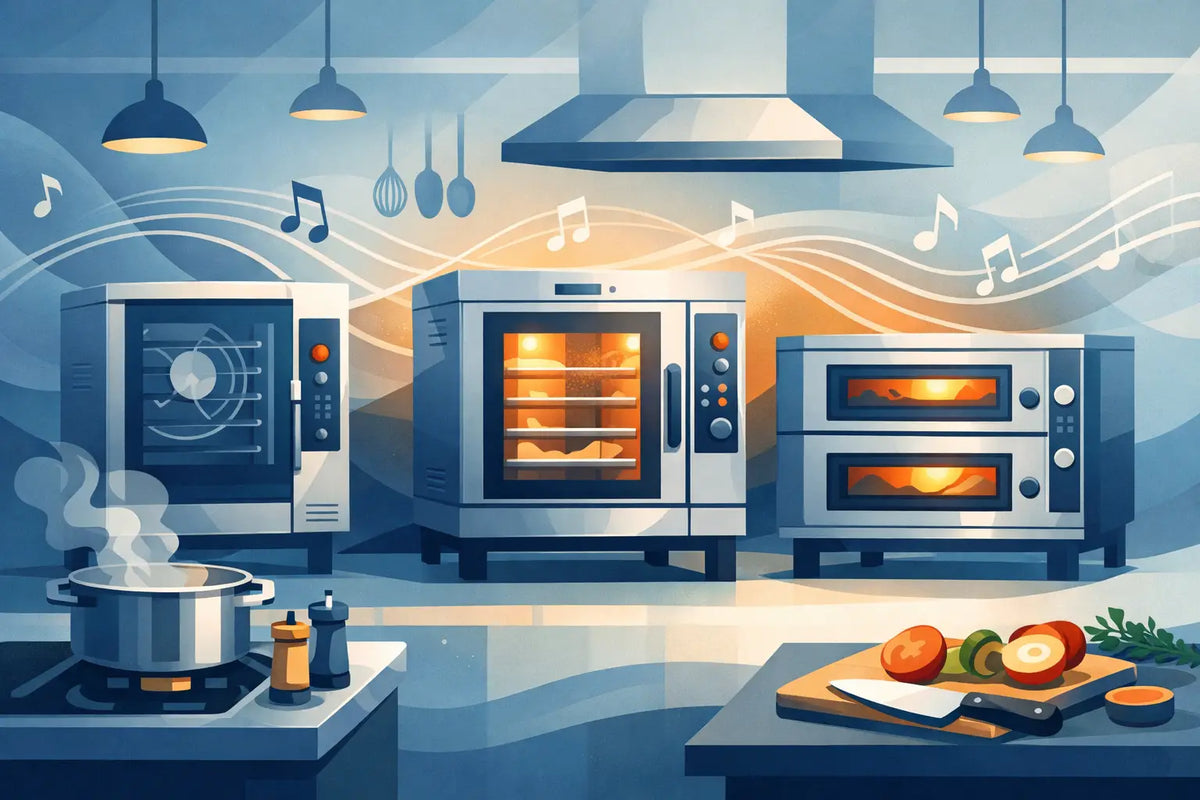
Convection ovens use fans to circulate hot air through the cavity. That moving air promotes even browning and efficient cooking, making this format a practical workhorse for roasting, baking, reheating, finishing casseroles, and producing high volumes of sides. Full-size models can accommodate multiple sheet pans, while half-size options make sense where footprint is limited.
The trade-off is that airflow can be too assertive for delicate goods. Custards, light soufflés, and certain laminated pastries may need careful fan settings or a different oven altogether. Look for adjustable fan speed, durable door seals, clear controls, and a capacity that fits your actual pan count. A few extra racks are only useful if the oven can cook them evenly.
Combi ovens for controlled versatility
A combi oven combines convection heat with steam and humidity control. That gives chefs an unusually broad range of techniques in one cabinet: roasting, steaming, baking, poaching, regenerating, and holding food with less moisture loss. For operations managing varied menus, labor pressure, or precise batch production, that flexibility can change the flow of the kitchen.
The value is not just in having more modes. Humidity control can help preserve yield in proteins, create better crust development in bread, and maintain consistency during retherming. Programmable cooking steps can also support repeatable results across shifts.
Combi ovens demand planning. They may require water treatment, drainage, cleaning protocols, and staff who understand how to use the settings intentionally. A model with more capability than the team will use is not necessarily a better investment. But for kitchens ready to build recipes around controlled heat and moisture, the return can be substantial.
Deck and pizza ovens for radiant character
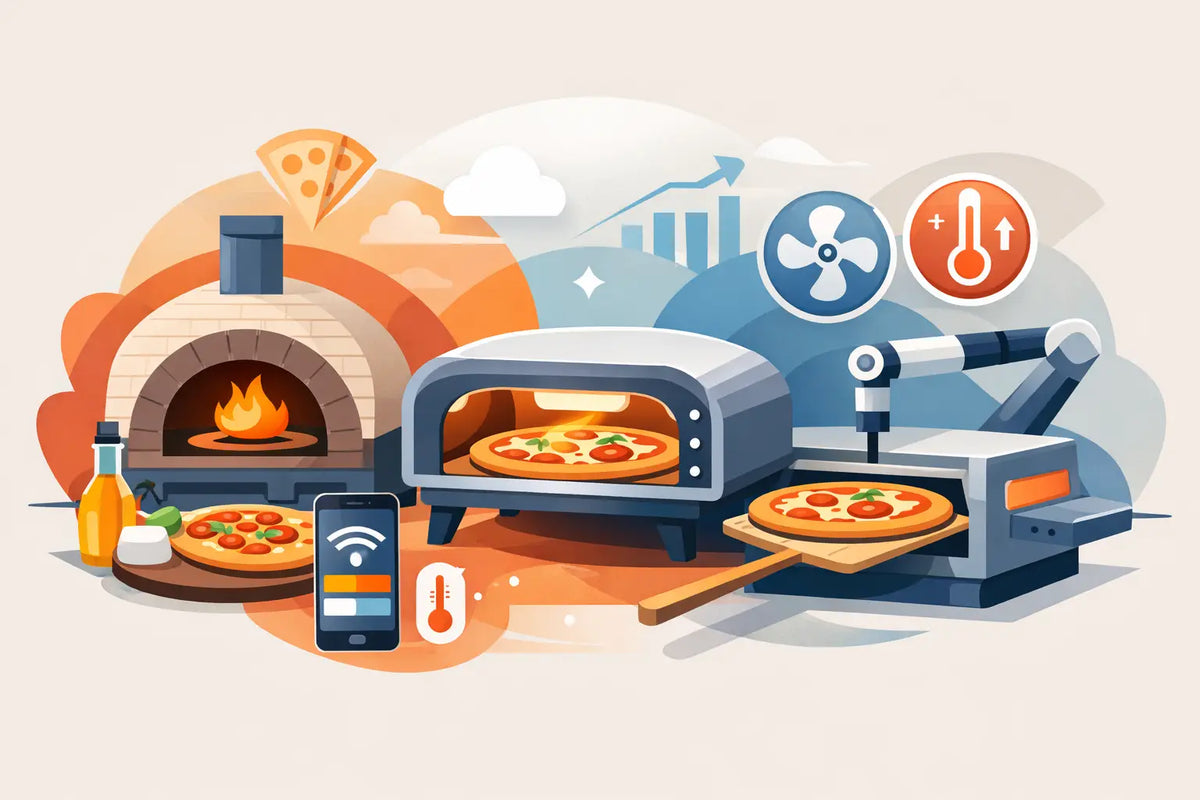
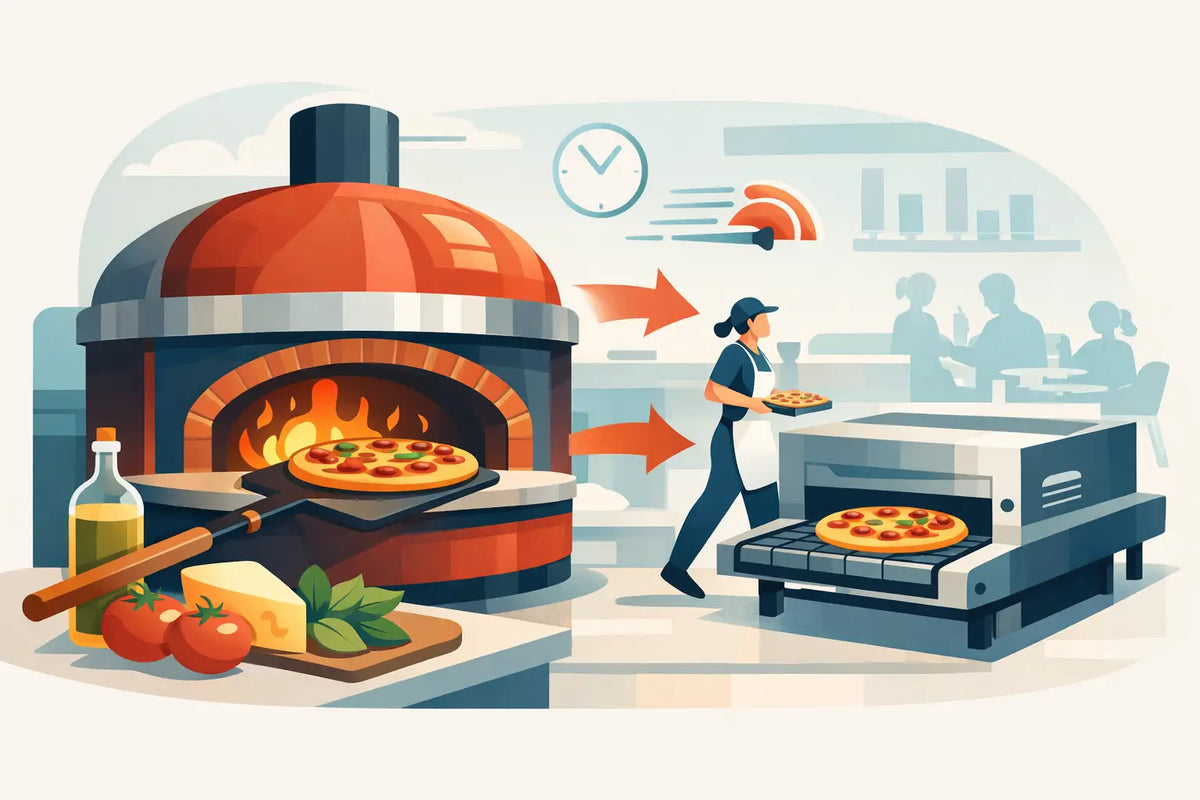
Deck ovens bring food close to stored, radiant heat. Their baking surfaces and chamber design make them central to artisan bread, pizza, flatbreads, and foods that benefit from a firm bottom crust and strong oven spring. Gas, electric, and wood-fired formats each create a different working experience and flavor profile.
For pizza, the decision is rarely only about maximum temperature. Consider deck dimensions, number of pies per bake, recovery after loading, insulation, ventilation requirements, and the style of pie on the menu. A thin, high-heat Neapolitan-inspired pizza asks more of an oven than a pan pizza or a New York-style slice program.
Deck ovens often reward patience and operator skill. They can deliver a deeply satisfying texture that high-airflow equipment cannot replicate, but they may need more attention during service. The right choice depends on whether that craft is central to the concept and whether the line has room to support it.
Conveyor ovens for repeatable volume
Conveyor ovens move food through a calibrated heat chamber at a set speed. They are built for consistency under pressure, making them strong candidates for high-volume pizza, sandwiches, toasted items, and fast-casual production. Once the temperature and belt speed are properly set, the result is repeatable with less hands-on monitoring.
This format can reduce training complexity and keep production moving during peak periods. It is less suited to menus that rely on frequent changes in pan format, delicate handling, or the visual theater of a hearth or deck oven. Still, when predictable throughput is the priority, a conveyor can bring welcome order to a demanding service line.
Plan Capacity Around Workflow
Oven capacity is about more than cubic feet or the number of racks. It is about whether the unit can be loaded, unloaded, and cleaned without disrupting the people working beside it. Door swing, handle clearance, hood placement, landing space, and proximity to refrigeration or prep tables all shape daily efficiency.
A double-stack convection oven may add valuable output without expanding the kitchen footprint, but it also changes reach and loading ergonomics. A floor model combi can replace several pieces of equipment in a compact footprint, yet it needs room for pans, drains, water connections, and routine maintenance access. In a food truck or compact café, a smaller unit with a fast recovery rate may serve better than a large oven that overwhelms the line.
Think through the journey of the food. Raw product should move naturally from refrigerated storage to prep, cooking, pass, and service. When a cook must cross a traffic lane with hot sheet pans or open an oven door into a crowded aisle, the equipment layout is working against the team.
Gas, Electric, and the Reality of Utilities
Gas ovens are valued for responsive heat and can be an economical choice where gas infrastructure is already in place. Electric ovens often offer highly precise control and can be especially appealing for baking programs, certain compact kitchens, or locations where gas is unavailable. Neither is inherently superior. The best fit depends on local utility costs, the cooking style, installation conditions, and the equipment surrounding the oven.
Confirm utility requirements before purchase, including voltage, phase, amperage, gas type, BTU demand, water supply, drainage, and ventilation. These details are not paperwork at the edge of the project. They determine whether the oven can perform as specified and whether installation stays on schedule.
Ventilation deserves the same attention. Some ovens may qualify for ventless operation under specific conditions, while others require a Type I or Type II hood system. Local codes, fire suppression requirements, and inspector approvals vary. Bring qualified installers and local authorities into the conversation early, particularly for gas-fired, wood-fired, or grease-producing applications.
Controls Should Serve the People Using Them
The best control system is the one your team can operate accurately during a busy shift. Manual dials offer direct, tactile simplicity. Digital controls support exact temperature settings, timers, and repeatability. Programmable touchscreen systems can store recipes and multi-stage cooking processes that help protect quality across locations or shifts.
More programming is helpful when consistency is difficult to maintain or training time is limited. It can be unnecessary when a small, experienced team runs a focused menu with a few familiar cooking routines. Ask who will use the oven at 8 p.m. on a packed Saturday, then choose controls that make their work clearer rather than more complicated.
Cleaning also belongs in the controls conversation. Removable rack guides, accessible cavities, durable gaskets, automatic wash cycles, and clear maintenance prompts all affect how long equipment stays reliable. An oven that is difficult to clean will eventually lose performance, no matter how impressive its specifications looked on day one.
Build for the Next Service, Not Just Opening Day
A commercial oven is a long-term decision about pace. Choose enough output for your busiest service, but avoid paying for capacity that sits cold. Choose specialized heat when it defines the food, and versatile equipment when the menu must flex. Above all, select a unit whose installation, controls, maintenance needs, and working height fit the people who will rely on it every day.
When the heat is right, the kitchen gains more than speed. It gains the quiet confidence to send out food with the same color, texture, and care from the first ticket to the last.