Commercial Mixer Bowl Capacity: Size It Right
The difference between a mixer that carries service with quiet authority and one that interrupts it often comes down to a single choice: commercial mixer bowl capacity. A bowl that is too small creates extra batches, hurried prep, and needless wear on the team. One that is oversized for the task can struggle with small quantities, take up valuable floor space, and tie up capital that belongs elsewhere in the kitchen.
Capacity is not simply a number stamped on the bowl. It is a working relationship between the product, the mixing method, the menu, and the rhythm of production. The right mixer should feel proportionate to the work: enough power and volume for the busiest prep window, with the control to produce the same dough, batter, filling, or whipped preparation every time.
What Commercial Mixer Bowl Capacity Actually Means
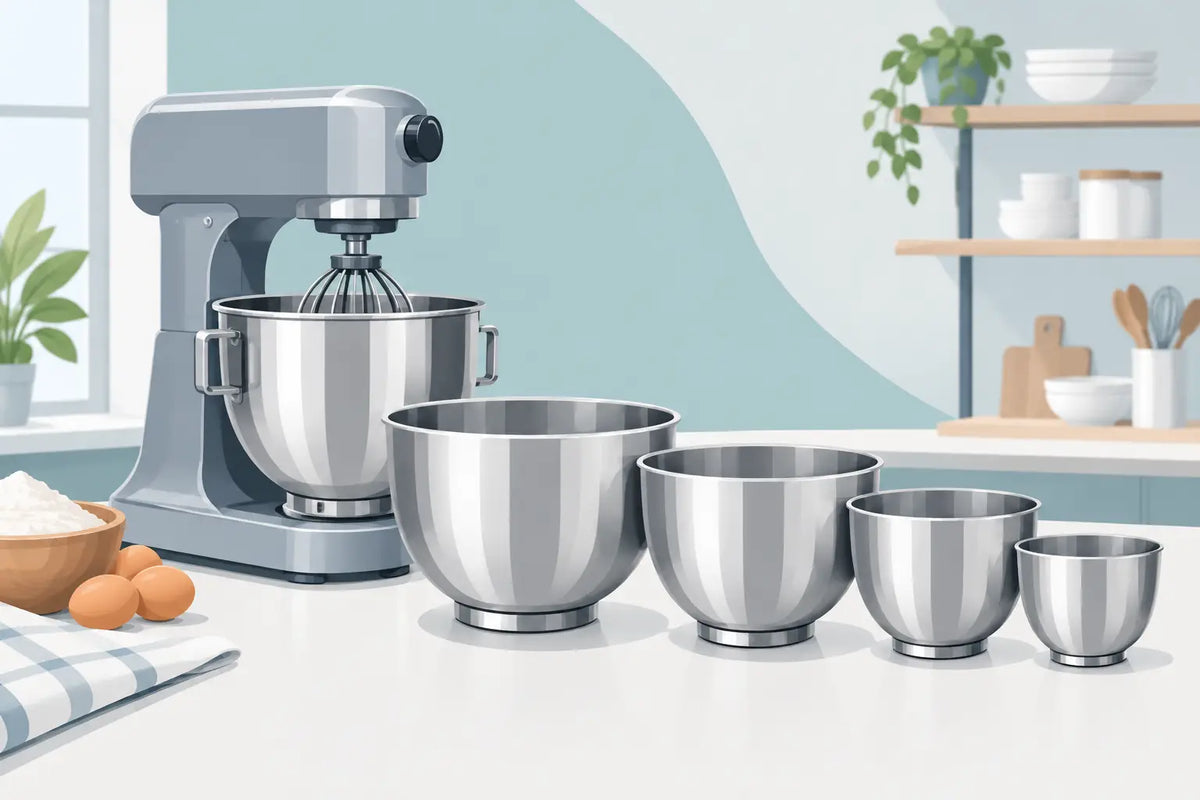
Commercial mixer bowl capacity is typically stated in quarts, with common planetary mixer sizes ranging from compact 10- or 20-quart units to 30-, 40-, 60-, 80-, and 140-quart floor models. That figure describes the bowl's physical volume, not the amount of every ingredient it can successfully mix.
A 60-quart bowl may accommodate a generous volume of cake batter or whipped cream, for example, but it cannot necessarily knead 60 quarts of stiff bagel dough. Dense dough places a far greater load on the motor, gears, agitator, and bowl lift. Manufacturers therefore publish maximum capacities by product type and, for dough, often by flour weight or finished dough weight.
This distinction protects both product quality and equipment life. A mixer working beyond its rated dough load may heat the dough, overwork the gluten, trip protection systems, or place damaging strain on the drive train. The bowl is only one part of the capacity equation. Horsepower, transmission design, mixing speed, agitator style, and the resistance of the mix all matter.
Start With the Batch, Not the Bowl
The most reliable way to choose capacity is to identify the largest batch you need to produce during a normal prep cycle. Start with actual recipes and production records rather than guest-count estimates alone. A bakery making 100 pounds of pizza dough before lunch has different needs from a restaurant using a mixer primarily for whipped potatoes, cookie dough, and sauces.
For dough-based operations, calculate the finished dough weight per batch, then compare it with the manufacturer's published maximum for that specific mixer. Include the flour weight and hydration level. A high-hydration focaccia dough flows more easily than a low-hydration bagel dough, even at a similar finished weight. Whole-grain flour, cold water, butter, inclusions, and preferments can also change the resistance the mixer experiences.
For batters and lighter mixtures, assess the working volume rather than filling the bowl to its rim. Mixing needs headspace. A bowl packed too high sends flour into the air, batter over the edge, and product onto the machine instead of into the pan. High-volume whipped applications need even more room because cream, egg whites, and mousse bases expand dramatically as air is incorporated.
A useful planning question is: what must this mixer complete in the narrowest, most demanding part of the day? Size for that moment, then confirm that the machine can also handle your smallest routine batch without compromising incorporation.
Think in Production Windows
A larger bowl can reduce the number of batches, but larger is not always more efficient. If a 60-quart mixer saves one batch yet requires a longer cleanup cycle, a heavier bowl lift, or more staging space than the operation can support, the real gain may be modest.
Conversely, choosing a small mixer because its purchase price is attractive can create a permanent labor cost. Four batches where one would do means more scaling, more bowl changes, more sanitizing, and more opportunities for inconsistency. In a pizzeria, that can mean dough is still being mixed while the line is already warming up. In a pastry program, it can mean a cook is waiting on equipment when cakes, fillings, and frostings all need attention.
Estimate how many batches are required for your peak day, then add realistic time for scaling, mixing, bowl removal, scraping, and cleaning. The goal is not the biggest mixer in the room. It is a production rhythm with enough margin to absorb a busy Friday, a large catering order, or a late delivery without turning prep into a bottleneck.
Match Capacity to Mixer Style
Bowl capacity must be considered alongside mixer design. Planetary mixers are the versatile centerpieces of many commercial kitchens. Their agitators travel around the bowl while rotating on their own axis, making them well suited to batters, frostings, mashed potatoes, shredded meat, fillings, sauces, and moderate dough production. The familiar flat beater, wire whip, and dough hook make one machine useful across a wide menu.
Spiral mixers are purpose-built for dough. The bowl and spiral hook work together to develop gluten efficiently while generally keeping dough temperatures more controlled than a conventional planetary mixer under heavy loads. For high-volume pizza, bread, bagel, or artisan baking programs, a spiral mixer may produce the dough quality and throughput the menu demands, even if its stated bowl capacity appears comparable to a planetary model.
Smaller countertop planetary mixers earn their place as well. A 10- or 20-quart machine can be an excellent second mixer for pastry components, small-batch sauces, test recipes, or prep that would disappear in a 60-quart bowl. Many high-functioning kitchens use a floor mixer for volume and a compact unit for precision. That pairing keeps large equipment available for heavy production while giving cooks a controlled tool for detail work.
Minimum Batch Size Deserves Equal Attention
The smallest batch matters as much as the largest. A large bowl may not whip a few egg whites properly because the wire whip cannot reach the product with enough contact. Small quantities of buttercream, dressing, or dough can ride around the bowl rather than combine evenly.
Ask whether the mixer is expected to perform delicate, low-volume work. If it is, review the available bowl and agitator options, and test where possible. A smaller companion mixer may be more practical than forcing every recipe into one oversized machine.
Capacity Planning by Operation Type
A neighborhood restaurant with a broad menu often benefits from a 20- to 40-quart planetary mixer. This range can cover mashed potatoes, cake batters, whipped creams, dressings, and moderate dough batches without imposing the footprint of a larger floor unit. The correct size depends on covers, scratch production, and whether baking is central to the concept.
For pizzerias and bread-forward concepts, dough volume should lead the decision. A 60-quart planetary mixer can serve moderate pizza production when its dough rating supports the recipe, while a dedicated spiral mixer becomes compelling as daily dough weight grows or when fermentation, crumb structure, and dough temperature are defining elements of the finished product.
Caterers and institutional kitchens should account for event-driven peaks. Their average day may suggest a smaller unit, but a mixer that cannot absorb banquet prep creates a costly pinch point. When large jobs are frequent, capacity margin has operational value. When they are occasional, it may be wiser to schedule production in stages or retain access to a secondary machine.
Bakeries and dessert programs should separate dense and light applications. Cookie dough, cheesecake bases, and enriched doughs need torque. Meringues, whipped cream, and sponge batters need bowl geometry and whip performance. One large planetary mixer can cover many of these tasks, but a dedicated smaller mixer often improves precision and protects the larger unit from constant short runs.
Do Not Forget the Physical Fit
A mixer belongs to the workspace, not just the spec sheet. Measure the planned location for width, depth, height, door clearance, and access around the machine. Floor mixers need room to raise and lower bowls, change attachments, and move ingredients safely. Consider the weight of a fully loaded bowl and the path from dry storage, refrigeration, and prep tables.
Electrical requirements deserve the same attention. Larger machines may require a dedicated circuit, higher-voltage service, or three-phase power. Confirm the available utility before committing to a capacity tier. Also consider the cleaning routine: smooth access to the bowl, agitator, controls, and surrounding floor makes sanitation faster and more dependable.
At Culinary Precisions, the most productive equipment conversations begin with the recipe and the service pattern, then move to dimensions, power, and workflow. Capacity becomes clearer when it is tied to what the kitchen actually needs to make.
A Better Standard for Choosing the Bowl
Do not select a commercial mixer by quarts alone. Compare the manufacturer's product-specific capacity ratings, calculate peak-day batch requirements, and leave practical room for growth. If a planned menu expansion, wholesale account, or second location is likely, that future demand should shape the purchase without forcing an impractical machine into the current kitchen.
The best mixer does more than hold ingredients. It gives the prep team a dependable cadence: dough developing at the right temperature, whipped components holding their structure, and each batch arriving on the line with the same texture and intention. Choose the bowl capacity that protects that cadence, and the mixer becomes one of the most reliable instruments in the kitchen.