Best Commercial Vacuum Sealers for Busy Kitchens
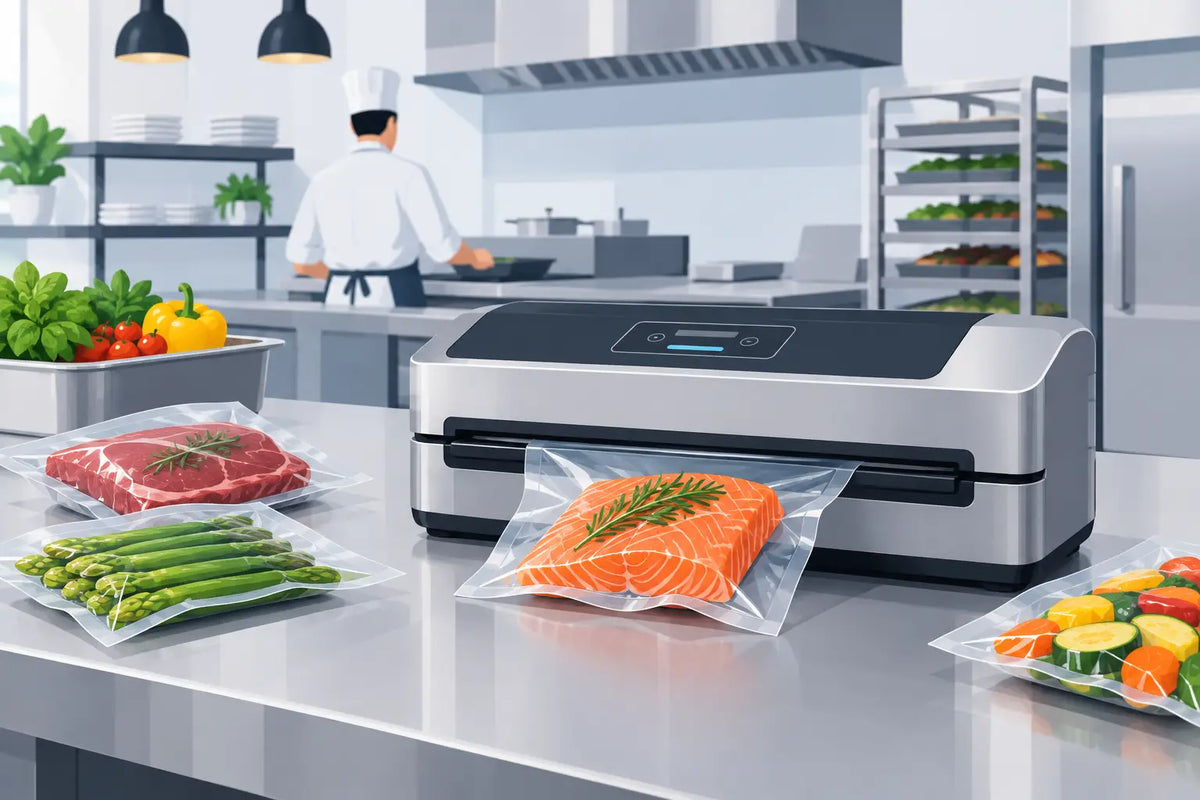
A properly sealed portion of salmon, brisket, or house-made sauce should feel like a promise kept: clean lines, protected flavor, and a product ready when service calls. The best commercial vacuum sealers do more than extend shelf life. They bring order to prep, support tighter portion control, and create the consistency that busy kitchens depend on.
For a chef-driven restaurant, caterer, butcher shop, meal-prep business, or serious outdoor kitchen, the right machine depends less on a single feature than on the rhythm of the work. How much product moves through prep each day? Are you sealing dry proteins, marinades, soups, or delicate produce? Do you need a compact countertop footprint, or a chamber built for continuous production? The answers shape the right purchase.
What Separates the Best Commercial Vacuum Sealers
Commercial vacuum sealing is fundamentally about removing air, but the equipment choice affects nearly every part of that process. A dependable machine protects food from freezer burn and oxidation, helps preserve color and texture, and creates a more controlled environment for sous vide cooking, marinating, chilling, and storage.
The distinction between consumer and commercial equipment becomes clear during a long prep shift. Commercial models are built with stronger pumps, more durable sealing bars, serviceable components, and cycle times suited to repeated use. They are designed to hold their accuracy through case after case of proteins, prepared sauces, or batch-cooked components.
The best choice also has to fit the physical workspace. A large chamber sealer can turn high-volume prep into a calm, repeatable process, but it needs counter space, electrical planning, and enough production volume to justify its capacity. A compact external suction machine may be more sensible for an operation sealing smaller quantities of dry goods, even if its limits become apparent with liquids and frequent cycles.
Chamber sealers for sauces, proteins, and production prep
For most professional kitchens, a chamber vacuum sealer is the more versatile investment. The entire bag sits inside the chamber, where pressure is reduced around the product before the bag is sealed. This method allows operators to seal liquids and liquid-rich foods with confidence, from braising jus and vinaigrettes to marinated chicken thighs and chilled soups.
Chamber machines also use smooth, economical vacuum pouches rather than the textured bags required by many external suction models. Over time, that bag cost can matter significantly for kitchens with a steady prep program. Because the process is controlled within the chamber, chamber sealers are also well suited to gentle products, quick marinades, and consistent sous vide portions.
The trade-off is size. Chamber dimensions determine the largest pouch, container, or cut of meat you can seal, so assess the products you actually prepare rather than buying solely by pump specification. A narrow chamber may work beautifully for individual portions and sauces but frustrate a barbecue operation packaging full racks of ribs or larger cuts.
External suction sealers for lighter-duty needs
External suction vacuum sealers pull air directly from a bag outside the machine. They generally occupy less space, cost less up front, and make sense for dry foods, smaller batches, and operations where sealing is useful but not central to daily production.
Their limitations are practical rather than mysterious. Liquids can be drawn toward the seal area, which may interfere with the seal or create cleanup work. Textured bags are typically required, and repeated back-to-back cycles may slow a demanding prep schedule. For a coffee program, dry spice storage, or a home chef preserving seasonal produce, those compromises may be entirely acceptable. For a restaurant sealing sauces, proteins, and components every day, a chamber machine usually earns its footprint.
How to Choose a Commercial Vacuum Sealer
Start with volume and product format. A kitchen sealing 20 to 30 bags a day has different needs from a commissary packaging hundreds of portions before distribution. Estimate your heaviest prep day, not your average Tuesday. A machine that is adequate under light use can become a bottleneck before dinner service when every cook needs it at once.
Then look closely at chamber size, sealing bar length, and pump capacity. A wider sealing bar lets you process larger bags and may allow multiple smaller bags in one cycle. A deeper chamber creates room for taller containers or products with more liquid. Pump capacity affects evacuation speed, but it should be considered alongside the chamber’s internal volume. A larger chamber offers more room, yet it also requires more air to be removed each cycle.
For many restaurants, a single-chamber unit provides the best balance of capacity and counter-space efficiency. High-output butcher shops, central kitchens, and food-production facilities may benefit from double-chamber models. These allow staff to load one side while the other is running, keeping prep in motion with less waiting between cycles.
Look for control where it matters
Simple controls are often the most useful controls, provided they allow meaningful adjustment. Adjustable vacuum time, seal time, and soft-air release give operators greater command over varied ingredients. A delicate filet of fish, a bag of berries, and a dense portion of short ribs should not necessarily be treated the same way.
Soft-air release is especially valuable for fragile items. Rather than rapidly returning the chamber to atmospheric pressure, it introduces air more gradually, helping prevent crushed berries, broken chips, or displaced liquids. Adjustable sealing time matters when moving between thin bags and heavier-gauge pouches, helping create a dependable seal without excessive heat.
If your team packages liquids regularly, consider a machine with features that support a clean, repeatable liquid-sealing workflow. The best practice is still to chill products before sealing whenever possible. Cold liquids are calmer in the chamber, easier to handle, and more compatible with food-safety procedures.
Do not overlook electrical requirements and materials
Before selecting equipment, verify the available electrical service at the installation point. Some commercial vacuum sealers run on standard 120V power, while larger production units may require 208V or 240V service. Planning this before delivery prevents a costly pause in a project that is otherwise ready to open.
Stainless steel construction is a practical advantage in a working kitchen. It holds up to moisture, frequent cleaning, and the small collisions that come with active prep. Transparent, durable lids let staff confirm bag position and product behavior during the cycle. Lid design also affects daily usability, especially where the machine is opened and closed hundreds of times a week.
Build Vacuum Sealing Into a Better Prep System
A vacuum sealer is most valuable when it supports a disciplined system, not when it becomes a place to hide food without labels. Establish clear standards for bag sizing, labeling, date marking, cooling, and storage. Sealing a product does not replace proper refrigeration, safe cooling procedures, or a well-managed first-in, first-out rotation.
Portioning is often where the return becomes tangible. Proteins can be weighed, sealed, labeled, and organized before the rush, giving cooks a more predictable station and helping managers see food cost with greater clarity. Batch sauces can be sealed flat for fast chilling and compact freezer storage. Prepared components arrive at the line protected from dehydration and odor transfer.
For sous vide programs, vacuum sealing also supports a more measured relationship with time and temperature. Even contact between the bag and water helps food cook consistently, while accurate portioning makes pickup more repeatable. The result is not merely a technical improvement. It is a quieter, more controlled service.
Care That Protects the Machine and the Food
Daily cleaning should be simple and non-negotiable. Wipe the chamber, lid, seal bar area, and gasket after use, then remove any food debris before it hardens. Keep the sealing surface clean and dry, since residue can compromise the very seal the machine is meant to produce.
Pump maintenance deserves equal attention. Follow the manufacturer’s schedule for inspecting or changing vacuum pump oil where applicable, and use the recommended oil type. A weakening vacuum, slow cycle times, or inconsistent seals are signals to investigate before a busy weekend exposes the problem.
Train more than one person to operate the unit correctly. The machine may be a compact piece of equipment, but its influence reaches purchasing, prep, food safety, labor flow, and menu execution. When the team understands bag placement, proper cooling, control settings, and cleaning, the sealer becomes a reliable part of the kitchen’s rhythm.
The right vacuum sealer should feel purposeful at the prep table: strong enough for the workload, precise enough for the product, and simple enough that your team trusts it every shift. Choose for the way your kitchen actually cooks, packages, stores, and serves, and the equipment will keep protecting the work long after the last bag is sealed.