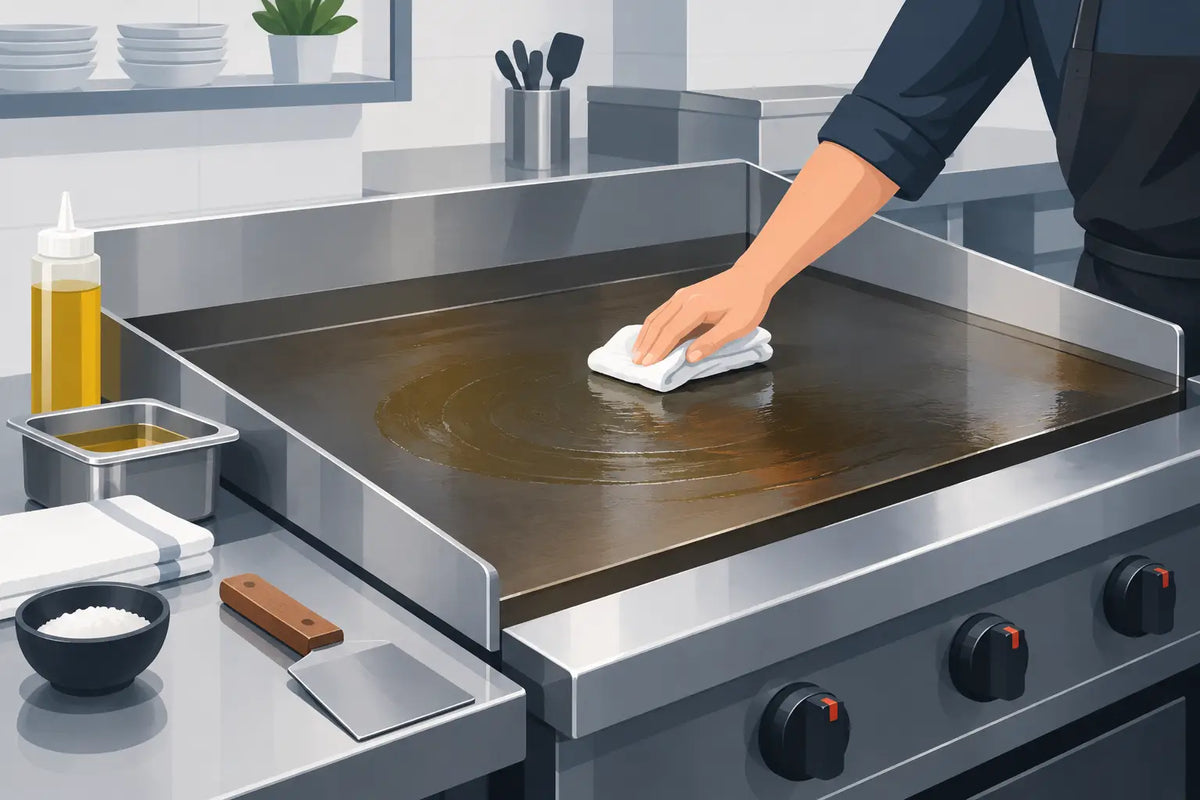
How to Season a Commercial Griddle Properly
A new flat-top has a particular look under the kitchen lights: bare steel, clean edges, and a surface waiting for its working character. Knowing how to season a commercial griddle correctly is what turns that raw cooking plane into a dependable station for eggs at breakfast, burgers at lunch, and the controlled heat of a busy dinner service. The goal is not simply to make the steel dark. It is to build a thin, bonded layer of oil that protects the surface, improves food release, and becomes more capable with every well-run shift.
Why Seasoning a Commercial Griddle Matters
Most commercial griddles with a steel or cast-iron plate need seasoning before their first use and ongoing care afterward. Heat changes the oil applied to the metal, creating a hard polymerized film. That film fills microscopic irregularities in the cooking surface, slows oxidation, and creates the foundation for a naturally low-stick finish.
A properly seasoned plate also rewards consistency. Pancakes release with less tearing, delicate fish is easier to turn, and cleanup is faster when food is not welded to exposed steel. This does not mean a seasoned griddle is maintenance-free or equivalent to a factory nonstick pan. High-acid foods, aggressive scraping, detergents, and repeated hard cleaning gradually remove the finish. Seasoning is part of the rhythm of operating a flat-top, not a one-time setup task.
The process depends on the plate material. Standard steel and cast-iron griddles are designed to be seasoned. Chrome-plated griddles are different: they typically require cleaning and a light protective oil film rather than repeated high-heat seasoning, because abrasive tools and improper seasoning practices can damage the chrome. Always begin with the equipment manufacturer’s instructions, especially for a new unit under warranty.
What You Need Before You Start
Use a high-smoke-point oil with a neutral profile. Canola oil, vegetable oil, grapeseed oil, sunflower oil, and refined avocado oil are common choices. Operators often favor canola because it is economical, available, and performs well for this task. Avoid butter, unrefined oils, and sprays containing additives. They can smoke excessively, build sticky residue, or leave an uneven coating.
Have clean, lint-free towels or griddle pads ready, along with heat-resistant gloves or tongs for handling towels near the plate. You will also need a griddle scraper and water for the initial clean. The central discipline is restraint: each oil layer should be extremely thin. Excess oil does not create a stronger finish. It creates tacky patches that can flake or transfer unpleasant flavor to food.
How to Season a Commercial Griddle for First Use
1. Remove factory residue and wash the plate
New commercial equipment can arrive with dust, packing residue, protective coatings, or machining oils on the plate. With the griddle cool, wash the cooking surface according to the manufacturer’s directions, usually with warm water and mild detergent. Rinse thoroughly so no soap remains, then dry completely with clean towels.
Do not skip the rinse. Oil cannot bond evenly over detergent film, and the first seasoning cycle can trap residues that should never become part of the cooking surface.
2. Heat the griddle gradually
Turn on the griddle and bring the plate to a moderate setting, generally around 300 to 350 degrees F. A gradual warm-up is kinder to the metal and gives you more control. If the plate is smoking heavily before oil is applied, it is too hot for an even first coat.
On a large commercial surface, temperature can vary from one zone to another, particularly before the unit fully stabilizes. Give the plate time to heat evenly. This is a useful moment to confirm that the thermostat and all heat zones are performing as expected.
3. Apply a very thin film of oil
Pour a small amount of oil onto the warm plate. For a typical 36-inch griddle, start with only a tablespoon or two, then add a little more only if needed. Spread it across the entire surface using a towel held with tongs or a dedicated griddle pad. Work into the corners, along the backsplash edge, and around the front lip.
When finished, the surface should look nearly dry, with a faint sheen rather than visible puddles. Wipe away any excess. Thin coats create a harder, more even finish than one heavy application.
4. Let the oil smoke, then let it set
Allow the oil to heat until it begins to smoke lightly. This signals that the oil is reaching the point where polymerization can occur. Keep the ventilation system running and monitor the plate. A light, controlled smoke is expected; thick clouds or a burnt odor suggest the heat is too high or there is too much oil on the surface.
Once the smoking eases, let the plate remain heated for a few more minutes. The oil should no longer look wet. Depending on the griddle, oil, and temperature, this cycle may take five to 10 minutes.
5. Repeat the thin-coat cycle
Apply another very thin layer of oil and repeat the heating process. Most steel commercial griddles benefit from three to five cycles before their first service. The plate will begin to shift from bright gray toward bronze or brown. It may not color perfectly evenly on day one, especially across a wide surface. That is normal.
A good finish develops through use. Chasing a perfectly black appearance by overheating the plate or applying too much oil often creates the opposite result: gummy residue and uneven cooking.
6. Cool, wipe, and begin cooking
After the final coat has set, turn the griddle off or lower it to the appropriate cooking temperature. When it is safe to handle, give the surface a final light wipe. The plate is now ready for its first menu items.
For the first few services, choose foods that support the seasoning rather than challenge it. Bacon, burgers, grilled sandwiches, and other moderately fatty items help reinforce the surface. Acidic tomato sauces, citrus-heavy marinades, and prolonged simmering can wait until the finish has had time to mature.
Daily Care Keeps the Seasoning Intact
The close of service determines how the griddle opens the next morning. While the plate is still warm, scrape away food debris and push grease into the trough. Use a griddle pad or scraper suited to the plate material. For standard steel, a controlled water deglaze can loosen stuck-on food. Add water carefully to avoid steam burns and thermal shock, then scrape the loosened residue away.
Once clean, wipe the plate dry and apply a whisper-thin coat of oil before shutting down. This protects the warm steel from moisture and begins rebuilding any areas worn during service. Do not leave a thick, wet coat overnight. It can become sticky, attract dust, and smoke excessively at the next startup.
A line cook should not have to guess whether the finish is healthy. A well-maintained griddle feels smooth under the scraper, shows a dark, satin-like patina, and releases food with reasonable ease. Some variation in color is expected. What matters is whether the surface is clean, dry, and free of thick carbon deposits or peeling residue.
Common Seasoning Problems and Their Fixes
If the surface feels sticky after seasoning, the most likely cause is too much oil. Heat the plate moderately, use a griddle pad to remove the excess, and restart with thinner coats. If the finish flakes, it may be a buildup of carbonized oil rather than a bonded seasoning layer. Strip the affected area with the manufacturer-approved cleaning method, dry it thoroughly, and season again.
Rust spots mean moisture reached bare steel. Remove the rust with an appropriate abrasive pad or griddle stone, clean away all debris, dry the plate completely, and apply fresh seasoning. Small rust spots are manageable when addressed early; ignoring them invites pitting and a rougher cooking surface.
If food suddenly sticks after several successful shifts, consider the menu and cleaning routine. High-acid ingredients, harsh chemicals, overnight soaking, or a cook using excessive force with a scraper can all weaken the finish. Restore the surface with a focused cleaning and two or three thin seasoning cycles rather than applying more oil over residue.
A Surface Built for Service
Seasoning is a small discipline with a visible payoff. The griddle becomes darker, smoother, and more responsive to the cook who works it every day. Treat the plate as part of the craft of the line: keep it clean, use heat with intention, and build the finish in thin layers. Over time, that quiet care shows up where it matters most - in cleaner turns, steadier output, and food that leaves the pass exactly as intended.