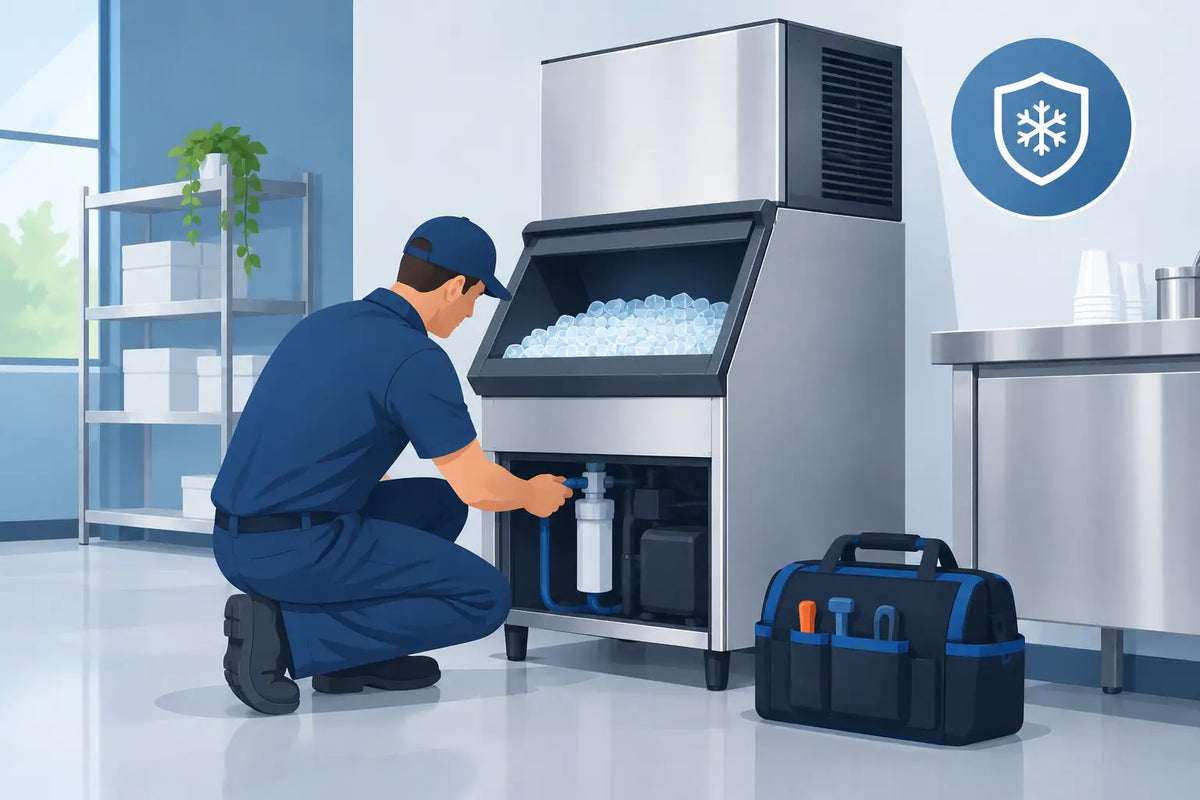
Ice Machine Installation That Holds Up to Service
A new ice machine can look like a simple equipment addition: place it near the bar, connect the water, turn it on, and let the bin fill. In a working kitchen, ice machine installation is more consequential than that. Water quality shapes the ice. Drain design affects sanitation. Electrical capacity protects the machine. Clearance around the cabinet determines whether it can reject heat and keep pace through a packed service.
Ice is a quiet part of hospitality, but it touches nearly every guest experience. It chills a cocktail without clouding it, supports a seafood display, holds product at a prep station, and keeps fountain drinks moving when the dining room is full. The installation should be planned with the same care as the equipment itself.
Start With the Ice Demand, Not the Empty Corner
Before choosing a final location, confirm that the machine's production rate and storage capacity fit the operation. A restaurant that needs ice mainly for water service has a different rhythm than a high-volume bar, hotel banquet program, coffee shop, or seafood counter. The busiest hour matters more than the average day.
Production ratings are commonly stated for specific ambient air and incoming water temperatures. In a hot kitchen, outdoor bar, or utility room with poor ventilation, actual output may fall below the number on the spec sheet. If the operation has little room for a production shortfall, choose capacity with a practical margin rather than sizing precisely to a best-case rating.
The machine style also affects placement. Undercounter units preserve a clean service line and keep ice close to the point of use, but their storage is limited. Modular heads paired with larger bins suit restaurants, hotels, and bars with steady demand. Remote-cooled systems can move heat away from the workspace, though they require more deliberate planning and qualified installation.
Choose a Location Built for Heat, Water, and Access
An ice machine needs a stable, level surface in a room that supports its operating temperature range. That sounds ordinary, yet location is often where long-term performance is won or lost. Avoid placing an air-cooled machine beside a fryer bank, directly under a heat-heavy cooking line, or in a tight enclosure that recirculates its own warm discharge air.
Manufacturers specify minimum clearance at the sides, rear, and top of each model. Treat those dimensions as operating requirements, not cosmetic suggestions. A cabinet pressed tightly against a wall may be harder to clean, harder to service, and less able to release heat. Over time, restricted airflow can reduce ice production and add stress to refrigeration components.
Access matters just as much as clearance. The front panel, air filter, water filter, bin interior, and drain connections should remain reachable without dismantling surrounding millwork. In a compact bar or cafe, it may be tempting to build the machine into a beautiful finished surround. Leave enough room for the technician who will eventually need to clean, inspect, and repair it.
For outdoor kitchens, protected placement is essential. Commercial-grade construction does not automatically mean a unit is rated for direct weather exposure. Sun, windblown debris, freezing temperatures, and high ambient heat can all affect output and durability. Verify the equipment's approved environment before making it part of an exterior entertaining space.
Water Supply Is an Ice Quality Decision
A dedicated potable cold-water line with the correct pressure is the foundation of dependable operation. The installation manual for the specific machine will state acceptable pressure ranges, connection sizes, and any required backflow protection. Local plumbing codes may add requirements, particularly in commercial kitchens and hospitality facilities.
Water filtration is not an accessory to postpone. It protects internal components from sediment and scale while helping preserve the clean appearance and taste of the ice. The right filtration approach depends on local water conditions. Hard water, high mineral content, chlorine, and particulate matter call for different treatment strategies, so an operator should understand the water entering the building rather than selecting a filter by habit.
A shutoff valve should be installed where staff or service technicians can reach it quickly. This small detail matters when changing filters, performing a deep clean, or responding to a leak. Keep water lines routed neatly and protected from kinks, abrasion, and heat sources.
Filtration Does Not Replace Cleaning
Even filtered water leaves behind minerals over time, and the ice zone must be cleaned and sanitized on the schedule recommended by the manufacturer. A well-planned installation makes that maintenance realistic. If the machine is difficult to access, cleaning gets deferred. If cleaning gets deferred, ice quality and equipment life suffer together.
Give the Drainage System Room to Work
Drainage deserves more attention than it usually receives. Ice machines release water during harvest cycles and cleaning, while storage bins also need to drain melting ice. A poorly designed drain can create standing water, odors, overflow, or sanitation concerns in an otherwise polished workspace.
Many commercial ice machines require a gravity drain with a properly sized, vented drain line and an approved air gap. The air gap helps prevent contaminated wastewater from backing up into the machine. Some layouts cannot accommodate a gravity drain because the floor drain is too far away or positioned above the equipment outlet. In those cases, a properly sized drain pump may be required.
Do not assume the nearest sink drain is suitable. Drain routing, trap configuration, local code, and the machine's specific requirements all matter. A licensed plumber can confirm the right approach and prevent a costly correction after cabinetry, flooring, or a bar top is already in place.
Match Power to the Machine, Exactly
Ice equipment may use a standard 115-volt connection, a higher-voltage circuit, or a hardwired electrical supply depending on capacity and model. Confirm voltage, phase, amperage, plug type, and circuit requirements before delivery. A machine should have the dedicated circuit specified by its manufacturer, not share power with a refrigerator, blender station, or other high-draw equipment.
Electrical planning is especially important for modular machines and remote condensers. The equipment may have separate requirements for the ice-making head and condenser, and installation can involve both electrical and refrigeration professionals. Rely on qualified, licensed trades and local inspection requirements rather than adapting an existing outlet to fit the plug.
The goal is not merely getting the machine to power on. Correct electrical installation protects warranties, supports consistent performance, and reduces the chance that a busy service is interrupted by a tripped breaker.
Set the Machine Level, Then Commission It Properly
Once utilities are in place, the machine must be leveled according to its installation instructions. A cabinet that sits out of level can affect water distribution, harvest behavior, bin drainage, and door alignment. On a modular system, the head and bin must also be matched and secured correctly.
Commissioning should include more than observing the first batch of ice. Confirm that the inlet water valve operates correctly, drains flow freely, the unit cycles as expected, and there are no leaks at fittings or connections. Remove interior packaging and protective materials, complete the initial cleaning and sanitizing procedure, and allow the machine to produce and discard the first ice as directed by the manufacturer.
Train the team on the everyday details: where the shutoff is located, how to use a clean ice scoop, why hands and glassware never enter the bin, and when filters and sanitation service are due. Ice is food, and the bin should be treated as a food-contact environment.
Build Maintenance Into the Layout
The best installation anticipates the years after opening day. Maintain a clear path to the unit. Keep the surrounding floor clean and dry. Check air filters or condenser surfaces at the recommended interval, especially in flour-heavy kitchens, bar areas, or spaces exposed to grease and dust.
A simple service record is worthwhile for any high-use machine. Record filter changes, cleaning dates, observed changes in ice shape or output, and service calls. Those notes help reveal patterns before a small performance issue becomes a lost weekend of ice production.
A well-sited ice machine becomes almost invisible during service, which is exactly the point. It delivers clear, dependable ice while the bar moves, the kitchen holds its pace, and guests experience every drink, display, and course at the temperature it was meant to be served.