Air Cooled Icemakers for Demanding Service
The first rush of a busy service rarely exposes a weak ice program. The second does. By then, cocktails are landing faster than they can be garnished, tea urns need refilling, prep cooks are packing seafood, and a nearly empty bin begins to dictate the pace of the room. Air cooled icemakers are a practical answer for many of these kitchens, bars, cafes, and hospitality spaces, provided the machine is selected for the real conditions around it - not simply the largest production number on the spec sheet.
For most operators, air-cooled equipment offers a strong balance of capacity, operating cost, and installation simplicity. It uses room air to carry heat away from the refrigeration system rather than continuously sending water through a condenser. That approach can conserve a substantial amount of water compared with a water-cooled machine. It also puts ventilation, ambient temperature, and thoughtful placement at the center of the buying decision.
How Air Cooled Icemakers Work
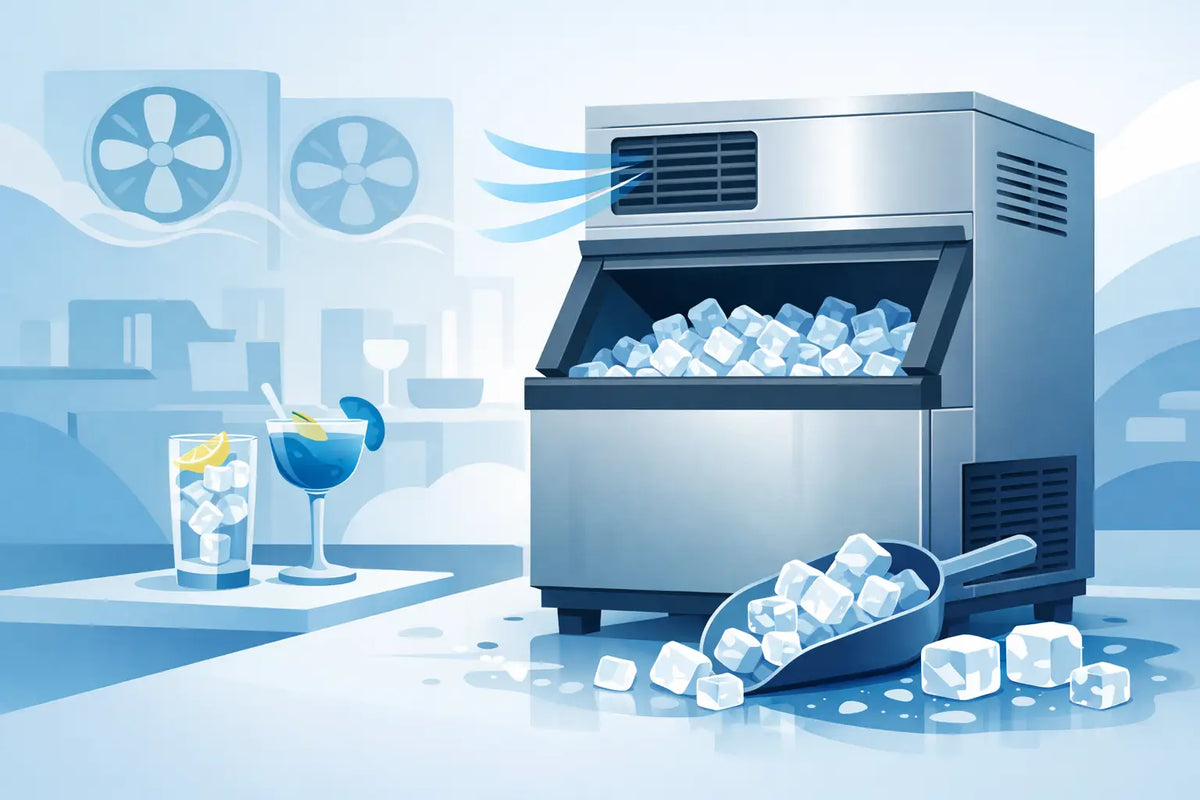
An air-cooled ice machine draws surrounding air across its condenser to release the heat collected during the freezing cycle. Fresh water enters the machine, ice forms on an evaporator surface or within a mold depending on the style of ice, and the finished cubes, flakes, or nuggets are released into a storage bin or dispenser. The condenser fan then carries that rejected heat into the room.
That last detail matters. An air-cooled machine is not only making ice; it is also exchanging heat with its environment throughout the day. In a cool, well-ventilated back bar or prep area, it can work with calm efficiency. Tucked beneath a counter with restricted airflow, beside a hot cookline, or inside a cramped utility closet, the same machine may produce less ice, run longer, and experience more strain.
This does not make air cooling a compromise. In many operations, it is the preferred configuration. It simply calls for a workspace that respects the equipment's need to breathe.
Why the Right Ice Machine Changes Service
Ice is a working ingredient. It affects drink dilution, presentation, food holding, display quality, and the rhythm of every handoff across the counter. A clear cube can preserve the structure of a spirit-forward cocktail. Nugget ice can make a fountain beverage feel more generous. Flake ice creates a cold, moldable bed for seafood, produce, and healthcare applications. The best machine begins with the intended ice, then matches production and storage to demand.
A bar may need dense cube ice that withstands a long pour and maintains a clean glass presentation. A quick-service restaurant may value a chewable nugget format that encourages beverage sales. A seafood counter may need flake ice that nests gently around delicate product. Production ratings alone do not answer these needs, because the type and quality of ice shape the guest experience as much as the quantity.
The bin deserves equal attention. Production capacity describes how much ice a head can make over a stated 24-hour period under controlled conditions. Bin capacity describes how much ice is available at a given moment. A high-output head paired with a small bin may be appropriate when ice is drawn steadily all day. A bar facing concentrated evening volume may benefit from more reserve storage, even if total daily output looks modest on paper.
Size for Peak Demand, Not the Quiet Hours
A machine that makes enough ice for an average day can still leave service short during its most profitable two hours. Start by mapping demand by station: bar wells, beverage dispensers, kitchen prep, hotel floor pantries, patient service, and any packaged ice requirements. Then identify when each station draws most heavily from the supply.
For a restaurant, lunch and dinner may create two distinct peaks. For a cocktail bar, ice demand may remain low until the room fills, then accelerate rapidly. For a hotel, banquet service can turn a normal weekday requirement into a different equation entirely. Caterers should also account for the time ice spends in transport, coolers, and satellite service areas before it reaches the guest.
Ambient conditions require a margin as well. Manufacturer production figures are typically based on specific air and water temperatures. Warmer incoming water or a hotter kitchen can lower actual output. This is especially relevant for outdoor entertaining areas, garages, seasonal venues, food trucks, and kitchens where the machine sits close to cooking equipment. Treat published capacity as a meaningful benchmark, not a promise detached from the room.
When demand is uncertain, it is often wiser to choose a machine with enough production headroom and an appropriately sized bin than to run a smaller unit at its limit every day. The goal is not excess equipment for its own sake. It is a steady reserve that keeps beverage quality and kitchen flow intact when the pace changes.
Give the Machine Air, Water, and a Clear Path to Service
Placement is where a well-chosen machine either earns its keep or becomes a recurring frustration. Air cooled icemakers need the manufacturer-specified clearance around louvers and condenser areas. The hot discharge air must have somewhere to go, and the machine must be able to pull in clean replacement air. A tight enclosure can cause the unit to recycle its own heat, a quiet problem that gradually reduces performance.
Avoid placing the ice machine immediately beside fryers, ranges, dishwashers, or direct sun exposure when another location is available. Grease-laden air is particularly hard on condenser surfaces. A nearby cookline may look convenient for labor, but the extra heat and airborne residue can create more maintenance and less dependable output.
Before finalizing a location, confirm four practical conditions:
- A properly sized electrical connection that matches the equipment specification.
- A cold potable water supply with suitable pressure and a shutoff valve.
- A floor drain or approved drain arrangement with the required air gap.
- Enough space to open panels, clean the unit, and service filters without moving surrounding equipment.
The Trade-Offs Against Water-Cooled and Remote Systems
Air cooling is often the practical default, especially where water conservation and straightforward installation are priorities. Yet it is not universally right. A water-cooled condenser may be considered in high-heat locations or spaces with limited ventilation, but it can use considerably more water and may face local restrictions or higher utility costs. Its operating context must justify that trade.
Remote-condensing systems move heat rejection away from the ice maker, which can reduce heat and noise in the kitchen or bar. They can be an excellent fit for high-volume venues, design-sensitive bars, and hot indoor environments. They also introduce more complex installation planning, including refrigerant line routing and coordination with qualified installers.
For an undercounter application, noise and heat release deserve special scrutiny. The compact footprint can be ideal for a cocktail station or coffee bar, but the surrounding millwork must provide the clearances and airflow the machine requires. A clean built-in appearance should never come at the expense of condenser performance.
Maintenance Is Part of Ice Quality
Ice can look clean while the machine behind it needs attention. Foodservice operations should follow the manufacturer's cleaning and sanitizing intervals, inspect water filters on schedule, and keep air intake and condenser areas free of dust and grease. In heavy-use environments, that attention is not cosmetic. It protects output, energy use, and the condition of every drink or chilled product touched by the ice.
Staff habits matter, too. Ice bins are not storage shelves for bottles, scoops should be kept sanitary, and hands should never enter the bin. A disciplined ice routine is simple but visible to guests in the quality of the final pour.
Culinary Precisions approaches commercial equipment as part of the working architecture of hospitality. The right ice machine should feel almost invisible during service: cold, consistent, properly placed, and ready before the order is called. Choose for your warmest day, your busiest hour, and the ice your guests actually notice.