How to Prevent Freezer Burn and Protect Food
A pan of freezer-burned chicken, a tub of icy ice cream, or a steak with dry gray edges can turn planned inventory into waste. Knowing how to prevent freezer burn protects more than appearance: it preserves flavor, texture, portion value, and the consistency your kitchen is expected to deliver.
Freezer burn is not a food safety issue on its own, but it is a quality issue. It happens when moisture leaves the food and turns directly into ice crystals, then escapes into the cold, dry air inside the freezer. The result is dehydrated surfaces, oxidation, off flavors, and uneven cooking performance. The solution is disciplined packaging, controlled temperatures, and a storage system built for rotation.
What Causes Freezer Burn?
Freezer burn starts with exposure. Every gap in a package allows cold air to circulate around the product, pulling moisture from the food over time. The larger the air pocket, the more opportunity there is for dehydration and ice formation.
Temperature fluctuation makes the problem worse. When freezer doors open frequently, products sit near the door, or equipment struggles to hold temperature during a busy service, surface ice can melt slightly and refreeze. That cycle damages texture and accelerates moisture loss. A freezer that is too empty can also fluctuate faster because there is less frozen product to help stabilize the cabinet temperature.
Some foods show damage sooner than others. Lean proteins, bread, berries, cooked grains, and prepared sauces can all lose quality quickly when packaged poorly. High-fat foods may resist dehydration somewhat, but they can still pick up stale or oxidized flavors. Ice cream is especially sensitive because temperature swings create large ice crystals that destroy its smooth finish.
How to Prevent Freezer Burn With Better Packaging
The most effective defense is to minimize air exposure before food enters the freezer. Use packaging that fits the product, rather than placing a small portion in an oversized container or bag. Less trapped air means less moisture transfer and better quality when the item is thawed or cooked.
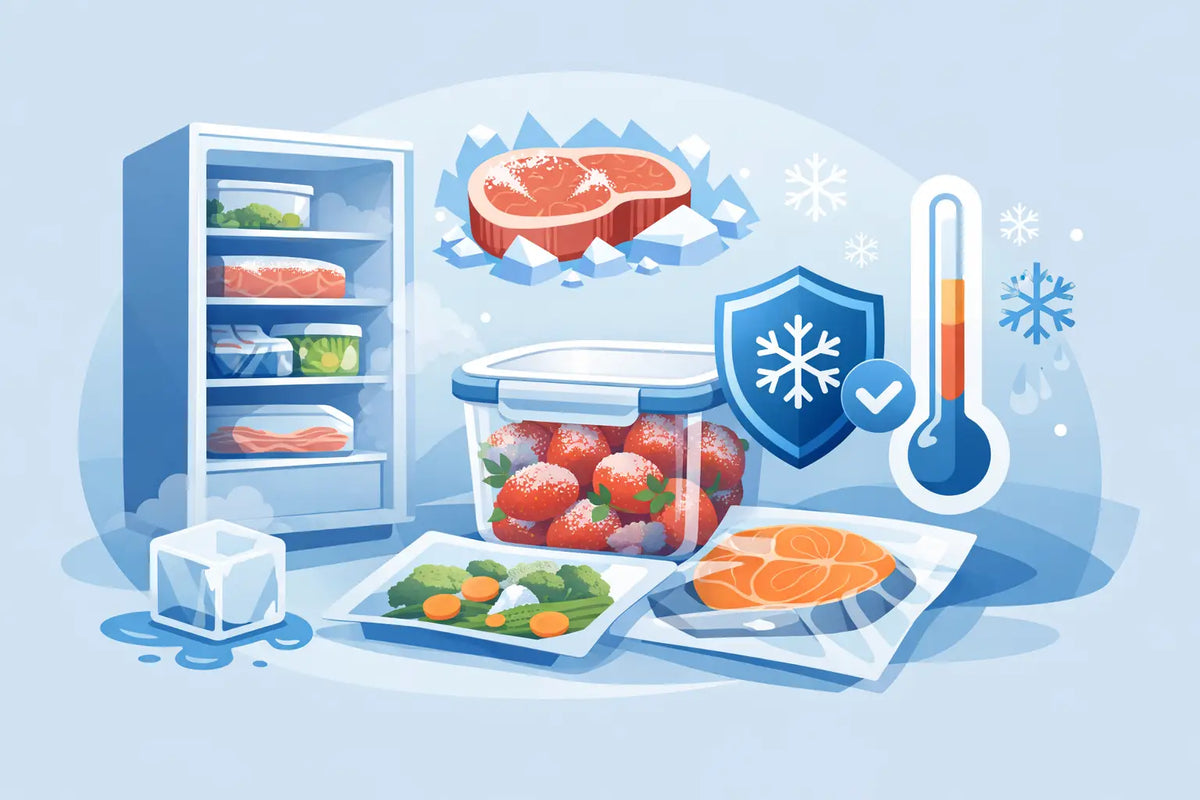
For proteins, vacuum sealing is often the strongest option. It removes most of the oxygen and creates a close barrier around steaks, poultry, seafood, ground meat, and prepared portions. It also supports cleaner organization and more accurate portion control. Vacuum-sealed foods still need proper storage temperatures, but they generally hold quality longer than products wrapped loosely in film or foil.
If vacuum sealing is not practical, use heavy-duty freezer bags and press out as much air as possible before sealing. For irregular items such as bone-in cuts or baked goods, wrap the food tightly in plastic wrap first, then place it in a freezer bag or a rigid airtight container. This double barrier is particularly useful for products that will be stored for more than a few weeks.
Rigid containers work well for soups, stocks, sauces, and batch-prepped components. Leave a small amount of headspace for liquids to expand as they freeze, but avoid leaving a large empty area above the food. For sauces and purees, a thin, flat layer in a sealed bag freezes quickly, stacks efficiently, and thaws faster than a deep container.
Avoid relying on the original retail wrap for long-term storage. Thin store packaging is designed for short display periods, not for extended freezer protection. Repackage products that will not be used promptly, especially bulk proteins and items purchased for prep ahead production.
Freeze Food Quickly, Then Hold It Cold
Fast freezing helps preserve cell structure and reduces the size of ice crystals inside food. Smaller crystals cause less damage, which means better texture after thawing. This is especially valuable for seafood, berries, delicate pastries, dairy-based desserts, and prepared foods intended for high-quality service.
Do not load a freezer with large volumes of warm product at once. Bringing down the temperature of hot food inside a standard freezer can warm surrounding inventory and strain the equipment. Cool cooked food safely before freezing, divide it into shallow portions, and allow cold air to circulate around each package during the initial freeze.
For higher-volume operations, a blast freezer provides a meaningful performance advantage. It pulls heat from food rapidly, helping kitchens preserve texture, maintain safer cooling practices, and move product into stable frozen storage more efficiently. It is not a substitute for airtight packaging, but it is a powerful tool when production volume, menu consistency, and food quality are on the line.
Once food is frozen solid, keep the freezer at 0°F or below. Lower, stable temperatures help maintain quality over time. Use an appliance thermometer or equipment monitoring system rather than relying only on the control setting. A dial can show the intended temperature; a thermometer shows the temperature your inventory is actually experiencing.
Organize Storage for Temperature Stability
A well-organized freezer is easier to rotate, clean, and keep cold. It also reduces the door-open time that contributes to temperature swings. Group products by category and use clearly defined zones for raw proteins, prepared foods, baked goods, frozen produce, and desserts. In commercial operations, maintain separation that supports your food safety procedures as well as efficient retrieval.
Keep packages off the floor of the cabinet and away from areas where airflow is blocked. Do not pack product so tightly that cold air cannot circulate. At the same time, avoid storing a few isolated packages in an oversized freezer when possible. Frozen mass helps stabilize the environment, though ventilation around products still matters.
Label every package with the item name, preparation or freeze date, and use-by date based on your operation's quality standards. First in, first out rotation is one of the simplest ways to prevent freezer burn because it keeps product from being forgotten until it is far past its best quality window.
For a busy kitchen, a practical label should answer three questions at a glance: What is it? When was it frozen? What should be used next? If the answer is not visible without opening the package, the system will slow down service and increase waste.
Match Storage Time to the Food
Even under excellent conditions, frozen food does not retain peak quality forever. Freezing stops bacterial growth, but it does not stop gradual flavor loss, oxidation, or textural changes. The best storage window depends on the food, the packaging method, and the performance of the freezer.
Vacuum-sealed proteins can maintain strong quality for several months when held at a stable temperature. Foods in standard freezer bags may be best used sooner. Prepared soups and sauces often perform well within two to three months, while breads and baked goods are generally at their best when used within a few months. Delicate seafood, dairy desserts, and foods with crisp textures deserve shorter holding periods.
These are quality guidelines, not universal deadlines. A tightly vacuum-sealed roast in a consistently cold commercial freezer may outperform a loosely wrapped roast stored for half the time. Build your internal standards around the products you serve, your rate of turnover, and the level of quality your guests expect.
Avoid Common Freezer Storage Mistakes
Small habits create most freezer-burn problems. Leaving a bag partly open, repeatedly thawing and refreezing a product, or placing hot pans directly into frozen storage can compromise an otherwise solid process. So can storing food near a faulty door gasket, where warmer air can enter the cabinet.
Check door seals regularly. A gasket that is cracked, loose, or dirty can prevent a proper seal, allowing humid air inside and forcing the refrigeration system to work harder. Keep condenser areas and vents clean according to the equipment manufacturer's maintenance requirements. Consistent performance depends on equipment that can reject heat efficiently and hold its set point under load.
Be realistic about inventory. Buying in volume can lower food cost, but only if the product can be packaged, frozen, rotated, and used before quality declines. The lowest purchase price is not a win if a portion of the order becomes waste.
Thaw Without Sacrificing Quality
Proper thawing does not reverse freezer burn, but it can protect the quality that remains. Thaw foods in the refrigerator when possible, keeping them in their original sealed package until they are ready to use. This limits moisture loss and reduces the chance of cross-contamination.
For foods that need to move quickly into service, use approved cold-water or microwave thawing methods only when the product will be cooked promptly. Avoid thawing at room temperature. Beyond the food safety concern, rapid uncontrolled warming can create uneven texture and excess purge in proteins.
Professional results begin well before the cooking process. Airtight packaging, quick freezing, stable equipment temperatures, and disciplined rotation turn the freezer from a holding space into a dependable extension of your prep operation. Protect each batch before it goes in, and it will be ready to perform when the ticket comes in.