What Is Commercial Catering Equipment?
A busy kitchen reveals the difference fast. When tickets stack up, doors keep opening, and food has to move without sacrificing safety or consistency, household appliances fall behind. That is where the question matters: what is commercial catering equipment? It is the class of cooking, refrigeration, holding, prep, and cleaning equipment built to perform in professional foodservice environments where speed, durability, hygiene, and repeatable results are non-negotiable.
For restaurant owners, chefs, foodservice managers, and even serious home cooks building a high-output setup, this equipment is less about appearance and more about performance under pressure. Commercial catering equipment is designed for heavier workloads, stricter sanitation standards, higher capacity, and longer operating hours than residential products. It is the hardware behind service consistency.
What Is Commercial Catering Equipment and What Does It Include?
Commercial catering equipment refers to the appliances and machines used to prepare, cook, store, hold, serve, and clean food in professional settings. That includes restaurants, hotels, catering companies, bakeries, pizzerias, cafeterias, concession operations, food trucks, institutional kitchens, and some serious residential setups that demand commercial-grade output.
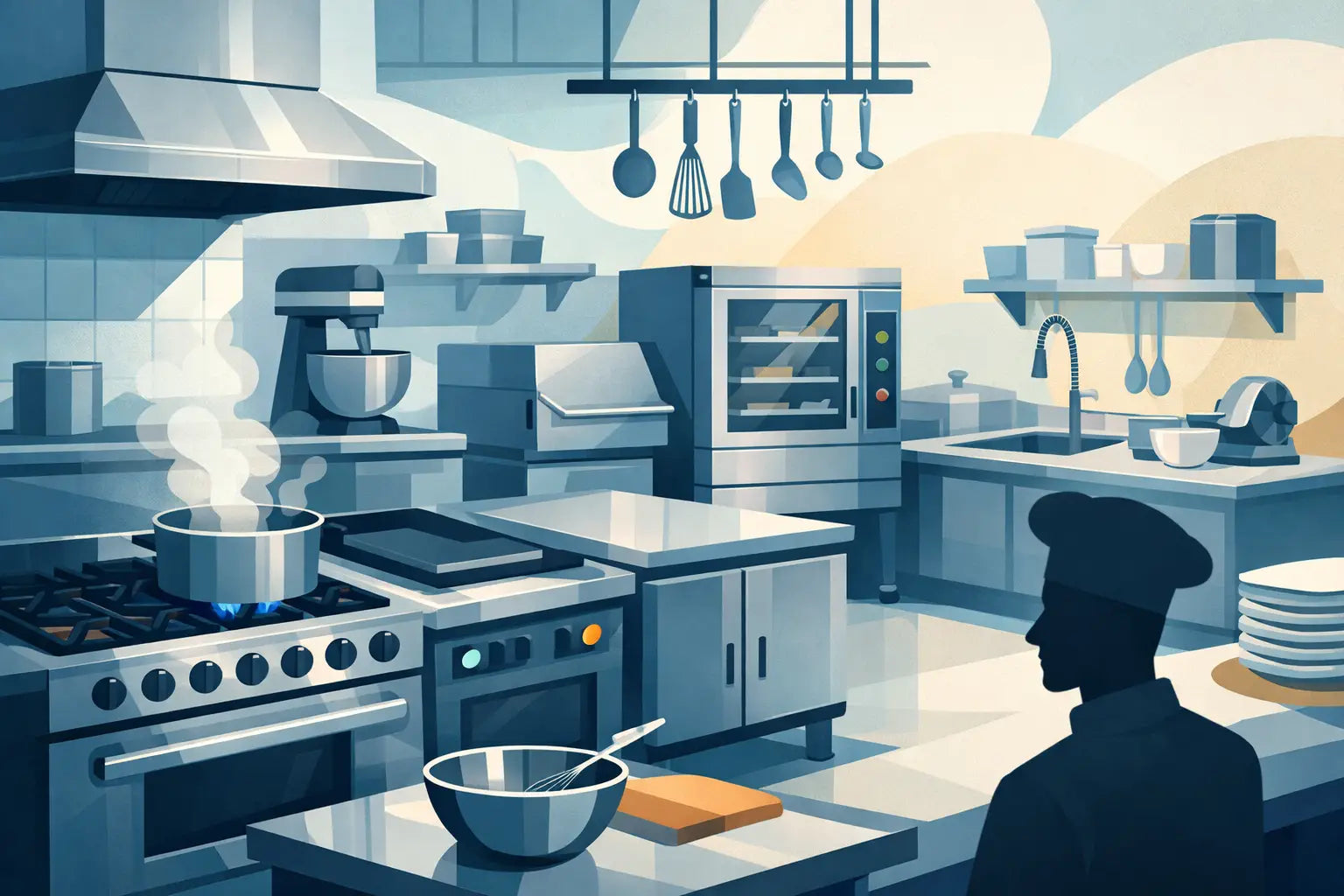
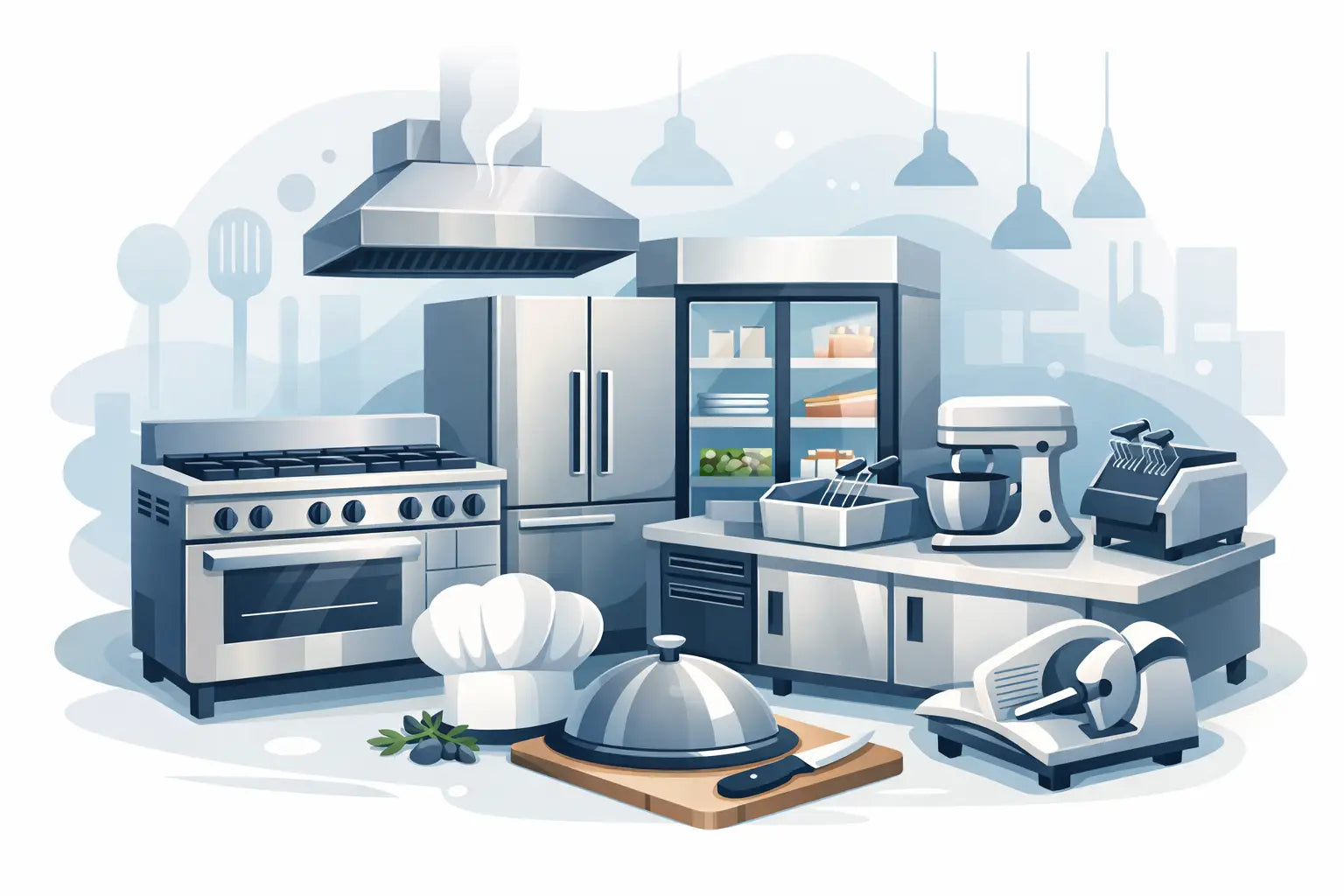
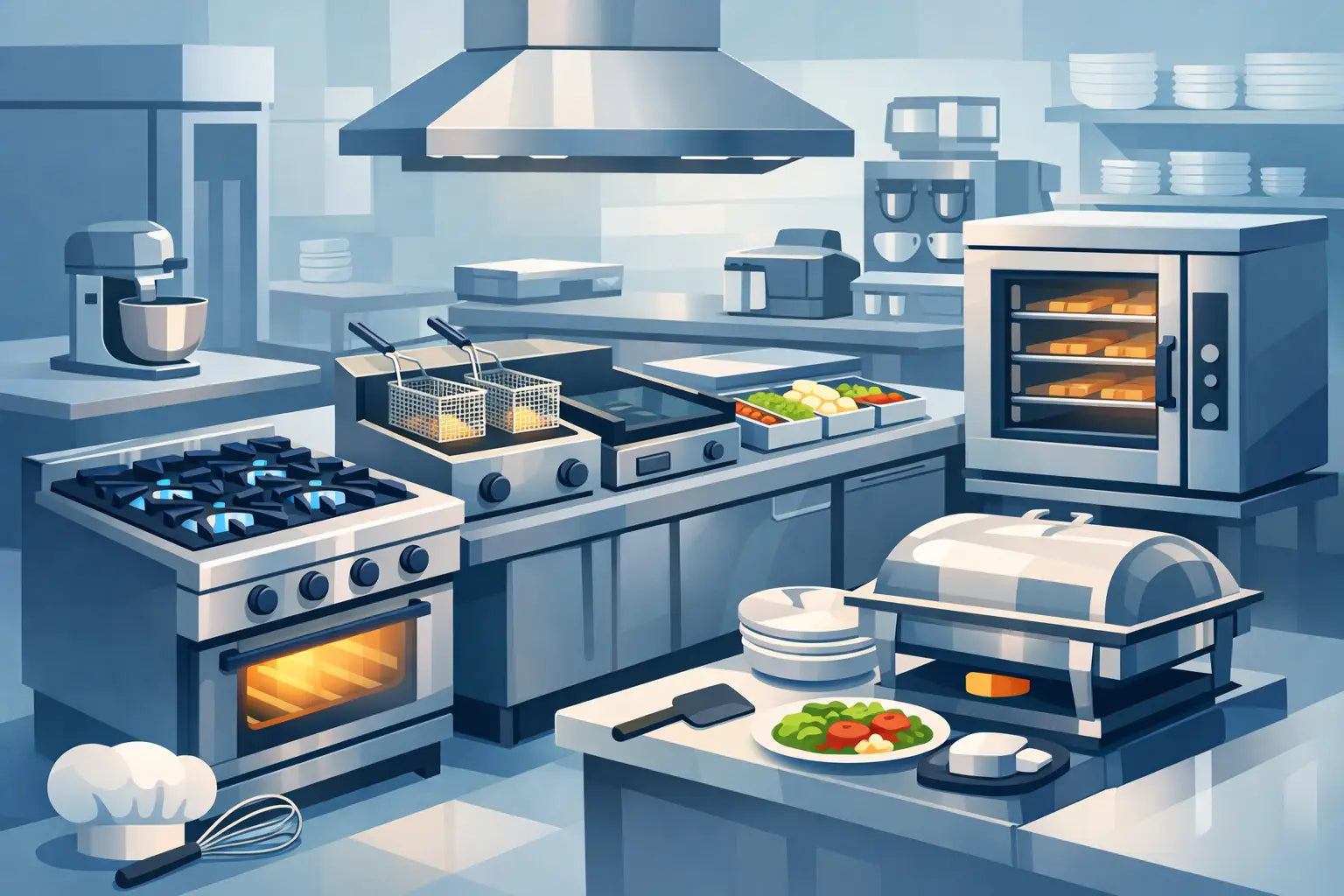
The category is broad because a working kitchen runs on systems, not standalone products. Cooking equipment often includes gas ranges, convection ovens, pizza ovens, charbroilers, grills, steamers, and fryers. Cold storage includes reach-in refrigerators, freezers, undercounter refrigeration, prep tables, and specialty cooling like blast chillers or blast freezers. Prep equipment can include mixers, slicers, food processors, holding cabinets, and warming units. Warewashing equipment includes commercial dishwashers and sinks designed for rapid cleaning cycles and sanitation control.
Some operations also rely on specialty machines such as slushy machines, soft serve units, curing cabinets, or outdoor kitchen equipment. In each case, the purpose is the same: deliver reliable production at a pace and volume standard home equipment is not built to handle.
How Commercial Equipment Differs From Residential Appliances
The biggest difference is duty cycle. A home oven may perform well for dinner service in one household. A commercial oven may need to run for hours, recover temperature quickly after repeated door openings, and produce batch after batch with minimal variation. That level of demand changes everything from internal components to insulation, airflow, controls, and structural materials.
Commercial catering equipment is also built for easier cleaning and stricter hygiene. Stainless steel construction, removable components, smooth work surfaces, and service-friendly designs matter because kitchens have to maintain sanitation while moving fast. In a professional setting, a piece of equipment that is hard to clean is not just inconvenient. It becomes a labor issue and a food safety risk.
Capacity is another major dividing line. Commercial refrigerators are designed to protect ingredient freshness during constant access. Food warmers hold product safely through service. Mixers handle heavier dough loads. Dishwashers process racks at a pace that supports a live kitchen, not a family meal.
There is also the question of consistency. Professional kitchens need equipment that produces repeatable results across shifts and staff. Precision temperature control, faster recovery times, and construction made for frequent use all support that goal.
Why It Matters for Foodservice Performance
In a commercial kitchen, equipment is not a background purchase. It shapes ticket times, labor efficiency, food quality, and operating cost. A range that heats unevenly slows production and creates inconsistency. A refrigerator with poor temperature stability can shorten shelf life and put product at risk. A dishwasher that cannot keep up with service creates bottlenecks that spread across the entire line.
That is why experienced operators think in terms of workflow, not just equipment categories. The right setup supports prep, service, holding, storage, and cleaning as one connected system. When those pieces work together, the kitchen becomes more predictable. Predictable kitchens waste less, move faster, and produce better results.
For serious home cooks, the same logic applies at a different scale. If you host often, bake in volume, make pizza at high heat, or want refrigeration and cooking tools with stronger recovery and durability, commercial-grade equipment can raise your ceiling. The trade-off is that size, utility requirements, ventilation, and local code considerations may become more complex.
Common Types of Commercial Catering Equipment
Cooking equipment usually gets the most attention because it drives output directly. Gas ranges and stoves provide fast heat and flexibility. Convection ovens improve even cooking and throughput. Pizza ovens are built for high-temperature performance and consistent crust development. Charbroilers and grills bring speed and flavor in high-demand service environments.
Refrigeration is just as critical, even if it is less visible to guests. Reach-in units support back-of-house storage. Undercounter refrigeration keeps ingredients close to the line. Blast freezers and rapid-chill equipment help preserve texture, extend shelf life, and support safer cooling processes. In operations where freshness and food safety are closely tied, refrigeration is performance equipment, not just storage.
Holding and warming equipment protect product after cooking. This matters more than many buyers expect. If food leaves the line too early or sits at the wrong temperature, quality drops quickly. Warmers, heated display units, and holding cabinets bridge the gap between production and service.
Prep and processing equipment save labor while improving consistency. Commercial mixers, slicers, and specialty prep machines reduce manual strain and support standardization. When the same dough, sauce, or prep volume needs to be repeated daily, those gains add up fast.
Cleaning equipment closes the loop. A commercial dishwasher is not simply a faster version of a home machine. It is part of sanitation compliance, labor planning, and turnaround speed. In many kitchens, warewashing capacity directly affects service flow.
How to Choose the Right Equipment
The right answer depends on your menu, volume, footprint, and utility setup. A small coffee shop, a pizza-focused restaurant, a catering commissary, and a steakhouse all define essential equipment differently. Buying on category alone is risky. Buying on workflow is smarter.
Start with production demand. How many covers, orders, or batches do you need to handle during peak service? That tells you more than average daily volume. Equipment has to perform during pressure periods, not just quiet hours.
Next, look at space and layout. Bigger is not always better if it creates congestion or slows movement. Undercounter refrigeration may outperform a larger remote storage solution when line efficiency matters. A compact convection oven may fit a small kitchen better than a larger unit that disrupts flow.
Power source and ventilation also matter. Gas and electric each have advantages depending on infrastructure, performance preference, and operating cost. Some specialty equipment requires specific ventilation or drainage setups. Before buying, confirm what your space can actually support.
Then consider maintenance and cleaning. High-performance equipment still needs regular care. Units that are easier to clean, service, and access tend to support lower downtime and better long-term value.
What Is Commercial Catering Equipment Worth Investing In First?
If you are building or upgrading a kitchen, prioritize the equipment that most directly affects safety, speed, and core menu execution. For many operators, that starts with refrigeration, primary cooking equipment, and dishwashing. If those fail or underperform, the whole operation feels it.
After that, invest where labor savings and consistency gains are clearest. A food mixer that cuts prep time every day may deliver stronger value than a specialty appliance used only occasionally. A blast freezer may transform product management for one operation and be unnecessary for another. It depends on your menu and production model.
This is where a performance-focused supplier can make a real difference. Culinary Precisions serves buyers who need equipment selected for real kitchen demands, not just product specs on a page. That matters when uptime, fit, and output are tied directly to revenue.
Compliance, Durability, and the Long View
Commercial equipment should also be evaluated through the lens of compliance and lifespan. Materials, cleanability, certification, and intended use all affect whether a piece belongs in a professional operation. A lower upfront price can become expensive if the unit struggles under volume, requires frequent repairs, or creates cleaning and safety problems.
Durability is not only about heavy steel or brand reputation. It is about whether the equipment matches the pace of your kitchen. Overbuying can waste budget and space. Underbuying can create service failures that cost more over time.
The best equipment decisions usually come from honest planning. Know your menu. Know your peak demand. Know your space. Then choose pieces built for the level of consistency your kitchen has to deliver.
If you are asking what commercial catering equipment is, the short answer is simple: it is the professional backbone of a working kitchen. The better answer is that it is the difference between getting through service and controlling it with confidence.