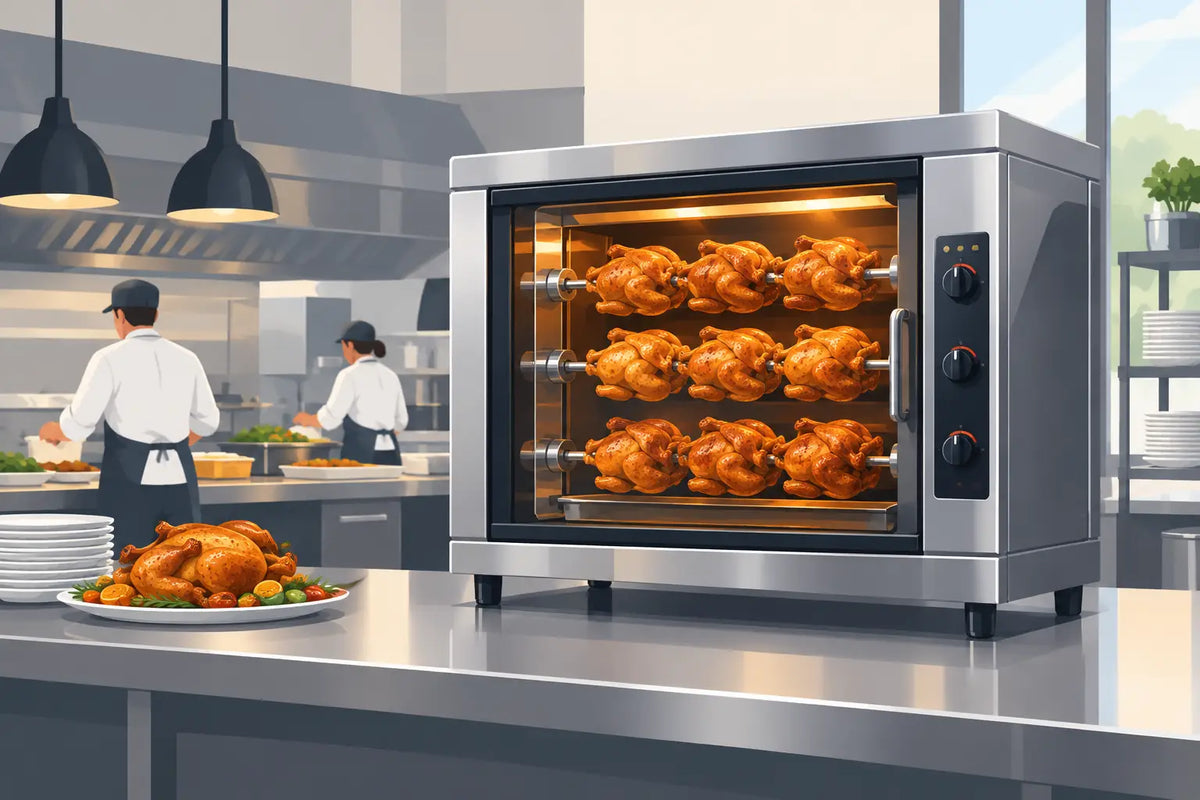
Commercial Rotisserie Built for the Rush
The first crackle of chicken skin is not just theater. It is a signal that rendered fat, radiant heat, motion, and timing are working together. A commercial rotisserie turns that controlled process into a visible part of service, producing bronzed poultry, glistening porchetta, ribs, and other slow-turning signatures with an aroma that draws guests toward the counter. The right unit can become both a production engine and a focal point for the room.
What a Commercial Rotisserie Changes in the Kitchen
Rotisserie cooking creates a result that is difficult to duplicate with static roasting alone. As product turns, it continuously bastes in its own rendered fat. Radiant heat colors the exterior while the interior cooks steadily, yielding the contrast guests expect: crisp, lacquered skin around tender, seasoned meat.
For an operator, the appeal extends beyond flavor. A front-of-house rotisserie gives guests proof of preparation. It can support a dedicated chicken program, add an unmistakable visual cue to a market counter, or bring a fireside quality to an open kitchen without relying on a live flame. In a catering kitchen or commissary, the same equipment can produce repeatable batches with less hands-on tending than multiple sheet pans and ovens.
Its value depends on how it fits the menu. A rotisserie excels when the product benefits from movement, self-basting, and visual display. It is less compelling when the menu requires frequent small, highly varied batches or when finished product must immediately move into covered holding. The equipment should reinforce the rhythm of service, not introduce another bottleneck.
Start With the Menu and the Peak Hour
Capacity is the number that gets attention, but it is not the only number that matters. Begin with the portions you need during your busiest window, then work backward through cook time, resting, carving, and replenishment. If a unit holds 24 chickens but a full load takes 75 minutes, it may not cover a sharp lunch rush unless the first batch is already cooked and held correctly.
Consider the actual shape and weight of what you will cook. Whole chickens, ducks, roasts, rolled meats, and skewered vegetables occupy the spit differently. A stated bird capacity is useful for comparison, yet it is usually based on a particular product size. Oversized birds, trussed roasts, and unevenly loaded spits reduce usable capacity and can affect rotation.
A strong production plan separates cooking capacity from selling capacity. If product is intended for a heated display, calculate how many finished birds the display can hold at safe quality and temperature. If staff will carve to order, allow room in the labor plan for resting, carving, packaging, and cleaning between batches. The golden bird in the window has to arrive at the pass when guests are ready to buy it.
Choose the Heat Source With Intent
Gas-fired rotisseries bring strong radiant heat and the visual energy of a flame. They are often a natural choice for high-volume poultry programs, particularly where gas infrastructure and ventilation are already established. Their heat character can deliver deeply rendered skin, but operators must account for gas connection requirements, combustion air, hood design, and local code.
Electric models offer a different kind of control. They can be well suited to locations where gas is unavailable or restricted, where installation simplicity matters, or where operators want closely managed heating zones. Electrical requirements deserve careful review. Voltage, phase, amperage, plug configuration, and dedicated circuits should be confirmed before equipment arrives, not during opening week.
The better choice is not automatically gas or electric. It is the model that matches the building, volume, culinary objective, and available utility capacity. Heat output alone does not make a better roast. Even exposure, dependable rotation, and disciplined loading matter just as much.
Vertical, Horizontal, and Open Display Designs
A vertical rotisserie presents product in a compact, upright arrangement. This format can create an arresting display and may be a smart answer where floor depth is limited. It also gives staff clear sightlines to color development and drip management.
Horizontal spit rotisseries create a more traditional roast-house profile. They can accommodate long cuts and provide an expansive visual display, especially in open kitchens, butcher counters, and hospitality settings where the cooking ritual is part of the guest experience. The trade-off is often a larger footprint and more careful planning around access to spits, doors, and surrounding work surfaces.
Enclosed models help contain heat, grease, and splatter while offering a more controlled cooking environment. Open display units create more immediate visual impact but place greater emphasis on ventilation, guard placement, and front-of-house cleaning standards. A rotisserie should look considered from every guest-facing angle, even in the final minutes of a busy service.
Controls That Protect Consistency
A commercial rotisserie is only as useful as its ability to produce the same result on a Friday night that it produced during testing. Look for independent heating zones when the menu includes products with different finishing needs. Adjustable spit positions can also be valuable, allowing cooks to manage distance from the heat as skin colors and larger cuts come toward temperature.
Variable-speed rotation is helpful for certain applications, though steady and reliable movement is the baseline requirement. Digital controls, timers, interior lighting, and programmable settings can make training easier, particularly in multi-unit operations. They do not replace a cook's judgment. Staff still need clear standards for loading, seasoning, internal temperatures, rest time, and the visual cues that define a finished product.
Drip pans deserve the same attention as burners and motors. Properly placed pans protect the cabinet, simplify cleanup, and collect rendered fat before it becomes a smoking, flavor-damaging problem. If drippings are part of the menu - for jus, potatoes, or basting - establish a safe, deliberate process for collecting and handling them.
Ventilation, Clearance, and the Real Installation
The most beautiful piece of equipment is the wrong purchase if it cannot be installed safely in its intended location. Rotisseries generate heat, vapor, and grease. Depending on the model and local jurisdiction, installation may require a Type I hood, fire suppression, specific clearance from combustible materials, and coordination with a mechanical contractor.
Before placing an order, verify these points with the relevant professionals and local authorities:
- The unit's overall width, depth, height, door swing, and service clearance.
- Gas type, pressure requirements, shutoff access, and electrical specifications.
- Hood dimensions, exhaust capacity, make-up air, and fire-suppression compatibility.
- Floor loading, wall protection, pathway access, and final placement before delivery.
Build a Workflow Around the Spit
The best rotisserie programs are organized before the product goes on the spit. Nearby refrigerated storage should hold raw poultry safely and keep marinades, seasonings, and mise en place within reach. A dedicated prep surface supports trussing and loading. On the finishing side, plan for a resting area, carving station, packaging supplies, and hot holding if product will not be sold immediately.
Cross-contamination control is especially important with poultry. Raw-product tools, finished-product tools, gloves, boards, and towels need a clear separation. Train staff to treat spit loading and removal as defined tasks rather than improvised moments in the middle of service. That discipline protects food safety and preserves the polished pace guests notice.
Cleaning must be built into the close. Remove grease, wash spits and forks thoroughly, clean drip pans, wipe glass and exterior surfaces, and inspect moving parts for buildup. A rotisserie that is cleaned well keeps its heat more predictable, its display more inviting, and its service life longer.
Buy for the Program You Want to Run
A lower-cost unit can be sensible for a limited menu or occasional production. A higher-capacity, more fully featured model earns its place when rotisserie cooking is central to daily revenue, open-kitchen presentation, or a signature hospitality experience. The decision should account for more than the purchase price: installation, utilities, ventilation, labor, cleaning time, warranty support, and anticipated volume all shape the true cost of ownership.
For operators comparing specifications, Culinary Precisions can help translate dimensions, power requirements, capacity, and installation considerations into an equipment choice that suits the kitchen. The goal is not simply to add spectacle. It is to create a dependable line of heat and motion that sends out food with the color, fragrance, and consistency guests remember.
A well-chosen rotisserie earns its footprint one turning spit at a time. Give it the right utilities, a clear workflow, and a menu worthy of its heat, and it can make the daily rush feel less like compromise and more like craft.