How to Use Convection Ovens the Right Way
That tray of roasted vegetables browning too fast on one side, or a batch of cookies coming out darker than expected, usually is not an oven problem. More often, it is a convection setting being used like a conventional bake cycle. If you want to know how to use convection ovens with consistent, professional results, the key is understanding what the fan changes and how to adjust your process.
Convection ovens are built for performance. They move heated air around the cavity, which helps food cook faster, brown more evenly, and recover heat more efficiently when the door opens. In a busy kitchen, that means tighter ticket times and better consistency. In a serious home setup, it means more control and fewer surprises.
How to use convection ovens with confidence
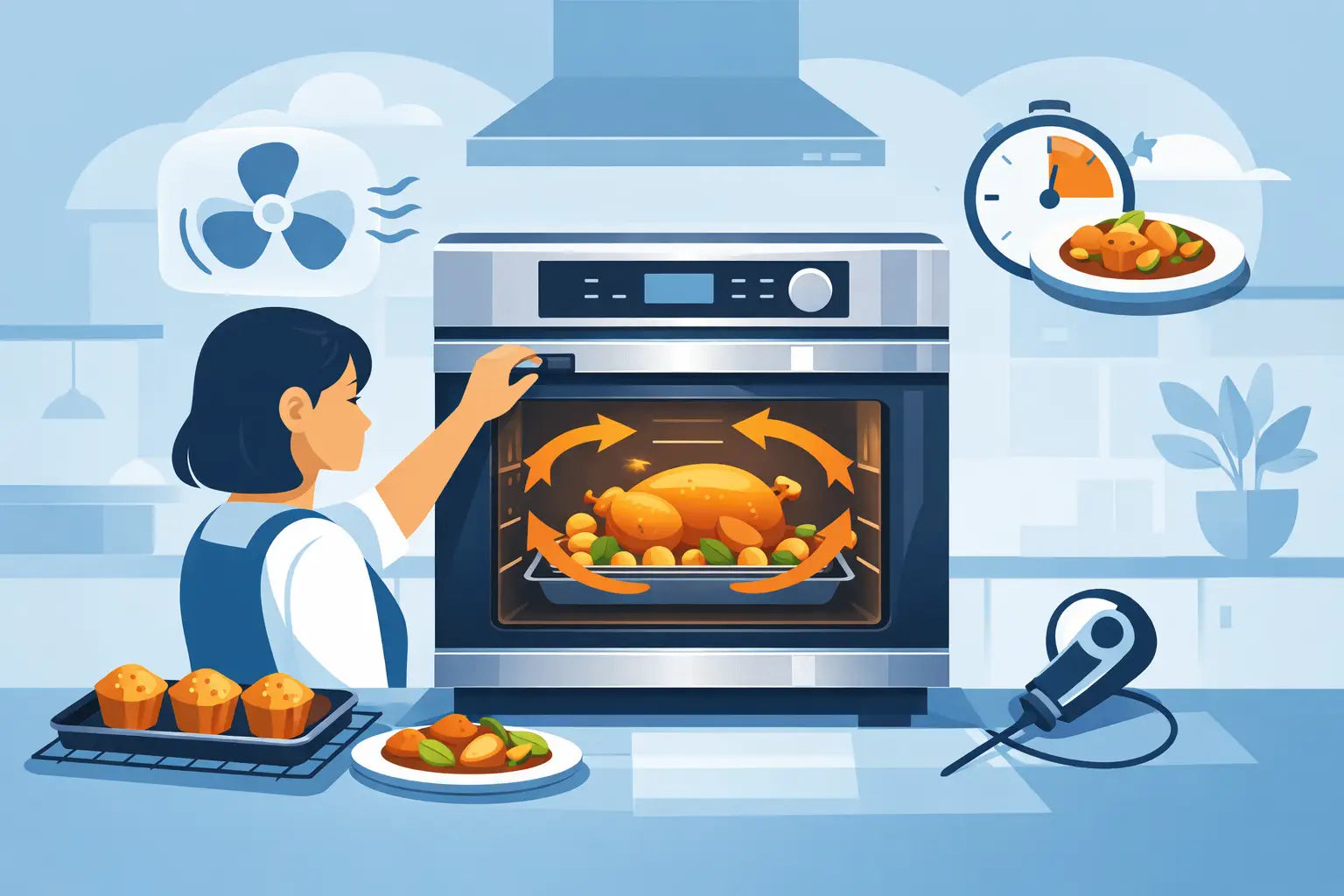
A convection oven uses a fan, and in many models an additional heating element, to circulate hot air around the food. That circulation reduces hot and cold spots and speeds up heat transfer. The result is a more even cooking environment than a standard radiant oven.
The practical adjustment is simple. Most foods should be cooked at a temperature about 25 degrees Fahrenheit lower than a recipe written for a conventional oven, or checked earlier than the original bake time suggests. Some operators do both. For example, if a recipe says 400 degrees for 30 minutes, convection often performs better at 375 degrees with doneness checked around the 22 to 25 minute mark.
That said, not every product responds the same way. Lean proteins, roasted vegetables, sheet-pan meals, baked potatoes, and pastries that benefit from crisp exteriors usually perform well in convection. Delicate cakes, custards, souffles, and some quick breads can be less forgiving because the moving air may set the outside too quickly or create uneven rise.
What convection changes in real kitchen use
The biggest advantage is evenness. In a well-calibrated unit, air circulation helps reduce the need to rotate pans constantly. That matters in commercial production where opening the door repeatedly costs time and temperature stability.
The second advantage is browning. Dry moving heat pulls surface moisture away faster, which is why skin-on poultry, roasted potatoes, and baked items often finish with better color and texture. If your goal is crisp edges and a dry, appealing exterior, convection is usually the right choice.
There is a trade-off. Faster surface drying can work against foods that need a gentler environment. Cheesecakes, flans, and soft sponge cakes often do better with conventional heat or with extra humidity control, if your oven supports it.
Start with the right temperature adjustment
If your oven has a true convection mode, begin by reducing the recipe temperature by 25 degrees Fahrenheit. If it has an automatic convection conversion feature, the control may do that for you. Always confirm what your specific model is actually changing. Some units reduce temperature automatically. Others do not.
In high-output kitchens, it is smart to standardize this adjustment in your prep sheets or recipe cards. That keeps line cooks and bakers from making different assumptions from shift to shift. Precision matters more than guesswork, especially when volume is high.
Watch timing early, not late
One of the most common mistakes is trusting the full recipe time on the first run. Convection frequently shortens cooking time by roughly 20 percent, though the exact number depends on food density, pan material, load size, and moisture content.
Check food early enough that you can still protect the result. A chicken that needs another five minutes is manageable. A tray of burnt cookies is not. In commercial kitchens, this is where repeatable testing pays off. Run one batch, document the result, and treat that as your baseline.
Pan placement and airflow matter
Convection works best when air can actually move. Overloading the cavity or crowding pans blocks circulation and weakens the oven's advantage. Leave space around pans whenever possible, and avoid covering racks with oversized sheet trays that stop airflow from reaching the product evenly.
Rack position still matters, even in convection. The center racks usually provide the most balanced heat exposure. Products that are sensitive to excess browning should stay away from the very top of the cavity, while items that benefit from a stronger finish can be placed higher if your model runs hotter near the top.
If you are cooking multiple trays, stagger them so they are not directly stacked over one another with no space between. Air needs a path. When it has one, you get the consistency convection is designed to deliver.
Choose pans with the finish you want
Dark metal pans absorb more heat and usually produce stronger browning. Light aluminum pans reflect more heat and can help slow browning for products that need a little more control. Insulated bakeware may reduce the crisping effect that makes convection useful in the first place.
For roasting proteins and vegetables, shallow pans generally perform better than deep vessels because they expose more surface area to circulating air. For casseroles or products where moisture retention matters, deeper pans may still be the better choice. It depends on whether your target is browning, moisture, or both.
Best foods to cook in convection ovens
If your priority is speed, color, and uniformity, convection is a strong fit for many daily tasks. Roasted vegetables caramelize well. Chicken wings and bone-in poultry benefit from crisp skin. Cookies, pies, biscuits, and puff pastry often bake more evenly when airflow is not restricted.
Commercial operators also use convection effectively for batch roasting, reheating certain baked items, and finishing menu components that need a dry exterior. In fast-paced service, that reliability can support both quality control and ticket management.
Foods that may need caution include custards, flans, delicate cakes, and anything with a very loose batter. The moving air can create a lopsided rise or encourage cracking. You can sometimes compensate by lowering the temperature further, using a water bath, or switching to conventional mode if your oven offers it.
Common mistakes when learning how to use convection ovens
The first mistake is skipping the temperature adjustment. That alone causes a large share of overbaked results. The second is ignoring airflow by crowding the oven cavity. The third is assuming every recipe improves in convection. Some do. Some absolutely do not.
Another issue is opening the door too often. Convection ovens recover heat faster than standard ovens, but repeated door openings still interrupt performance. If you are checking doneness every few minutes, you are reducing the stability that makes convection valuable.
Calibration matters too. If the oven runs hot or the door seal is worn, your results will drift no matter how carefully you follow the recipe. In professional environments, regular cleaning, inspection, and temperature verification are part of performance management, not optional maintenance.
A simple test method for better consistency
If you are adapting recipes for a new oven, test with one product at a time. Keep the recipe the same, reduce the temperature by 25 degrees, and begin checking around 20 percent earlier than the standard time. Record the rack position, pan type, total bake time, and finished result.
After two or three runs, patterns show up quickly. You may find your oven browns best on the middle rack, or that dark pans need a larger time reduction than light pans. This is how operators turn equipment capability into repeatable output.
Convection for commercial kitchens vs home kitchens
The core principles are the same, but the stakes are different. In a commercial kitchen, convection is about throughput, consistency, and labor efficiency. Faster recovery, more even baking, and reduced rotation all help production move with fewer interruptions.
For home cooks, the value is often quality and control. A serious cook can get sharper browning, cleaner roasting, and more predictable multi-rack results with the right technique. The main adjustment is resisting the urge to use convection for everything just because the feature is available.
If you are selecting equipment for a higher-demand environment, build quality, fan performance, cavity size, and control accuracy matter as much as the convection feature itself. Culinary Precisions serves buyers who care about those details because they directly affect output and consistency over time.
A convection oven rewards disciplined cooking. Lower the heat when needed, give the air room to move, and test your timing before service depends on it. Once you treat convection as a performance tool rather than just another button on the panel, the results start looking a lot more professional.