Are Blast Freezers Worth It for Kitchens?
A tray of stock cooling too slowly, gelato losing texture overnight, prepped proteins shedding moisture after thawing - this is where the question shifts from curiosity to cost control. Are blast freezers worth it? For many kitchens, the answer depends less on the machine itself and more on how much value you place on speed, food safety, texture, and production consistency.
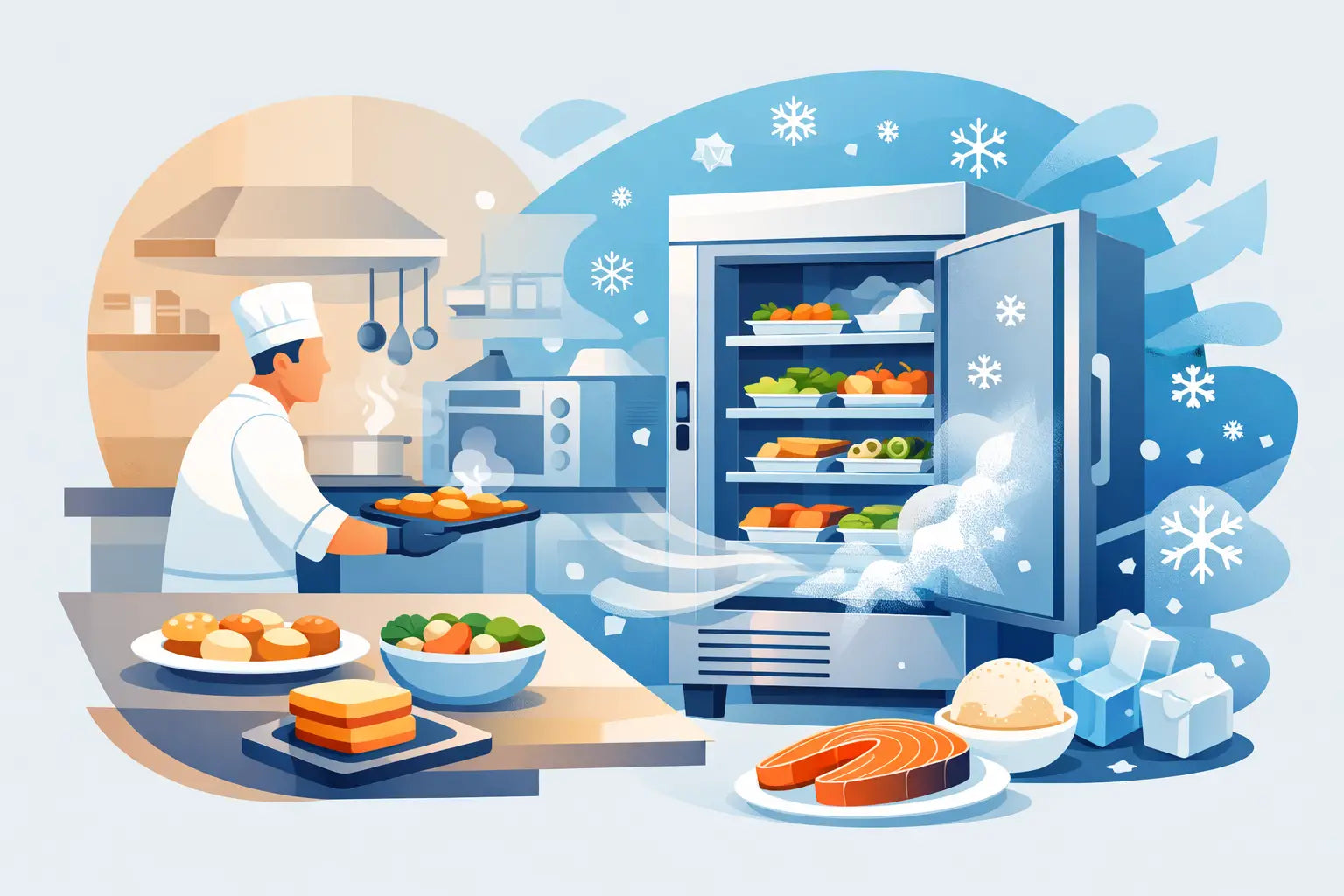
A blast freezer is not just a colder freezer. It is built to pull heat out of food fast, moving products through the temperature danger zone much more quickly than a standard reach-in or chest freezer. That difference matters in commercial kitchens where timing, compliance, and product quality are tied directly to margin.
Are blast freezers worth it for commercial kitchens?
For a high-output restaurant, bakery, commissary, catering operation, or dessert program, a blast freezer can absolutely be worth the investment. The strongest case is not convenience. It is control.
When you cool or freeze food rapidly, you preserve structure more effectively. Proteins tend to lose less moisture. Sauces and soups hold up better in storage. Ice cream, gelato, and pastry components maintain a more consistent finish. In practical terms, that can mean fewer quality complaints, less waste, and better recovery after reheating or thawing.
There is also the food safety piece. Standard freezers are designed to hold frozen food, not to quickly drop the internal temperature of hot product. If your team is relying on regular refrigeration or freezer space to cool large batches, you may be creating bottlenecks and compliance risks without realizing it. A blast freezer gives operators a faster, more repeatable path from production to safe storage.
That matters even more if your kitchen runs batch prep. If you produce sauces, proteins, doughs, desserts, or cooked components in advance, rapid chilling and freezing support a more disciplined workflow. You can prep ahead without sacrificing as much quality, which gives the line more consistency during service.
Where the value shows up day to day
The return on a blast freezer usually comes from several smaller wins that stack up over time. One is reduced product loss. Foods frozen slowly form larger ice crystals, which can damage cell structure and lead to texture problems. Fast freezing helps limit that damage.
Another is labor efficiency. If your team spends time rotating sheet pans, splitting hot batches into smaller containers, or waiting for refrigeration space to open up, that is labor tied up in temperature management instead of production. A blast freezer helps streamline that step.
Menu consistency is another big factor. Operators who depend on make-ahead production know that holding quality from day one to day five is not a minor detail. It shapes guest experience. If your concept depends on precision - plated desserts, pastry work, premium proteins, seafood, frozen prep, or high-volume meal production - the machine can support a noticeably better standard.
Then there is inventory flexibility. Faster freezing gives you more confidence to buy in volume, prep in batches, and hold product with less fear of quality drop-off. For some businesses, that creates a meaningful purchasing advantage.
When a blast freezer may not be worth it
Not every kitchen needs one. If your menu is built around same-day production and low-volume service, the payoff may be limited. A small cafe that rarely freezes prepared food, or a restaurant with a tight menu and very little batch prep, may not see enough operational gain to justify the upfront spend and floor space.
Space is a real issue. Commercial kitchens are already under pressure, and every footprint decision has to earn its place. If adding a blast freezer means compromising prep flow or eliminating a more heavily used piece of equipment, the math changes.
The same goes for budget. A blast freezer is a performance purchase, not an entry-level convenience buy. If capital is tight, some operators are better served by upgrading core refrigeration, improving prep systems, or investing in equipment that directly expands revenue capacity first.
It also depends on discipline. A blast freezer improves results when the kitchen uses it correctly and consistently. If your team has no defined cooling procedures, weak labeling habits, or inconsistent storage practices, the machine alone will not solve those problems. It performs best inside a kitchen that already values process.
Are blast freezers worth it for serious home cooks?
Sometimes yes, but the bar is higher.
For most households, a standard freezer is enough. But serious home cooks who buy premium proteins in bulk, prep meals ahead, make ice cream or gelato, cure foods, or care deeply about texture may see real value in blast freezing. The biggest benefit at home is quality preservation, especially for ingredients that are expensive or difficult to replace.
If you hunt, fish, break down large primal cuts, or regularly cook for events, a blast freezer can help protect that investment. It can also support ambitious entertaining by letting you prepare components in advance without as much compromise in final texture.
Still, this is not a casual countertop upgrade. Cost, space, electrical requirements, and frequency of use matter. A home buyer should ask a simple question: will this machine improve how I cook every week, or will it become an expensive backup freezer? If the honest answer is occasional use, it may not be worth it.
The real comparison: blast freezer vs standard freezer
A standard freezer is designed for storage. A blast freezer is designed for speed.
That difference changes the result. When warm food goes into a regular freezer, the unit may struggle to pull heat down quickly, and surrounding products can be affected. A blast freezer is engineered to handle that thermal load with more precision. You are not just freezing food. You are managing the freezing process in a way that better protects safety and product integrity.
This is especially relevant for kitchens working with dense foods, large batches, or delicate textures. Thin items may freeze reasonably well in a conventional unit. Deep hotel pans of soup, braised meats, pastry inserts, and prepared entrees are another story.
How to decide if the investment makes sense
The smartest way to answer are blast freezers worth it is to look at your operation through four lenses: volume, product type, risk, and standards.
Volume comes first. The more food you prep ahead, the more useful rapid chilling and freezing become. Product type comes next. If your menu includes items that suffer when frozen poorly, the machine has more value. Risk matters because slow cooling can create both food safety exposure and product loss. Standards matter because if your brand promises consistency, your equipment has to support that promise.
You should also think in terms of avoided cost, not just purchase price. How much product do you lose to texture degradation, freezer burn, purge, or inconsistent thawing? How much labor is spent managing cooling manually? How much revenue depends on producing ahead without sacrificing quality?
For many operators, those numbers justify the purchase faster than expected.
Signs your kitchen is ready for one
If your walk-in is regularly overloaded with hot product waiting to cool, that is a sign. If your team relies heavily on batch prep, that is another. If frozen desserts, pastry programs, seafood, or premium proteins are central to the menu, the value becomes easier to defend.
You may also be ready if growth is exposing weaknesses in your current process. A kitchen can get by with workarounds at one level of volume, then hit a wall when demand rises. Blast freezing often becomes attractive at that exact point - when quality standards need to scale without slowing the operation down.
This is where performance-focused buyers tend to make the clearest decision. They are not buying a cold box. They are buying throughput, consistency, and more control over the life of their product.
The bottom line on whether blast freezers are worth it
If your kitchen depends on precision, prep efficiency, and safe temperature control, a blast freezer is often worth it. If your operation freezes food only occasionally and has limited space or budget, it may be better to hold off.
The key is matching the equipment to the pressure your kitchen actually faces. In a serious foodservice environment, speed and consistency are not luxuries. They are part of the job. And when your menu, team, and standards demand that level of performance, investing in the right cold-side equipment is less about spending more and more about protecting everything you already work hard to produce.
The best equipment decisions are the ones that remove friction from service and protect quality after the prep is done.