Article: How to Size Food Warmer for Your Service
How to Size Food Warmer for Your Service
A food warmer that is too small creates a service bottleneck. One that is too large consumes valuable counter space, energy, and labor without improving output. Knowing how to size food warmer equipment starts with one practical question: how much hot food must be held at peak service, not how much food you prepare over an entire day.
For a quick-service line, a catered buffet, or a busy restaurant pass, the right warmer protects food quality while giving the team enough capacity to replenish confidently. Size it around your menu, pan format, holding time, service rhythm, and available utility connections. The result is a station built for speed, safety, and consistent presentation.
Start With Peak-Service Demand
Daily covers are useful, but they can mislead a buying decision. A restaurant serving 200 guests over five hours may only need to hold enough food for 45 guests during its busiest 30-minute period. A banquet operation serving 200 guests at once has a completely different requirement.
Estimate the number of portions you need ready during the busiest service window. Then multiply that number by the average portion size for each menu item. If your busiest 30 minutes requires 50 portions of mashed potatoes at 6 ounces each, you need about 19 pounds of product available before allowing for replenishment and a reasonable operating buffer.
Your holding strategy changes the answer. Kitchens that replenish pans frequently can use a more compact warmer and maintain fresher product. Operations with limited labor, long buffet periods, or high-volume rushes generally need greater pan capacity. Neither approach is automatically better. The right choice depends on how reliably your team can cook, transfer, monitor, and refill food during service.
How to Size Food Warmer Capacity by Pan Count
For most commercial operations, pan capacity is the clearest sizing measurement. Food warmers are commonly configured around full-size hotel pans, with flexible combinations of half, third, and quarter pans. A full-size pan measures roughly 12 by 20 inches, making it the standard reference point for steam tables, countertop wells, and heated holding cabinets.
Begin by listing every hot item that must be held at the same time. A simple lunch line might need chicken, rice, vegetables, gravy, and soup. If each item requires its own pan, the warmer needs at least five separate holding positions, even if the total food volume seems modest.
Depth matters as much as the number of wells. A 2.5-inch pan is appropriate for lower-volume sides and fast replenishment. A 4-inch or 6-inch pan holds more product, but deeper pans can make it harder to rotate food quickly and may affect presentation. Dense foods such as macaroni and cheese, chili, pulled pork, and mashed potatoes often benefit from deeper pans. Delicate vegetables, fried foods, and products that dry out easily usually perform better in shallower pans with more frequent replenishment.
As a working capacity guide, plan for 10 to 20 percent more holding space than your calculated minimum. That buffer allows for an unexpected rush, a backup pan, menu changes, or a temporary delay from the cook line. It is useful capacity, not wasted capacity, when it keeps service moving under pressure.
Match the Warmer Style to the Food and Service Format
Capacity alone does not determine the best food warmer. The equipment style has to support the product you are holding.
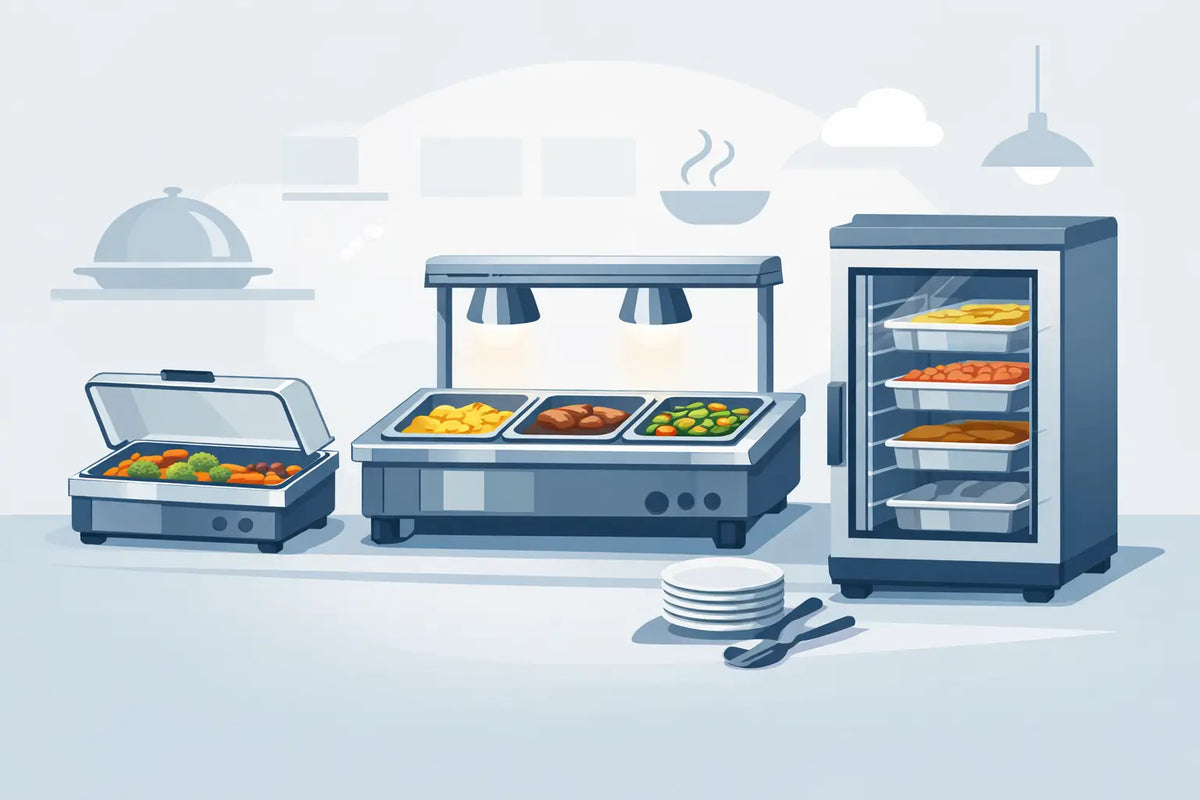
Wet heat steam tables and bain-marie wells are a strong choice for moist foods such as soups, sauces, braises, rice, pasta, beans, and cooked vegetables. Water transfers heat evenly around the pan and helps reduce scorching. They require water management and regular cleaning, but they are dependable for high-volume hot holding.
Dry heat wells are often easier to operate and avoid water fill and drain tasks. They work well for many covered-pan applications, but they may be less forgiving with food that loses moisture quickly. If dry holding is your preference, choose pans and lids that limit moisture loss and establish a disciplined replenishment schedule.
Heated cabinets are designed for bulk holding before food reaches the line. They are useful for holding covered hotel pans, plated meals, catered orders, or batches produced in advance. A cabinet can reduce pressure on a crowded service line, but it is not a substitute for enough front-of-house buffet or serving capacity.
Heat lamps, strip warmers, and pass-through warmers serve a different role. They protect finished plates and short-hold items at the pass. They should not be sized or used as long-term holding equipment for large pans of food.
Plan the Footprint Around the Actual Workstation
A warmer must fit the kitchen on paper and function in the kitchen during a rush. Measure the available counter, cart, or floor space, then account for door swing, pan access, electrical cords, water connections, sneeze guards, and the working room your staff needs to serve food safely.
Countertop units are efficient for compact kitchens, concession stands, coffee shops, and secondary stations. They place hot food close to the point of service, but they can overwhelm a shallow counter quickly. Confirm both the overall equipment dimensions and the clearance needed to open lids, lift pans, and clean the unit.
Floor-model steam tables and mobile buffet units offer more capacity for cafeterias, catering teams, hotels, and high-volume restaurants. They can also create a more organized service flow when paired with tray slides, guards, or serving counters. The trade-off is a larger footprint and less flexibility if the menu or line layout changes.
Do not size solely to the exact width of the counter. Leave enough landing space for fresh pans, utensils, lids, and plated orders. A crowded holding station slows replenishment and increases the chance of spills, cross-contact, and temperature loss.
Verify Heat Output, Power, and Recovery Needs
A food warmer is designed to hold properly cooked hot food at safe serving temperatures. It is not built to cook raw food or rapidly reheat cold product. For hot holding, food should generally remain at 135 degrees F or above, subject to your local health department requirements and operating procedures.
This distinction affects equipment sizing. If you load a warmer with cold, dense pans of food and expect it to bring them to temperature, recovery will be slow and food safety performance may suffer. Cook or reheat food using the proper equipment first, verify its temperature, then transfer it to the warmer for holding.
Check the warmer's electrical requirements before purchase. A compact countertop warmer may operate on a standard 120V circuit, while larger units may require higher voltage, dedicated circuits, or hardwired installation. Gas steam tables add ventilation and connection considerations. Your facility's available utilities can narrow the right equipment choice before capacity becomes the deciding factor.
Higher wattage is not always the answer. It can support faster recovery after pans are changed, but insulation, thermostat accuracy, well design, lid use, and operator habits also determine real-world holding performance. Choose equipment with controls that your staff can use consistently and temperatures that can be monitored with a calibrated food thermometer.
Account for Menu Changes and Product Quality
The best size food warmer supports the menu you serve now while giving you room for realistic growth. A two-well unit may handle a limited menu beautifully, but it can become restrictive the moment you add a soup, a second protein, or a seasonal side. At the same time, a large steam table filled with only a few shallow pans can create unnecessary heat loss and a less efficient line.
Consider how each product behaves under heat. Crispy foods can soften, sauces can skin over, rice can dry out, and proteins can continue cooking if held too hot. Lids, pan depth, humidity, frequent stirring, and smaller batch sizes often matter as much as the warmer itself. Equipment should help your team protect the intended texture, not merely keep food hot.
For serious home cooks, the same principles apply on a smaller scale. Size a countertop warmer for the number of dishes you intend to serve simultaneously, the pan sizes you already use, and the length of your event. Buying commercial-grade equipment can bring welcome durability and control, but only if the footprint and electrical setup suit your space.
Before selecting a unit, map your peak service, count simultaneous menu items, choose pan depths, verify utilities, and measure the station with room for people to work. Culinary Precisions is built around equipment decisions like these: performance first, measured against the real demands of your kitchen. A properly sized food warmer gives every prepared batch a better chance to reach the guest hot, safe, and exactly as your team intended.