Best Commercial Food Warmers for Every Service
A steam-table pan of mashed potatoes can look perfect at 5:30 and become dry, crusted, and difficult to serve by 7:00. That gap is where the best commercial food warmers earn their place. The right unit protects temperature, texture, and speed of service without pulling staff away from the line.
For restaurants, catering teams, concession operators, and serious home cooks building a professional setup, a food warmer is not a generic holding box. It is a production tool. Capacity, heat source, controls, recovery time, pan layout, and cleaning requirements all affect whether food stays guest-ready during the rush.
What the Best Commercial Food Warmers Do
Commercial food warmers are designed to hold fully cooked food at safe serving temperatures. They are not built to cook raw food or rapidly reheat cold product. That distinction matters. Loading a warmer with cold pans forces the unit to work beyond its intended job and can leave food in an unsafe temperature range for too long.
A well-matched warmer helps a kitchen maintain hot holding at 135°F or above, while preserving the qualities guests notice first: moisture in proteins, body in sauces, crisp edges where appropriate, and a clean presentation on the buffet or serving line. The best choice also supports your actual workflow. A compact countertop unit may be ideal for a cafe, while a high-volume banquet operation may need a mobile steam table with multiple full-size pan wells.
Performance is not just about the maximum temperature printed on a spec sheet. Stable heat, responsive controls, even warming, and practical access during service matter more. If operators must fight lids, add water constantly, or guess at dial settings, the equipment slows the team down.
Choose the Warmer Type Before Comparing Features
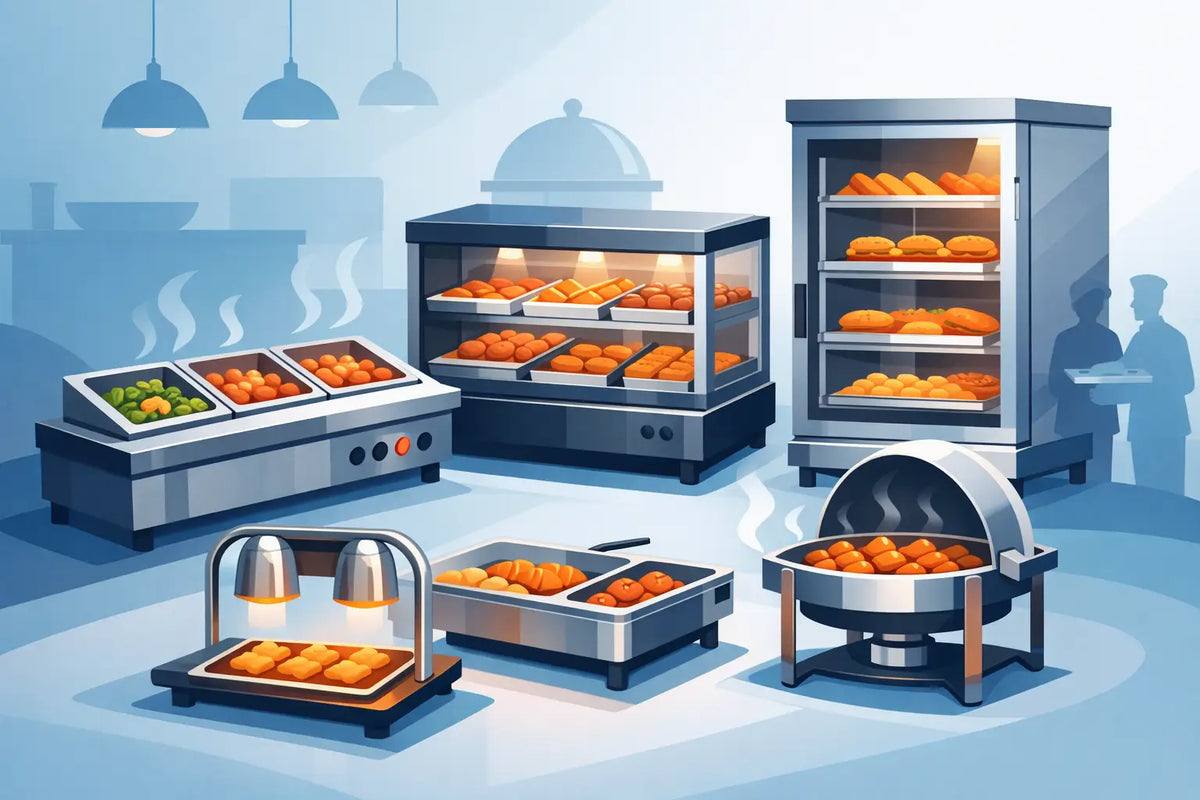
The right category usually becomes clear when you identify where food is held and how long it must remain there. Three common formats cover most commercial needs.
Steam Tables and Bain-Marie Warmers
Steam tables use heated water to create gentle, humid heat around food pans. They are a strong choice for soups, sauces, rice, vegetables, braised meats, and other moist menu items. Because water transfers heat evenly, steam tables are often forgiving during extended holding periods.
Wet heat comes with added maintenance. Operators must monitor water levels, follow the manufacturer’s fill guidance, and clean mineral buildup before it affects performance. A unit with a drain valve makes daily cleanup significantly easier in busy kitchens.
Dry-well steam tables heat pans without water. They reduce refill and drain tasks, making them attractive for fast service lines. The trade-off is that dry heat can be less forgiving for foods that dry out easily. If your menu leans heavily toward gravy-based dishes, mashed potatoes, or long-held proteins, wet operation may provide better results.
Countertop Food Warmers
Countertop warmers bring holding capacity to tight spaces. They work well at pass-through stations, quick-service counters, prep kitchens, coffee shops, and smaller catering setups. Many accept standard food pans, letting staff move product from prep to holding with minimal handling.
The best countertop warmer is sized for peak demand, not average demand. A two-well unit may look efficient until both wells are occupied by high-turn items and there is nowhere to hold a backup pan. On the other hand, buying too many wells for a compact line can consume valuable counter space and add unnecessary energy use.
Look closely at the electrical requirements. A 120V countertop warmer is often convenient for flexible placement, but higher-output units may require a dedicated circuit. Confirm available power before selecting the equipment, not after it arrives.
Heated Cabinets and Holding Cabinets
Heated holding cabinets are built for operators who need to stage larger quantities before service. They are especially useful for catered events, high-volume restaurants, bakeries, banquet facilities, and delivery-focused kitchens. Adjustable shelves and enclosed doors allow teams to hold covered pans, plated components, wrapped product, or hotel pans while protecting food from the open kitchen environment.
Cabinets offer greater capacity and better protection than open warmers, but they take up more floor space and require thoughtful loading. Overpacking restricts airflow and creates uneven temperatures. For best results, use the cabinet as a holding system with planned rotation, not as a place to forget product until it is needed.
Key Buying Factors That Protect Food Quality
Once you have selected the equipment format, focus on the specifications that affect daily performance.
Pan Capacity and Layout
Food warmer capacity is typically measured by the number of full-size hotel pans it can hold. However, a full-size pan count does not tell the whole story. Consider the pan combinations your menu requires. One full pan of chili, two half pans of rice and beans, or three third pans of toppings all need different layouts.
A flexible divider bar system lets you adapt stations as the menu changes. This is particularly valuable for caterers and multi-concept operations, where the same warmer may support breakfast service one day and a taco bar the next.
Temperature Controls and Recovery
Simple dial controls can work well for predictable menus, but thermostatic controls provide greater consistency when holding different products. Clear temperature markings and indicator lights reduce guesswork for staff. A warmer should also recover efficiently after lids are opened or fresh hot pans are loaded.
Do not rely solely on the control setting. Use a calibrated food thermometer to verify product temperature throughout service. The warmer measures the environment around the pan, while food safety depends on the temperature at the center of the food itself.
Build Quality and Cleaning Access
Stainless steel construction is the standard for a reason. It withstands heavy use, resists corrosion, and supports routine sanitation. But even durable equipment can be frustrating if it is difficult to clean. Smooth wells, accessible heating components, removable covers, and drain valves all reduce closing labor.
For mobile units, heavy-duty casters with reliable locks are worth prioritizing. A steam table that rolls easily but shifts during service creates a safety concern. For fixed countertop units, stable feet and a properly sized footprint help prevent movement and preserve workspace.
Lids, Sneeze Guards, and Service Flow
A food warmer must fit the way guests and staff access food. Hinged lids can speed self-service and reduce clutter, while roll-top lids provide convenient access on a buffet. Solid covers help retain heat when pans are not actively being served.
In front-of-house environments, pair the warmer with appropriate sneeze guards and utensils. Equipment selection should support both food protection and fast, clean presentation. A warmer that holds temperature perfectly but creates a bottleneck at the serving line is not a complete solution.
Match the Warmer to Your Menu
There is no single best commercial food warmer for every kitchen. The best unit depends on food type, service volume, available utilities, and holding time.
For a breakfast buffet, humid steam-table heat works well for scrambled eggs, sausage gravy, oatmeal, and breakfast potatoes, provided pans are replenished in smaller batches. For a fast-casual serving line, dry wells or countertop warmers can keep beans, queso, rice, and proteins accessible at pace. For banquet production, a heated cabinet allows the kitchen to stage covered pans and protect consistency while the event team sets the room.
Crisp fried foods deserve special consideration. Standard moist holding can soften breading quickly. If fried chicken, fries, or crispy appetizers are central to the menu, choose equipment designed for dry, ventilated holding rather than assuming any warmer will preserve texture.
Likewise, delicate sauces and dairy-rich dishes should be held at the lowest effective setting. Excess heat can break sauces, scorch edges, and create waste. The goal is not to run the unit as hot as possible. It is to maintain a safe, stable serving temperature with the least damage to the finished product.
Build a More Reliable Holding Routine
Even premium equipment cannot correct poor hot-holding practices. Train staff to preheat the unit, load only food that has reached proper cooking or reheating temperature, use clean pans, and check temperatures on a documented schedule. Cover food during slow periods, then rotate fresh batches before quality declines.
Plan holding capacity around real service windows. A warmer should give the team enough product to handle a rush, but not so much that food sits for hours. Smaller, frequent replenishment is often the better standard for premium menu items.
At Culinary Precisions, the strongest equipment decisions begin with the service problem you need to solve. Measure the space, map the menu, confirm the power supply, and choose a warmer that gives your team controlled heat when the pressure is highest.