How to Choose a Slushy Machine for Business
A cold drink program succeeds or stalls in the details: the speed of the pour, the texture in the cup, the clarity of the flavor, and whether the machine can keep pace when the line forms. Choosing a slushy machine for business is therefore less about adding a novelty item and more about building a dependable profit center that belongs in your service rhythm.
For bars, quick-service restaurants, dessert counters, hotels, concession stands, and outdoor dining venues, frozen beverages can carry strong margins while giving guests a vivid reason to order one more round. The right machine holds its texture through a rush, fits the available counter or back-bar footprint, and supports a menu your team can execute cleanly.
Start With the Beverage Program
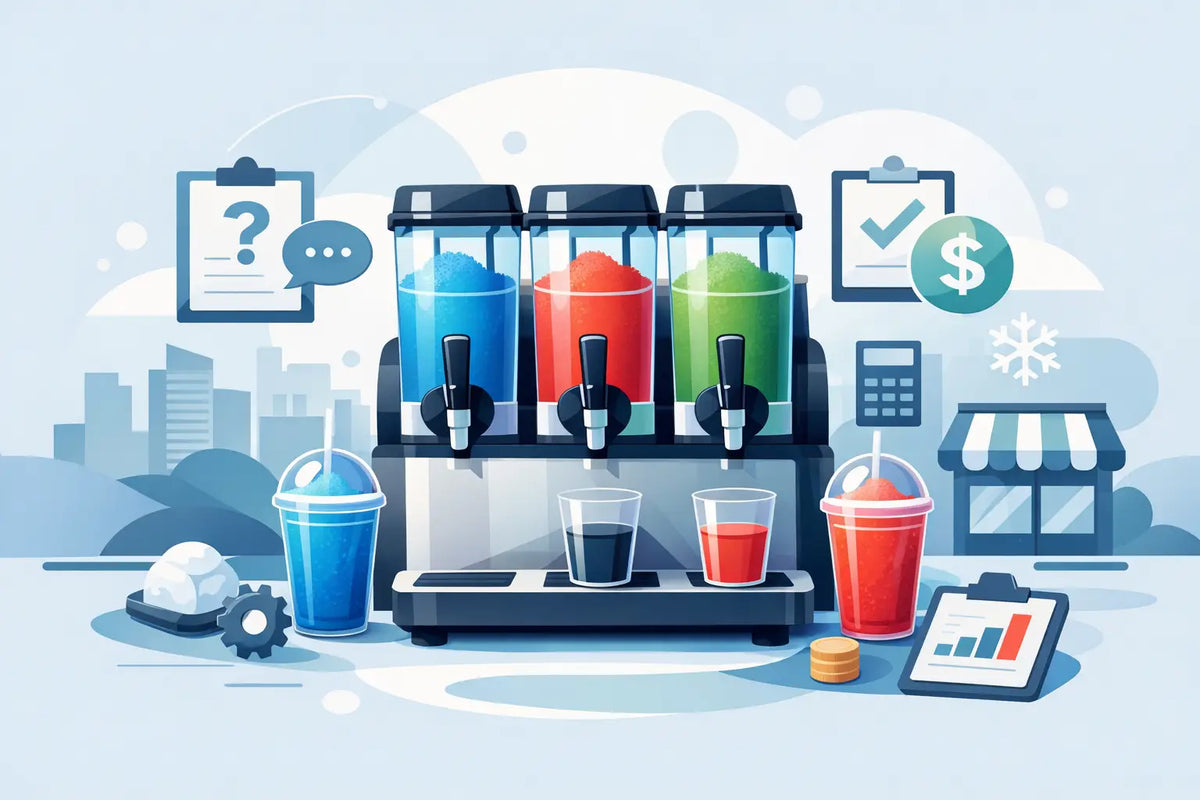
Before comparing capacities or finishes, decide what the machine needs to produce. A two-bowl unit makes sense for a café offering a classic fruit slush alongside frozen lemonade. A three-bowl configuration gives a bar room for a nonalcoholic option, a signature frozen cocktail, and a rotating seasonal flavor. More bowls create more choice, but they also add cleaning time, require more counter space, and can leave product sitting too long if demand is modest.
The base mix matters as much as the menu concept. Most commercial slushy machines are designed for sugar-based beverages with a specified Brix range, which is the measure of dissolved sugar in the mix. Too little sugar can allow the product to freeze too hard. Too much can prevent it from reaching the right frozen consistency. Use mixes formulated for frozen drink equipment and follow the manufacturer’s dilution guidance rather than treating the bowl as a blender.
Alcohol requires its own calculation. Spirits lower the freezing point, so a frozen cocktail needs a carefully balanced recipe and a machine rated for that application. A machine that produces a beautiful lemonade granita may not be suited to a high-proof cocktail program. When frozen cocktails are central to the concept, select equipment and recipes together.
Choose a Slushy Machine for Business by Demand
Capacity should reflect peak-hour volume, not just the number of drinks sold on an average Tuesday. Estimate how many servings you expect during your busiest 30 to 60 minutes, then consider the cup size and the recovery time needed after a bowl is drawn down. A full bowl may look generous during setup, but the useful question is whether the refrigeration system can restore texture fast enough after repeated pours.
Smaller countertop machines can be a disciplined choice for bakeries, cafés, food trucks, and restaurants testing a frozen beverage program. They conserve space, limit product exposure, and simplify daily handling. For a high-traffic concession operation, busy hotel pool bar, or dedicated dessert concept, larger multi-bowl machines reduce refill interruptions and keep the display full during service.
Do not confuse bowl volume with hourly output. Bowl capacity tells you how much product the unit can hold. Production or recovery capacity indicates how effectively it can freeze additional mix as sales continue. Both figures belong in the decision.
Gravity-Fed or Pump-Fed?
Most slushy machines use a gravity-fed system, where the product flows from the bowl to the dispensing valve. This design is straightforward, visually appealing, and well suited to traditional slushes, frozen lemonades, and many cocktail mixes. It is often the practical standard for operations that want clear product visibility and uncomplicated service.
Pump-fed systems can provide more controlled dispensing and may work well with certain higher-volume or specialty applications. They can also add mechanical complexity. The better choice depends on the mix, the expected draw volume, and the degree of portion control your operation requires. If the menu is simple and the team needs a reliable visual cue for refills, gravity-fed equipment is frequently the stronger fit.
Refrigeration, Power, and Placement Matter
A slushy machine is a working refrigeration appliance, not a decorative countertop piece. Its compressor must shed heat into the surrounding room, which makes ventilation clearance essential. Crowding the machine under a shelf, pressing it against a wall, or placing it beside a hot cooking line can weaken performance precisely when the operation needs it most.
Confirm the electrical requirements before ordering. Many compact commercial units operate on 115V power, while larger equipment may call for higher voltage, a dedicated circuit, or a specific plug configuration. Electrical planning should happen alongside equipment selection, especially in bars and service counters where outlet access is often already claimed by refrigeration, blenders, ice equipment, and POS hardware.
Measure the full service envelope, not only the cabinet width. Account for bowl height, lid clearance, side ventilation, access to dispensing handles, and room to remove components for cleaning. A handsome machine that cannot be comfortably filled or serviced becomes an obstacle in the workspace.
Build Texture and Presentation Into the Purchase
Guests notice frozen beverage texture immediately. A well-calibrated slush has fine, consistent crystals that feel refreshing rather than icy or watery. Machines with independent bowl controls offer valuable flexibility when flavors behave differently. A citrus-forward lemonade, for example, may stabilize differently than a syrup-rich blue raspberry or a low-alcohol cocktail.
Clear polycarbonate bowls support the theater of the product. Bright color, moving augers, and visible frozen texture create a small but effective merchandising moment at a counter or bar. This matters in high-impulse settings, where a guest may not have planned to order a frozen drink until they saw one being poured.
That visual advantage comes with a discipline requirement. Keep bowls clean, lids free of residue, and flavor labels easy to read. Avoid overfilling past the recommended line. Product presentation is part of food safety and part of the sale.
Plan for Daily Cleaning Before You Buy
The best slushy machine for business is one the staff can maintain correctly at closing. Frozen drink machines handle sweet products that can leave residue in valves, seals, bowls, and dispensing parts. A neglected machine can affect flavor, performance, and sanitation.
Review the cleaning process in practical terms. How easily do bowls, gaskets, augers, and drip trays come apart? Are replacement parts readily identifiable? Can the team reach the relevant components without moving the entire unit? A lower-cost machine with an awkward cleaning routine may cost more in labor and service frustration over time than a better-designed model.
Create a written routine that covers draining product, rinsing, washing food-contact components, sanitizing, air-drying, and reassembly. Train staff to inspect seals and dispensing valves as they clean. Small leaks, stiff handles, or inconsistent flow are easier to correct early than during a Saturday rush.
Price the Program, Not Just the Equipment
A slushy machine earns its place through contribution margin and repeatable service. Consider the full operating picture: equipment cost, mix cost, cups and lids, garnishes, labor, utility use, cleaning supplies, and the expected sales mix. A frozen lemonade with a modest food cost can be an approachable add-on. A well-composed frozen cocktail can become a signature item with a more substantial check impact.
Menu design has a direct effect on throughput. Keep the first offering focused. Two flavors that are memorable and easy to explain often outperform five generic choices. Once sales patterns are clear, a rotating bowl can bring seasonal movement without requiring a larger permanent menu.
For operators investing in a polished service environment, the machine should also belong visually. Consider bowl count, cabinet profile, placement, and whether the unit supports the pace and character of the counter. Commercial equipment is infrastructure, but it is also part of the guest’s view of your hospitality.
A thoughtful frozen beverage program does not need excessive complexity to feel special. Select a machine sized for the rush, give it air and power to perform, use recipes built for its freezing range, and make cleaning nonnegotiable. Then let the first bright pour do what it does best: slow the guest down for a moment and make the next order feel easy.