Commercial Steamer Buyer Guide for Busy Kitchens
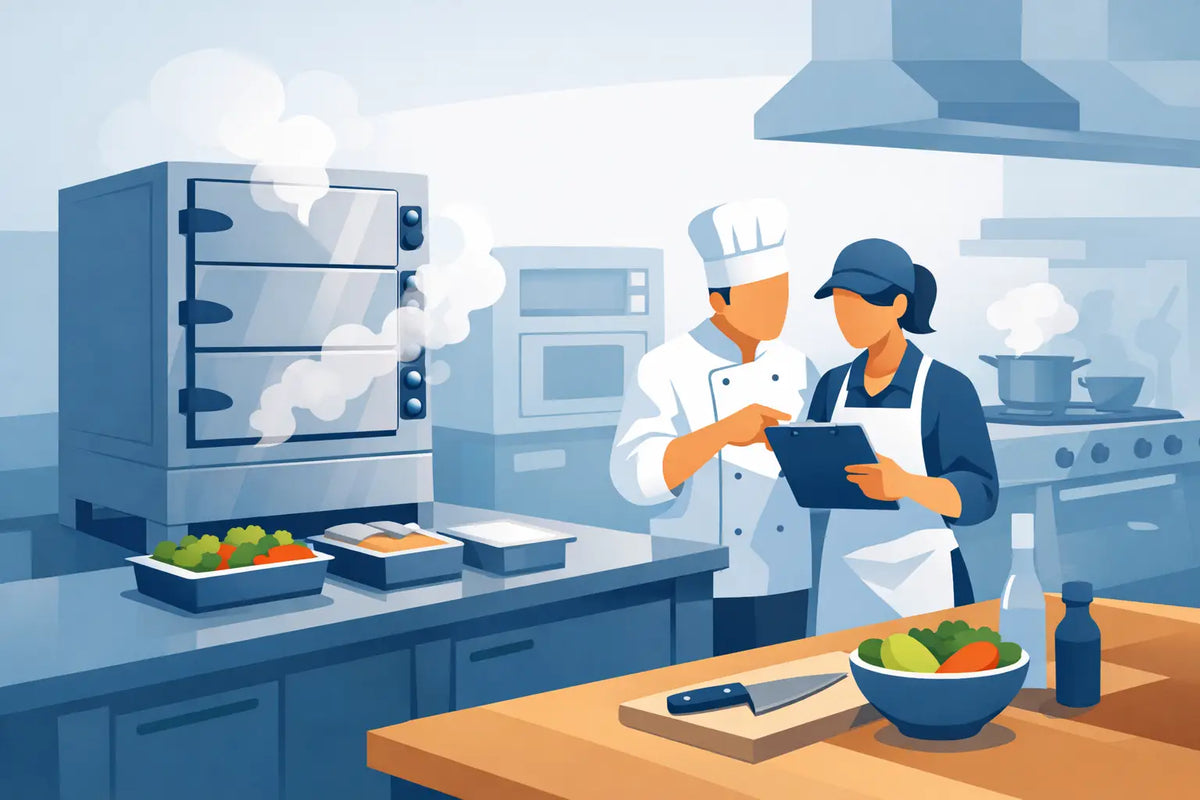
A commercial steamer earns its place when the line is moving, prep lists are long, and consistency cannot depend on who is working the station. This commercial steamer buyer guide focuses on the decisions that affect daily output: what you cook, how much you cook, how quickly you need it ready, and what your facility can support.
Steam is one of the most efficient forms of commercial cooking. It preserves moisture, limits shrinkage, supports repeatable portions, and allows operators to cook vegetables, seafood, grains, proteins, and prepared items with less hands-on attention than many traditional methods. The right unit can reduce bottlenecks. The wrong one can create utility, drainage, and labor problems that follow your kitchen for years.
Start With Your Actual Production Demand
Do not begin with the largest cabinet or the highest BTU rating. Begin with the food leaving your kitchen during the busiest 60 to 90 minutes of service. A cafe steaming vegetables in small batches has different needs than a hospital kitchen producing hundreds of covered portions, even if both serve similar menu items.
Map your highest-volume steamed foods, batch sizes, and required turnaround times. Include prep production, not just service. A steamer that handles lunch volume may still be undersized if it must also produce grains, potatoes, vegetables, and proteins before the doors open.
Pan capacity is the most useful starting point. Full-size hotel pan capacity tells you how much product the cabinet can hold, but capacity alone does not guarantee fast recovery. A heavily loaded cabinet takes longer to return to temperature, particularly when cold product is added repeatedly. For high-volume operations, more compartments or a larger cabinet often protect throughput better than trying to overfill a smaller unit.
Also consider the physical workflow. A floor model may deliver the capacity a busy operation needs, but it requires clear access for loading, unloading, cleaning, and service. Countertop steamers can be a strong fit for compact kitchens, satellite stations, catering operations, and serious home kitchens, provided their batch limits match the menu.
Choose the Right Commercial Steamer Type
The best commercial steamer is not always the most complex model. Equipment should match the product, staff skill level, available utilities, and maintenance plan.
Pressureless steamers
Pressureless, or convection, steamers circulate steam around food at atmospheric pressure. They are highly versatile and easy for staff to understand. They work well for vegetables, seafood, dumplings, rice, potatoes, and reheating prepared items. Because the door can be opened during cooking, they offer flexibility for mixed production, though opening the cabinet releases heat and can extend cook times.
This is often the practical choice for restaurants, schools, healthcare kitchens, and operators who value broad menu flexibility over maximum speed.
Pressure steamers
Pressure steamers cook at elevated pressure, increasing temperature and reducing cook times. They are built for volume and can be particularly effective for dense vegetables, potatoes, rice, legumes, and institutional batch cooking. The trade-off is a more controlled operating process. Staff must follow proper depressurization procedures, and the unit is less convenient when cooks need to check or adjust food mid-cycle.
For a high-output kitchen with predictable batch cooking, pressure can deliver meaningful labor and time savings. For a menu that changes frequently or relies on visual checks, pressureless steaming may be the better operational fit.
Boiler-based and boilerless steamers
Boiler-based steamers generate steam in a dedicated boiler. They are proven workhorses for demanding production, especially where several compartments operate continuously. They can offer strong recovery and output, but they require disciplined water treatment and regular boiler maintenance.
Boilerless models create steam directly in the cooking cavity or generator system. They can reduce some installation complexity, use less water in certain applications, and simplify parts of daily operation. However, their performance and maintenance requirements vary by design. Do not assume boilerless means maintenance-free. Mineral buildup still matters, and proper cleaning remains essential.
A boiler-based unit can be the right long-term choice for sustained, high-volume cooking. A boilerless model may make more sense for smaller operations, locations with limited infrastructure, or buyers who prioritize simpler day-to-day operation. Review the manufacturer's water requirements before deciding.
Fuel, Utilities, and Installation Can Decide the Purchase
A steamer's specification sheet must work with the building, not just the menu. Gas models can provide fast recovery and may offer lower operating costs where gas pricing is favorable. Electric models can be easier to place in facilities without gas service and can deliver precise, dependable performance. The better option depends on your available service, local codes, energy costs, and ventilation plan.
Water quality deserves the same attention as fuel type. Hard water can create scale inside generators, valves, probes, and heating components. Scale reduces efficiency, affects steam production, and increases service calls. If your water supply is mineral-heavy, budget for the appropriate filtration or treatment system from the beginning. It is a protection for both food production and equipment life.
Drainage is equally important. Commercial steamers require a properly sized drain connection and floor drainage that supports safe cleaning and maintenance. Verify electrical voltage, gas connection requirements, water pressure, clearance dimensions, hood requirements, and local health and plumbing codes before ordering. A model that fits through the door may still fail the installation plan if utility connections are overlooked.
Controls Should Match Your Team
Manual controls are straightforward, durable, and useful for kitchens that run a small number of repeatable steam cycles. They can be an excellent choice when experienced staff prefer direct operation and the menu does not require extensive programming.
Programmable controls add value when multiple employees use the equipment, recipes must be repeated across shifts, or food quality depends on precise timing. Programs can standardize cycles for vegetables, seafood, grains, and reheating tasks. That consistency helps reduce overcooking, improve portion quality, and shorten training time.
The most advanced control package is not automatically the best investment. Consider whether your team will use recipe programming, diagnostics, timed starts, or automatic cleaning features consistently. Buy controls that remove real friction from your operation rather than features that sit unused.
Build Maintenance Into the Buying Decision
Steamers operate in a hot, wet environment, so cleaning and preventive care directly affect performance. Look for a cabinet with accessible interior surfaces, durable door gaskets, easily removable pan supports, and clear daily cleaning procedures. A door that seals poorly wastes energy and compromises cooking results. A cavity that is difficult to clean will eventually slow the team down.
Plan for daily rinsing and wipe-downs, scheduled deliming or descaling based on water conditions, gasket inspection, and regular checks of drains and safety components. Assign ownership of these tasks. Commercial equipment lasts longer when maintenance is part of the production routine rather than an emergency response.
Service access matters as well. Before buying, confirm that there is enough room around the unit for technicians to reach service panels and connections. In a tightly designed kitchen, a few inches of clearance can make the difference between a routine repair and costly equipment relocation.
Use Total Cost, Not Purchase Price, to Compare Models
A lower-priced steamer can become the more expensive choice if it lacks capacity, consumes excessive water, requires frequent repairs, or creates labor delays. Compare the full operating picture: expected output, energy and water use, filtration needs, cleaning time, warranty coverage, parts availability, and the cost of downtime during service.
For many operations, the strongest value comes from a unit sized slightly above current peak demand. That extra capacity gives the kitchen room to absorb catering orders, seasonal traffic, menu growth, and busy shifts without forcing staff into repeated small batches. Oversizing by a wide margin, however, can waste floor space and utilities. The target is productive headroom, not excess equipment.
Culinary Precisions helps operators compare professional-grade steamers with the performance details that matter in real kitchens: capacity, reliability, safety, and the infrastructure each model requires. Choose with your menu and facility in view, then give the equipment the water treatment, cleaning, and service access it needs to perform under pressure.