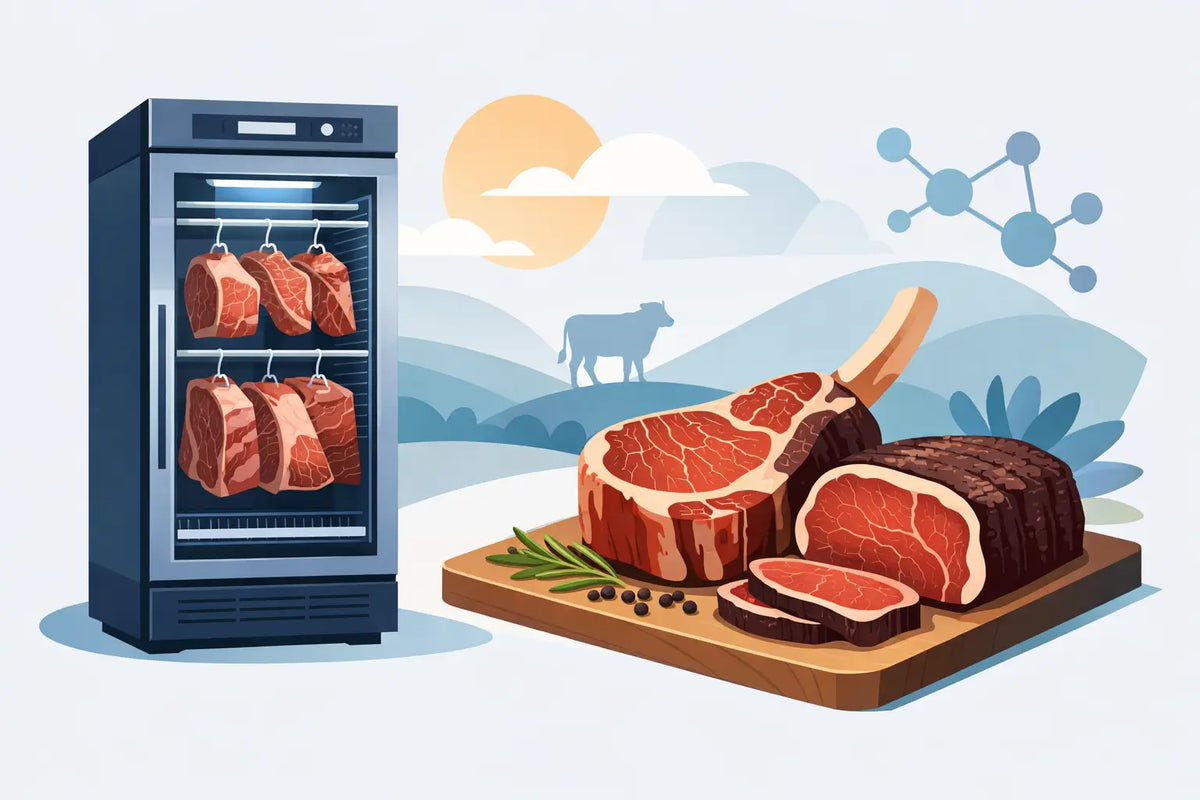
How a Dry Aging Cabinet Builds Better Beef
A dry aging cabinet turns a process once reserved for butcher shops and high-volume steakhouses into a controlled part of your kitchen program. When temperature, humidity, airflow, and sanitation hold steady, beef develops the nutty, concentrated character that makes a dry-aged steak memorable - not merely expensive.
For a restaurant, hotel, specialty butcher, or serious home cook, the cabinet is more than a dramatic display of hanging loins. It is a precision environment for managing yield, flavor, timing, and presentation. The right model gives a chef the confidence to put a 30-, 45-, or 60-day dry-aged cut on the menu with a process that can be repeated.
What a Dry Aging Cabinet Actually Controls
Dry aging is controlled dehydration paired with natural enzymatic tenderization. Over time, moisture leaves the exterior of a primal cut, concentrating its flavor. Meanwhile, enzymes already present in the muscle gradually soften connective structure, contributing to a more tender bite.
That transformation depends on consistency. A dry aging cabinet is designed to maintain the narrow environmental range that ordinary reach-in refrigeration rarely delivers. Most programs aim for temperatures near 34°F to 38°F, relative humidity commonly around 75% to 85%, and measured airflow around the product. Exact targets vary by cabinet, cut, aging duration, and house preference, but stability matters more than chasing a single universal number.
The cabinet also separates aging from everyday refrigeration traffic. A walk-in door opening during prep, deliveries, and service disrupts temperature and humidity. A dedicated aging chamber creates a quieter rhythm: product goes in, conditions stay stable, and the process proceeds without constant interruption.
Flavor, Yield, and the Trade-Off That Matters
Dry-aged beef earns its depth through time, but time is not free. As aging progresses, the cut loses moisture and forms a dry outer pellicle that must be trimmed before portioning. That trim loss is part of the craft. It is also part of the food cost.
A shorter program, often in the 21- to 30-day range, can deliver a clear improvement in tenderness and concentration while preserving more sellable yield. Longer aging creates increasingly pronounced roasted, mineral, buttery, and blue-cheese-like notes. For the right steakhouse guest, that intensity is the point. For a broader dining room, it may be too assertive or too costly to become the only option.
This is why a strong dry-aging program begins with menu intent. A chef building a premium ribeye feature may want the boldness of 45 days or more. A restaurant introducing dry-aged beef for the first time may find that a 28-day strip loin is easier to price, explain, and sell consistently. The cabinet gives you control, but the business model determines how far to take the aging.
Choosing the Right Dry Aging Cabinet
Capacity is the first question, but it should not be the only one. A cabinet that looks generous when empty can feel restrictive once whole strip loins, rib sections, bone-in cuts, shelving, and clearance for airflow are accounted for. Consider the primal size and shape you plan to age, not just the published cubic-foot capacity.
Before selecting a unit, assess four practical factors:
- Product volume and aging cycle: Calculate how many pounds will be inside during peak inventory, including overlapping batches at different ages.
- Placement and clearance: Measure the intended footprint, door swing, ventilation space, floor load, and route through doors or corridors before delivery.
- Electrical requirements: Verify voltage, plug type, circuit capacity, and whether installation calls for dedicated electrical work.
- Service model: Decide whether the cabinet will live in a visible dining room, an open kitchen, a butcher counter, or a back-of-house prep area.
A compact cabinet may suit a chef-driven restaurant testing a limited dry-aged feature or a home collector aging one or two primals at a time. Larger commercial cabinets make more sense when aging supports a core steak program, butcher retail, or regular special-event volume. Bigger is not automatically better. Excess capacity can leave a cabinet underloaded, while an undersized unit can crowd product and complicate airflow.
Materials and Interior Design
Look for durable, foodservice-ready construction and interiors that are practical to clean. Stainless steel remains a strong choice for commercial environments because it is durable, visually composed, and suited to frequent wipe-downs. Adjustable shelving or hanging systems are valuable when your program includes different cuts, from bone-in rib sections to strip loins and whole muscles.
Door construction matters as well. A glass door supports merchandising and easy visual checks, while a solid door may be preferable where light exposure, placement, or a more utilitarian back-of-house setup takes priority. Neither option is universally superior. Choose based on how the cabinet will work in your space.
Start With the Right Beef
An aging cabinet cannot turn weak raw material into exceptional steak. Begin with high-quality whole-muscle beef from a supplier whose grading, handling, and delivery standards you trust. Well-marbled ribeyes and strip loins are classic candidates because their fat content supports flavor and protects the eating experience as moisture loss concentrates the meat.
Larger primals generally age more gracefully than small individual cuts. They provide a protective exterior and leave more usable interior product after trimming. Bone-in cuts can offer a striking presentation and may add perceived value on a menu, though they can take up more cabinet space and require thoughtful fabrication.
Avoid placing product in the cabinet without a plan for receiving and traceability. Record the source, received date, cut, starting weight, intended aging date, and staff notes. A simple aging log brings discipline to the process and helps you understand the relationship between time, trim loss, yield, and guest response.
Operating With Food Safety in Mind
Dry aging is not casual storage. Your cabinet should be cleaned and maintained according to the manufacturer’s instructions, and your kitchen team should follow established food safety procedures for receiving, handling, labeling, and fabricating raw beef. Keep aging beef separate from ready-to-eat foods and from items that could introduce unwanted odors or contamination.
Monitor conditions rather than assuming the display is always the whole story. Review temperature and humidity readings at a regular interval, especially after loading product, cleaning, or any power interruption. If your cabinet uses UV-C or other air-treatment features, treat them as part of an overall sanitation plan, not as a substitute for cleaning and sound handling practices.
Airflow deserves the same respect. Do not pack cuts tightly together or push product against vents. Each piece needs circulation around its surface. Crowding may seem efficient in the moment, but it undermines the even, controlled conditions that justify investing in dedicated aging equipment.
When Is Beef Ready?
There is no single day when every cut reaches perfection. Inspect the product with trained eyes and a clear standard. The exterior should develop a dry, darkened surface. After aging, the pellicle is trimmed away to reveal the usable interior, which is then portioned and stored according to your operation’s procedures.
Taste is the final authority. Keep notes on each batch, including aging duration, trim percentage, portion yield, cooking performance, and guest feedback. Over several cycles, those records become a house calibration. You learn which cut performs best at 30 days, which deserves 45, and where the added time no longer earns its place on the plate.
Make the Cabinet Part of the Experience
A dry-aging program can strengthen both a menu and a room. In an open kitchen or dining area, a well-lit cabinet gives guests a visible connection to time, restraint, and craftsmanship. It signals that the steak was not simply ordered and cooked. It was selected, held, observed, trimmed, and prepared with intention.
Still, the most compelling result is not the cabinet itself. It is the moment a guest cuts into a deeply caramelized steak with a tender center and a flavor that stays on the palate. Choose a dry aging cabinet that fits your volume, your space, and your standards, then let time do the work that heat alone cannot.