How Pizza Oven Heat Consistency Is Built
A pizza oven can reach an impressive peak temperature and still produce uneven pies all night. Pizza oven heat consistency is what separates a fast first pizza from reliable service: a crisp, properly spotted crust, fully melted cheese, and predictable bake times from the opening order through the final rush.
For a restaurant, that consistency protects ticket times, food cost, and guest expectations. For a serious home cook, it turns a high-heat oven from an occasional showpiece into a dependable cooking tool. The answer is not simply buying the oven with the highest advertised temperature. It is choosing and operating a system that stores, transfers, and recovers heat with control.
Why Pizza Oven Heat Consistency Matters More Than Peak Heat
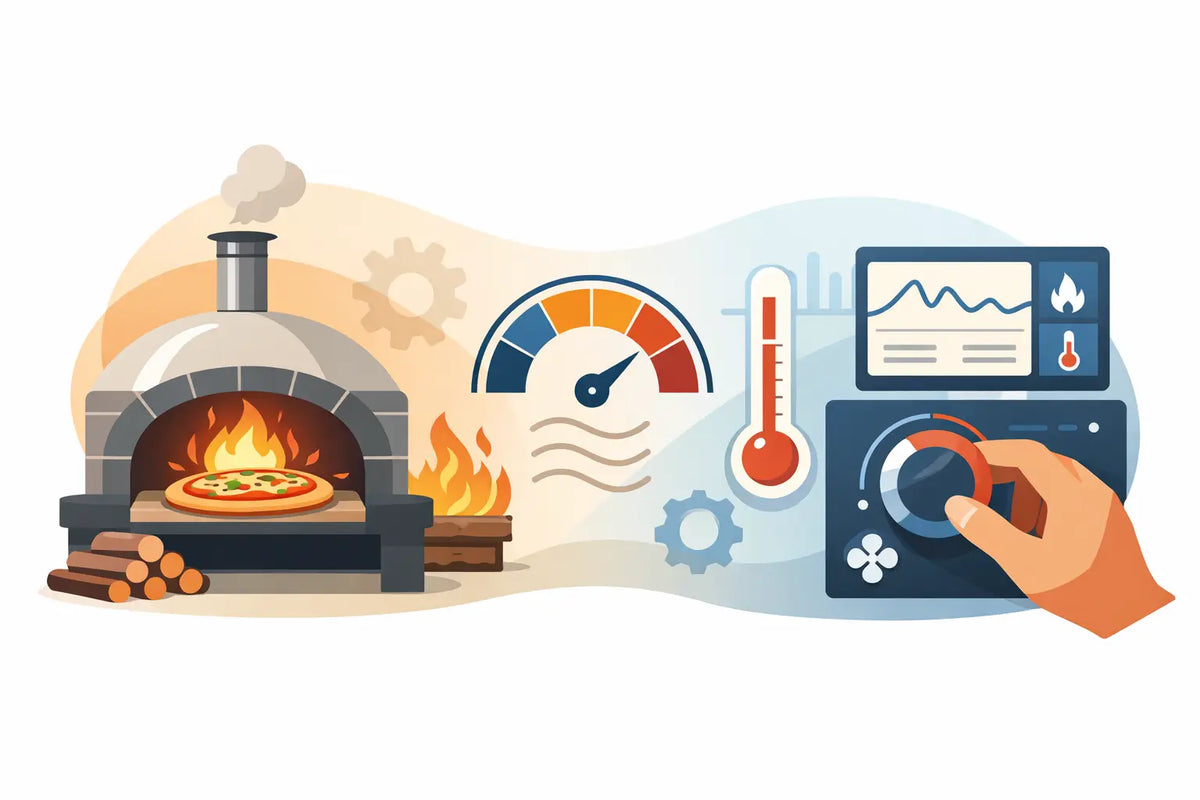
A 900°F oven sounds compelling, but temperature alone does not tell you how the oven will perform after several pizzas, a long door opening, or a heavy pan placed on the deck. Pizza requires multiple forms of heat working together. The deck must conduct heat into the bottom of the dough. The dome, ceiling, or heating elements must radiate heat onto the rim and toppings. Hot air circulation contributes as well, especially in convection-assisted or forced-air equipment.
When those heat sources are balanced, the pizza bakes evenly. When they are not, operators compensate with longer bake times, more turning, or excessive flour and semolina on the deck. Those workarounds can reduce throughput and create a product that varies from one cook to the next.
A consistent oven also gives the kitchen a repeatable baseline. A dough formula can be refined, sauce portions can be standardized, and staff can be trained around known bake times. Without stable heat, even a well-developed recipe becomes difficult to execute under pressure.
The Three Heat Systems Behind a Better Bake
Thermal mass protects the deck
Thermal mass is the oven's stored energy. Thick stone, cordierite, refractory material, or a substantial steel deck can absorb heat during preheat and release it back into the pizza during the bake. This is why a deck may show the correct temperature initially but cool rapidly after several pies if it lacks enough mass or recovery power.
More thermal mass is not automatically better for every operation. It usually means a longer preheat and may require more energy to bring the oven to operating temperature. But for high-volume pizza production, it offers a major advantage: the deck is less likely to collapse in temperature when orders stack up.
Consider the style of pizza being produced. Neapolitan-style pizzas benefit from very high heat and a brief bake, while New York, tavern, Detroit, and pan pizzas need different deck and top-heat relationships. The best oven is the one that can hold the temperature profile your product needs, not the one with the most aggressive maximum setting.
Recovery power keeps service moving
Recovery is how quickly an oven returns to its target conditions after heat is lost. Every open door releases heat. Every cold dough ball, sauce portion, cheese load, and metal pan absorbs energy. In a busy kitchen, that loss is constant.
Electric ovens rely on element wattage, heating-zone design, insulation, and controls to recover. Gas ovens depend on burner output, flame distribution, combustion airflow, insulation, and thermostat performance. Wood-fired ovens add another variable: the fire must be actively managed so the flame, coal bed, and heated masonry remain in balance.
High recovery matters most when demand is irregular. A home cook making two pizzas back to back may be satisfied with a longer reset between bakes. A pizzeria handling a surge of twenty tickets needs equipment that returns to its set point quickly enough to prevent the last pizzas from baking differently than the first.
Top heat and bottom heat must agree
A common pizza problem is not low heat but mismatched heat. If the deck is too hot relative to the dome or upper elements, the bottom darkens before the cheese and rim finish. If top heat is excessive, the cheese may blister and the crust edge may burn while the base stays pale.
Ovens with independently adjustable top and bottom heat provide meaningful control for operators who produce more than one style of pizza or run a changing menu. They allow the kitchen to fine-tune the bake for thin crust, heavier toppings, pan pizzas, or par-baked applications without relying entirely on timing.
This adjustability is especially valuable in electric deck ovens. A stable thermostat is useful, but zone control gives chefs a way to correct the actual bake rather than merely chase a displayed air temperature.
What Causes Heat to Drift During Service
Heat drift is usually an operating issue, an equipment limitation, or both. The most frequent causes are easy to recognize once the team watches the oven as closely as it watches the pizza.
Door discipline has an immediate effect. Repeated checking, long conversations at the oven opening, and loading one pizza at a time when several are ready all release heat. Organize the make line so pizzas can be launched efficiently, then keep the door closed whenever possible.
Loading patterns matter too. Crowding pizzas restricts airflow and places a sudden load on the deck. Even a large oven has a practical capacity based on pizza size, bake style, and recovery power. Leaving adequate space supports more even heat exposure and gives staff room to turn pizzas cleanly.
Dough temperature is another overlooked variable. Dough coming directly from cold storage draws more heat from the deck and can extend the bake. Consistent fermentation and a controlled dough-temperature process help the oven perform more predictably. The same principle applies to heavily loaded pizzas, frozen ingredients, and cold pans.
Fuel management is central to live-fire ovens. A weak flame may leave the top pale; an oversized flame can scorch one side of the pizza or create localized hot spots. The fire should be maintained as a production heat source, not treated as a visual feature. Consistent wood species, piece size, and fire placement make a noticeable difference.
Measure the Surfaces That Actually Cook the Pizza
The oven's built-in display is useful, but it is not the whole story. Many controls measure air temperature at a specific point in the cavity. Pizza responds most directly to deck temperature and radiant heat from above.
Use an infrared thermometer to check several deck locations: center, front, rear, and both sides. Make the measurements at the same points before service, during peak production, and after a recovery period. A consistent pattern gives the team practical information. If the front of the deck runs cooler because of door loss, pizzas may need to be launched deeper in the chamber. If one area runs hotter, it can become the preferred zone for a pan pizza or a pie with heavier toppings.
An infrared reading should be paired with bake results. A surface temperature number is valuable, but the final standard is the pizza itself. Track whether the underside, rim, cheese melt, and bake time remain consistent across several orders. That is the operational evidence that the heat profile is correct.
Equipment Features That Support Consistent Output
When comparing pizza ovens, prioritize the features that keep heat stable instead of focusing only on advertised maximum temperature. Strong insulation reduces energy loss and improves recovery. A well-built door and durable gasket help preserve the chamber environment. Quality refractory decks or commercial-grade baking surfaces retain energy during repeated loading.
For electric equipment, look closely at independent heat zones, reliable thermostatic or digital controls, element placement, and electrical requirements. An oven can only deliver its intended performance when the site has the correct voltage, amperage, and circuit capacity. For gas equipment, verify BTU input, ventilation requirements, gas type, and whether the kitchen can support the necessary utility connection.
Capacity should be evaluated honestly. A compact oven may be the right answer for a limited counter, food truck, bar program, or home patio, but it will not perform like a larger commercial deck oven during a sustained rush. Buying to the actual production pattern protects both consistency and equipment life.
At Culinary Precisions, the right pizza oven begins with the operation's menu, volume, available utilities, and service expectations. Professional results come from matching the equipment specification to the way the kitchen actually works.
Build a Repeatable Oven Routine
Consistency is maintained before the first ticket arrives. Give the oven enough time to preheat not only the air but also the deck, walls, and ceiling. A displayed set point may be reached well before the baking surface has stored sufficient energy.
Establish an opening check that includes deck readings, a test bake, and confirmation of top-to-bottom color. During service, assign responsibility for fire management or control adjustments so changes are deliberate rather than reactive. After a heavy rush, allow a planned recovery interval when possible instead of continuing to load pizzas onto an underpowered deck.
Clean the deck and cooking chamber regularly. Burned flour, cheese, and food debris create smoke, bitter flavors, and uneven contact with the pizza base. A clean deck also makes temperature readings and visual bake assessment more reliable.
The goal is not to make every pizza identical regardless of style. It is to give your team a stable, controllable heat platform so each pizza can be made exactly as intended, even when the kitchen is working at full speed.