Restaurant Ranges That Set the Pace of Service
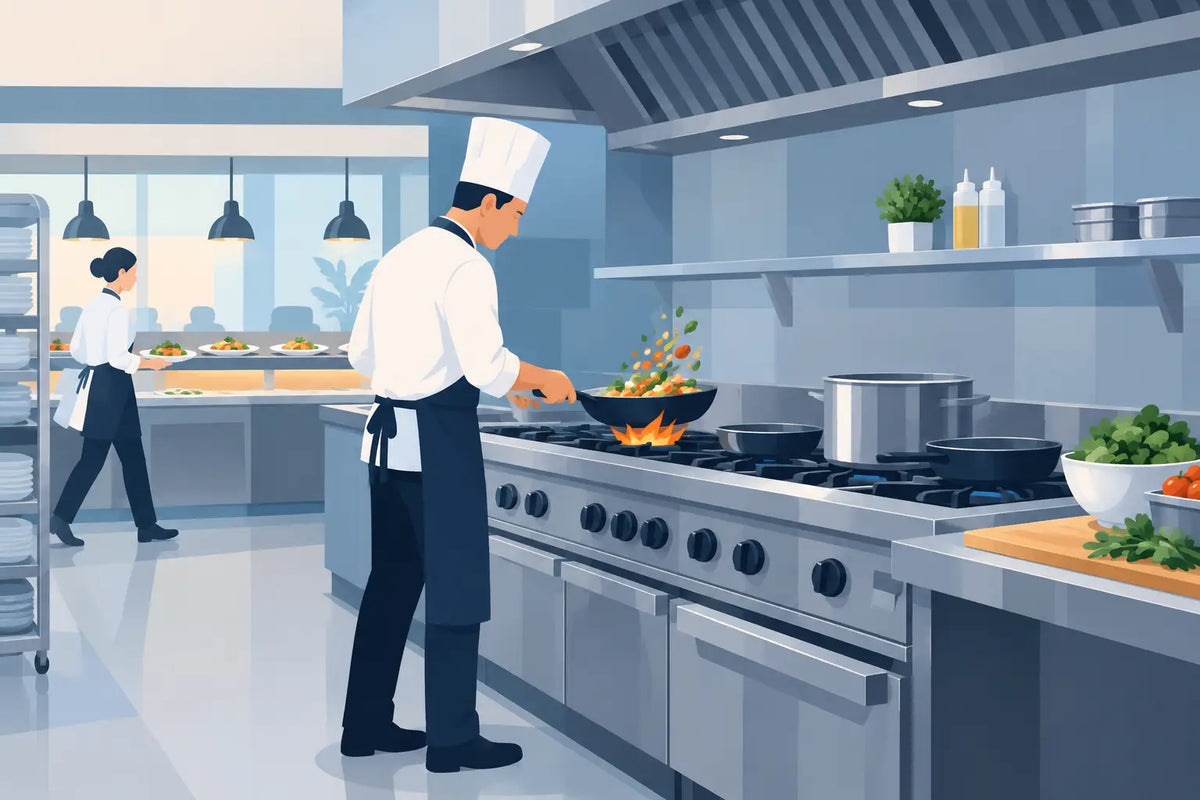
The range is where a ticket becomes a plate. It carries the sharp heat of a sauté pan, the low patience of a braise, the rolling boil for pasta, and the steady recovery a busy service demands. Choose it well, and the cookline feels composed even at the height of a Friday rush. Choose it poorly, and every burner becomes a compromise.
For restaurants, hotels, caterers, food trucks, and serious outdoor kitchens, restaurant ranges are not simply a collection of burners beneath a griddle or oven. They are the central heatline of control: a working surface that shapes menu execution, labor rhythm, energy use, and the flavor guests remember.
Start With the Menu, Not the Spec Sheet
A range should earn its footprint through the food it produces. Before comparing BTUs, burner counts, or oven capacities, look closely at the actual movement of your menu. A bistro turning out pan-roasted fish, sauces, and sautéed vegetables needs a different cooking platform than a breakfast concept built around eggs, pancakes, bacon, and potatoes. A high-volume Italian operation may need relentless stock-pot capacity beside a powerful oven, while a compact bar kitchen might benefit more from an integrated griddle and a modest number of open burners.
Consider what is cooked to order, what is held, and what requires a pan to move quickly between heat zones. The answer reveals whether you need open burners, a French top, a griddle, a charbroiler, or a combination of surfaces. It also shows where a separate specialty piece may be wiser than asking one range to do everything.
A range with six open burners can be remarkably versatile, but versatility is not the same as ideal fit. If half the menu relies on flat-top cooking, a dedicated griddle offers more usable surface and more consistent production. If steaks define the house, a charbroiler deserves a place in the line. The most efficient kitchen is often built from purposeful zones rather than one oversized appliance expected to carry every technique.
Gas, Electric, or Induction Restaurant Ranges?
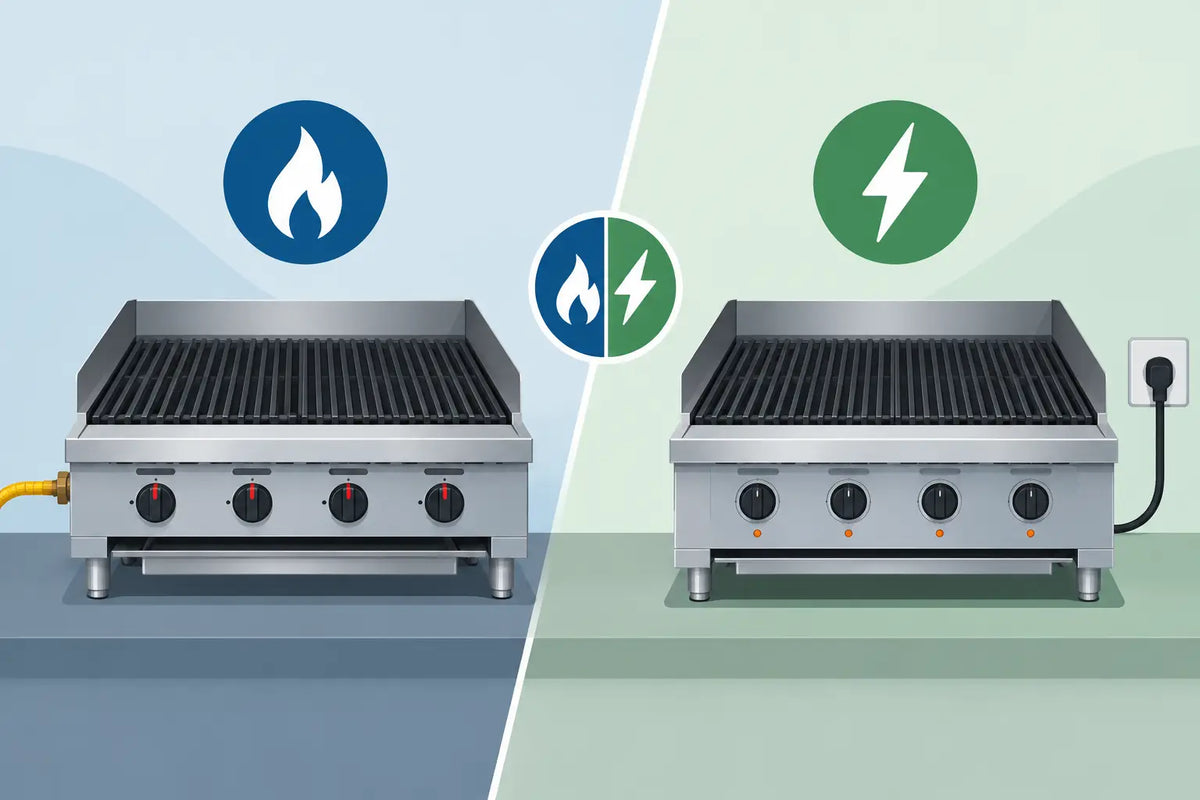
Fuel choice affects more than utility costs. It changes response time, kitchen comfort, ventilation demands, cookware requirements, and the way cooks interact with the line.
Gas ranges remain a familiar favorite in professional kitchens because the flame is immediate and visible. Cooks can judge heat at a glance, shift a pan between burner zones, and work with virtually any durable commercial cookware. Open gas burners offer strong flexibility for sauté work, stock pots, and uneven pan sizes. They also bring ambient heat to the kitchen, which can be a meaningful consideration in a tight line or warm climate.
Electric ranges provide a steady, straightforward heat source and can make sense where gas service is unavailable or operational requirements favor electric equipment. Traditional electric elements respond more slowly than gas or induction, so they are usually best suited to kitchens with predictable cooking patterns rather than constant, highly reactive sauté production.
Induction ranges create heat directly in compatible magnetic cookware, leaving the surrounding surface notably cooler than conventional cooking equipment. That can improve comfort, simplify cleaning, and reduce wasted heat. The trade-off is upfront cost, the need for induction-ready pans, and a cooking experience that may require adjustment from teams trained on flame. For demonstration kitchens, chef counters, compact foodservice operations, and polished residential entertaining spaces, induction can be an especially compelling expression of precision.
The right answer depends on the menu, local utility access, ventilation plan, and the instincts of the cooks who will use the equipment every day. A strong equipment plan respects all four.
Choose the Cooking Surface With Intention
Open Burners for Fast, Flexible Pan Work
Open burners are the classic choice for a reason. They give cooks distinct stations for sauces, sauté pans, stock pots, and quick finishing work. Look beyond the total burner count. Burner output, grate design, spacing, and the ability to accommodate larger vessels all affect how much useful work the surface can actually hold during service.
High-output burners are valuable for rapid searing and recovery, but maximum BTUs are not automatically better. Delicate sauces, chocolate work, and long reductions benefit from controllable low settings as much as raw power. The best range gives a cook a broad, dependable spectrum of heat.
French Tops for Controlled, Graduated Heat
A French top uses a broad, solid metal surface heated from the center, creating natural temperature zones across the plate. It rewards an organized cook: high heat in the center, gentler holding heat toward the perimeter. Sauces can stay warm without crowding the burners, pans can be moved rather than constantly adjusted, and the surface develops a quiet rhythm during a demanding service.
This format is particularly well suited to refined à la carte cooking, but it requires technique and a team willing to work with its heat pattern. It is not a direct substitute for a full bank of open burners when many pots must boil or sauté simultaneously.
Integrated Griddles and Charbroilers
An integrated griddle gives breakfast, burger, sandwich, and diner concepts a continuous cooking plane without adding another piece of equipment. Pay attention to plate thickness, heat zones, thermostatic versus manual controls, grease management, and the actual width available after side clearances are accounted for.
An integrated charbroiler brings live-fire character and defined grill marks to a compact line. It can be a powerful fit for proteins and vegetables, though it raises the stakes for ventilation, cleaning, and grease management. If grilling is central to the menu, a dedicated charbroiler may still provide greater capacity and a better workflow than a range-mounted section.
The Oven Below Matters More Than It Seems
The base oven often determines whether a range is a true production asset or merely a cooktop with storage beneath it. Standard ovens are useful for roasting, baking, finishing, and holding pans close to the line. Convection ovens use fan-driven air movement for faster, more even cooking, making them well suited to roasting vegetables, baking, and batch production.
Consider the pans your kitchen actually uses. Full-size sheet pans, hotel pans, roasting pans, and stockpots require meaningful interior dimensions, not just a generous-looking exterior. Verify rack positions, oven temperature range, door swing, and clearance to adjacent equipment. A range oven that cannot accept your preferred pans will create workarounds from day one.
For pizza, bread, high-volume roasting, or tightly controlled baking programs, a dedicated oven often remains the better tool. Range ovens are versatile, but they should not be forced into a role that demands specialized chamber design or greater capacity.
Size the Range for the Line You Have
Restaurant ranges commonly span compact 24-inch formats through 36-inch, 48-inch, 60-inch, and wider configurations. Width alone does not tell the whole story. The real question is whether the range gives each cook enough working room without interrupting the path from refrigeration to prep to heat to pass.
A larger unit may appear to future-proof the kitchen, yet it can consume valuable landing space and add burners that are rarely used. Conversely, undersizing the range creates pan traffic, forces cooks to wait for heat, and encourages unsafe crowding. Watch a typical service on paper: map where pans are filled, where proteins are held, where sauces are finished, and where plated food exits. The range should support that movement rather than become a bottleneck within it.
Do not overlook counter height and ergonomics. Heavy stock pots, sauté pans, and sheet trays should move naturally between adjacent surfaces. In an open kitchen or outdoor setting, the range should also belong visually to the space. Stainless steel, substantial grates, clean control layout, and well-proportioned components communicate that the kitchen was built to work, not merely to impress.
Plan for Utilities, Ventilation, and Daily Care
A range purchase begins with specifications but ends with installation. Confirm the fuel type, gas pressure, electrical requirements for ignition or convection components, total load, and local code requirements before ordering. Verify hood capacity, fire suppression requirements, clearances, and whether the range will need a curb, stand, or specific floor protection.
Cleaning access deserves equal attention. Removable grates, drip trays, burner components, grease drawers, and oven racks influence how thoroughly the team can reset the equipment after service. Equipment that is difficult to clean eventually loses performance and becomes harder to trust. A well-built range should feel substantial in the hand while still allowing routine maintenance to happen without a struggle.
Culinary Precisions helps operators weigh those practical details alongside the cooking experience itself, from dimensions and fuel requirements to the surface configuration that fits the menu.
Buy for the Service You Want to Run
A restaurant range should give the line confidence: enough heat when a pan needs a hard sear, enough control when a sauce needs restraint, and enough capacity to keep the team moving without noise or clutter. Build around the dishes that define your operation, the hands that cook them, and the pace your guests deserve. The right range will not call attention to itself during service. It will simply make excellent work feel possible, plate after plate.