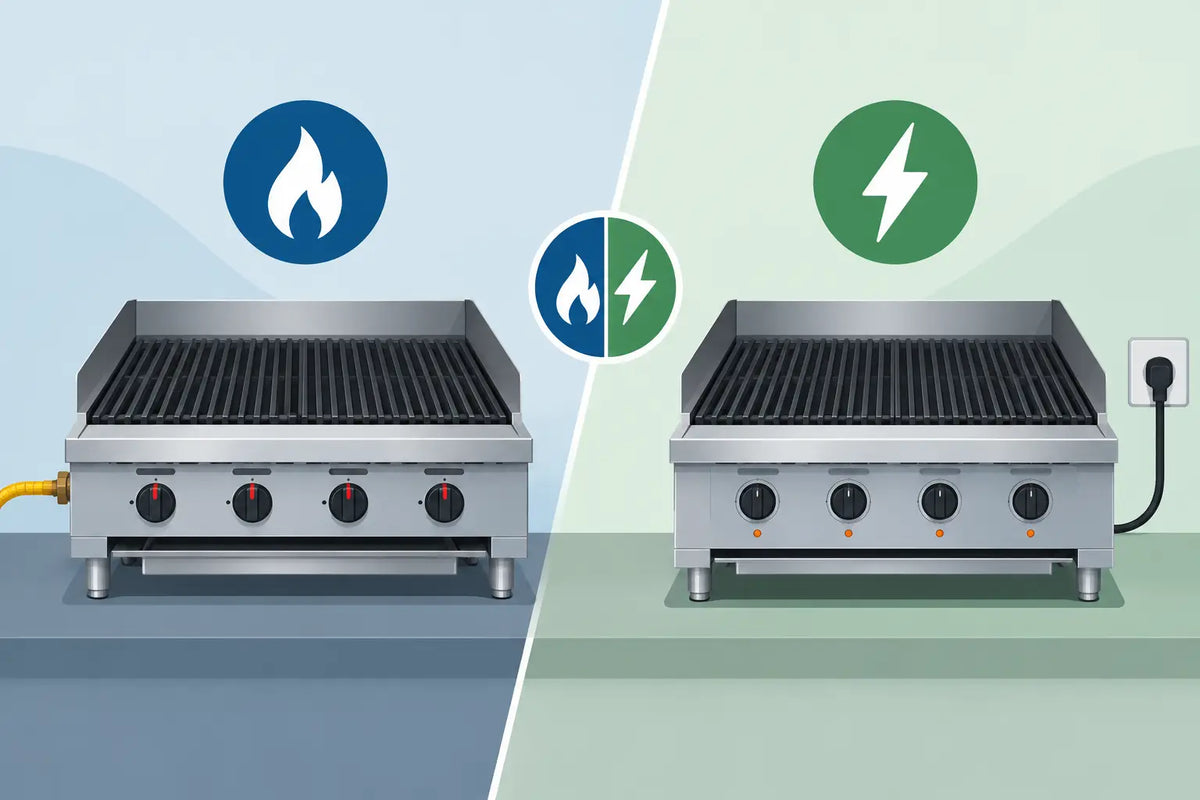
Gas Versus Electric Charbroiler: Which Fits?
A charbroiler is not simply a hot surface with grates. It is the station where a steak earns its crust, vegetables take on smoke-kissed edges, and an open kitchen gains its visual center. The decision between a gas versus electric charbroiler reaches beyond utility service. It affects the rhythm of the line, ventilation requirements, recovery between covers, and the particular character of the food leaving the pass.
For many kitchens, gas feels like the obvious choice. For others, an electric charbroiler provides the more controlled, practical, or code-friendly path. The right answer starts with the menu and the building, then moves into the pace of service.
Gas Versus Electric Charbroiler: The Core Difference
A gas charbroiler produces heat through burners positioned beneath radiant plates, lava rock, or ceramic briquettes, depending on the model. Those components absorb and distribute heat while managing drippings. Fat that reaches a hot radiant surface can vaporize and return to the food as aromatic smoke, helping create the familiar live-fire profile guests associate with grilled beef, burgers, chicken, and hearty vegetables.
An electric charbroiler uses heating elements beneath the cooking surface, usually paired with cast-iron grates and radiants designed to direct heat upward. It does not produce a flame, but a commercial electric unit can still generate intense surface heat, defined grill marks, and a deeply browned exterior. Its character is often cleaner and more measured, with less variability from burner flame, gas pressure, or changing airflow around the equipment.
Neither format automatically makes better food. A well-seasoned grate, proper product tempering, disciplined cleaning, and a cook who understands heat matter more than the fuel source alone. But the two formats create different working conditions, and those conditions should carry real weight in a purchase decision.
Choose Gas When Flame, Recovery, and Flavor Lead
Gas charbroilers are built for kitchens that need immediate, high-output heat. Operators can ignite the burners, adjust the flame, and bring a cooking surface into service quickly. During a hard lunch rush, that responsiveness matters. A cook can shift between a forceful sear for ribeyes and a calmer zone for chicken or delicate produce without waiting for an element to react.
The flavor case for gas is strongest on menus designed around grilled identity. A burger bar, steakhouse, Mediterranean concept, sports bar, or outdoor dining kitchen may benefit from the fuller aroma created when juices and rendered fat meet hot radiants. This is not the same as cooking over wood or charcoal, but it gives food a pronounced charbroiled character that is difficult to imitate on a flat-top.
Gas also tends to offer more flexibility in larger footprints. Multi-burner units can create practical heat zones across the grate, allowing cooks to manage a range of proteins at once. The left side may be working hard for burgers while the right handles asparagus, buns, or a slower finish on thicker cuts.
That performance comes with infrastructure demands. Gas equipment generally requires a properly sized gas connection, professional installation, and dependable hood ventilation. It also requires regular attention to burners, pilots or electronic ignition systems, grease collection, radiants, and air balance. In a tight urban build-out, a gas line and hood upgrade can alter the project budget more than the charbroiler itself.
Where an Electric Charbroiler Makes Sense
Electric charbroilers earn their place where gas is unavailable, restricted, or simply not worth the installation cost. They are particularly useful in facilities with all-electric design standards, limited gas capacity, certain institutional settings, and locations where a clean, compact cooking line is the priority.
Their appeal is precision through consistency. Once the unit is fully preheated, electric elements maintain a steady thermal environment with fewer variables. For a menu with repeatable portions and a trained but lean kitchen team, that consistency can protect quality from shift to shift. The heat may feel less theatrical than gas, yet it can be exceptionally effective for chicken breasts, seafood, vegetables, sandwiches, and smaller-format proteins.
Electric models can also be attractive in open-kitchen environments where visual restraint matters. There is no visible burner flame and no gas plumbing beneath the unit. The station can feel composed and intentional, especially in a contemporary café, hotel lounge, or serious residential outdoor kitchen designed around clean material lines.
Electric does not mean ventilation-free. Charbroiling produces grease-laden vapors and smoke from the food itself, regardless of how the heat is generated. Local code, the appliance listing, the menu, and the volume of cooking will determine whether a Type I hood is required. Treat ventilation as a design and compliance question to resolve before equipment selection, not after delivery.
Recovery Time Matters More Than Initial Heat-Up
Buyers often focus on the highest temperature printed on a specification sheet. That number is useful, but recovery is often the more revealing measure. When cold proteins hit the grate repeatedly, the cooking surface loses energy. The charbroiler must replace that energy quickly enough to preserve marks, browning, and ticket times.
Gas units are frequently favored for high-volume work because their burners can respond with force when the surface is loaded. This makes them a natural fit for restaurants sending out a continuous stream of burgers, steaks, skewers, and grilled entrées. A heavy-duty gas charbroiler with cast-iron grates and substantial radiant mass can hold its composure through a demanding service.
Electric equipment can perform very well within its designed load, but it is best matched carefully to the menu. If the station will cook several dozen burgers in a compressed window, select an electric model with sufficient wattage, cooking area, and electrical capacity rather than assuming any countertop unit will carry the same workload. A smaller electric charbroiler may be excellent for finishing proteins or producing a focused grill program, but it should not be asked to carry an entire steakhouse line.
Installation Costs Change the Equation
Equipment price is only one layer of ownership cost. The more useful question is what it takes to put the charbroiler into productive service.
A gas model may require a new gas run, shutoff valve, regulator, and coordination with a licensed installer. Its BTU input must be considered alongside every other gas appliance in the kitchen. If the building's gas service is near capacity, adding a charbroiler can become a larger utility project.
An electric model needs the correct voltage, phase, amperage, and a dedicated circuit. Commercial electric charbroilers often require 208V or 240V service and may need a hardwired connection. For a new build, planning that circuit early is straightforward. For an older restaurant, panel capacity can be the deciding constraint.
Utility costs vary by market, so there is no universal winner. Compare local gas and electricity rates, then account for the way the equipment will actually be used. A charbroiler that runs at full output for six hours each day presents a different cost profile than one used only for dinner service or as a finishing station.
Grates, Radiants, and Cleaning Define Daily Experience
The material between the heat source and the food deserves close attention. Heavy cast-iron grates retain heat and produce authoritative marks, but they need seasoning and consistent care. Stainless steel grates are easier to maintain and can suit lighter menus, though they generally do not hold heat with the same weight.
On gas models, ceramic briquettes and lava rock add thermal mass and can enhance the charbroiled effect, but they require cleaning and eventual replacement. Stainless radiants are often simpler to maintain and are common in busy commercial settings. On electric units, the design of the element guards and radiants influences how drippings are managed, how easily the unit can be cleaned, and how evenly heat reaches the grate.
No charbroiler is a low-maintenance piece of equipment. Grates should be brushed during service, grease drawers emptied, and radiants inspected before buildup becomes a flare-up or a performance problem. The best unit is one your team can clean thoroughly at the end of a long night without turning closing duties into a second service.
Match the Charbroiler to the Menu, Not the Myth
Choose gas if the menu depends on high-volume output, fast adjustment, and the aromatic signature of drippings meeting intense heat. It is often the natural choice for full-service restaurants, grill-forward concepts, and outdoor kitchens where flame is part of the experience.
Choose electric if consistent operation, utility limitations, compact design, or an all-electric facility points in that direction. It can be a refined, capable tool for controlled grill work, especially when its electrical requirements and production capacity are planned with care.
Before committing, map the busiest fifteen minutes of service: how many portions hit the grate, how thick they are, where finished food lands, and who cleans the station at close. That small exercise usually reveals whether your kitchen needs the raw response of gas or the steady discipline of electric heat. Culinary Precisions can help translate that service pattern into the right commercial-grade charbroiler, so the equipment feels less like a compromise and more like a natural extension of the way your kitchen cooks.