How to Choose Commercial Steamers That Perform
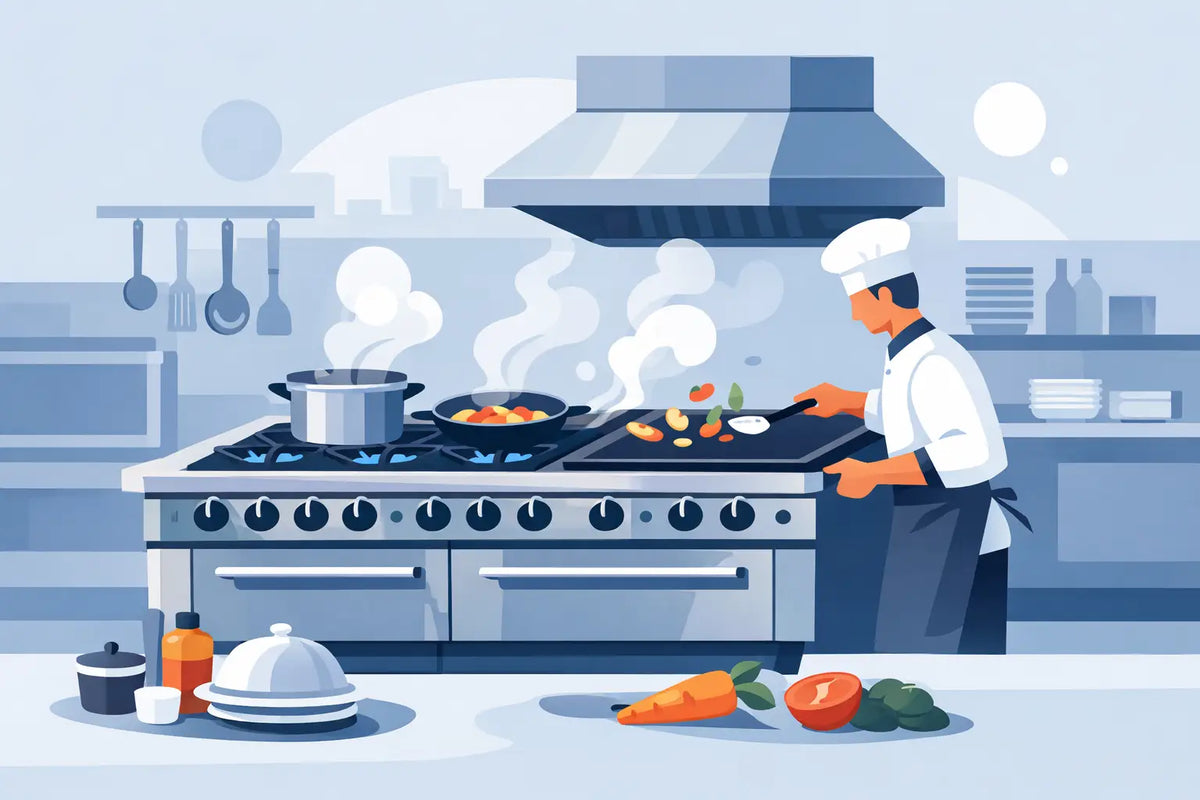
A steamer can be one of the quietest forces in a professional kitchen. While the range throws visible heat and the fryer announces every batch, commercial steamers keep vegetables vivid, proteins moist, grains consistent, and prep moving without crowding the cookline. The right model gives a team repeatable results with less oil, less active labor, and fewer last-minute compromises.
Choosing one is not simply a question of how many pans fit inside. Steam production, water quality, recovery time, ventilation, drainage, utility access, and the rhythm of your menu all shape whether a unit feels like a reliable production tool or a daily bottleneck.
Start With the Food, Not the Equipment
A thoughtful purchase begins with the menu and the moments when demand peaks. A cafe steaming a small run of vegetables, dumplings, and grains has different needs from a hotel banquet kitchen producing hundreds of portions of broccoli, rice, fish, and composed plates before service. Both need dependable steam. They do not need the same machine.
Map the food you expect to cook, the number of portions required per hour, and whether the steamer will support prep, service, or both. Consider what happens at 12:15 p.m. or 7:30 p.m., not only what happens during a quiet prep shift. A cabinet that handles the daily production total may still be undersized if it cannot recover quickly enough for the busiest fifteen minutes.
Steam is particularly valuable where texture and yield matter. Delicate seafood, custards, shellfish, vegetables, tamales, rice, potatoes, and reheated prepared foods all benefit from moist, even heat. It can also free burners for sauces and finishing work, creating more useful space around the range during a crowded pickup.
The Main Types of Commercial Steamers
The best format depends on output, available utilities, and how much control the operation needs. Each style brings a distinct working character to the kitchen.
Convection Steamers for Flexible Production
Convection steamers circulate steam throughout a compartment, surrounding food with even moisture and heat. They are a versatile choice for restaurants, schools, healthcare kitchens, catering operations, and institutions that cook in hotel pans throughout the day.
Capacity is commonly described by the number of full-size hotel pans each compartment accepts. A countertop unit can be a smart answer for a compact kitchen with limited batch needs. Floor models and stacked compartments suit higher-volume operations, allowing teams to cook separate items at once or run a larger coordinated batch.
The trade-off is that higher capacity requires a real commitment to installation, water management, and cleaning. Buy enough cabinet space for service, but avoid paying to heat unused volume shift after shift.
Boiler-Based Models for Heavy Demand
Boiler-based steamers generate steam in a dedicated boiler before sending it into the cooking compartment. They are often selected for demanding, continuous production because they can provide strong steam generation and fast recovery when doors open repeatedly.
For a high-volume kitchen, that recovery matters. Frequent loading and unloading pulls heat from the cavity. A system that returns to operating conditions promptly protects timing across a large prep list.
Boiler systems do require attentive water treatment and maintenance. Mineral scale does not stay a cosmetic issue. It can reduce efficiency, affect performance, and eventually create costly service problems. In areas with hard water, a properly specified filtration or treatment system is part of the steamer purchase, not an optional accessory.
Boilerless Steamers for Practical Efficiency
Boilerless, sometimes called connectionless steamers, generate steam directly in the cooking cavity. They can offer a simpler approach to steam production and may reduce some boiler-related maintenance demands. For many restaurants and smaller production kitchens, that balance of performance and operational simplicity is attractive.
They still need clean water and disciplined care. The right choice is not “boiler versus no boiler” in the abstract. It is the model that supports your output while fitting your team’s capacity for maintenance, descaling, and daily cleaning.
Pressure Steamers for Speed and Volume
Pressure steamers cook under pressure, raising the cooking temperature and shortening cook times for many foods. They have a strong place in high-output institutional environments, commissaries, and kitchens where fast production of vegetables, potatoes, and similar items is central to the operation.
That speed comes with a more specialized workflow. Staff need training on loading, cycle timing, and safe door operation. If your menu relies on delicate, à la carte cooking or frequent small batches, a convection steamer may offer a more natural fit.
Capacity Is More Than Pan Count
A pan capacity figure is useful, but it cannot tell the complete story. Pan depth changes the real load, and so does the density of the food. Six pans of asparagus behave very differently from six deep pans of rice or potatoes.
Look at the usable compartment dimensions, shelf spacing, and the pans your team actually uses. Standardizing on full-size and half-size hotel pans can make loading more predictable and make the steamer easier to integrate into prep. If you frequently run tall hotel pans or unusual molds, confirm clearance before ordering.
Two compartments can also be more valuable than one large cavity. Separate compartments allow a kitchen to cook different foods simultaneously, reduce flavor transfer concerns, and avoid opening the entire production load to retrieve one pan. For operations with varied menus, that flexibility can be worth more than headline capacity alone.
Utilities and Installation Shape the Decision
Commercial steamers ask more of a building than a countertop appliance. Before selecting a model, verify the electrical service, gas availability where applicable, water supply, drainage, ventilation requirements, floor space, and door clearance.
Electric steamers require the correct voltage, phase, amperage, and properly sized electrical connection. Gas-fired units require appropriate gas service and must be installed in accordance with local code. Water-fed models need a suitable supply line, while units with drains need a compliant floor drain or drain connection. Hot condensate and steam discharge are not details to solve after delivery.
Ventilation requirements vary by model, local jurisdiction, and the rest of the cooking line. Some installations may need a hood or condensate hood; others may have different allowances. Confirm the manufacturer’s requirements and involve your contractor, electrician, plumber, and local inspector early. A precise equipment specification is far less expensive than a rushed field correction.
Measure the full delivery path as well. Check receiving doors, hallways, turns, elevators, and final placement. A steamer that fits the kitchen drawing but cannot clear the back entrance is not a small problem.
Water Quality Protects Performance
Steam exposes every weakness in a water supply. Scale can accumulate on heating surfaces, restrict water flow, extend recovery times, and raise service costs. Water with aggressive chemistry can create different concerns, including corrosion.
Have the local water evaluated when possible, then match the treatment approach to the steamer manufacturer’s requirements. Filtration may address sediment and taste, while scale control or a broader treatment system may be necessary for mineral-heavy water. The correct solution depends on the water report, the equipment, and local service conditions.
Make maintenance visible in the operating routine. Train staff to empty and rinse as required, clean the cavity and door gasket, inspect drain areas, and follow the recommended deliming schedule. A clean steamer produces better food and gives technicians a clearer path when something does go wrong.
Controls Should Match the Team’s Rhythm
Manual controls can be durable and straightforward for kitchens running a narrow set of familiar items. Programmable controls bring greater consistency when multiple cooks use the equipment, recipes repeat often, or labor changes from shift to shift. Timed recipes, staged cooking, and automated functions can reduce guesswork during prep.
More programming is not automatically better. A small restaurant with a stable, experienced team may prefer simple controls that are easy to teach and quick to operate. A multi-unit operation or high-volume kitchen may gain real value from repeatable programs and documented cooking procedures.
Ask who will use the steamer at 6 a.m., during lunch prep, and at the end of the night. The best control package is the one the team will use correctly when the kitchen is busy.
Build a Purchase Specification Before You Compare Models
A short written brief keeps the selection process grounded. Record your expected portions per hour, foods and pan types, desired compartment count, utility details, water conditions, available footprint, and cleaning plan. Include the dimensions of nearby tables, holding equipment, and traffic lanes.
Also account for the total ownership picture: installation labor, water treatment, accessories, routine maintenance, and potential downtime. A lower purchase price can lose its appeal quickly if the unit is difficult to service, poorly matched to the water supply, or too small for peak production.
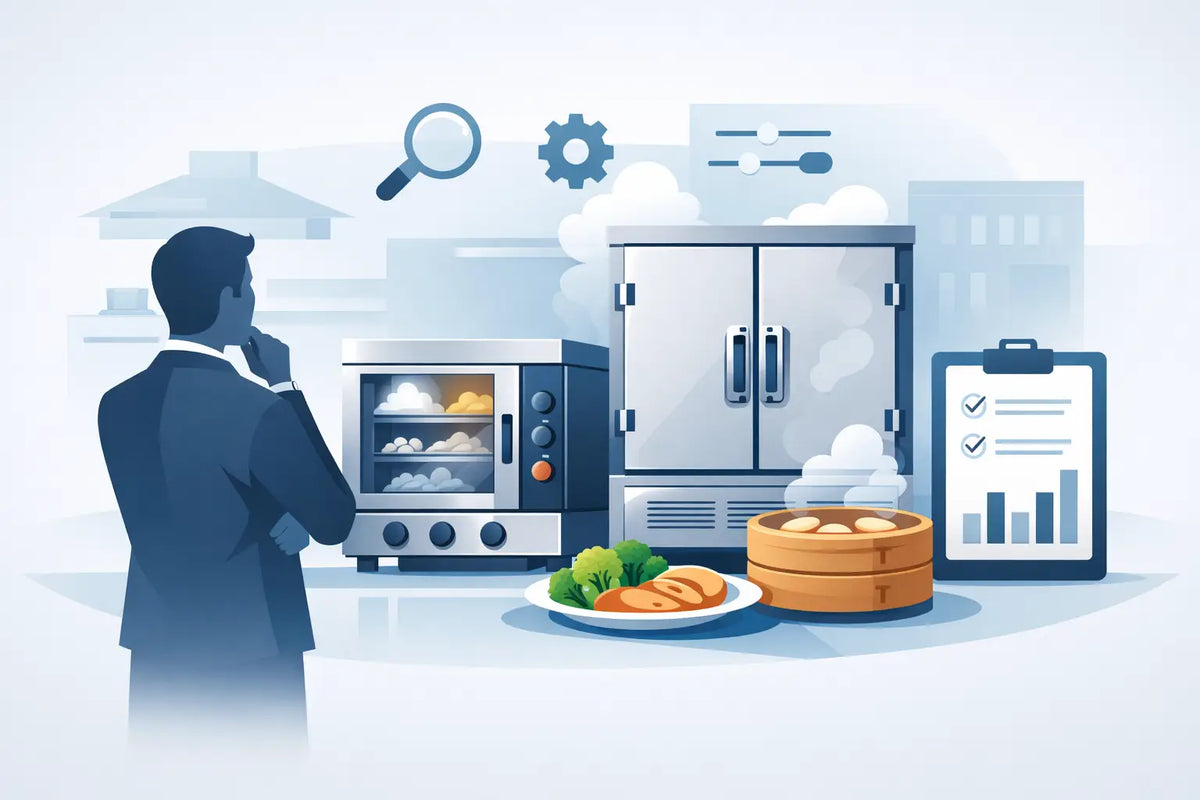
When comparing commercial steamers, look beyond a single specification sheet. Capacity, recovery, controls, build quality, and local installation realities must work together. A well-chosen steamer becomes part of the kitchen’s rhythm: quiet heat, measured timing, and food that arrives at the pass with its color, moisture, and character intact.