Gas Stove vs Electric: Which Kitchen Wins?
A gas stove vs electric decision is not a matter of tradition or appearance. It determines how quickly a station responds during a rush, what utilities your kitchen must support, how your team cooks, and how consistently you can execute the menu. For restaurants and serious home kitchens alike, the right answer starts with the food you produce and the conditions you operate under.
A wok station, saute line, or kitchen that relies on open-flame techniques has different priorities than a compact cafe, a high-volume production kitchen, or a home cook who values easy cleanup and precise low-temperature control. Gas and electric both deliver professional results when they are selected, installed, and used for the work they need to do.
Gas Stove vs Electric: The Operational Difference
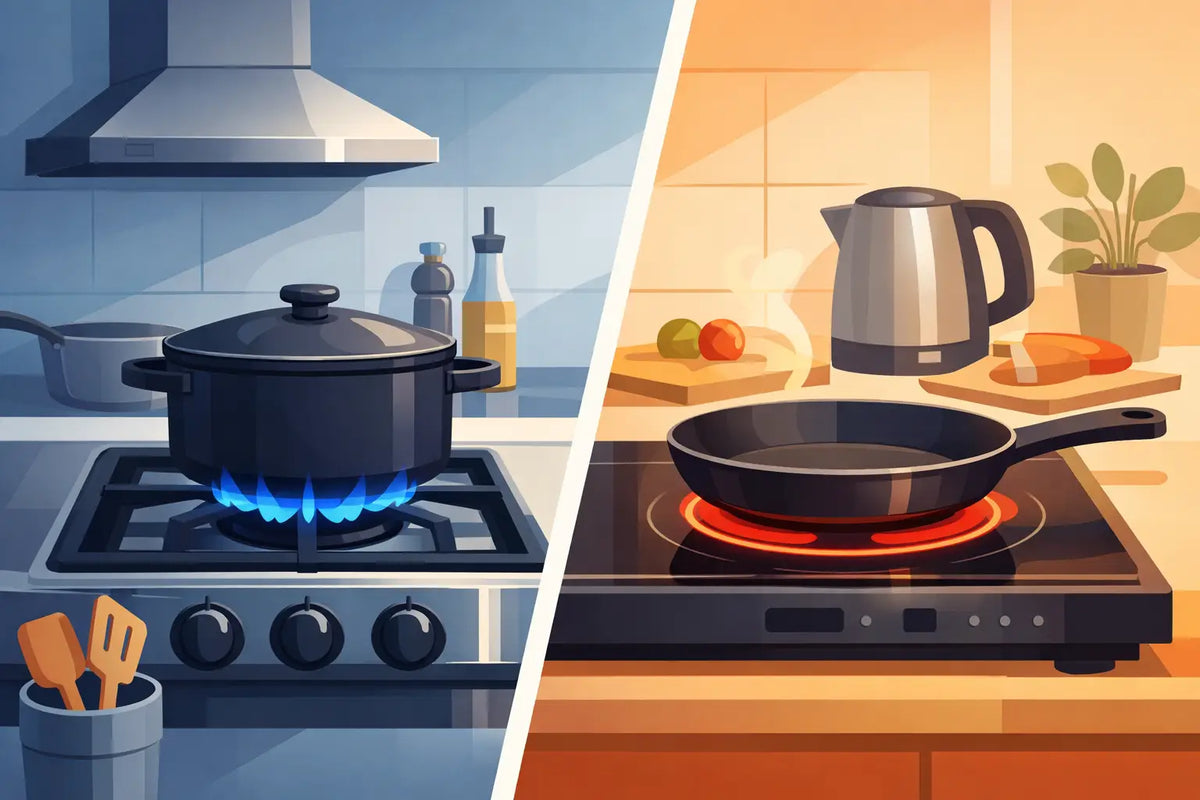
Gas ranges create heat with a visible flame. The response is immediate: turn the control, and the flame changes. That direct feedback is why many chefs prefer gas for sauteing, pan sauces, charring, and other techniques where rapid adjustments shape the final dish.
Traditional electric ranges transfer heat from an element into the cooking surface and then into the pan. They may take longer to heat and cool than gas, but they can provide stable, repeatable heat once they reach temperature. Electric equipment also eliminates an open flame, a meaningful advantage for kitchens with safety restrictions or limited ventilation options.
Induction belongs in the electric category, but it performs differently from coil or radiant electric equipment. It uses a magnetic field to heat compatible cookware directly, producing very fast response and less ambient heat. For many operations, induction is the strongest alternative to gas when speed, energy efficiency, and a cooler working environment matter. It does, however, require magnetic cookware and dependable electrical capacity.
The best choice is rarely “gas is better” or “electric is better.” It is which system supports your production volume, cooking style, facility constraints, and long-term operating plan.
Heat Control and Cooking Performance
Gas remains a chef favorite because the flame is visible and highly responsive. A cook can move from a hard sear to a gentle simmer with a small adjustment, then lift or tilt a pan to manage heat in real time. Open burners also accommodate a wide range of cookware, including round-bottom woks with the correct burner setup.
That flexibility comes with a trade-off. Gas flames lose heat around the sides of the pan, and performance can be affected by airflow, burner condition, and how well the cookware matches the burner. A neglected burner can produce uneven flames that undermine consistency and slow service.
Electric radiant surfaces offer a flatter, more uniform contact area for many pots and pans. They are well suited to simmering, holding steady temperatures, and tasks that benefit from predictable heat rather than constant changes. Their main limitation is residual heat. A burner remains hot after the control is lowered, so cooks need to anticipate the carryover.
Induction minimizes that lag. Because the pan itself becomes the heat source, it can boil water quickly, respond almost immediately to setting changes, and hold delicate sauces with impressive control. It is particularly valuable for chef counters, finishing stations, catering, and compact kitchens where excess heat affects both staff comfort and HVAC demand.
Utility Requirements Can Decide the Purchase
Before comparing burner counts, BTUs, or surface styles, confirm what the building can support. This step prevents costly surprises after equipment arrives.
A commercial gas range needs an appropriately sized gas line, shutoff valve, and professional connection. Depending on local code and the appliance, it may also require a ventilation hood, fire-suppression coverage, makeup air, and inspections. These requirements are standard for many restaurant lines, but they can add time and expense to a new build or retrofit.
Electric ranges require sufficient voltage, amperage, and the correct receptacle or hardwired connection. A residential-style electric unit may not meet the demands of a commercial kitchen, while a commercial electric range can require substantial power. Induction equipment can be especially demanding at higher wattages, even though it often uses energy more efficiently during cooking.
For existing kitchens, infrastructure may make the decision quickly. A location with gas already at the cook line and a compliant hood system may be ready for a gas range. A venue without gas service, such as a kiosk, demonstration space, or certain all-electric facilities, may be better served by electric or induction equipment.
Do not assume a gas appliance can be converted between natural gas and propane, or that any electric range will work with the available circuit. Verify fuel type, voltage, phase, amperage, clearance requirements, and local code before ordering.
Speed, Capacity, and the Pace of Service
High-output gas ranges are built to support demanding service. Multiple open burners let cooks work with different pan sizes at once, while high-BTU burners can deliver the intense heat needed for searing, stir-frying, and rapid reductions. For an established line cooking a broad menu, that versatility is hard to replace.
Electric can be equally productive when the menu and station design match the equipment. A flat-top electric surface may be ideal for controlled batch cooking, while induction can provide strong recovery in a smaller footprint. Because induction releases less waste heat into the room, it can help maintain a more comfortable line during long service periods.
Think beyond the headline heat rating. A burner with exceptional output is only useful if your pans, hood, staffing, and menu can use it effectively. A small operation may gain more from fast, precise induction zones than from a large gas range that consumes floor space and adds heat to an already tight kitchen.
Safety, Cleaning, and Daily Maintenance
Both fuel types require disciplined operation, but their risk profiles differ. Gas equipment introduces an open flame and a combustible fuel supply. Staff need training on ignition, flame adjustment, shutoff procedures, and how to recognize irregular burner performance. Proper ventilation is essential for heat, grease, and combustion byproducts.
Electric equipment removes the flame, but hot surfaces and electrical connections still demand care. Radiant tops can remain hot long after cooking stops, creating a burn risk during cleanup. Induction surfaces cool more quickly because the glass is heated mainly by contact with the pan, although the area beneath recently used cookware can still be hot.
Cleaning requirements also affect labor. Open gas burners, grates, and drip trays take more time to disassemble and scrub, particularly in heavy-use kitchens where grease buildup is constant. Smooth electric and induction tops are generally faster to wipe down, but glass surfaces should be cleaned with appropriate tools to avoid scratches or damage.
Preventive maintenance protects performance on either platform. Gas burners need periodic cleaning and inspection for clogged ports, weak ignition, and uneven flames. Electric equipment needs attention to elements, controls, cords, and surface condition. Induction units should be kept clear of blocked air vents and operated only with compatible cookware.
Energy Use and Operating Cost
Equipment price is only part of the cost equation. Gas prices, electricity rates, ventilation load, installation work, and maintenance all influence the real cost of ownership.
Gas is often attractive where fuel costs are favorable and high flame output is central to the menu. Yet gas cooking sends a meaningful amount of heat into the surrounding kitchen, which can increase cooling and ventilation demand. In a hot climate or a confined kitchen, that additional load can affect comfort and utility expenses.
Traditional electric cooking converts power into heat at the element, but it also retains heat in the surface. Induction is typically the most efficient electric option because it directs more energy into the cookware rather than the air around it. That can lower waste heat and make the station more pleasant to work at, especially during peak production.
For a restaurant, calculate operating cost alongside expected output. For a serious home cook, consider whether the convenience, cleaning speed, and kitchen comfort of electric or induction justify any electrical upgrade. The lowest purchase price is not always the best value over years of service.
How to Choose for Your Kitchen
Choose gas when your cooking depends on open-flame response, high-heat pan work, flexible cookware compatibility, or established gas-line infrastructure. It is a strong fit for saute-driven menus, wok cooking, char-focused techniques, and traditional restaurant lines that need durable, high-capacity performance.
Choose traditional electric when stable heating, a simpler cooking surface, or an all-electric building is the priority. It can be a practical choice for controlled production tasks and operations that do not rely on constant high-heat adjustments.
Choose induction when you need rapid response without an open flame, reduced ambient heat, easy cleanup, and strong temperature control. It is particularly compelling for compact commercial spaces, front-of-house cooking, mobile service, and performance-minded home kitchens. Just account for cookware compatibility and electrical requirements from the start.
The strongest equipment decision begins with a clear picture of service: the pans on the line, the dishes leaving the pass, the utilities behind the wall, and the labor required after closing. Culinary Precisions helps performance-focused buyers evaluate equipment around those realities, so the range supports the kitchen instead of forcing the kitchen to work around the range.