Gas Range vs Induction: Which Fits Your Kitchen?
Saturday dinner service is not the time to find out your cookline choice slows pans, overheats the room, or complicates cleanup. The gas range vs induction decision affects more than cooking style. It shapes kitchen speed, line safety, ventilation demands, energy use, and how consistently your team can execute under pressure.
For some operations, gas is still the right call because it is familiar, durable, and ready for high-heat versatility. For others, induction brings tighter temperature control, faster responsiveness, and a cleaner working environment that supports precision and efficiency. The better choice depends on your menu, your utility setup, your cookware, and how hard your equipment needs to work every day.
Gas range vs induction: the core difference
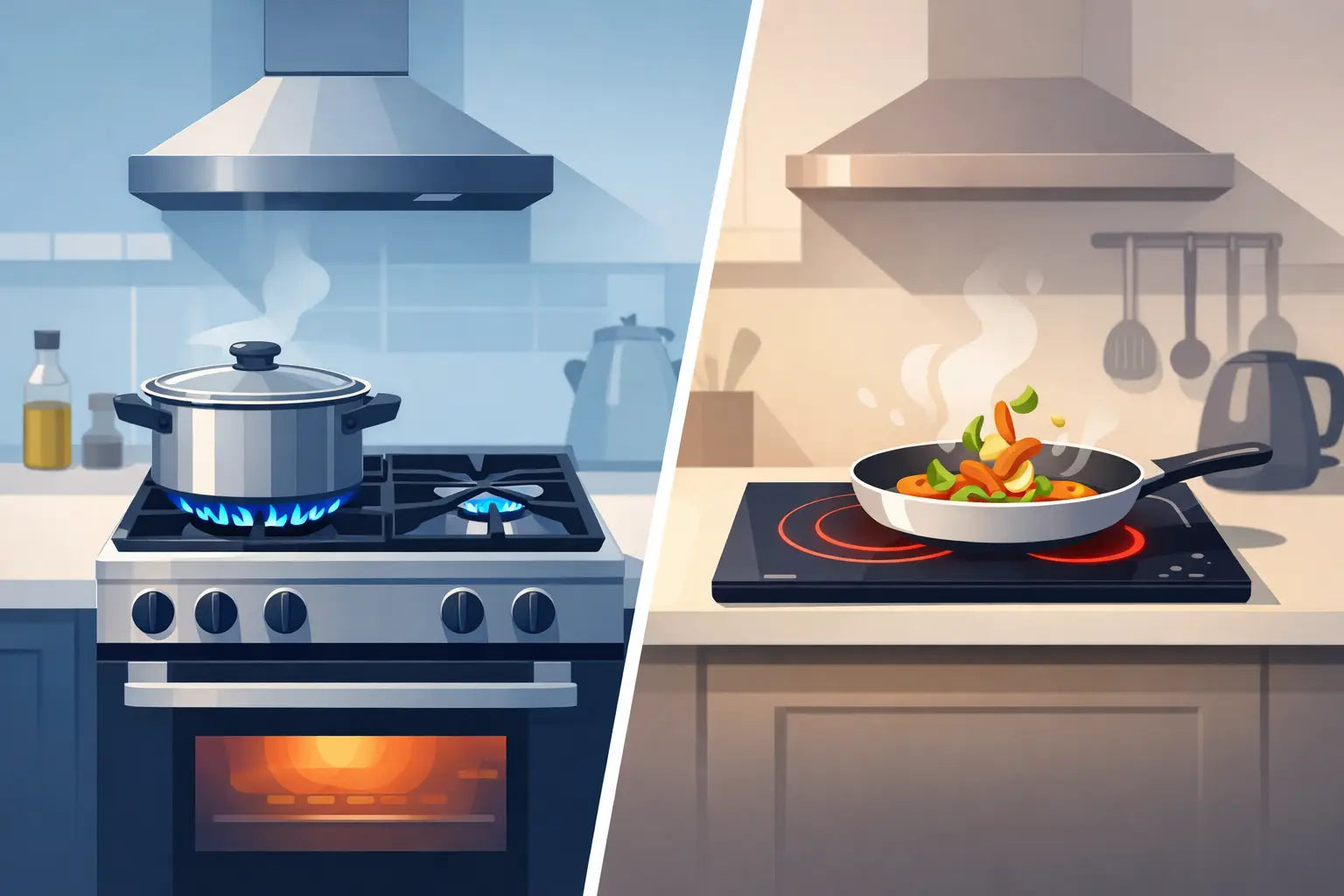
A gas range creates flame-based heat. That heat rises around the pan, which gives cooks visible feedback and broad compatibility with cookware. It is a proven format in commercial kitchens because it handles sauteing, boiling, pan roasting, and quick pan changes with very little adjustment for experienced staff.
Induction works differently. Instead of heating the cooking surface with an open flame or glowing element, it uses electromagnetic energy to heat compatible cookware directly. The pan becomes the heat source. That changes the cooking experience in a meaningful way. Less ambient heat escapes into the kitchen, the cooking surface stays relatively cooler, and response times can feel extremely fast and precise.
That technical difference matters because it changes daily performance, not just specs on paper.
Speed and responsiveness on the line
If your priority is production speed, both options can perform well, but they do it in different ways.
Gas offers immediate flame adjustment. Turn the knob, and the flame visibly rises or falls. Many chefs trust that direct visual cue, especially during busy service. It is intuitive, and teams already trained on gas can move fast without re-learning their heat management habits.
Induction is often faster at transferring energy into the pan. Water typically comes to a boil quickly, and recovery between temperature adjustments can be excellent. In practical terms, that can support faster batch work, more accurate simmering, and less wasted heat. For high-volume prep or stations where repeatability matters, that level of control can be a real operational advantage.
Still, speed is not just about raw heating power. It is also about workflow. If your team constantly swaps pans or uses mixed cookware types, gas may keep things simpler. If your menu demands exact temperature consistency across sauces, delicate proteins, or finishing work, induction can sharpen execution.
Where gas still feels stronger
Gas remains a strong fit for kitchens that rely on visual flame control, frequent pan tossing, and a wide range of cookware. It also suits operations where staff training time is limited and familiarity is valuable.
Where induction gains ground
Induction stands out when precision, energy efficiency, and kitchen comfort are priorities. It can be especially attractive in open kitchens, compact kitchens, and upscale residential spaces where heat management and cleanliness matter as much as output.
Heat, ventilation, and working conditions
This is where the conversation often gets practical fast.
Gas ranges put more heat into the room. In a busy commercial setting, that can increase the load on ventilation and cooling systems. Hotter kitchens can affect staff comfort, especially on long shifts, and that matters more than many buyers expect. A cookline that performs well but raises ambient heat can create downstream strain on labor and HVAC costs.
Induction generally keeps more heat in the pan and less in the air. That helps maintain a cooler workspace. It can also reduce grease and combustion byproducts associated with open-flame cooking. For kitchens focused on cleaner air, more comfortable stations, or tighter environmental controls, this is one of induction's strongest performance arguments.
That said, ventilation requirements vary by local code, application, and the rest of your equipment package. No buyer should assume induction eliminates every hood or airflow consideration. But in many setups, it supports a cleaner, more controlled environment.
Precision and consistency
Consistency is money in a professional kitchen. A station that runs a little too hot or too unevenly can affect ticket times, product quality, and waste.
Gas gives excellent flexibility, but it can be less exact at very low settings, depending on the unit and operator technique. Skilled cooks know how to work around that. They can rotate pans, adjust flame position, and compensate in real time. In chef-driven kitchens, that hands-on control is part of the appeal.
Induction often excels at repeatable heat levels. That makes it useful for sauces, holding delicate temperature zones, controlled reductions, and tasks where overcooking happens fast. Serious home cooks notice this too. If you want more predictable day-to-day results with less environmental heat interference, induction can feel like a precision tool rather than just a heat source.
For operators managing multiple shifts or variable staff experience, that consistency can help standardize output.
Safety and cleanliness
Open flame always carries workflow considerations. Gas is dependable, but it introduces fire risk, hot grates, and more residual surface heat. In a fast-moving kitchen, those factors require disciplined habits and clear safety standards.
Induction reduces some of those risks. Since there is no open flame and the surface around the pan stays cooler than a traditional range, burn exposure and accidental ignition risks can be lower. Spills also tend to be easier to clean because food is less likely to bake onto the cooking surface.
That does not mean induction is maintenance-free. The glass or ceramic top must be treated carefully, and cookware selection matters. But from a sanitation and daily cleanup standpoint, many users find induction easier to keep presentable and service-ready.
Installation, utilities, and total cost
The upfront buying decision is only part of the cost story.
Gas ranges often make sense where gas infrastructure already exists and utility rates are favorable. For many established commercial kitchens, installing or replacing gas equipment is straightforward. The equipment itself may also be familiar to service technicians and easier for some operators to troubleshoot over time.
Induction units may carry higher upfront equipment costs, and they require compatible electrical capacity. In some spaces, especially older buildings, upgrading power can change the economics quickly. On the other hand, induction can offset some of that through energy efficiency, lower ambient heat, and potentially reduced ventilation burden depending on the setup.
This is where buyers should think like operators, not shoppers. The best choice is not always the lower purchase price. It is the option that supports throughput, consistency, utility efficiency, and staff performance over years of use.
Cookware compatibility and daily practicality
Gas is forgiving with cookware. If the pan can sit on the grate, you can usually cook with it. That flexibility matters in kitchens with mixed inventories, older pans, or specialty cookware.
Induction requires magnetic cookware. If your current pans are not induction-ready, replacement cost becomes part of the project. For some buyers, that is a minor update. For others, especially larger operations, it is a significant line item.
There is also a technique adjustment. Induction responds quickly, which is a benefit, but it can feel different to cooks trained on flame. Most teams adapt quickly, though the transition should not be ignored in planning.
Which kitchen benefits most from each option?
If you run a traditional restaurant line with high-heat saute work, mixed cookware, and a staff that knows gas instinctively, a gas range may still be the strongest operational fit. It is proven, versatile, and well suited to demanding service environments where tactile familiarity matters.
If you are building a compact commercial kitchen, upgrading a high-performance home kitchen, or prioritizing precision, cleaner operation, and cooler working conditions, induction deserves serious consideration. It aligns well with kitchens that value control, efficiency, and a more refined cooking environment.
There is also a hybrid path. Some kitchens benefit from using gas in heavy line positions and induction for targeted stations that demand control or reduced ambient heat. For buyers balancing production, safety, and utility constraints, that mixed approach can be the smartest answer.
The better question than gas range vs induction
The real question is not which technology wins in the abstract. It is which one helps your kitchen perform better under your actual workload.
Choose gas if you need broad cookware compatibility, familiar operation, and all-purpose line versatility. Choose induction if you want tighter temperature control, a cleaner station, and stronger efficiency in a precision-focused setup. If you are buying for long-term performance, trust the demands of your menu and your team more than the myths around either format.
The right cooking equipment should not just heat pans. It should support speed, consistency, safety, and confidence every time service starts.