Food Warmers That Protect Service and Flavor
The last pan on the line is often where a strong service can lose its edge. A crisp fried chicken cutlet softens under the wrong heat. A velvety queso develops a skin. Rice tightens, sauces reduce, and a carefully built buffet begins to look tired before the rush is over. The right food warmers do more than keep cooked food hot. They protect the texture, appearance, and rhythm that your kitchen worked to create.
For restaurants, caterers, hotels, concession programs, and outdoor entertaining spaces built for real volume, holding equipment deserves the same attention as the range or refrigeration system. It is the quiet infrastructure between cooking and serving - the equipment that gives a team control when tickets stack up or guests arrive all at once.
What Food Warmers Are Designed to Do
Food warmers are holding tools, not cooking tools. Their job is to maintain safe serving temperatures after food has been properly cooked, while limiting moisture loss, scorching, and unwanted changes in texture. That distinction matters when selecting equipment. A warmer with insufficient heat recovery may struggle during a busy buffet. One with aggressive direct heat can damage delicate products even when the temperature setting appears reasonable.
For most commercial operations, hot food must be held at 135°F or above under the FDA Food Code baseline, though local health department requirements should always guide your final operating standard. The number is essential, but it is not the full story. A pan of braised beef can tolerate a different holding environment than fried appetizers, scrambled eggs, mashed potatoes, or hollandaise.
Good holding begins with food that enters the unit hot. Food warmers are not intended to bring cold product up to a safe serving temperature. They are there to preserve a finished product's best condition through the service window.
Choose Food Warmers by the Service You Run
The best format depends less on the menu category than on the movement of your operation. Consider where food is finished, how long it waits, who serves it, and how often pans turn over. Capacity matters, but so does access, recovery, counter footprint, and the way the equipment fits your team's natural motions.
Steam Tables and Wells for the Service Line
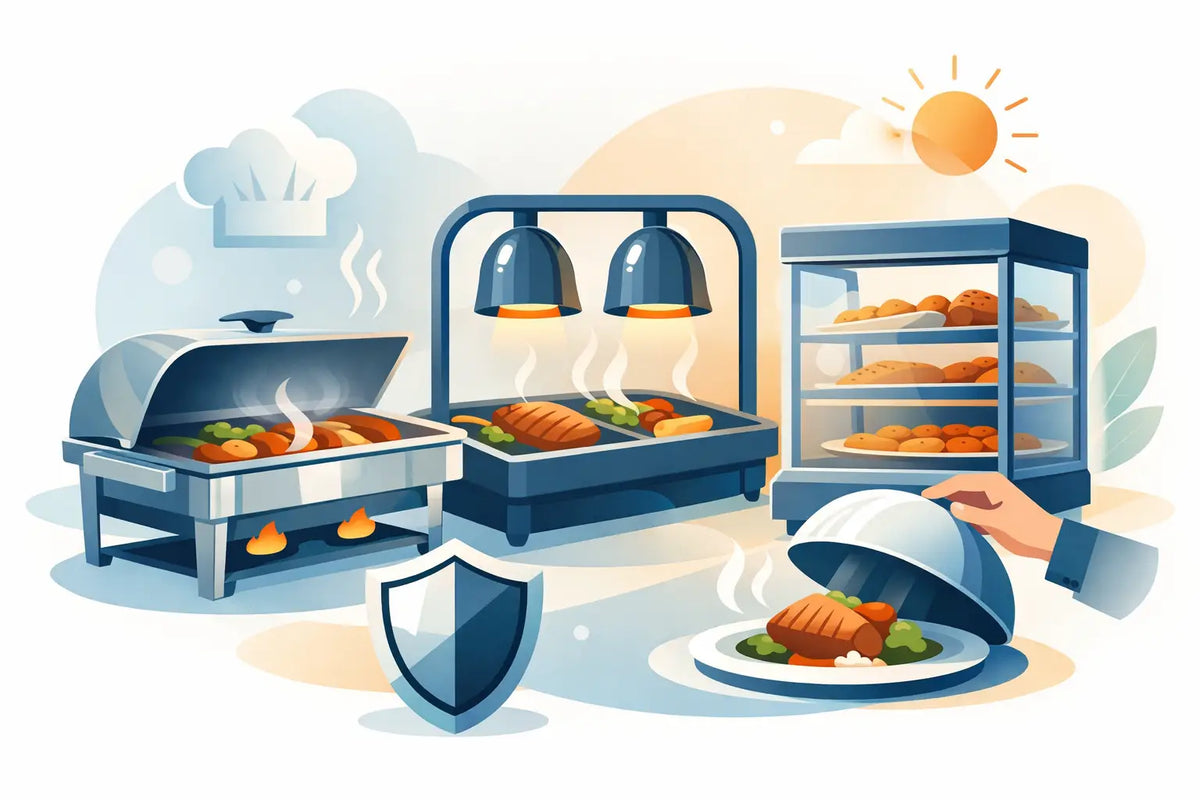
Steam tables and countertop food wells are foundational for cafeterias, fast-casual concepts, carving stations, buffet restaurants, and catered service. They hold full-size and fractional hotel pans in a clean, organized format, giving operators a flexible platform for proteins, sides, sauces, vegetables, and grains.
Wet wells use water to distribute heat gently around the pan. This is often a smart choice for products that benefit from humidity, such as mashed potatoes, macaroni and cheese, soups, and sauced preparations. The trade-off is daily water management and cleaning. Dry wells eliminate the need for water and can simplify operation, but some foods may require closer attention to avoid drying at the edges.
Look beyond the number of wells. A well-built unit should offer reliable thermostatic control, durable stainless steel construction, easy-to-reach drains where applicable, and enough electrical capacity for the demands of the line. For a built-in installation, verify cutout dimensions, ventilation requirements, and service access before the counter is fabricated.
Soup Kettles and Countertop Warmers for Focused Menus
A soup kettle, sauce warmer, or compact countertop well can be the right answer when a menu needs targeted holding rather than a full hot line. These formats work especially well for soup programs, chili, queso, gravy, cheese sauce, hot toppings, and small-batch sides.
Their value is precision in a small footprint. A front-of-house counter serving one seasonal soup does not need a large steam table. A bar offering warm dip during events may only need a controlled vessel that looks composed in the guest-facing environment. Match the capacity to turnover. An oversized vessel can hold product longer than its quality allows, while a properly sized warmer encourages fresh replenishment.
Heat Lamps and Strip Heaters for the Pass
At the pass, heat lamps and strip heaters provide a different kind of protection. They are most useful for plated food, wrapped sandwiches, fries, pizza slices, and other items awaiting a short handoff. Their purpose is immediacy, not long-term holding.
Infrared heat can keep a plate warm and preserve momentum during a busy service, but it can also dry exposed food quickly. Positioning is critical. The distance between heater and food, the width of the warming zone, and the presence of a sneeze guard or pass-through shelf all influence results. For fried food, consider whether an overhead heat source should be paired with a ventilated holding cabinet instead of being used for extended waits.
Heated Holding Cabinets for Volume and Timing
A heated holding cabinet is often the strongest choice when timing is the central challenge. Catering teams use them to stage pans before an event. Banquet kitchens rely on them to hold components during coordinated plating. Restaurants use them to stabilize production before a rush, particularly for smoked meats, roasted proteins, bread, and batch-cooked sides.
Cabinets offer protected, enclosed storage and can provide either dry or humidified heat depending on the model. Humidity control can be valuable for products prone to drying, but it is not automatically better. Crispy foods generally need air circulation and a drier environment. The goal is to select the climate that serves the food, rather than assuming one cabinet setting will suit every pan.
Temperature Control Is Only One Part of Quality
A warmer can display 145°F and still deliver disappointing food. Holding quality is shaped by moisture, airflow, pan depth, lid use, batch size, and time. This is why a thoughtful operation establishes product-specific holding practices instead of treating every item the same.
Shallow pans can improve recovery and make replenishment easier, but they expose more surface area to heat and air. Covered pans retain moisture, yet they can trap steam and soften crisp items. Stirring may prevent a sauce from forming a skin, while stirring rice too aggressively can break grains and create a dense texture. These small decisions become visible to guests.
It helps to build a short holding standard for each high-volume item: target temperature, recommended pan depth, lid or no lid, maximum hold time, and the visual cues that tell staff it is time to refresh. A properly maintained warmer supports that discipline. It does not replace it.
Details That Matter When Buying Commercial Food Warmers
Commercial equipment should fit the full operating picture, not simply the space available on a counter. Start with your utility conditions. Electric warmers may require a dedicated circuit and a specific voltage or plug configuration. Gas-fired equipment requires appropriate gas service, clearances, and ventilation planning. Confirm those fundamentals before selecting a model.
Then consider construction and cleaning. Stainless steel bodies, insulated cabinets, sturdy controls, removable wells, accessible drains, and easy-to-clean corners make a measurable difference over years of daily service. In high-volume environments, the few minutes saved at close can be as valuable as a modest difference in purchase price.
Capacity deserves a more careful calculation than total pan count. Estimate peak demand, expected replenishment frequency, and the menu mix occupying the warmer at the same time. A six-well steam table may look sufficient until two wells are dedicated to sauces, one to a vegetarian entrée, and the remaining wells must carry the core of the menu. A slightly larger format can create breathing room, but only if the product turnover supports it.
For caterers and mobile operators, mobility changes the equation. Casters, locking wheels, durable handles, enclosed bases, and protective transport features can be more useful than a permanently installed configuration. For an upscale open kitchen or outdoor entertaining area, visual finish also matters. Equipment should feel at home beside the cooking line, not like an afterthought brought in for the event.
Set Up a Holding System, Not Just a Piece of Equipment
The strongest food warmers work within a clear system. Preheat the unit before loading. Use calibrated thermometers to verify food temperature rather than relying only on a dial or digital display. Keep backup pans hot and ready for rotation. Train staff to replenish in smaller batches when quality matters more than maximum volume.
Cleaning and maintenance protect performance as much as appearance. Mineral buildup in wet wells, damaged gaskets on cabinets, neglected drains, and loose temperature controls can all compromise consistency. A closing routine that includes draining, wiping, inspecting, and reporting issues keeps the equipment ready for the next service instead of turning a small problem into a failed shift.
Culinary Precisions approaches holding equipment as part of the larger kitchen cadence: heat applied with intention, food staged with care, and service supported by tools built to endure. The right warmer gives your team more than a place to set a pan. It gives them the confidence to send every plate and every buffet serving out with the warmth, texture, and finish your guests came for.
When you evaluate your next holding setup, begin with the food at its best moment. Then choose the heat, humidity, capacity, and workflow that let that moment last long enough to be served.