How Often to Clean a Soft Serve Machine
The answer to how often to clean a soft serve machine is not simply “when it looks dirty.” In a high-volume kitchen, a machine can deliver hundreds of servings while hidden residue builds inside its freezing cylinder, hopper, dispensing valve, and air system. A disciplined cleaning schedule protects product quality, supports food safety, and helps preserve the smooth texture guests expect from every cone, cup, or shake.
For most commercial operations, soft serve machines need daily sanitizing and periodic full disassembly based on the manufacturer’s instructions and local health department requirements. Many traditional machines require a complete breakdown and cleaning every three days. Heat-treatment models may be approved for longer operating cycles, often up to 14 days, but they still require daily monitoring, sanitizing procedures, and careful adherence to the specific machine manual.
How Often Should You Clean a Soft Serve Machine?
Treat cleaning as a layered routine rather than a single task. The exterior, drip tray, dispensing area, and touch points should be cleaned throughout the day and at closing. The food-contact system requires a more deliberate sanitation process each day. Then, at the interval specified by the manufacturer, the machine must be drained, disassembled, washed, sanitized, lubricated where required, and reassembled.
A practical schedule looks like this:
- During service: Wipe spills, clean the dispensing spout and handles, empty and wash the drip tray as needed, and keep the exterior free of sticky mix residue.
- Daily: Sanitize food-contact surfaces and follow the unit’s daily operational procedure, including temperature checks and mix handling.
- Every 3 days, for many conventional machines: Complete a full teardown, cleaning, sanitation, inspection, and reassembly.
- Every 7 to 14 days, for eligible heat-treatment machines: Perform a complete cleaning cycle at the manufacturer-approved interval, while continuing daily sanitation and monitoring.
- As needed: Clean immediately after a contamination event, a prolonged power interruption, an equipment fault, or use of an expired or improperly held mix.
Why Soft Serve Machine Cleaning Cannot Be Delayed
Soft serve mix is a dairy-based product or a similarly perishable alternative. It contains the moisture and nutrients that can support bacterial growth when temperature control or sanitation slips. The visible areas of the machine may look clean while mix residue remains behind valve seals, O-rings, beaters, hopper walls, and cylinder surfaces.
That residue affects more than safety. It can cause off flavors, icy product, weak overrun, inconsistent portions, and poor draw performance. In severe cases, buildup can strain components, create leaks, or contribute to equipment downtime during a rush.
For restaurant owners and foodservice managers, the operational cost is straightforward: a skipped cleaning cycle can turn into discarded product, failed inspections, guest complaints, emergency service calls, and lost sales. Consistent maintenance is far less disruptive than recovering from a preventable sanitation issue.
Daily Tasks That Protect Product Quality
Daily care starts before the first serving. Verify that the machine is holding mix at the proper temperature and that no warning indicators are active. Check the hopper for residue around the lid and walls, inspect the dispensing head for leaks, and confirm that the drip tray is clean and properly positioned.
During the shift, clean the exterior with a food-safe cleaner according to the chemical label. Pay close attention to handles, control panels, hopper lids, and the area below the dispensing head. These surfaces are handled frequently and can quickly become sticky, especially in busy quick-service, dessert, and concession environments.
At closing, follow the machine manufacturer’s daily sanitation procedure. This may include brushing accessible product zones, sanitizing the dispensing area, checking mix levels and dates, and running any required automated cycle. Use the correct sanitizer concentration. Too weak, and it may not sanitize effectively. Too strong, and it can damage components or leave undesirable residue.
Document the work. A simple cleaning log creates accountability across shifts and gives managers a reliable record for internal standards and health inspections. Include the date, time, employee initials, sanitizer test result when applicable, machine temperature, and any maintenance concerns found during the check.
What a Full Soft Serve Machine Cleaning Includes
A full cleaning is a controlled procedure, not a quick wipe-down. First, use or properly dispose of the remaining mix according to your food safety policy and local requirements. Never save product that has been held outside approved conditions simply to reduce waste.
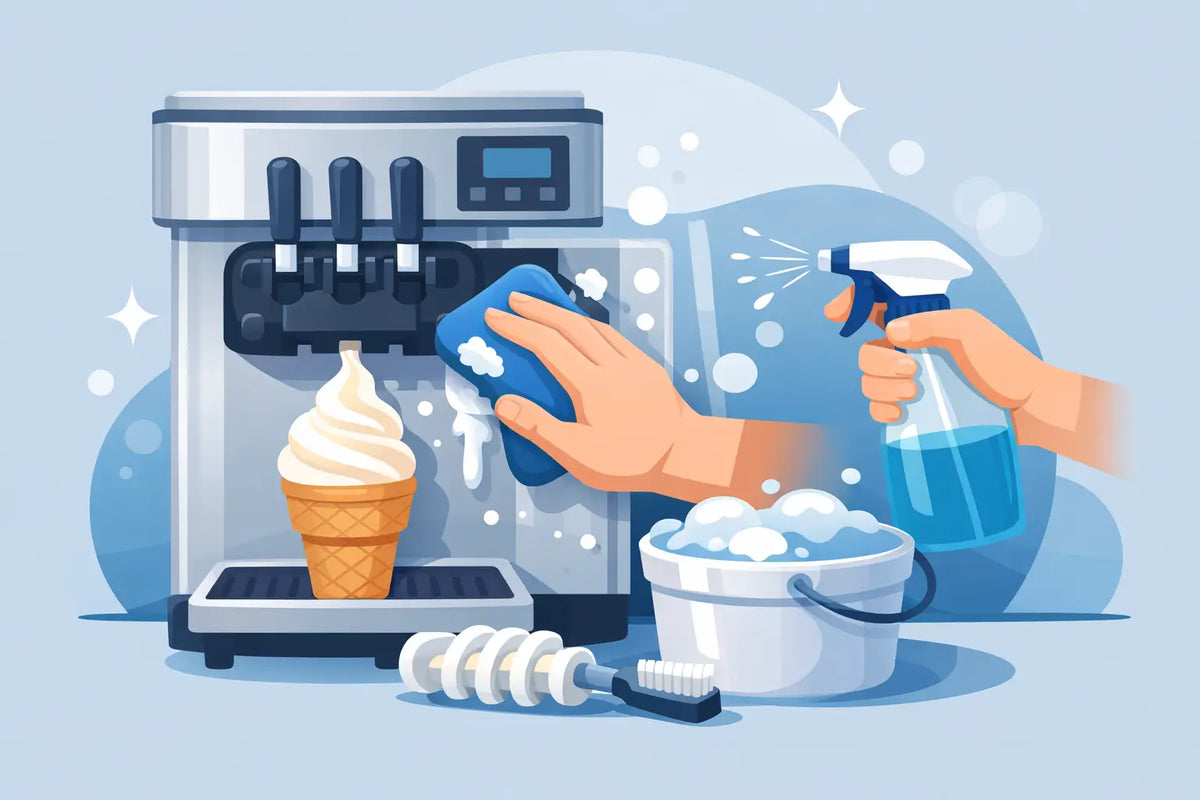
Next, flush the system, disassemble the removable food-contact parts, and wash each component in warm water with the approved detergent. Typical parts include the beater assembly, draw valve, spout, O-rings, seals, hopper cover, feed tube, and drip tray. A dedicated brush kit is essential because narrow channels and valve openings cannot be cleaned thoroughly with a cloth alone.
Rinse away detergent completely, then sanitize all food-contact components using the approved sanitizer and correct contact time. Allow parts to air dry where the manufacturer directs. Towel drying can reintroduce contaminants and leave lint on seals or valves.
Before reassembly, inspect every gasket, O-ring, seal, and beater component for cracks, wear, stretching, or product buildup. Apply food-grade lubricant only to the locations and in the amount specified in the manual. Too little lubrication can lead to leaks and premature wear. Too much can contaminate product areas or attract residue.
Once the unit is reassembled, prime it with fresh mix and verify that it freezes, dispenses, and recovers correctly. This final performance check matters. Cleaning is also your best opportunity to catch a worn seal, loose valve, blocked air passage, or unusual machine behavior before service begins.
Heat-Treatment Machines Need a Different Plan
Heat-treatment soft serve machines can be a strong choice for operations focused on labor efficiency and consistent availability. These units periodically heat the mix to a controlled temperature, then cool it back down, allowing longer intervals between complete breakdowns when used as designed.
The trade-off is that heat treatment demands operational discipline. The machine must complete its heat cycle without interruption, maintain proper refrigeration, and receive the required daily attention. If the cycle fails, the machine loses temperature control, or a product alarm appears, follow the manufacturer’s corrective procedure immediately. That may mean discarding mix and conducting a full cleaning before returning the unit to service.
Operators should never extend a cleaning interval because the machine “seems fine.” Use the stated schedule in the equipment manual, follow local regulatory rules, and set reminders that align with the machine’s approved cleaning window. A dependable soft serve program is built on documented procedures, not guesswork.
Common Cleaning Mistakes That Cost Time and Product
The most common mistake is confusing cleaning with sanitizing. Cleaning removes food soil and residue. Sanitizing reduces microorganisms on a properly cleaned surface. Both steps are necessary, and sanitizing a part that still has dried mix or grease on it does not produce a safe result.
Another frequent issue is using the wrong chemical or concentration. Commercial equipment should be cleaned with products approved for foodservice use and compatible with the machine’s materials. Follow dilution instructions and test sanitizer concentration when required. Improvised solutions may damage plastic, rubber, and metal components over time.
Rushing reassembly also creates avoidable problems. Missing an O-ring, installing a seal backward, or failing to lubricate a designated component can cause leaks, poor draw, and equipment alarms. Train more than one employee on the full procedure so cleaning does not rely on a single experienced operator.
Finally, do not overlook the machine’s surrounding environment. The floor beneath the unit, ventilation openings, storage area for mix, cleaning tools, and handwashing access all influence the safety and efficiency of the soft serve station.
Build Cleaning Into Your Service Rhythm
The best cleaning schedule is one your team can execute consistently during real operating conditions. For a restaurant with steady daily volume, schedule full cleaning during the lowest-demand period and allow enough time for washing, sanitizing, drying, reassembly, and freezing. For seasonal stands and concession operations, plan the schedule around event days so the machine is fully ready before peak demand.
Keep the manufacturer’s manual accessible, maintain a dedicated cleaning kit, stock approved chemicals, and replace worn seals before they fail. Professional-grade equipment performs best when its maintenance standards match its production demands.
A clean soft serve machine does more than satisfy a checklist. It protects the flavor, texture, safety, and consistency that turn a quick dessert purchase into a reason for guests to come back.