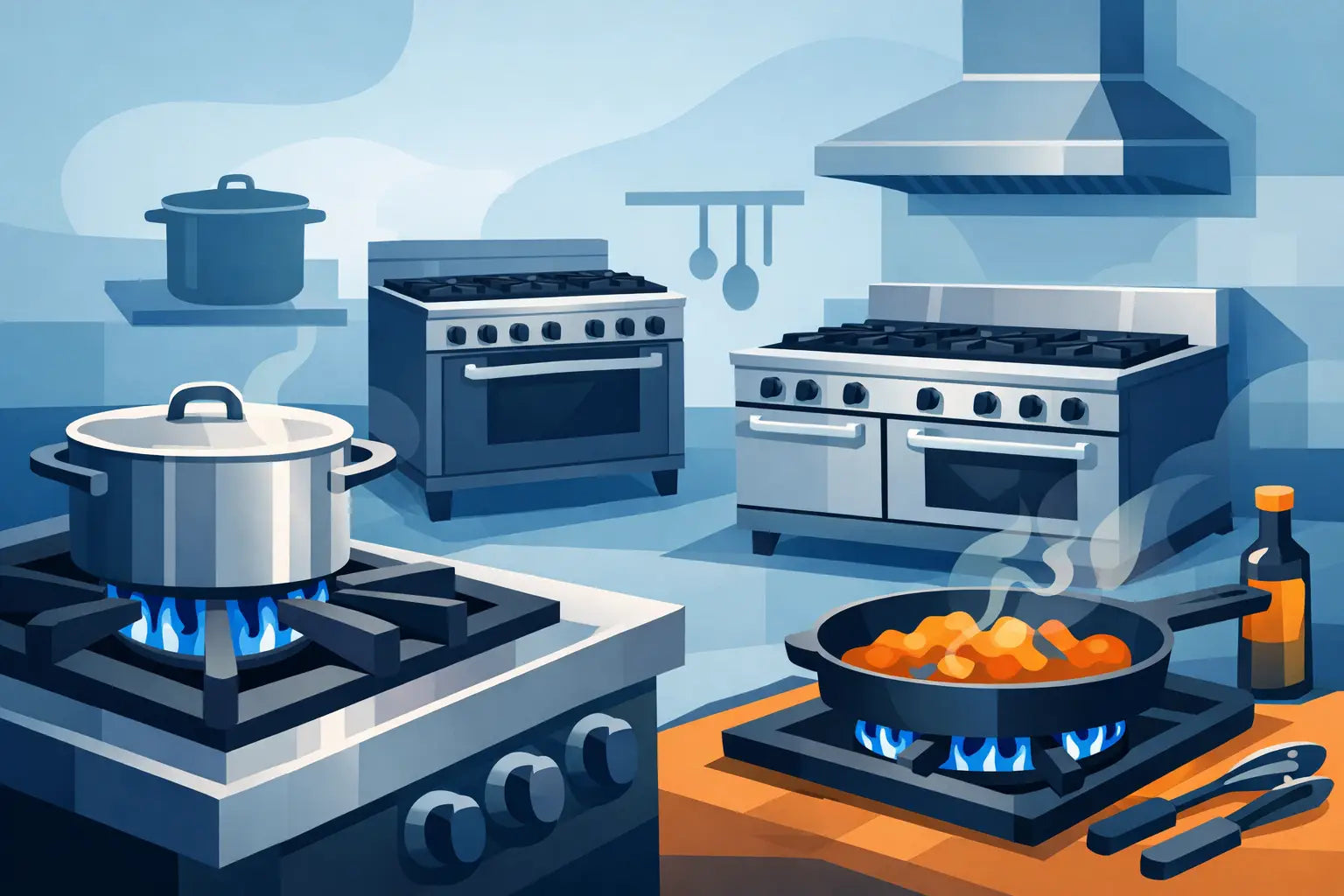
Choosing Heavy Duty Gas Stoves
When the line is full, tickets are stacking, and every burner is spoken for, the difference between getting through service and falling behind often comes down to the range. Heavy duty gas stoves are built for exactly that kind of pressure. They deliver fast heat, precise flame control, and the durability required for kitchens that cannot afford weak output or frequent downtime.
For restaurant owners, chefs, and foodservice managers, the decision is rarely about choosing a stove that simply looks commercial. It is about selecting equipment that matches volume, menu style, workflow, and long-term operating demands. Serious home cooks face a similar question on a smaller scale. If you cook often, use large cookware, or want professional-level control, a heavy duty unit can raise both speed and consistency. The right choice depends on how your kitchen actually performs day after day.
What makes heavy duty gas stoves different
Not every gas stove with stainless steel panels qualifies as heavy duty. In practical terms, this category means stronger construction, higher burner output, thicker grates, more stable heat delivery, and components designed for repeated use under load. A residential-style range may handle family meals comfortably, but a heavy duty model is expected to run hard for long stretches without heat drop-off, warped surfaces, or unreliable ignition.
The most visible difference is often burner power, usually measured in BTUs. Higher BTU ratings can improve boil times, recovery speed, and the ability to maintain strong heat when pans are added or shifted. That said, more BTUs are not always better in every position. Many high-performing kitchens benefit from a mix of burner strengths, with powerful burners for searing and stockpots, and lower-output burners for sauces, reductions, and holding delicate items.
Construction matters just as much as raw output. Heavier grates support larger pans with less movement. Reinforced knobs and controls hold up better during rush periods. Stainless steel bodies are easier to maintain and better suited to demanding kitchen environments. In a true production setting, those details are not cosmetic. They affect speed, safety, and service life.
How to evaluate heavy duty gas stoves for your kitchen
The first question is capacity. Think in terms of active cooking, not just available space. A six-burner unit may sound like the obvious upgrade, but if your prep style relies on stockpots, sauté pans, and constant movement between stations, you also need enough clearance to use those burners efficiently. Crowded burner layouts can slow down a team even when the stove technically offers more positions.
Next comes heat profile. A steakhouse, breakfast operation, catering kitchen, and sauce-driven fine dining program do not ask the same thing from a range. If your menu leans heavily on searing, rapid pan work, and high-volume boiling, strong top burners are essential. If your operation depends on careful simmering and layered prep, flame responsiveness and low-end control deserve equal attention.
You should also consider whether the range oven below the burners is part of your daily production or just backup support. Some kitchens rely on the oven compartment for roasting, holding, or finishing. Others already have dedicated convection ovens and mainly need a reliable cooktop. If the oven will carry real volume, evaluate interior capacity, recovery time, and temperature consistency instead of treating it as an afterthought.
Ventilation and utility compatibility cannot be ignored. A more powerful stove may improve production, but it also places greater demands on gas supply and hood performance. Before upgrading, confirm that your kitchen can support the unit safely and within code. This is one of the most common points where buyers focus on the appliance and underestimate the system around it.
Size, layout, and workflow matter more than buyers expect
A stove can be technically excellent and still be the wrong fit. Width, depth, and burner configuration need to align with your kitchen’s movement patterns. In compact commercial kitchens, every inch affects prep flow, plating, and access to refrigerated ingredients. In larger spaces, stove placement can influence how efficiently cooks move between range tops, ovens, warmers, and pass-through areas.
For serious home cooks, the same principle applies. A heavy duty gas stove should support the way you cook, not dominate the room without adding usable performance. If you regularly use oversized pans, griddles, or canning pots, grate spacing and surface depth become important quickly. If your kitchen is open-plan, noise, heat output, and cleanup demands may weigh more heavily than they would in a back-of-house setting.
This is where buying by headline specs alone can lead to regret. More burners, more BTUs, and a larger footprint do not automatically equal better results. The better choice is the model that improves your working rhythm while giving you the thermal control your menu requires.
Durability is more than a materials claim
In the commercial equipment world, durability gets used so often that it can start to sound generic. In reality, durability has a very practical meaning. It is the ability of a stove to maintain performance over time while exposed to spills, grease, movement, constant cleaning, and repeated temperature cycling.
Look closely at cast iron grates, burner design, control placement, and serviceability. Components that are easy to remove and clean reduce downtime. Stronger grate structures improve safety when lifting heavy cookware. Burners that distribute flame evenly can reduce hot spots and improve consistency across stations. A unit that looks solid from the front but is difficult to maintain behind the scenes often becomes expensive over time.
For operators, service access matters almost as much as initial build quality. Fast replacement of wear components, straightforward maintenance, and reliable support can influence the true value of the purchase. In a busy kitchen, the cheapest downtime is the downtime you prevent.
Safety and sanitation should shape the buying decision
Heavy duty gas stoves operate in high-heat, high-traffic environments, so safety features deserve real attention. Stable grates, clearly responsive controls, dependable ignition systems, and good heat containment all contribute to a safer cooking line. A range that runs hot in the wrong places or allows excessive wobble under heavy pans can create avoidable risk.
Sanitation is equally important. Smooth stainless surfaces, removable drip trays, and practical access for cleaning help teams maintain standards without losing time. Grease buildup is not just a cleaning issue. It affects fire risk, equipment longevity, and overall kitchen discipline. The easier a stove is to clean correctly, the more likely it is to stay in strong operating condition.
Who actually needs heavy duty gas stoves
For many restaurant kitchens, the answer is straightforward. If your range is in constant use, if speed and consistency affect ticket times, or if your current unit struggles to recover heat during service, a heavy duty upgrade is a performance decision, not a luxury purchase.
For smaller operations, the answer depends on menu and ambition. A compact cafe with limited hot production may not need maximum burner output, but it still may benefit from commercial-grade durability and control. For serious home cooks, the decision usually comes down to frequency, technique, and expectation. If you cook occasionally, a standard high-end residential range may be enough. If you cook like a production kitchen, entertain often, or want chef-level response from your equipment, heavy duty performance starts to make sense.
That distinction matters because overbuying has costs too. Larger units may require more ventilation, more gas, and more cleaning. They can also generate more heat than a smaller kitchen comfortably handles. The best equipment choice supports output without creating new inefficiencies.
Buying for performance, not just appearance
A professional-looking stove can still underperform where it counts. The smarter approach is to evaluate the stove as part of your production system. Ask how quickly it recovers, how evenly it holds flame, how well it fits your cookware, and how easily your team can clean and maintain it. Those are the details that shape long-term results.
At Culinary Precisions, that performance-first mindset is what serious buyers should expect from any equipment decision. The goal is not simply to install a stronger stove. It is to create a kitchen setup that supports precision, speed, and dependable output under real working conditions.
If you are comparing options now, focus less on the badge and more on what happens during your busiest hour. That is where the right stove proves its value, burner by burner.