Commercial Kitchen Equipment Guide
A rushed equipment purchase usually shows up later - on the line, during prep, or in the middle of service when output slows and temperatures drift. This commercial kitchen equipment guide is built for operators and serious cooks who need gear that holds up under pressure, fits the workflow, and supports consistent results day after day.
Buying commercial equipment is not just about filling a kitchen with machines. It is about matching production demands to the right capacity, recovery speed, footprint, and utility requirements. A compact cafe, a high-volume pizzeria, and a chef building an outdoor cooking setup may all need heat, refrigeration, and holding equipment, but they will not need the same specifications. The right choice protects food quality, labor efficiency, and long-term operating costs.
How to use this commercial kitchen equipment guide
Start with the menu, not the catalog. Equipment should support what you actually produce, how often you produce it, and how quickly you need to turn orders. If your business depends on dough production, baking consistency, and rapid service, your priorities will look very different from a kitchen focused on chilled prep, plated entrees, or frozen desserts.
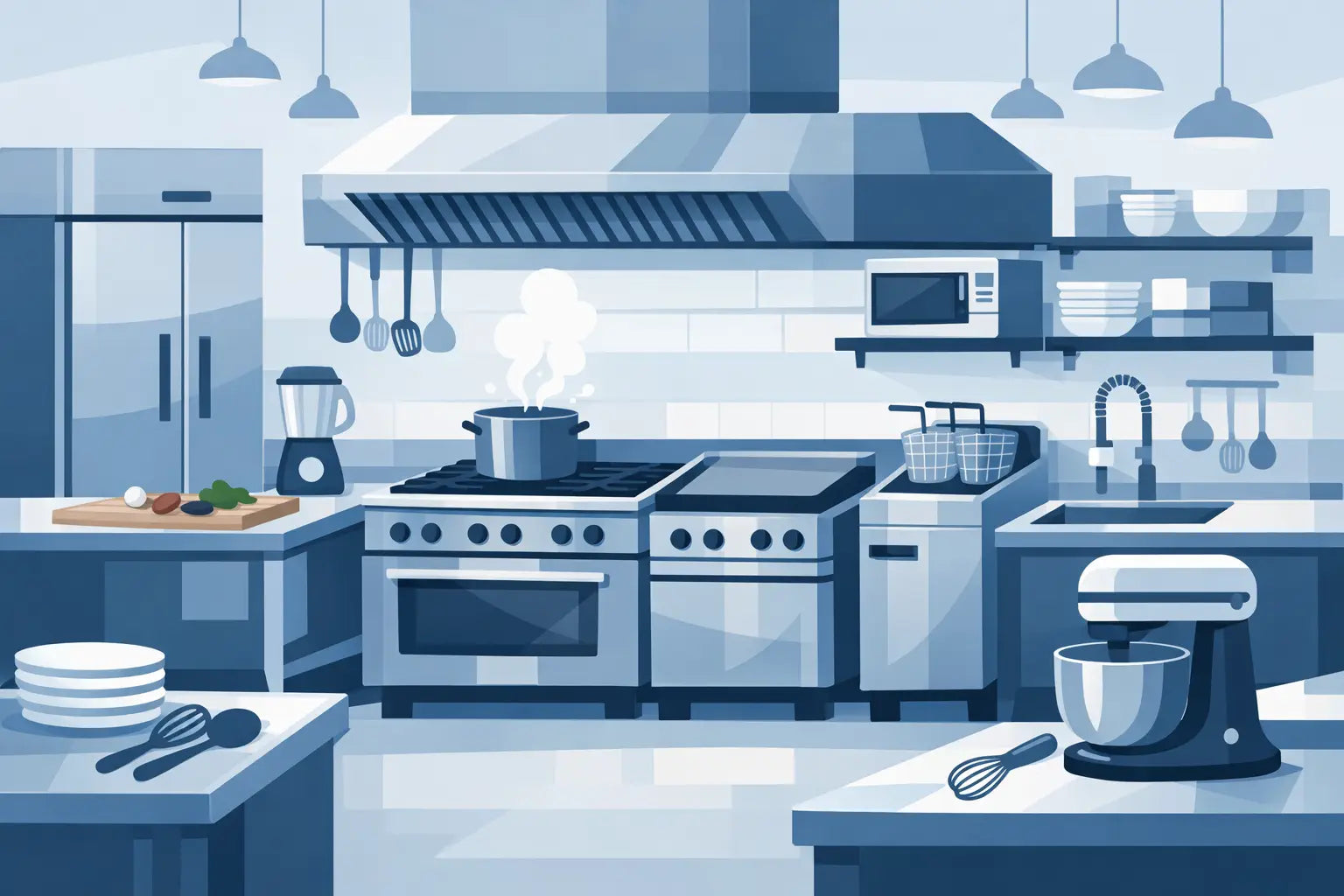
Think in terms of workflow zones. Most kitchens depend on five: cold storage, prep, cooking, holding, and cleaning. When one zone is undersized or poorly planned, the rest of the operation feels it. A strong equipment plan keeps product moving cleanly from receiving to service without bottlenecks, cross-contamination risks, or wasted motion.
Capacity matters, but oversizing can be just as costly as undersizing. A range with more burners than you use, a mixer built for batches far beyond your real output, or refrigeration that consumes valuable floor space without improving production can drag down efficiency. Precision matters more than excess.
Refrigeration and cold storage
Refrigeration protects product value before it supports service. If temperature stability is inconsistent, ingredient quality slips, food safety risk rises, and prep teams lose time managing stock that should have been protected from the start.
Reach-in refrigerators work well for general cold storage, but undercounter refrigeration can be the better performance decision in tight line setups. It keeps ingredients within reach, reduces unnecessary movement, and helps stations stay organized during peak periods. For kitchens with high turnover and frequent access, door style, shelving layout, and compressor performance matter as much as raw cubic footage.
Blast freezers serve a different purpose. They are less about everyday holding and more about speed, preservation, and control. For operations that batch prep, preserve texture, or need to lock in quality quickly, a blast freezer can improve consistency and reduce waste. The trade-off is cost and space, so it makes the most sense when production volume or menu style justifies it.
If you are choosing between larger central refrigeration and distributed point-of-use units, the answer depends on labor flow. Central storage may simplify inventory control, while undercounter units improve line speed. Many of the best kitchens use both.
Cooking equipment that matches output
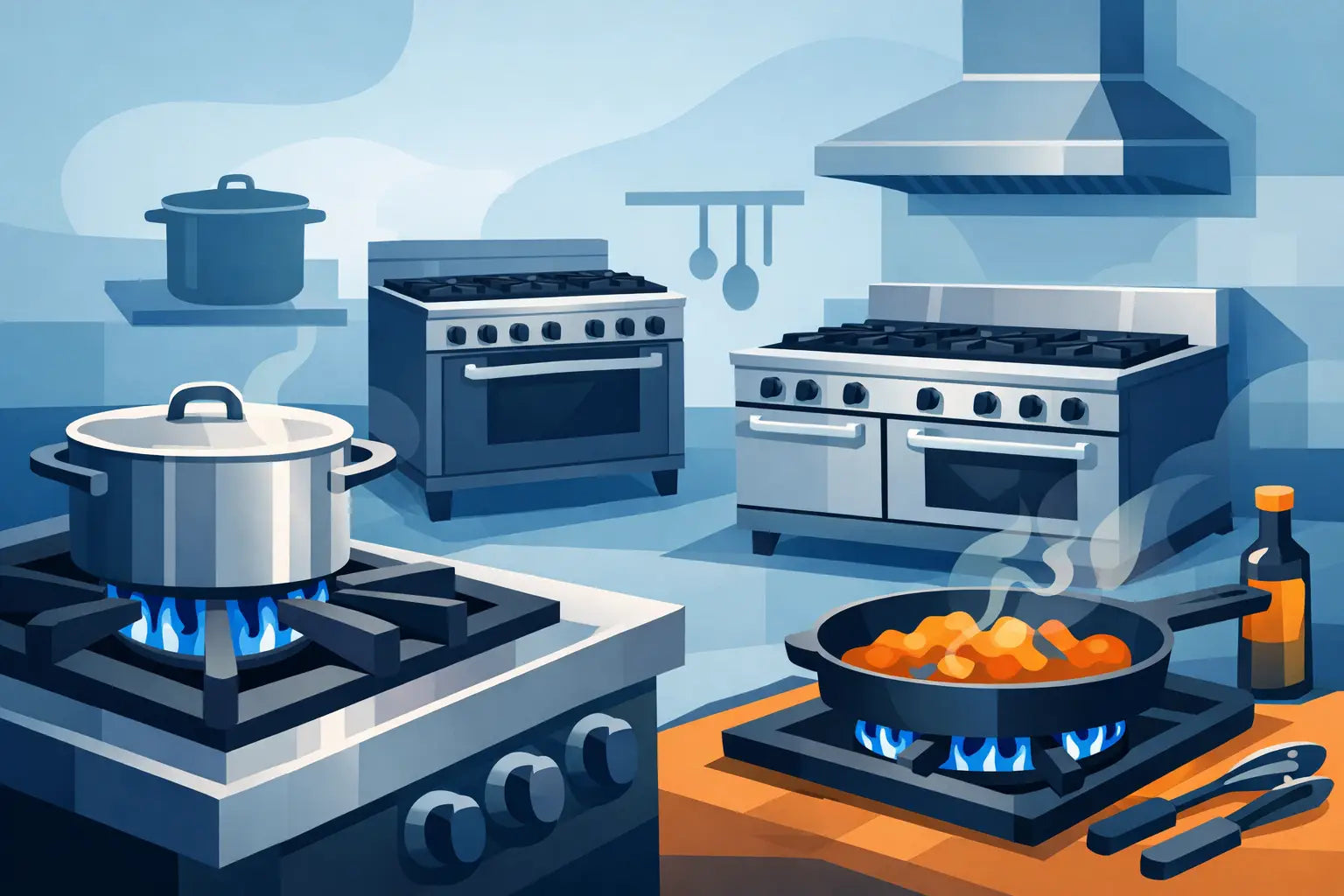
Cooking equipment should be selected by menu style, not by habit. Gas ranges and stoves offer flexibility and familiarity, especially for kitchens with changing prep demands and multiple cooking techniques in play. They are strong all-around performers, but they are not automatically the best fit for every concept.
Convection ovens bring consistency and efficient heat circulation, making them a solid choice for baking, roasting, and repeatable batch production. If the menu relies on uniform results across multiple trays or pans, convection often improves output without demanding constant adjustment from the operator.
For operations built around live-fire flavor, charbroilers and grills create a different value. They deliver the sear, texture, and visual finish many menus depend on, but they also place heavier demands on ventilation, cleaning, and heat management. The decision should account for the full operating environment, not just the flavor profile.
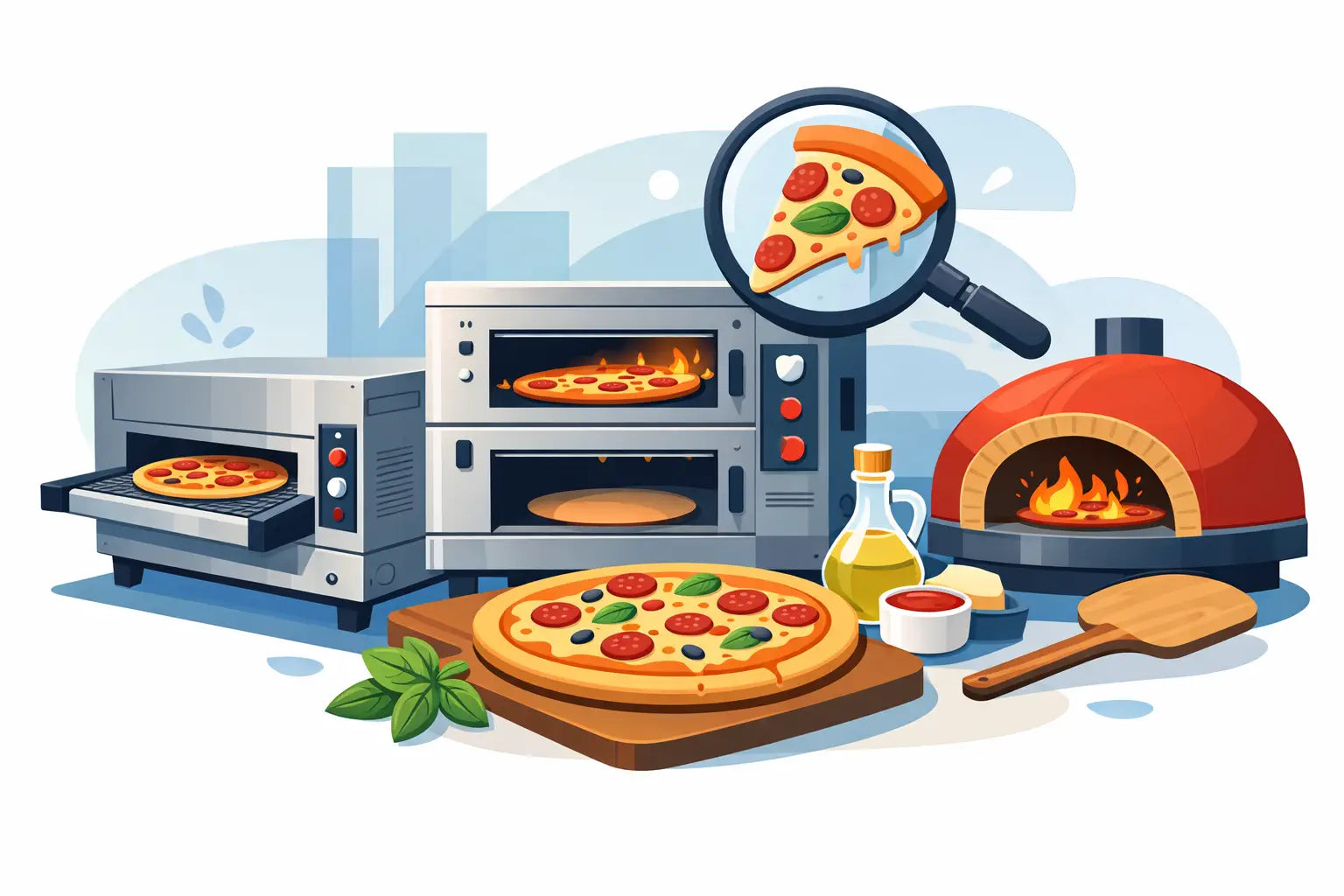
Pizza ovens deserve their own category because they influence product identity so directly. Deck style, chamber size, recovery time, and temperature range all shape crust quality and ticket times. A pizzeria with steady traffic may need throughput and consistency above all else, while a serious home setup might prioritize versatility and footprint.
Steamers are often overlooked until labor and yield become pressing concerns. They support speed, moisture retention, and repeatability, especially in high-volume production. If your kitchen handles vegetables, seafood, dumplings, or reheating applications at scale, steam can outperform drier methods in both consistency and efficiency.
Prep equipment and production control
Prep is where consistency starts. If mixing, portioning, and staging are unstable, the line inherits every mistake. Food mixers are a clear example. Bowl size, motor strength, and attachment compatibility need to match batch size and product density. Buying too small creates delays. Buying too large can reduce control for smaller runs and waste both money and floor space.
Specialty equipment can also define a kitchen's edge. Curing machines support precision in preservation and flavor development. Slushy machines and soft serve ice cream machines create high-margin menu opportunities, but only when volume, maintenance expectations, and sanitation routines are realistic. These are strong additions when they fit a concept, not when they are treated as impulse upgrades.
Outdoor kitchen equipment deserves careful planning as well. Commercial-grade outdoor setups must handle weather exposure, service flow, and fuel logistics without sacrificing performance. The right equipment can expand service capacity and menu appeal, but durability and placement matter far more outdoors than many buyers expect.
Holding equipment, sanitation, and the parts of the kitchen buyers skip too fast
Food warmers rarely get the same attention as ovens or ranges, but they are critical to quality control. Proper hot holding protects texture, serving temperature, and pace during rush periods. If the kitchen wins at cooking but loses at holding, the guest still receives an inconsistent plate.
Dish washers are another category where speed and reliability directly affect operations. A machine that cannot keep pace with service creates backups, disrupts sanitation flow, and increases labor strain. The right unit depends on volume, available space, utility access, and the type of wares you cycle most often.
These support categories often determine whether a kitchen feels controlled or chaotic. Buyers sometimes focus on headline equipment and postpone investment in holding and cleaning. That decision can become expensive quickly.
Space, utilities, and compliance
A great piece of equipment is still the wrong purchase if it does not fit the kitchen, the electrical service, or the ventilation plan. Before buying, confirm dimensions with enough clearance for operation, cleaning, loading, and service access. Measure doorways, corners, and installation paths, not just the final footprint.
Utility demands should be reviewed early. Gas, voltage, drainage, and water connections can change the real cost of ownership. A lower-priced machine may become the more expensive option if installation requirements are more demanding.
Compliance matters too. Foodservice operators should confirm the standards, certifications, and local code considerations that apply to their facility. This is especially important for heat-producing equipment, sanitation systems, and any unit tied into fire suppression or ventilation infrastructure.
New buyers make the same three mistakes
The first is buying for aspiration instead of production reality. It is smart to leave room for growth, but equipment should be grounded in actual volume, staffing, and menu demand.
The second is treating all commercial equipment as equal if the category name matches. Two convection ovens may look similar on paper while delivering very different recovery times, control precision, and durability under heavy use.
The third is ignoring service life and support. Performance is not just what a machine does on day one. It is how dependably it works through daily opening, prep, rush, and cleanup cycles over time.
What smart selection looks like
The strongest buying decisions balance present needs with operational direction. Ask how each piece improves speed, consistency, sanitation, or output. If the answer is vague, keep looking. Equipment should solve a real kitchen problem or create a clear production advantage.
For many operators, that means building in layers. Start with core cooking and refrigeration. Then strengthen prep, holding, and cleaning based on workflow pressure points. Specialty equipment comes after the foundation is right. This approach is practical, scalable, and easier to defend from both an operational and budget standpoint.
At Culinary Precisions, that performance-first mindset is what separates a good purchase from a costly distraction. The best equipment does not just fill space. It earns its place every service, every batch, and every shift. Choose the tools that keep your standards high when the kitchen gets busy, because that is when quality has to hold.