What Size Pizza Oven Do You Need?
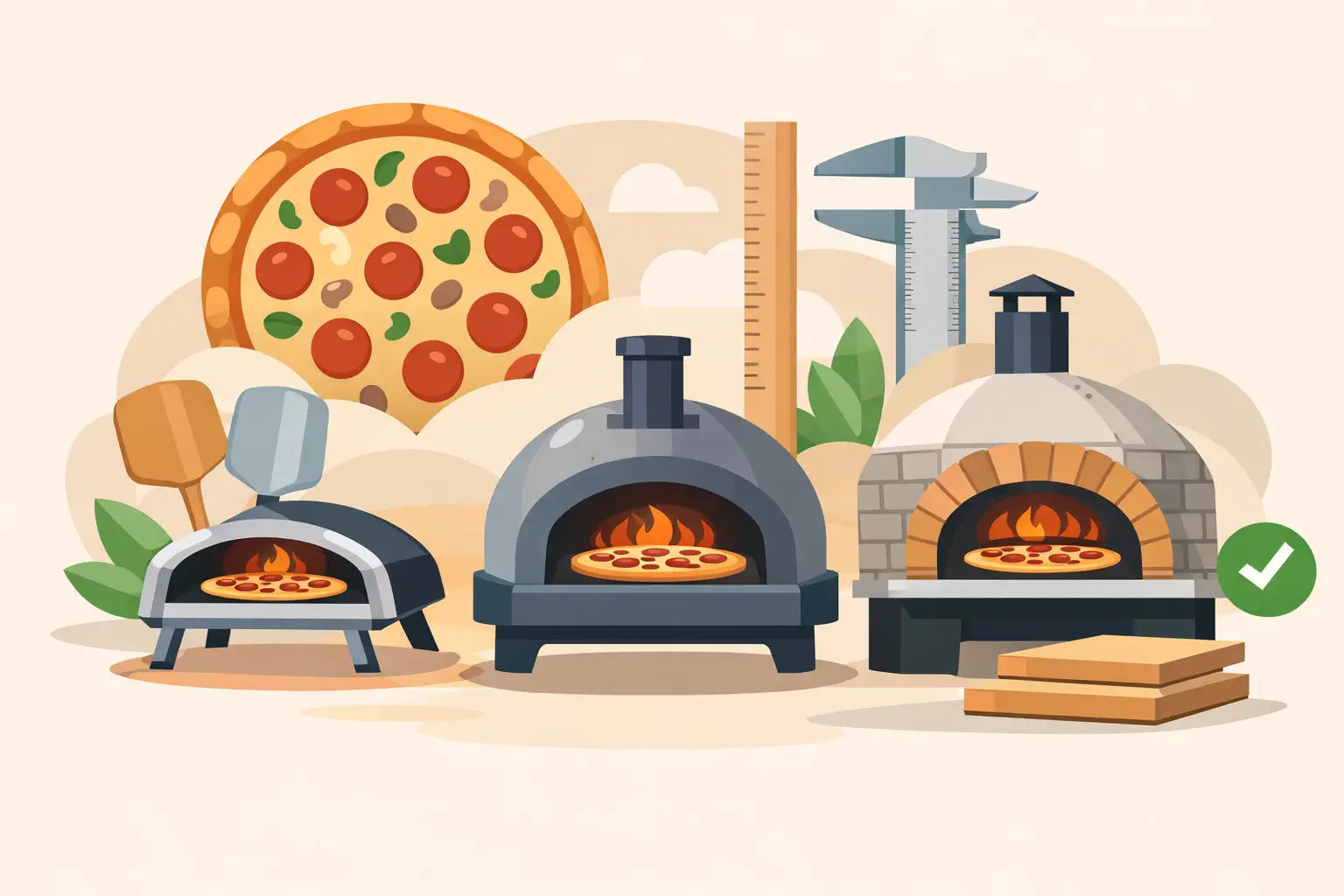
A pizza oven that is too small slows service, crowds your workflow, and limits what you can actually cook. A pizza oven that is too large can waste fuel, eat up valuable floor or counter space, and cost more than your operation needs. If you are asking what size pizza oven makes sense, the right answer starts with output, space, and the kind of pies you want to produce consistently.
What size pizza oven really means
When buyers ask about pizza oven size, they are usually talking about one of three things: the overall footprint of the unit, the cooking surface inside the oven, or the maximum pizza diameter the oven can handle. Those measurements are related, but they are not interchangeable.
For a serious home cook, the first question is often whether the oven can fit a 12-inch or 16-inch pizza. For a restaurant, the better question is how many pizzas the oven can turn out during a rush without bottlenecking the line. A compact oven may technically bake a large pizza, but if it only holds one pie at a time and recovery is slow, it may not support your service goals.
That is why oven size should be evaluated as a performance decision, not just a dimension on a spec sheet.
Start with your pizza size and production goals
The most practical way to decide what size pizza oven you need is to work backward from the food you plan to serve. If your menu centers on 10-inch personal pizzas, your requirements are different from a shop producing 16-inch New York-style pies or a backyard setup built for entertaining large groups.
A small oven is often enough for one pizza at a time in the 10-inch to 12-inch range. That works well for home use, occasional parties, and low-volume service models where speed is less critical. It keeps the footprint manageable and usually heats faster.
A medium pizza oven makes more sense when you want flexibility. This is often the sweet spot for serious home cooks and smaller commercial operations because it can handle larger pies without feeling oversized. You get more room to turn pizzas cleanly, more tolerance for different dough styles, and often better workflow when baking back-to-back.
A large pizza oven is built for output. In a commercial setting, that can mean baking multiple pizzas at once, handling wider diameters, or supporting a menu that includes flatbreads, roasted vegetables, proteins, and pans. The trade-off is obvious: larger ovens demand more installation space, more ventilation planning in many cases, and more budget.
What size pizza oven for home use?
For most residential buyers, the right size comes down to how many people you usually feed and how often you entertain. If pizza night means two adults and a couple of kids, a compact oven that handles a 12-inch pizza may be enough. If you regularly host neighbors, make multiple styles in one session, or want room for larger pies, moving up in size saves time and frustration.
There is also a usability factor that gets overlooked. Tight interior space makes launching and turning pizza more difficult, especially for newer users. An oven that only just fits your intended pizza size can feel cramped in real use. If you want cleaner handling and more consistent results, a little extra deck space helps.
Outdoor home setups also need a realistic footprint check. The oven itself is only part of the equation. You need room for prep, peels, dough trays, and safe movement around a hot cooking zone. Bigger is not always better if it overwhelms your patio or outdoor kitchen layout.
What size pizza oven for a restaurant or foodservice operation?
Commercial buyers should think less about the biggest pizza the oven can hold and more about hourly throughput. During peak periods, your oven size directly affects ticket times, labor flow, and product consistency.
A smaller commercial oven can work in cafes, bars, concession setups, and limited-menu operations where pizza is an important item but not the only driver of service. If demand is steady rather than intense, a compact unit may deliver strong performance without overcommitting space.
A mid-size commercial oven is often the most balanced choice for pizzerias with moderate volume, ghost kitchens, and multi-use foodservice concepts. It gives operators enough capacity to maintain pace while preserving flexibility for different menu items.
A large-format commercial oven is the right move when pizza is a core revenue category and rush periods are non-negotiable. In that environment, undersizing the oven costs money every shift. If the kitchen can produce dough, build pies, and manage orders faster than the oven can bake them, the oven becomes your limiting factor.
Oven footprint vs cooking capacity
This is where many buyers get tripped up. A physically large oven does not always deliver the most usable cooking space, and a compact unit can sometimes be designed more efficiently than expected. You have to compare exterior dimensions, interior deck area, clearance requirements, and door opening height together.
For example, an oven may have enough internal width for a 16-inch pizza, but if the shape of the chamber leaves little room to rotate the pie, your practical working size may be smaller. Likewise, a stacked or multi-chamber configuration may increase production without demanding a massive floor footprint.
In commercial kitchens, every inch matters. A larger oven that disrupts prep flow or crowds refrigeration access can create operational drag. In residential settings, an oversized oven can dominate the cooking area and reduce convenience. The right fit is the one that supports output without compromising the rest of the workspace.
Fuel type can affect the right size choice
Gas, wood, pellet, and electric pizza ovens do not just cook differently. They also influence how much capacity you need and how the oven functions in your environment.
Wood-fired ovens tend to reward a bit more interior space because flame management, heat zones, and live-fire movement all benefit from room inside the chamber. They are excellent for high-heat character, but they require more active management.
Gas ovens offer faster control and simpler consistency, which can make a medium-size unit feel highly capable. If your priority is repeatable performance with less adjustment between bakes, gas often gives you more practical production from a smaller footprint.
Electric ovens are especially attractive indoors and in operations where ventilation, precision, and ease of use matter. Many electric models make efficient use of space, but capacity still needs to align with demand. A precise oven is still the wrong oven if it cannot keep up.
Don’t forget pizza style
Not every 12-inch pizza behaves the same way in the oven. A Neapolitan pie cooks fast at very high heat and benefits from enough room for quick turning. A thicker pan pizza may need a different chamber height or a longer bake profile. New York-style pies often need enough floor space to manage larger diameters comfortably.
If your menu includes multiple formats, size for your most demanding use case, not your easiest one. It is frustrating to buy an oven that performs well for small artisan pies but struggles with the larger style that drives the most orders.
This matters for home buyers too. If you enjoy experimenting with cast iron pans, breads, roasted vegetables, or proteins, a slightly larger oven may deliver much more value than one sized only for basic pizza baking.
A simple way to choose the right oven size
If you want a practical decision framework, start with four questions. What is the largest pizza you plan to cook regularly? How many pizzas do you need to produce during your busiest hour? How much usable space do you actually have once safety clearances and workflow are considered? And do you want the oven to serve only pizza, or multiple menu functions?
Those answers usually narrow the field quickly. Home cooks who make one or two pizzas at a time often do best with compact to mid-size ovens. Enthusiasts who entertain often or want broader cooking flexibility benefit from a medium unit with more interior room. Commercial operations should size around rush-hour production, not average demand, because peak capacity is where the investment proves its value.
For buyers who want professional-grade performance without guesswork, a specification-driven approach is the safest one. That means reading beyond the headline dimensions and focusing on usable deck space, max pizza diameter, recovery time, and real output.
What size pizza oven is best for most buyers?
For most serious home cooks, a medium-size pizza oven offers the best balance of capacity, ease of use, and footprint. It gives you room to bake comfortably, enough flexibility for different styles, and a setup that still fits a realistic outdoor or patio environment.
For most commercial buyers, the best size is the smallest oven that can confidently support peak demand without slowing service. That sounds conservative, but it is actually a performance-minded standard. An oven should carry the rush, not just survive it.
If you are comparing models, keep your attention on how the oven will perform during your busiest, most demanding use. That is where the right size stops being a measurement and starts becoming a business advantage. Culinary Precisions serves buyers who care about exactly that kind of result: equipment selected for consistency, speed, and reliable output under pressure.
Choose the oven that fits your pizzas, your workflow, and your pace of service, and you will feel the difference every time the orders start stacking up.