Why Use Combi Ovens in a Professional Kitchen?
The lunch rush exposes every weak point in a kitchen. A pan of chicken dries at the edges, vegetables lose their color in a holding cabinet, and the oven is occupied by one long bake while three other tickets wait. That is the practical answer to why use combi ovens: they give a busy kitchen more control over heat, humidity, timing, and capacity from one purposeful piece of equipment.
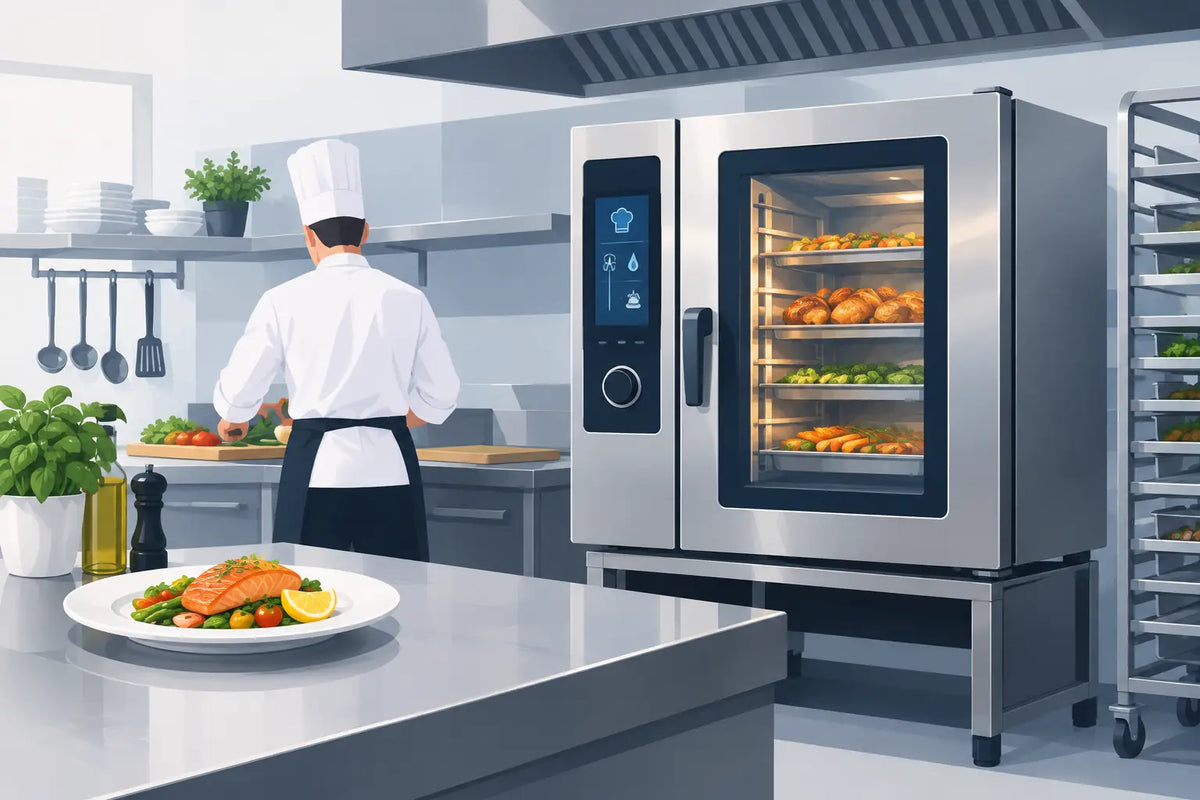
A combi oven is not simply a convection oven with steam added. It is a cooking system built around three modes: dry convection heat, steam, and a combination of both. The result is a more controlled cooking environment for roasting, baking, steaming, regenerating, poaching, braising, and finishing food at scale. For restaurants, hotels, caterers, institutions, and ambitious culinary spaces, that range can reshape the rhythm of prep and service.
Why Use Combi Ovens for Better Cooking Control
Convection moves hot air around food for fast, even browning. Steam protects moisture, transfers heat efficiently, and keeps delicate products from becoming brittle or dry. Combination cooking lets an operator set both elements together, creating the conditions a product actually needs rather than forcing every item into dry heat.
Consider a hotel pan of roasted chicken. In a conventional oven, cooks often compensate for moisture loss with basting, tighter timing, or a lower temperature that slows production. In a combi oven, measured humidity can reduce surface drying while convection develops color and crispness. The meat cooks more evenly, the skin can still render properly, and the finished yield is often stronger.
That control matters just as much for vegetables, seafood, grains, custards, and baked goods. Broccoli can retain a vivid green finish. Fish can cook gently without breaking apart. Bread can receive steam at the opening of the bake for a well-developed crust and expanded volume. These are not automatic outcomes - loading, seasoning, pan selection, and recipe development still matter - but the oven gives skilled cooks a far more responsive environment.
More Capacity Without More Cooking Equipment
A combi oven can take on work that might otherwise be divided among a convection oven, steamer, holding cabinet, braising setup, and sometimes a dehydrator. That does not mean it replaces every one of those tools in every operation. A high-volume bakery may still need dedicated deck ovens, while a seafood program may benefit from a separate pressure steamer. But for menus with varied production needs, a combi can consolidate a meaningful amount of work.
This is especially valuable where square footage is expensive. A compact countertop model can bring controlled steam and convection to a café, food truck commissary, or chef-driven small kitchen. Full-size floor models can support banquet production, hospital meal service, high-volume catering, and multi-pan restaurant prep. The right capacity depends on pan count, expected covers, batch size, utility availability, and the way food moves through the kitchen.
The operational benefit is not merely fewer boxes on the equipment plan. It is a cleaner sequence of work. A team can steam vegetables, roast proteins, regenerate plated components, and bake a sheet-pan dessert with less handoff between stations. When the menu is designed with the oven in mind, the kitchen gains valuable room to breathe.
Consistency That Protects the Plate and the Margin
Great food should not depend on which cook happens to be working a particular shift. Programmable combi ovens allow teams to save recipes with temperature, humidity, fan speed, probe targets, and cooking stages. A cook can load a pan, select the program, and focus on another part of service while the oven follows the intended sequence.
That consistency supports training and protects standards across multiple shifts or locations. It can also reduce avoidable waste. Overcooked proteins shrink. Vegetables cooked too long lose texture and visual appeal. Bread baked inconsistently becomes a frustrating variable in a sandwich program. Better repeatability helps preserve the product quality guests notice and the usable yield operators count on.
Many combi ovens also use core probes to cook toward an internal temperature rather than a fixed clock time. This is particularly useful for roasts, poultry, casseroles, and other items where load size and starting temperature can change the finish time. A probe does not replace sound food-safety procedures, but it gives the team a reliable reference point for repeatable cooking.
Faster Prep, Smarter Service
Speed is one reason combi ovens earn their footprint, but speed should be understood as throughput rather than a race to cook one item. Steam cooks efficiently, and multi-level racks allow operators to produce several pans at once. With thoughtful loading, a combi can prepare a large quantity of vegetables, grains, proteins, or baked components in a single cycle.
During service, the oven can be equally useful for regeneration. Caterers and banquet teams can bring prepared foods back to serving condition with humidity that helps prevent the dry, tired finish associated with conventional reheating. Restaurants can use programmed cycles to finish braises, warm side dishes, or recover batch-cooked items without tying up burners.
There is an important distinction here: an oven will not fix an unorganized production plan. If pans are overloaded, recipes are poorly portioned, or finished food sits too long, quality still suffers. The strongest results come when the combi is integrated into prep schedules, holding procedures, and station responsibilities from the beginning.
Menu Flexibility From One Heat Source
The best commercial equipment creates options without asking the kitchen to become more complicated. A combi oven can support a breakfast program with eggs, bacon, potatoes, and pastries, then shift into lunch production for roasted meats, steamed rice, and baked sandwiches. At dinner, it may handle proofing, roasting, low-temperature cooking, and plate regeneration.
For operators building a menu, this flexibility can be a strategic advantage. It allows a concept to add a composed entrée, a stronger catering offer, or a house-baked element without immediately adding several pieces of equipment. It also gives chefs room to test techniques such as overnight roasting, low-temperature cooking, dehydrating garnishes, or steam-assisted baking.
Still, versatility can become a weakness if it leads to a menu with no clear production logic. The right question is not whether a combi oven can cook something. It usually can. The better question is whether it can cook that item consistently, profitably, and on time alongside everything else on the menu.
What to Consider Before Buying a Combi Oven
Combi ovens are a serious investment, and the best model is shaped by the operation rather than a feature list. Start with the food you produce most often and the bottleneck you need to remove. A bakery-centered kitchen may prioritize humidity control, rack capacity, and baking programs. A catering operation may place more value on regeneration capacity and roll-in racks. A compact restaurant may need a smaller footprint, simple controls, and a unit that fits existing electrical or gas service.
Utilities deserve close attention. Models may require electric or gas connections, water filtration, drainage, ventilation, and sufficient clearance for service access. Water quality is especially important because mineral buildup can affect performance and increase maintenance needs. Automatic cleaning systems can save labor and encourage routine care, but they still require the correct chemicals, procedures, and staff accountability.
Also consider who will operate the oven. Touchscreen controls and recipe programming can be powerful, yet a kitchen needs training, labeling, and a clear system for managing programs. A simpler unit can be the better choice when the menu is focused and turnover is high. More advanced controls make sense when the team will use their full range of capabilities.
The Right Fit Is About the Kitchen You Want to Run
Why use combi ovens when a conventional oven may seem familiar? Because familiarity is not always efficiency. A combi oven gives cooks a controlled chamber where moisture, heat, and air movement can work together with intention. It can strengthen yield, expand production capacity, reduce repetitive labor, and bring more consistency to the pass.
For a restaurant owner, that may mean a steadier rush and fewer costly remakes. For a caterer, it may mean more confident batch production. For a serious home chef building an outdoor or entertainment kitchen, it may mean commercial-caliber control for gatherings where every plate matters.
Choose the unit around your menu, utilities, workflow, and team - then build recipes that let its control become part of the craft. A well-selected combi oven does more than cook food. It creates a calmer, more deliberate kitchen rhythm, leaving the people behind the line more room to focus on flavor and hospitality.