Are Convection Ovens Better for Cooking?
If you've ever pulled two sheet pans from the same oven and found one tray perfectly browned while the other still needs time, you're asking the right question. Are convection ovens better? In many kitchens, yes - but only when the cooking style, menu, and production demands actually benefit from moving hot air.
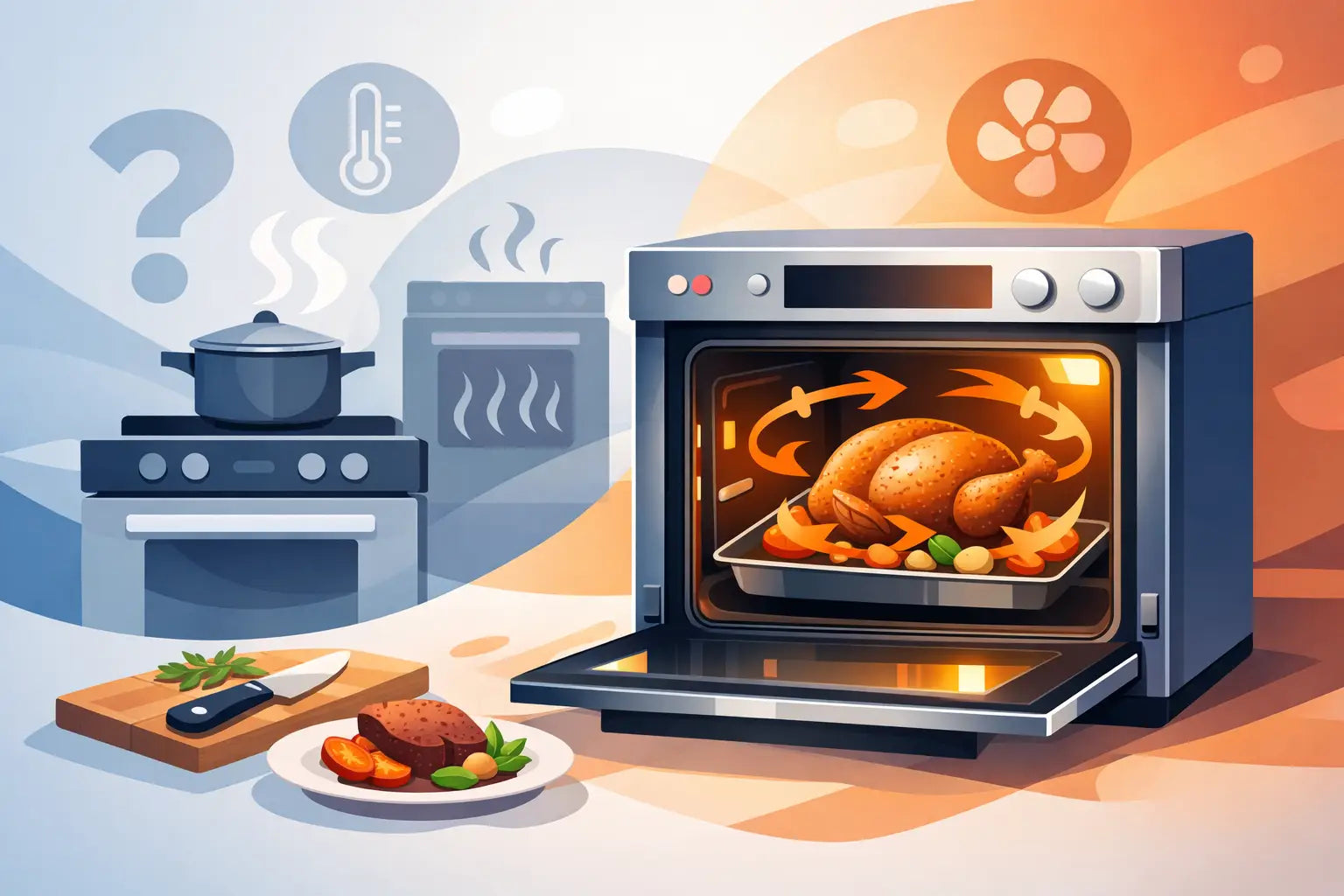
A convection oven uses a fan, and often an exhaust system, to circulate heated air around the food. That airflow changes how heat reaches the surface, which usually means faster cooking, more even browning, and better consistency from batch to batch. For chefs, operators, and serious home cooks, those are meaningful gains. But convection is not automatically better for every product, every kitchen, or every workflow.
Are convection ovens better in real kitchen use?
The practical answer is that convection ovens are often better when speed, uniformity, and repeatable results matter more than a gentle baking environment. In a commercial setting, that can translate into tighter ticket times, stronger product consistency, and more reliable throughput during service. In a high-performance home kitchen, it can mean better roasted vegetables, more evenly cooked proteins, and stronger control over multi-rack cooking.
What makes convection valuable is not just the fan itself. It is the way circulating air reduces hot and cold spots and improves heat transfer. Food cooks more efficiently because fresh hot air keeps moving across the surface instead of letting a cooler pocket of air sit around the product. That matters for browning, crisping, and production speed.
Still, better depends on what you cook. If your menu leans heavily toward roasted meats, potatoes, wings, cookies, pastries with crisp edges, or multiple pans at once, convection usually earns its place quickly. If your work centers on delicate custards, cheesecakes, souffles, or cakes that need a very calm oven environment, a standard oven may still be the better tool.
Why convection often performs better
In performance-focused kitchens, consistency is not a luxury. It is part of margin control, labor efficiency, and guest experience. Convection ovens support that by making cooking results more predictable across the cavity.
The first advantage is speed. Because heat circulates continuously, many foods cook faster than they do in a conventional oven. That can help a restaurant move product faster during peak periods and can help home cooks reduce total cook time without sacrificing finish. It also means less waiting between batches.
The second advantage is evenness. A conventional oven can develop pockets of uneven heat, especially when fully loaded. Convection reduces that problem. For operators baking trays of appetizers, roasting vegetables for prep, or finishing multiple portions at once, this can improve yield and reduce the need to rotate pans constantly.
The third advantage is browning and texture. Circulating air helps remove surface moisture more efficiently. That is why convection often produces better caramelization, crisper skin, and a more developed exterior on roasted foods. For kitchens focused on texture as much as flavor, that is a real operational benefit.
There is also a capacity advantage. Many convection ovens handle multi-rack cooking more effectively than conventional models. If the goal is to increase output within a limited footprint, that matters. Better airflow can help maintain quality across several trays instead of forcing one-pan-at-a-time production.
Where convection shines most
Roasting is where convection tends to prove its value fastest. Chicken, beef, pork, root vegetables, potatoes, and sheet-pan items generally benefit from faster heat transfer and better exterior development. The same goes for many frozen convenience foods in foodservice, where consistency and finishing speed matter.
Baking can also improve, especially for cookies, pies, puff pastry, and items where a dry, evenly heated environment supports a better finish. In many commercial kitchens, convection is a strong all-around choice because it handles a broad mix of savory and baked products without needing constant adjustment.
When a convection oven is not better
The strongest equipment decisions come from understanding limits, not just benefits. Convection is not ideal for every product because that moving air can be too aggressive for certain foods.
Delicate batters are the most common example. Cakes, quick breads, souffles, and some custard-based items may rise unevenly, dry out too quickly, or develop a surface before the interior structure is ready. In those cases, a still-air conventional oven can produce a better final result.
Moisture-sensitive items can also be tricky. Since convection tends to drive off surface moisture faster, foods that rely on a humid environment may not perform as well unless the oven is specifically designed to manage that. Some premium commercial models address this better than entry-level units, but the point remains: convection changes the cooking environment, and not every product wants that change.
There is also the learning curve. Teams used to a conventional oven often need to reduce temperature, shorten cooking time, or adjust pan placement when switching to convection. Without those changes, overbrowning or overdrying can happen quickly. The oven is not the problem. The process just has to match the equipment.
Convection vs. conventional ovens
When people ask whether convection ovens are better, what they often mean is whether they are better than a conventional oven for everyday use. The answer comes down to priorities.
A conventional oven is simpler. It uses stationary heat, typically from top and bottom elements or gas heat, without fan-driven air movement. That calmer environment can be ideal for delicate baking and recipes developed specifically around conventional heat. It is also straightforward to use, which matters in kitchens where staff training is limited or menu execution has to stay very simple.
A convection oven adds performance. It favors kitchens that need faster turns, more even results, and stronger browning. It asks more from the operator in terms of understanding temperature adjustments and product behavior, but in return it usually delivers more efficiency.
For many buyers, the best question is not which oven is universally better. It is which oven better supports your volume, menu mix, and production standards.
Are convection ovens better for commercial kitchens?
In many commercial applications, yes. The reason is not trend or marketing. It is operational value.
Commercial kitchens depend on repeatability. One undercooked tray or one uneven batch creates waste, slows service, and puts pressure on labor. A convection oven helps stabilize output, especially in prep-heavy or high-volume environments. That makes it a strong fit for restaurants, bakeries, cafes, catering operations, and institutional foodservice where the oven is in regular rotation all day.
It can also support better labor use. If staff spend less time rotating trays, extending cook cycles, or managing uneven browning, they can focus on higher-value work. Over time, those small efficiency gains add up.
That said, not every operation needs convection as its primary oven. A pastry-focused concept may still rely on deck or conventional heat for specific items. A small menu with low oven volume may not see enough gain to justify the upgrade. Better equipment decisions come from matching the oven to the actual production line, not buying on feature count alone.
Are convection ovens better for home cooks?
For serious home cooks, convection is often worth it. If you roast frequently, cook on multiple racks, or want more professional control over texture and finish, the benefits are easy to notice. Weeknight cooking gets faster, and foods like chicken thighs, vegetables, and sheet-pan meals usually come out more evenly cooked.
For occasional bakers who mostly prepare cakes or casseroles, the difference may feel smaller. A standard oven can still perform very well if the recipes match the appliance. But for anyone trying to bring more commercial-style consistency into a home kitchen, convection is a practical upgrade rather than a luxury feature.
How to decide if convection is the better choice
Start with your menu. If your kitchen depends on roasted proteins, crisp finishes, baked snacks, or high-volume tray cooking, convection is likely the better fit. Next, think about throughput. If faster recovery and more even multi-rack cooking will help service or prep, the value becomes more obvious.
Then consider your team. The best oven is the one your staff can use accurately every day. Convection rewards good process control. That means recipes may need to be recalibrated, temperatures may need to come down slightly, and cooking times may need to be watched more closely at first.
Finally, think beyond the feature and focus on build quality. A poorly built convection oven will not deliver the consistency buyers expect. Airflow design, recovery performance, controls, and durability matter. For buyers who want equipment built for performance and trusted day after day, choosing the right specification matters as much as choosing the right oven type.
A convection oven is better when your kitchen needs speed, consistency, and stronger surface finish. If your food depends on a gentler bake, conventional heat may still win. The smart move is not chasing a universal answer. It is choosing the oven that works under your real kitchen pressure, with the results your standards demand.